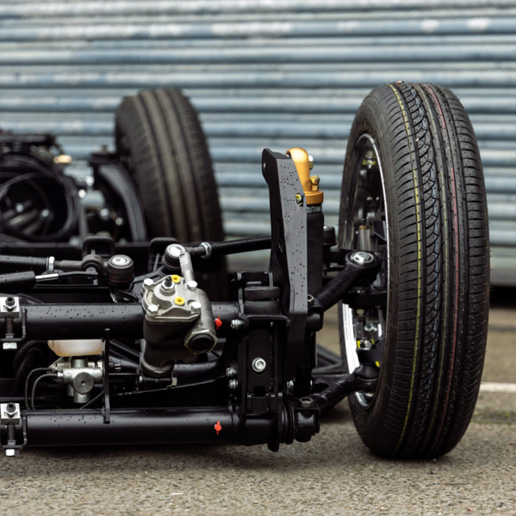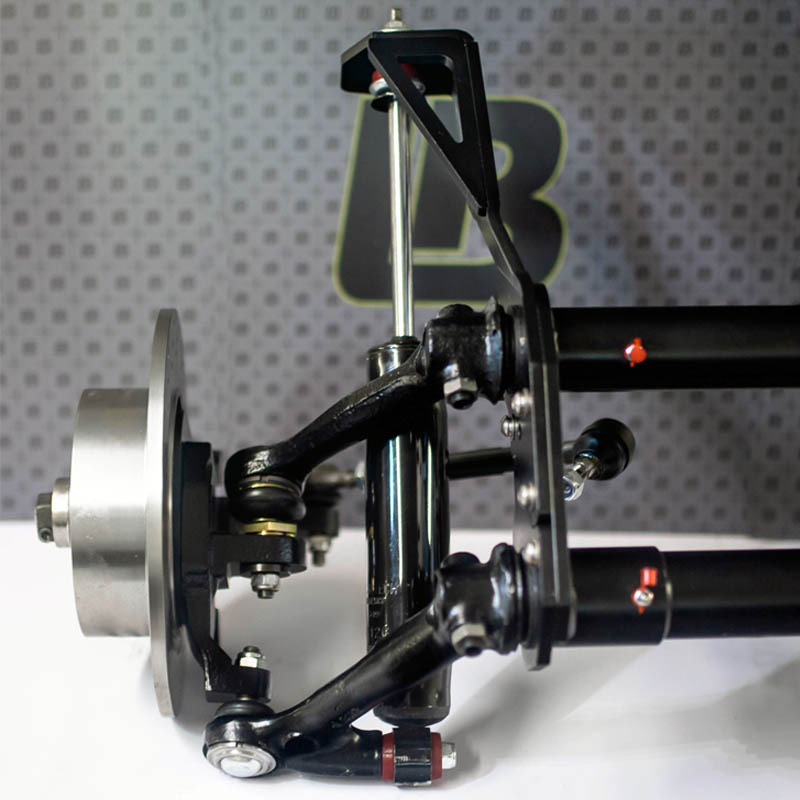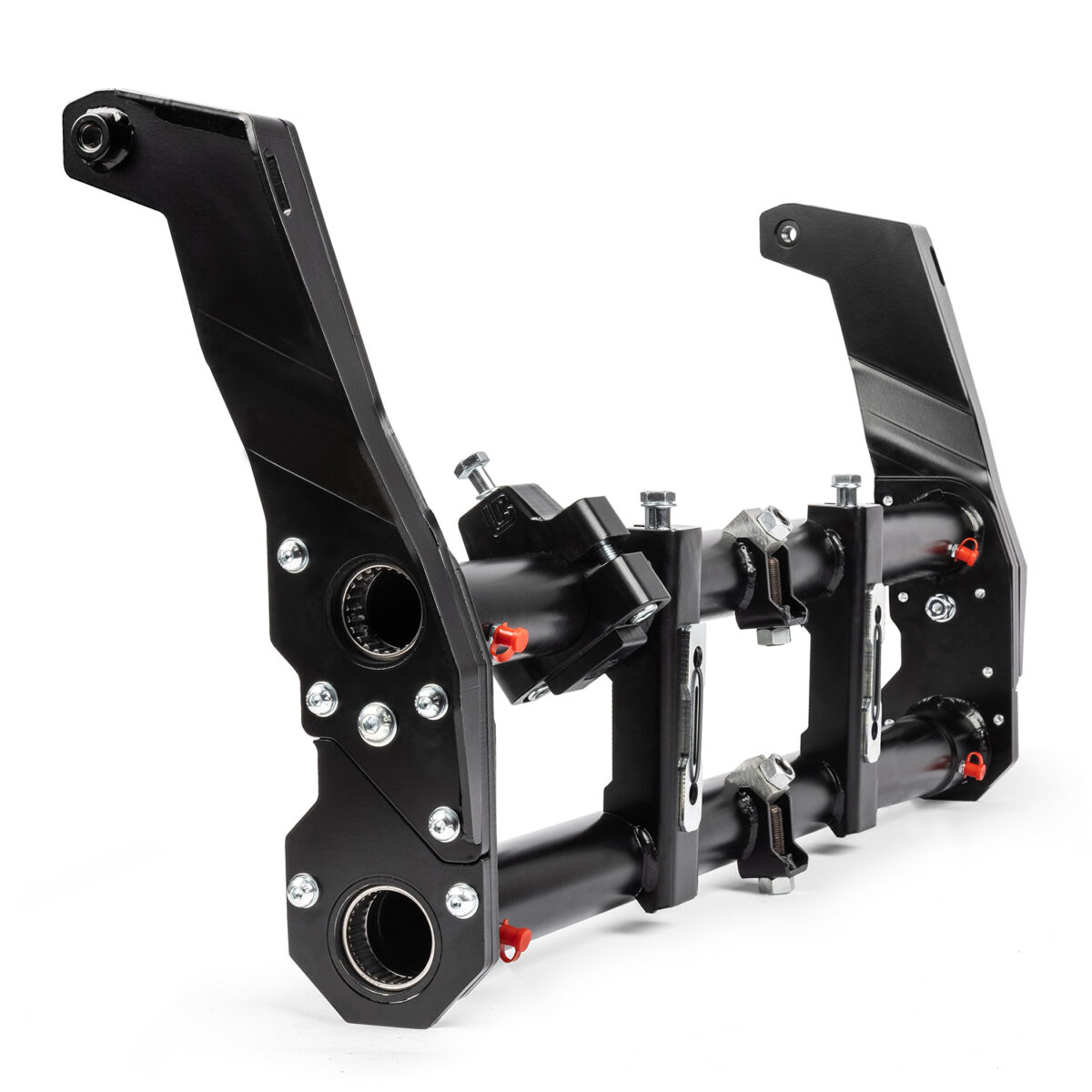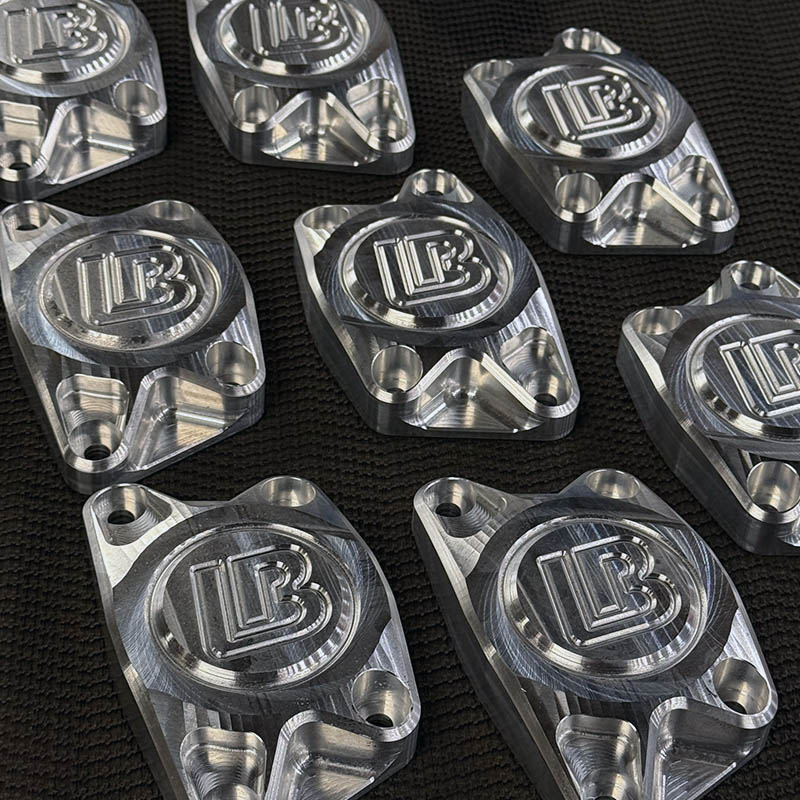

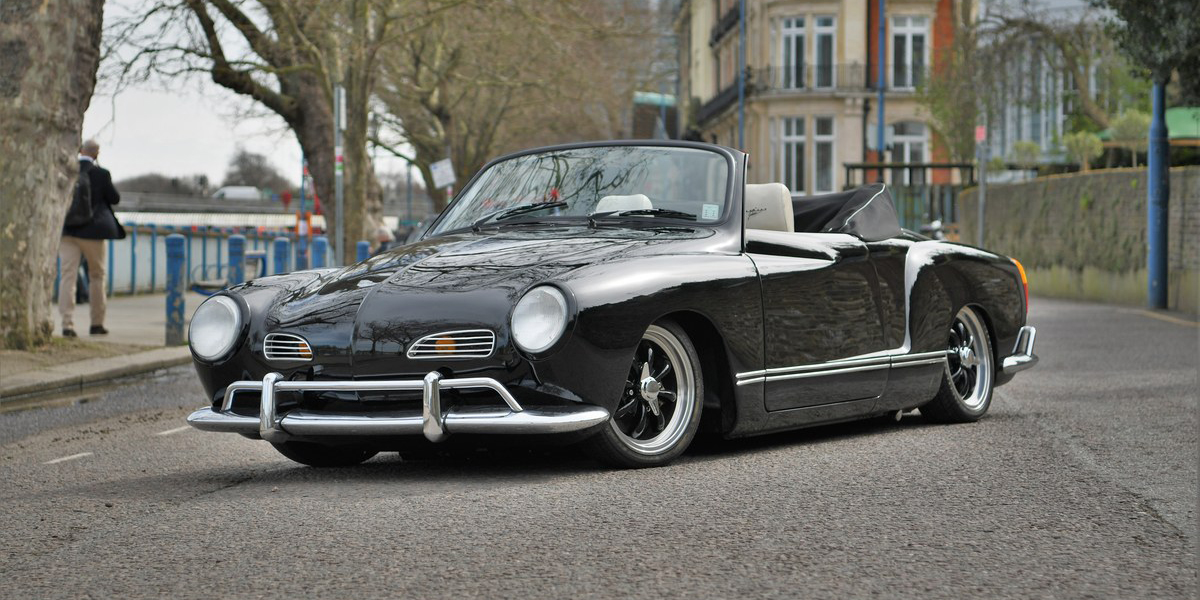
Lee R’ 1972 Karmnn Ghia puts a real-world finish on the Limebug catalogue, bringing together 4 Way Manual Air Ride Management System, 1/4", 4 Valve, 1948-79 Beetle / Ghia "The Revolution" Cantilever Swing Axle / IRS Rear Air Ride Kit, Bolt on, 1966-79 Beetle / Ghia 4" Narrowed Ball Joint Deluxe Cantilever Swing Axle / IRS Air Ride Kit in one properly resolved setup.
A 1972 Karmann Ghia convertible, built by a former NASCAR engineer for his wife, with suicide doors, side-hinged panels, Porsche headlights and a proper old-school custom attitude. Decades later, Lee R’s gloss-black Ghia is still turning heads, now sitting on a full Limebug air ride setup with a 1,914cc flat-four to back up the looks.
Words by Limebug | Hall of Fame — Featured Builds
Some cars refuse to grow up. Thank goodness.
There’s a certain sort of Volkswagen that could only have been built in the 1990s.
Shaved door handles. Smoothed bodywork. Elaborate custom interiors. Unusual hinges. Enough polished metal to keep somebody occupied with a cloth for the rest of their natural life.
Back then, building a show car wasn’t necessarily about preserving every factory detail. Quite the opposite. If something could be modified, relocated, smoothed or made to open in a completely different direction, somebody was probably already working out how.
And if you wanted to go properly wild, you started with a Karmann Ghia.
Which is exactly what happened to this 1972 convertible.
Now belonging to Lee R, this extraordinary black Ghia began its transformation in South Carolina, where a former NASCAR engineer decided to build something special for his wife.
Not a lightly lowered weekend cruiser.
Not a standard restoration with a different set of wheels.
A full custom.
And rather than disappearing into obscurity as tastes changed, the car has continued evolving, eventually making its way across the Atlantic and receiving a fresh round of mechanical upgrades, including a complete Limebug air suspension installation.
The result is an unusual survivor from an era when subtlety wasn’t necessarily the objective.
And we wouldn’t change that for the world.
Built by a NASCAR engineer. For his wife.
South Carolina, sometime in the nineties
The Ghia started life as a 1972 American-market convertible.
By the 1990s, it had found its way into the hands of an ex-NASCAR engineer in South Carolina, who set about turning it into a bespoke show car for his wife.
That background explains quite a lot.
Somebody accustomed to the engineering demands of motorsport was hardly likely to be intimidated by the prospect of modifying a Volkswagen.
And the list of alterations was extensive.
For starters, the car was converted to right-hand drive.
Then came a completely custom dashboard, extensive body smoothing and a rather ambitious rethinking of how the various panels should open.
The bonnet and rear engine lid were modified to hinge sideways.
The conventional front-hinged doors were converted to rear-hinged suicide doors.
And the exterior handles were removed altogether.
It was the kind of build where an ordinary trip around the car could become a demonstration of things opening in directions they really weren’t supposed to.
But that’s precisely what makes it interesting.
Opening things the wrong way
Suicide doors have always been a favourite in the custom scene.
On a Karmann Ghia, though, they’re particularly dramatic.
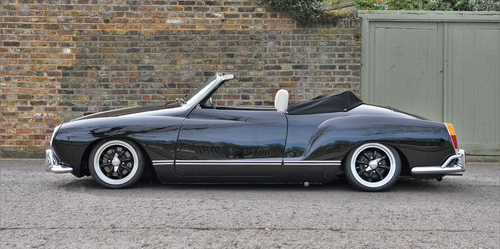
The long, low doors already form a major part of the car’s sweeping side profile. Reversing their operation changes the whole experience of getting in and out.
Then there’s the side-hinged bonnet and engine lid.
Neither was necessary for everyday usability, of course.
But this wasn’t an exercise in making a Volkswagen more ordinary.
It was about creating a car that would stop people in their tracks when the panels were opened at a show.
And decades later, it still does.
The Ghia that borrowed a Porsche’s eyes
A familiar nineties trick
If you’ve been around the air-cooled scene long enough, you’ll remember the fashion for fitting Porsche 911 headlights to Karmann Ghias.
It was a particularly recognisable modification during the 1990s.
And Lee’s car wears the conversion with considerable confidence.
The 911-style lights give the nose a more aggressive appearance, while the front indicators have been relocated behind the grilles.
Combined with the removed handles and smoothed bodywork, the result is an unusually clean silhouette.
There’s very little to interrupt the lines.
And those lines were already rather special.
The original Karmann Ghia design, shaped by Italian styling house Ghia and produced by Karmann, was hardly crying out for improvement.
But the American custom scene has never been particularly interested in leaving well enough alone.
This car is the evidence.
Black. Proper black.
The gloss-black paintwork ties everything together.
It’s a brave colour for a heavily modified body, because black is remarkably unforgiving.
Every ripple, panel transition and imperfect reflection has a habit of making itself known.
On this Ghia, the paint has benefited from professional correction and detailing, giving the smoothed bodywork the sort of finish that suits its show-car origins.
The chrome bumpers remain, providing just enough contrast against the dark body.
Eight-spoke alloys, chrome spinners and Nankang tyres complete the exterior.
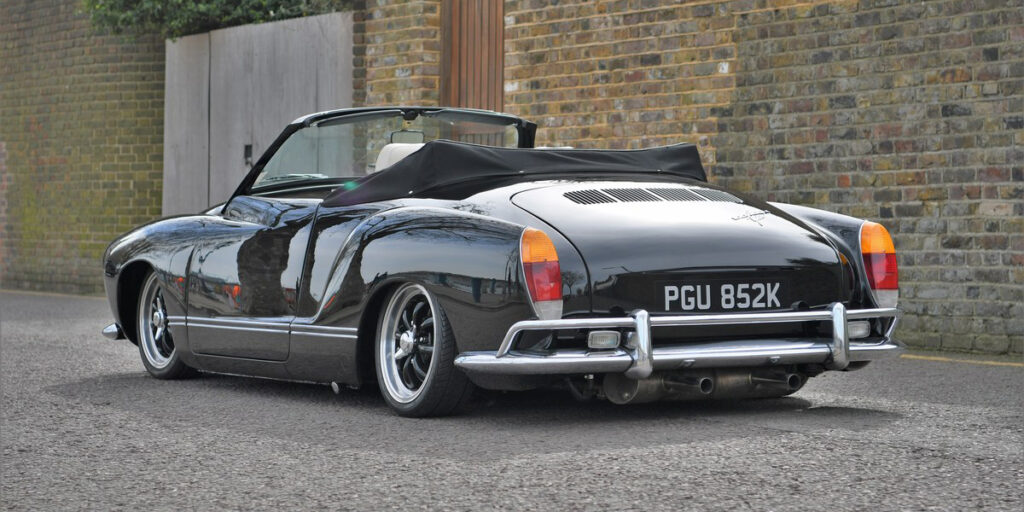
And the convertible hood has been replaced with a newer arrangement featuring a glass rear window.
At the time of the supplied vehicle description, the car had no side windows fitted, making dry-weather use rather more appealing than a journey through a British downpour.
Then again, this was never going to be the sort of car you’d casually leave outside the supermarket in November.
A new chapter across the Atlantic
From America to Britain
After its original custom transformation, the Ghia eventually made its way to the UK.
It was registered with the DVLA on 23 September 2015.
And rather than treating the nineties modifications as something to undo, subsequent work has preserved that distinctive character while bringing the mechanical specification up to date.
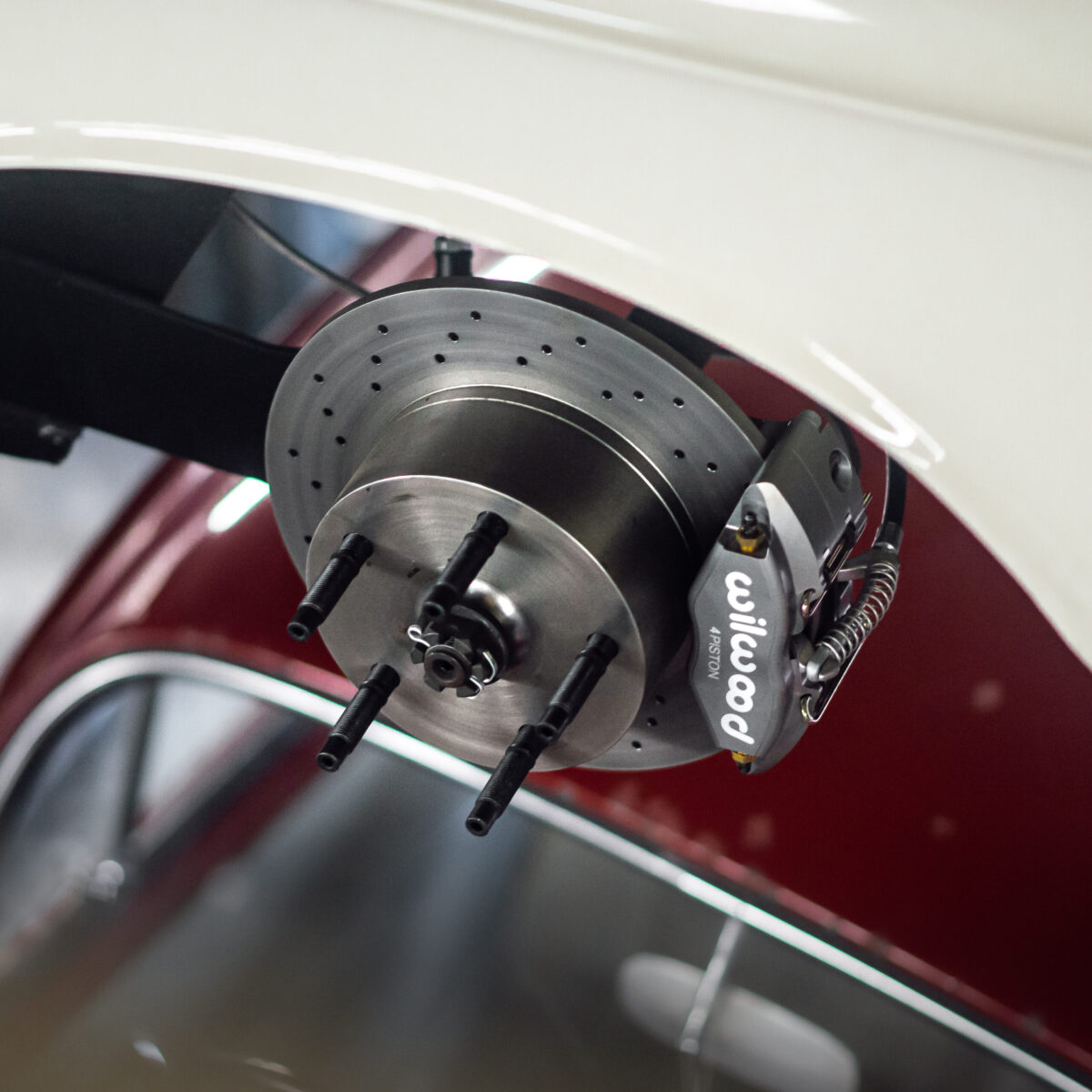
The car received a new engine, upgraded disc brakes, extensive interior attention and a complete air suspension system from Limebug.
The important thing is that the original custom identity remained intact.
The suicide doors stayed.
The unusual bonnet and engine lid hinges stayed.
The Porsche headlights stayed.
And the bespoke dashboard remained one of the defining features of the cabin.
It’s still very much a nineties show car.
Just one that has continued developing.
Four corners. Four switches.
The Limebug transformation
When it came to the suspension, the Ghia received a complete four-way Limebug air ride setup.
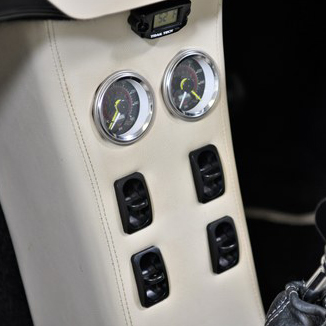
The front end incorporates a narrowed beam, while the system is controlled through four individual switches mounted on the dashboard.
No elaborate touchscreen interface.
No attempt to hide the fact that the car is modified.
Just a straightforward set of controls that allow the suspension to be adjusted at each corner.
And the difference between fully raised and aired out is considerable.
With the suspension down, the already low Karmann Ghia body settles dramatically towards the ground.
The long bonnet, smooth sides and rounded wings suddenly look even more exaggerated.
Raise it back up and the car becomes far more practical to move around.
It’s exactly the sort of finishing touch that suits the original custom philosophy.
After all, if somebody has already gone to the trouble of reversing the door hinges and making the bonnet open sideways, fitting adjustable suspension hardly seems excessive.
Not just for the showground
The air ride installation wasn’t the only chassis improvement.
The brakes were upgraded to discs, while the suspension and mechanical work helped make the Ghia a car that could be driven and enjoyed rather than simply displayed.
That distinction matters.
Plenty of elaborate customs spend most of their lives sitting still.
This one was built to have a life beyond the show field.
And with the engine fitted beneath that beautifully trimmed rear lid, there’s a good reason to take it out.
1,914cc of persuasion
A proper flat-four
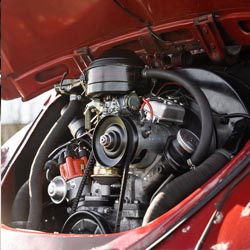
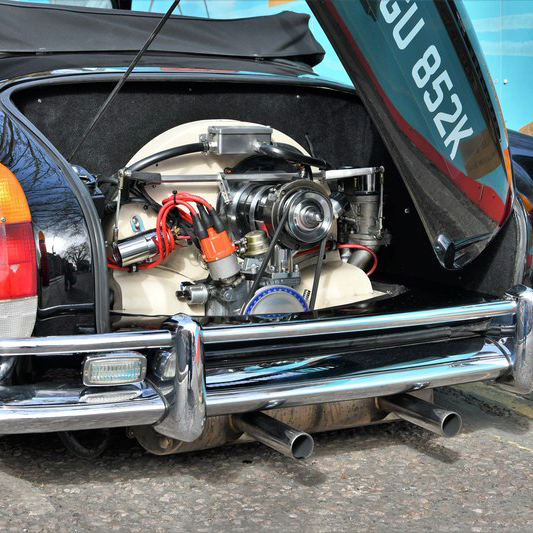
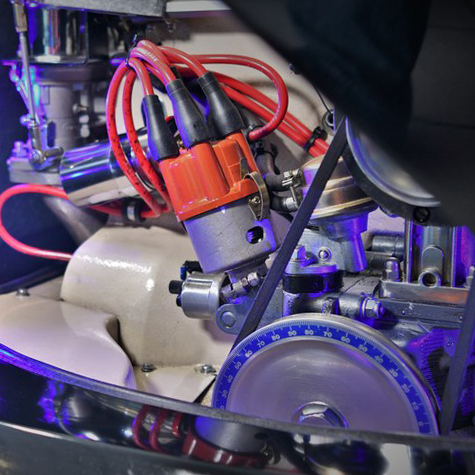
The original engine has made way for a freshly built 1,914cc air-cooled flat-four.
It’s a significant step beyond the standard engine specification of a 1972 Ghia.
The documented build includes 94mm barrels and pistons, polished heads, an external oil cooler, electronic ignition and a pair of EMPI 44 carburettors.
That gives the car a very different personality from a standard Volkswagen convertible.
There’s more torque available, a livelier response and the unmistakable soundtrack of a twin-carb air-cooled engine.
A little crackle from the exhaust.
A little induction noise.
And considerably more enthusiasm when the throttle goes down.
Exactly what you want from a car that looks this dramatic.
The Gene Berg connection
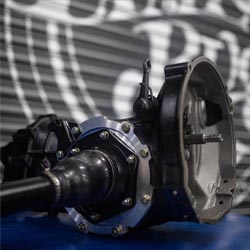
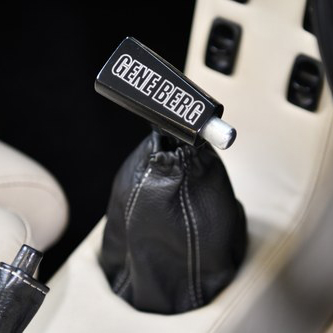
The engine is paired with a four-speed manual gearbox operated through a Gene Berg shifter.
A period-correct choice in spirit, and one that suits the car’s traditional custom character.
The short-throw action adds a more positive feel to the gear changes.
It’s another example of the build mixing components from different eras without losing its identity.
Nineties bodywork.
Traditional air-cooled tuning.
Modernised suspension.
And a gearbox still operated the proper way.
Inside the custom time machine
A dashboard you won’t find in any VW catalogue
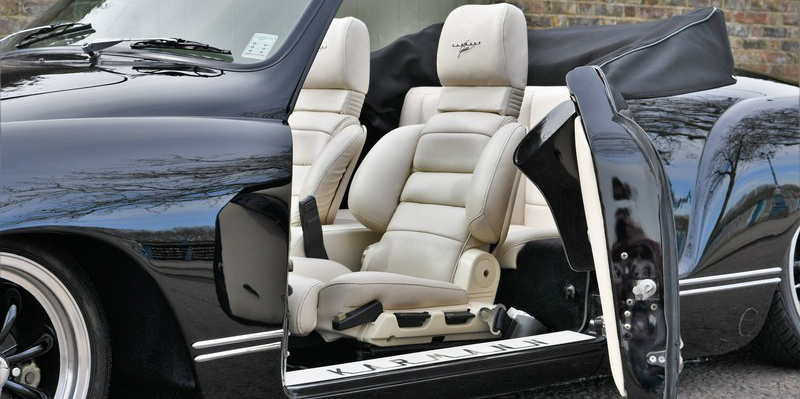
Open one of those rear-hinged doors and the interior continues the theme.
The dashboard was custom-built during the original American transformation, with a sweeping design that carries through into the bespoke door cards.
It’s an ambitious piece of interior work.
And rather than looking like a collection of unrelated aftermarket accessories, the whole cabin has been designed around the same flowing shapes.
The seats and rear bench are trimmed in leather, with custom-stitched Karmann Ghia logos.
The carpets have been renewed, the interior refreshed and additional soundproofing fitted.
A Midship steering wheel sits ahead of the driver, with the Gene Berg shifter positioned nearby.
The air suspension pressure gauges are housed in the centre console, while the individual suspension switches are mounted on the dashboard.
And the more you look, the more unusual details you discover.
Buttons, switches and a skateboard wheel
The green buttons on the dashboard operate the indicators.
The wipers have their own switch.
The starter is located beneath the dash, along with an immobiliser and a concealed electrical cut-off.
The door-opening handles are positioned low inside the cabin.
And the accelerator pedal?
A rotating skateboard wheel.
Of course it is.
If you’ve been involved in old-school air-cooled customs, you’ll recognise that particular modification immediately.
It’s the sort of wonderfully unnecessary detail that makes a car like this feel authentic.
Not a modern interpretation of a nineties custom.
An actual nineties custom, complete with the little eccentricities that came with the territory.
Even the luggage compartments are showing off
The boot is part of the display
The attention to detail doesn’t stop at the passenger compartment.
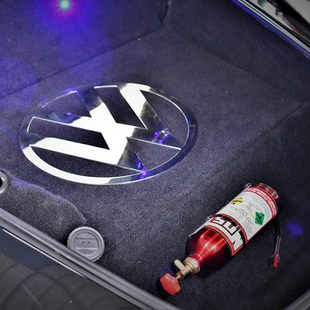
The front boot has been retrimmed and carpeted, complete with a large chrome Volkswagen emblem and custom blue LED lighting.
There’s even a nitrous oxide bottle.
Before anybody gets too excited, it’s a display feature rather than a functioning nitrous system.
But it fits the theme perfectly.
This is a car designed to look impressive with its panels open.
And given the side-hinged bonnet, you’d be rather disappointed if there wasn’t something interesting underneath.
The engine bay gets the same treatment
At the rear, the engine compartment has been cleaned up, painted and trimmed to match the standard of the rest of the vehicle.
More blue LED lighting provides an additional showground flourish.
With the engine lid swinging sideways, the polished and carefully presented mechanical components become another part of the display.
It’s a reminder of the amount of work that went into the original concept.
Every opening panel was an opportunity to create another talking point.
And the later mechanical upgrades have continued that tradition.
A show car with the paperwork to match
There’s a reassuring amount of documentation accompanying the Ghia’s history.
The records include its UK registration paperwork, import-related documentation, receipts for parts and work, and details of the replacement engine.
The EMPI carburettors are documented by a 2019 Heritage Parts Centre receipt.
The engine specification is itemised.
And the Limebug air suspension hardware is supported by a receipt for approximately £2,500.
There’s also a concours judging sheet showing that the car performed strongly in its class.
Which feels entirely appropriate.
This is exactly the sort of Volkswagen that custom show judging was made for.
Not because it’s subtle.
But because somebody clearly spent an enormous amount of time making sure that virtually every part of the car had been considered.
The complete build specification
Vehicle and history
- 1972 Volkswagen Karmann Ghia convertible
- American-market car
- Custom-built in South Carolina during the 1990s
- Original conversion carried out by a former NASCAR engineer for his wife
- Right-hand-drive conversion
- Imported and registered in the UK in September 2015
- Subsequently developed and updated in the UK
Bodywork and exterior
- Gloss-black custom bodywork
- Shaved exterior door handles
- Rear-hinged suicide doors
- Side-hinged front bonnet
- Side-hinged rear engine lid
- Porsche 911-style headlights
- Front indicators relocated behind grilles
- Chrome bumpers
- Newer convertible hood with glass rear window
- Eight-spoke alloy wheels
- Chrome wheel spinners
- Nankang tyres
Limebug suspension and chassis
- Full Limebug four-way air suspension system
- Narrowed front beam
- Four individual dashboard-mounted suspension switches
- Air pressure gauges in centre console
- Front and rear adjustable ride height
- Upgraded disc brakes
Engine and transmission
- 1,914cc air-cooled flat-four
- 94mm barrels and pistons
- Twin EMPI 44 carburettors
- Polished cylinder heads
- External oil cooler
- Electronic ignition
- Four-speed manual gearbox
- Gene Berg short-throw shifter
Interior and show details
- Bespoke 1990s dashboard
- Custom door cards
- Refreshed leather upholstery
- Embroidered Karmann Ghia seat logos
- Midship steering wheel
- Rotating skateboard-wheel accelerator pedal
- Dashboard indicator buttons
- Concealed starter switch
- Immobiliser and hidden electrical cut-off
- Custom chrome sill plates
- Retrimmed and carpeted front boot
- Chrome Volkswagen boot emblem
- Display-only nitrous oxide bottle
- Custom blue LED lighting in front boot and engine bay
- Detailed and trimmed engine compartment
Still outrageous. Still brilliant.
The air-cooled Volkswagen scene has changed enormously since this Ghia was first transformed in South Carolina.
Styles have come and gone.
Wheel fashions have changed.
Suspension technology has developed.
And the sort of modifications that once filled show halls have sometimes disappeared in favour of more restrained, factory-inspired builds.
But there’s something wonderfully refreshing about a car that refuses to apologise for its origins.
Lee’s Ghia still has its suicide doors.
Still has the Porsche headlights.
Still has the custom dashboard and the skateboard-wheel throttle.
And now it also has a 1,914cc engine, disc brakes and a full Limebug air ride system that allows the long black body to settle down into the weeds.
It’s an authentic piece of air-cooled custom history that has continued to evolve rather than being restored back into something conventional.
A little American hot-rod thinking.
A lot of nineties Volkswagen attitude.
And enough engineering and personality to make it interesting thirty years after the original transformation.
Lee R’s 1972 Karmann Ghia. A nineties child that never grew out of being different.