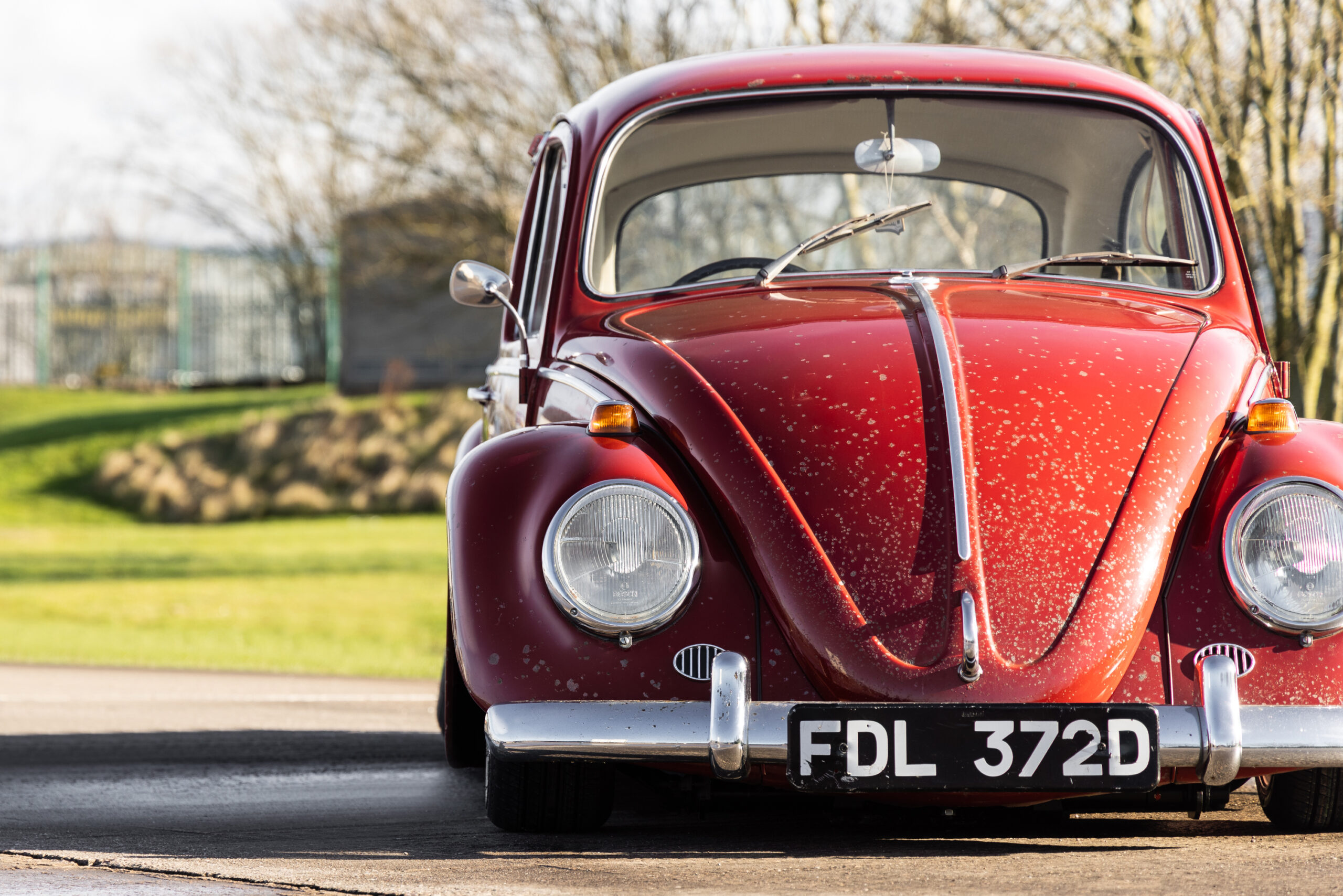
LIMEBUG ENGINEERING / THE GEN-II STORY
From factory-width restorations to radically narrowed air-ride builds, the front beam defines how an air-cooled VW looks, steers and sits. This guide explains the Gen-II philosophy, the beam-width options, and the components behind the system.
One core. Limitless possibilities.
The History Behind Gen-II
From improvised modifications to complete front-axle failures, plenty of modified Type 1 VWs are still running outdated beam designs.
For years, aftermarket suppliers have offered weld-in adjuster kits to raise or lower the front beam. Without precise cutting, alignment and welding, however, the results can be problematic. Twisted beams, poor geometry and fouling shock towers are just some of the issues associated with poorly executed conversions.
Manufacturers subsequently developed complete narrowed and adjustable beam assemblies. These were a significant improvement over home-modified original beams, but we felt there were still important areas to refine.
By taking a closer look at components such as shock towers and inner bushes, we developed the Gen-II blueprint.
Choosing Your Beam Width
Four familiar widths. Four very different looks. The right choice depends on wheel fitment, intended stance and the other components in your front suspension.
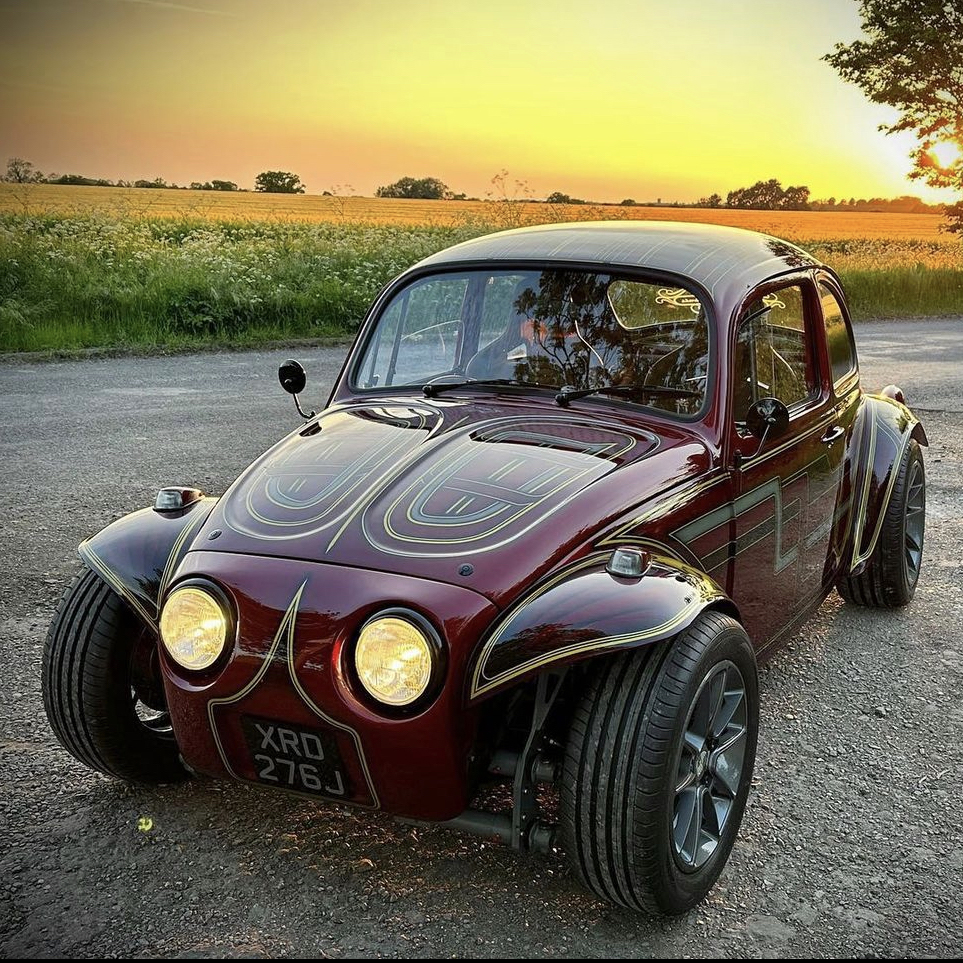
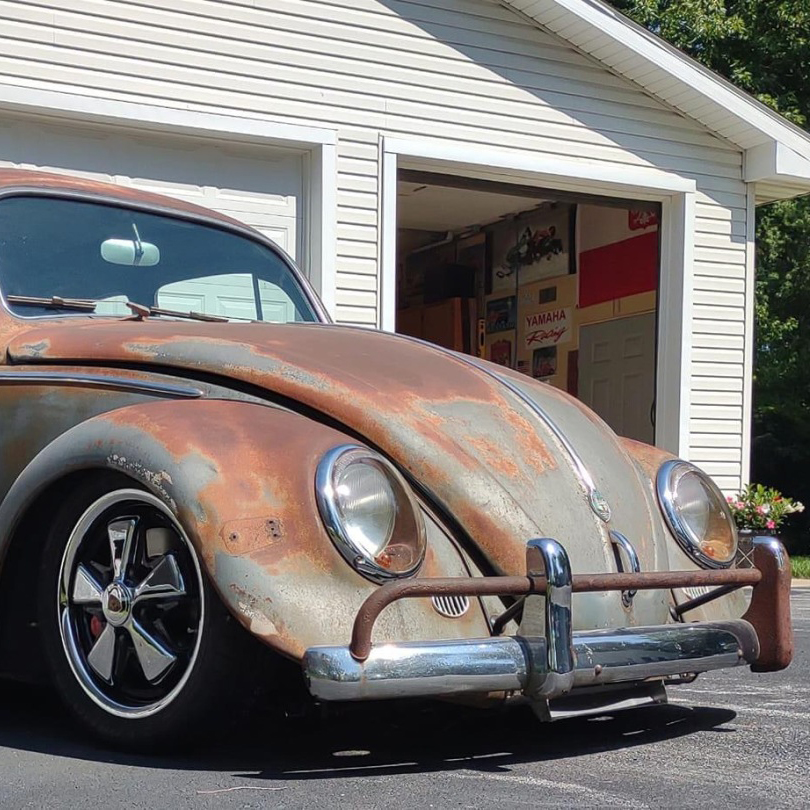


Stock width: The original factory width. Our OE-length beams are ideal for Type 1 restorations, retaining compatibility with factory fittings and track rod lengths. If your original components are still serviceable, there is no need to replace the entire front axle. The wider stance can make aftermarket wheels harder to accommodate beneath standard arches, although it may be desirable on a sand rail or similar build.
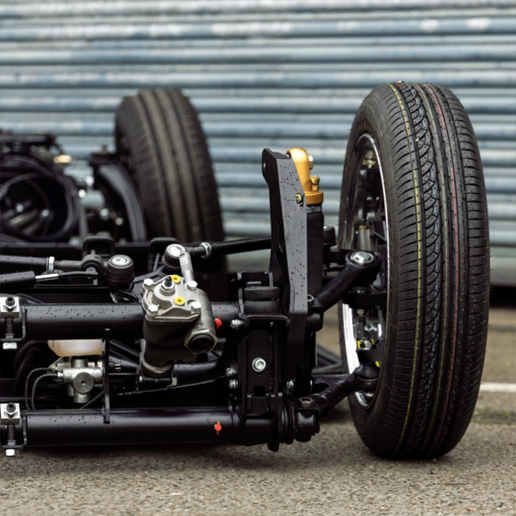
2″ narrowed: A useful option if you want to fit a slightly wider front wheel without dramatically increasing the tuck. As pictured above, Mike’s 4.5″ Fuchs sit neatly beneath the arches while retaining more of the wheel face on show.
4″ narrowed: One of our best-selling widths for many years, offering a versatile balance of clearance and stance. It provides extra room for wider wheels and a narrower front-end appearance across a broad range of builds. If you later decide you want less tuck, wheel spacers can be considered, subject to appropriate fitment and clearance checks.
6″ narrowed: For a particularly narrow front end, we offer a 6″ beam with or without shock towers. With the correctly matched supporting parts and setup, this can remain a usable option alongside the wider configurations.
Choose Your Beam Series
Titan for a static setup, or Jawbreaker for air ride. Both are built around the same Gen-II approach to modularity and serviceability.
Choose your weapon. With your width selected, the next step is deciding which beam series suits your build.


What Makes a Limebug Gen-II Beam Different?
Adjustable, Air Ride and Modular Narrowed Front Beams
Narrowed front beams have become one of Limebug’s most established and popular product ranges.
Our Titan (static) and Jawbreaker (air ride) series were developed around straightforward installation, useful adjustment and a feature-rich design.
The underlying approach has remained consistent: to provide more clearance for larger wheels and disc-brake conversions while giving builders greater control over front-end height and stance. Gen-II develops that approach with a modular design intended to be easier to adapt, maintain and upgrade.
You Spoke, We Listened
We looked closely at how the requirements of modified vehicles have changed over time.
The air-cooled VW floorpan has long been used for far more than standard-bodied Volkswagens. Kit cars, replicas, tributes, beach buggies and countless one-off builds all rely on the same adaptable platform.
Few automotive platforms have enjoyed such a long and varied life, and that versatility creates a demand for front axles that can evolve with the build.
Since Limebug began, we have seen owners request increasingly individual solutions. Those varied requirements led us towards the idea of a modular front axle.
What Does Modularity Mean for Installation and Maintenance?
Gen-II gives you room to adapt your beam as the build changes, with replaceable components intended to reduce the cost and effort of future maintenance or upgrades.
Spares are available through our website. Installation is also more flexible: the centre module can be fitted first, followed by the shock towers. This allows you to check inner-wing clearance as you go and can make installation or removal more manageable without needing a second pair of hands.
One core. Limitless possibilities.
A Closer Look at Gen-II Beam Features
Precision where it matters. Flexibility where you need it.
Elite Series Bearing Beams
Our improved Elite Series is available across the beam platforms in the range.
Each beam is engineered with precision and durability in mind, using OEM-style bearings for trailing-arm fitment and alignment with the original front-axle specification.


Inner Bushes
Original front beams used Bakelite-type inner bushes. For our replacement design, we chose polyoxymethylene (POM), commonly known by the trade name Delrin, for its engineering properties and suitability for this application.
This material offers high stiffness, wear resistance and dimensional stability. As the inner bushes help locate and support the trailing arms, material selection is an important part of the beam design.
Note: All bushes are supplied pre-fitted.
Billet Steering Damper Mount
Our billet mount replaces the original-style steering damper mounting arrangement with an adjustable clamp. It can be rotated around the beam tube to suit different tie-rod layouts and component clearances.
It also accommodates left- and right-hand-drive configurations, giving greater flexibility when fitting the beam to different vehicles.

View matching product →

View matching product →
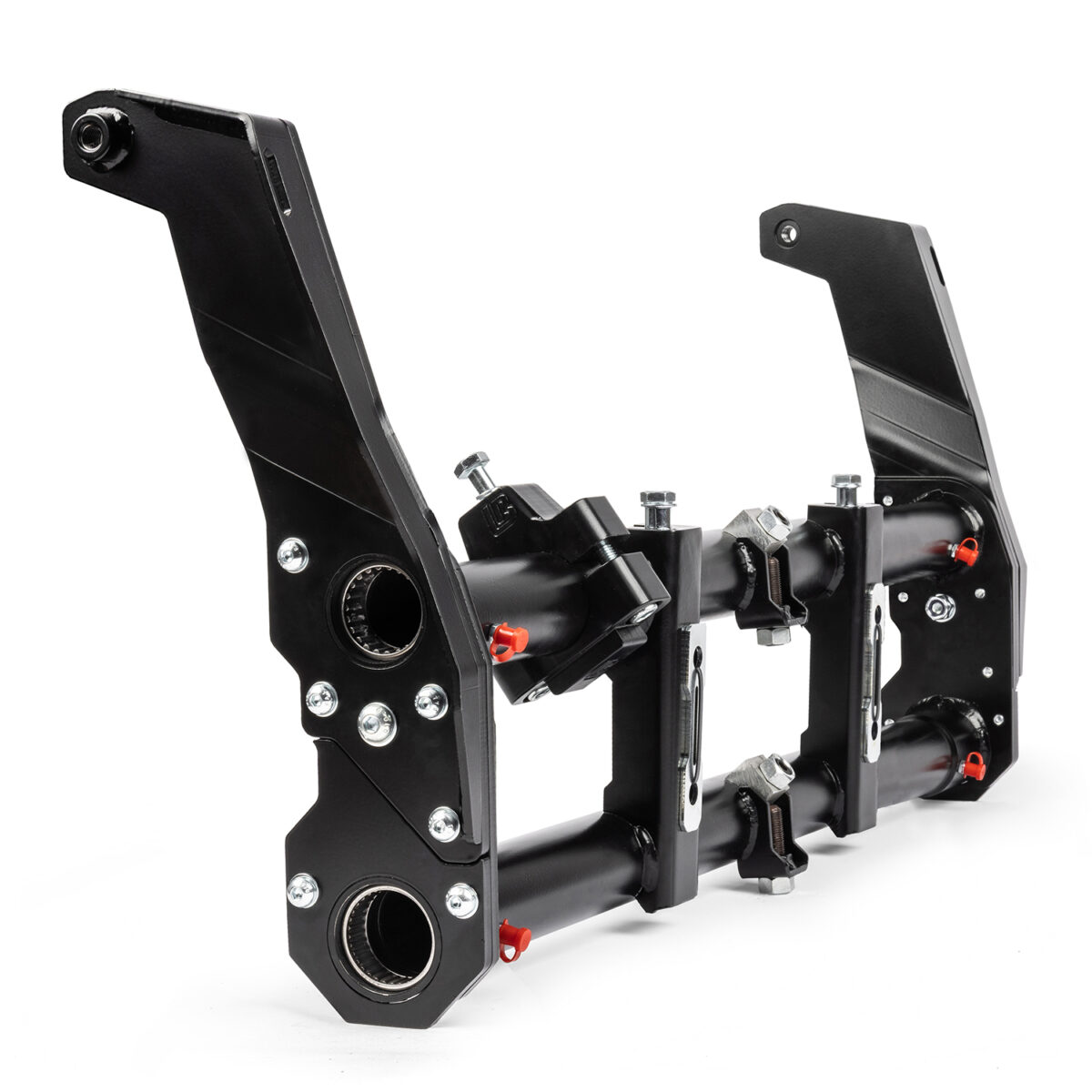
Zero Beam Adjusters — Over 8″ of Mechanical Adjustment
Our Zero adjuster was developed to maximise the available adjustment range while keeping the mechanism compact. Through CAD development and testing, we moved the adjuster geometry closer to the beam tube, with the pin reaching minimal clearance at the lowest point of its travel. The aim was to give builders a wider usable range of front-end height settings.
With an Allen key and a 19 mm spanner, the beam can be adjusted across more than 8″ of mechanical range. The wider, notched access opening makes it easier to reach and secure the main adjuster pin with the beam fitted to the vehicle.
Gen-II Shock Towers
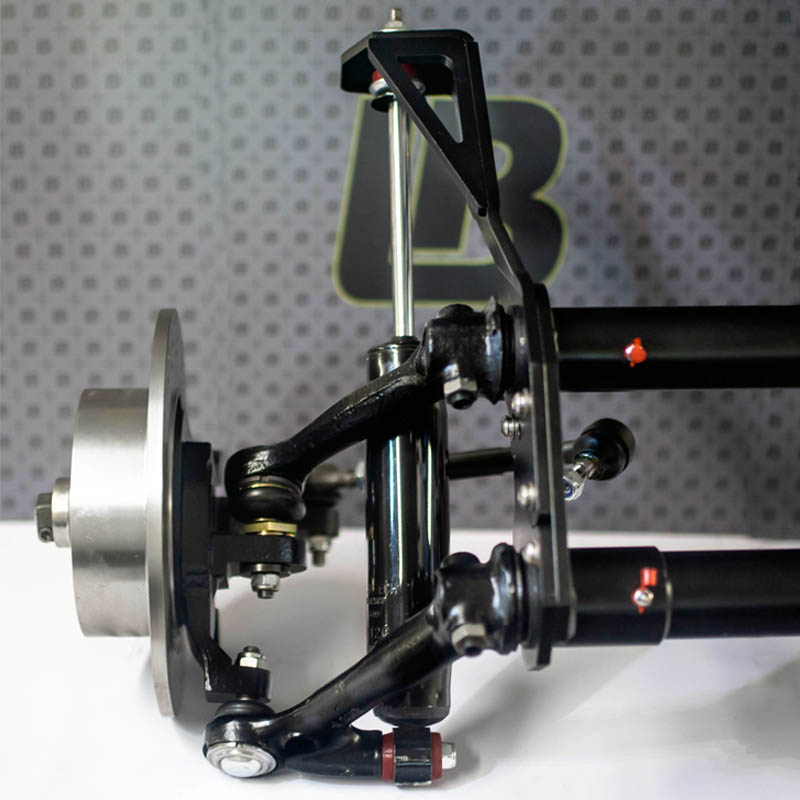
Our shock towers use carefully positioned bends to improve clearance and help maintain shock alignment on narrowed beams. This addresses a familiar problem with some home-built conversions, where the towers can foul surrounding components or leave the shocks at an undesirable angle. On ball-joint applications, our link-pin-style shock mounting arrangement replaces the traditional stud with a lower eyelet, creating additional room for shock movement and lower ride-height configurations.
Jawbreaker shock towers also include additional details for air-ride installations. A laser-cut outer gusset reinforces the bend, with robotic welding used for a consistent joint. A small upper slot provides a route for airline during assembly, while a substantial threaded upper mount replaces the simpler open-hole arrangements found on some older designs.


Replaceable Lower Beam Skid Ends
The modular Gen-II design lets you choose and replace the lower skid-end arrangement to suit your vehicle. If the underside sees regular contact with the road, the ends can be renewed without replacing the complete beam assembly.
The standard option follows an OE-style design. Alternatives include a tow-eye version, providing an accessible recovery attachment point, and an Air Lift 3H height-sensor-compatible version with additional mounting provisions. A combined height-sensor and tow-eye option is also available. Contact us if you would like help choosing the right configuration.
Accessories and Supporting Components
A beam is only one part of the front-end setup. These matching components help complete the installation and keep the geometry and serviceability in mind.
Torsion Leaves — Stock or Narrowed
To take the guesswork out of beam assembly, we offer professionally CNC-machined internal components for a range of model years and suspension setups.
We source OE-quality link-pin and ball-joint torsion leaf stacks from European suppliers. To suit the selected width, each stack is re-dimpled with a carbide taper cutter on our CNC mill, then trimmed, deburred and ground to aid installation.

View matching product →

View matching product →
The original torsion-leaf photo is a Split Screen Type 2 part (SKU 030020006), not a Beetle part. The links distinguish the applications.
Gen-II Heavy-Duty Through Rods
Traditional through-rod conversions use a long threaded bar running through the beam, secured at either end with nuts, washers and sometimes bearings.
If the end fasteners pull the trailing arms and seals towards the beam ends, the assembly can bind, producing stiff, notchy suspension movement.
Our approach uses a solid bar with a central locking pin and freely rotating ends. This keeps the rod laterally located while allowing the trailing arms to rotate, without the torsional action of a conventional leaf stack. It also allows the use of standard trailing-arm grease seals. Each rod is CNC-machined for consistent positioning.
For Gen-II we introduced dual locking features and changed the rod material from EN8 to EN24 steel, increasing the strength and rigidity of the assembly.
Adjustable Tie Rods and Track Rod Ends
Track rod length varies with beam width, vehicle year, steering position and the components fitted. We developed a length reference to simplify specification, and our Gen-II beam builder listings identify the track rods suited to the selected axle configuration. The rods are made in-house, with CNC-machined adjustment features and M14 × 1.5 threads finished on our lathe.
We also developed our own track rod ends, with lengths tailored to air-cooled VW applications rather than a broad range of unrelated vehicles. Both M10 and M12 variants include an Allen-head locking feature to help with adjustment and removal.


Grease Seals
Often overlooked, grease seals are an important part of fitting trailing arms to the beam. Our link-pin and ball-joint seals feature internal steel reinforcement and four-rib sealing faces. On compatible pre-1965 Limebug narrowed beams, we also use the later-style seal arrangement to improve fit and sealing.
As these are wear items, we recommend fitting a fresh set when rebuilding or refreshing a front axle.
Bolt-On Adjustable Steering Stop — LHD and RHD
Limebug concept. Inspired by the factory steering stop used on ball-joint front axles, our bolt-on design provides a way to limit steering movement without welding a stop to the beam. It attaches to the steering box clamp and acts on the pitman arm, limiting further track-rod travel. The upper fasteners let you fine-tune steering lock to suit your beam, wheels and arch clearance. The component is robot-welded for consistent construction and finished with a laser-cut Limebug logo.
Note: The Limebug steering stop is particularly useful alongside our Ultrarm, described below.

View matching product →

The Ultrarm Pitman Arm
Narrowing the axle should not mean accepting poor steering as part of the look.
Limebug concept.
Traditionally, fitting a substantially narrowed Type 1 front beam has often meant accepting reduced steering lock. Some builds retain the standard pitman arm and lose turning circle, while others use bolt-on extensions that can compromise steering feel.
In 2019, we set out to address that trade-off. After extensive measurement and development, we created the Ultrarm. Rather than simply extending the original arm, its mounting points are repositioned as well as lengthened. Designed primarily around 4″ narrowed beams, it can also improve the geometry of 6″ narrowed installations and directly replaces the original pitman arm.
By relocating the inner track-rod mounting points, the Ultrarm is designed to recover steering lock, improve the Ackermann relationship and provide a more progressive steering response than a simple extension.
The Ultrarm is manufactured from EN24 high-tensile alloy steel. In 2023, we added a large-spline option for earlier steering boxes, extending the stated application range to 1950–1979.
Fitment matters: these are examples of distinct drive-side, spline and tie-rod configurations. Match the steering box and model before ordering.
Gen-II Skid Plate
Our skid plates are available in several designs, balancing underbody protection with the different needs of lowered vehicles.
The original Gen-I Sawtooth introduced features including a reverse-lip guide, drainage provision and a low-profile shape intended to slide over uneven surfaces. It was designed around both early and later Type 1 framehead arrangements.
For Gen-II, we refined the appearance and practical details, including the leading-edge profile and the treatment of debris thrown up from the road. A strengthened front edge improves durability, while a larger adjuster access opening makes on-car beam adjustment easier.

View matching product →

View matching product →
Minesweeper Skid Plate
Limebug concept.
For builds where a low stance and a dramatic visual effect are part of the brief, the Minesweeper uses 14 replaceable threaded metal pellets that can produce sparks when they contact the road surface.
Pellets are offered in mild steel, stainless steel and titanium, each with different wear and spark characteristics. The removable design fits the Gen-II modular approach. Always consider ground clearance, road conditions and local road-use requirements before fitting or using contact components.
Replacement Steering Box
With age, wear or long periods out of use, original steering boxes can develop excessive play or seize. Where refurbishment is impractical or uneconomical, a replacement unit may be the more sensible option.
We supply ready-to-fit replacement boxes with the later 24 mm spline. If your vehicle currently uses the earlier 28 mm spline pitman arm, you will also need to change to the corresponding compatible arm; contact us for guidance.
Our steering box overhaul kit is another option, combining a reconditioned original steering box clamp/shackle with new installation hardware.
Add this to your beam build by clicking here.

View matching product →
View matching product →
Steering Damper
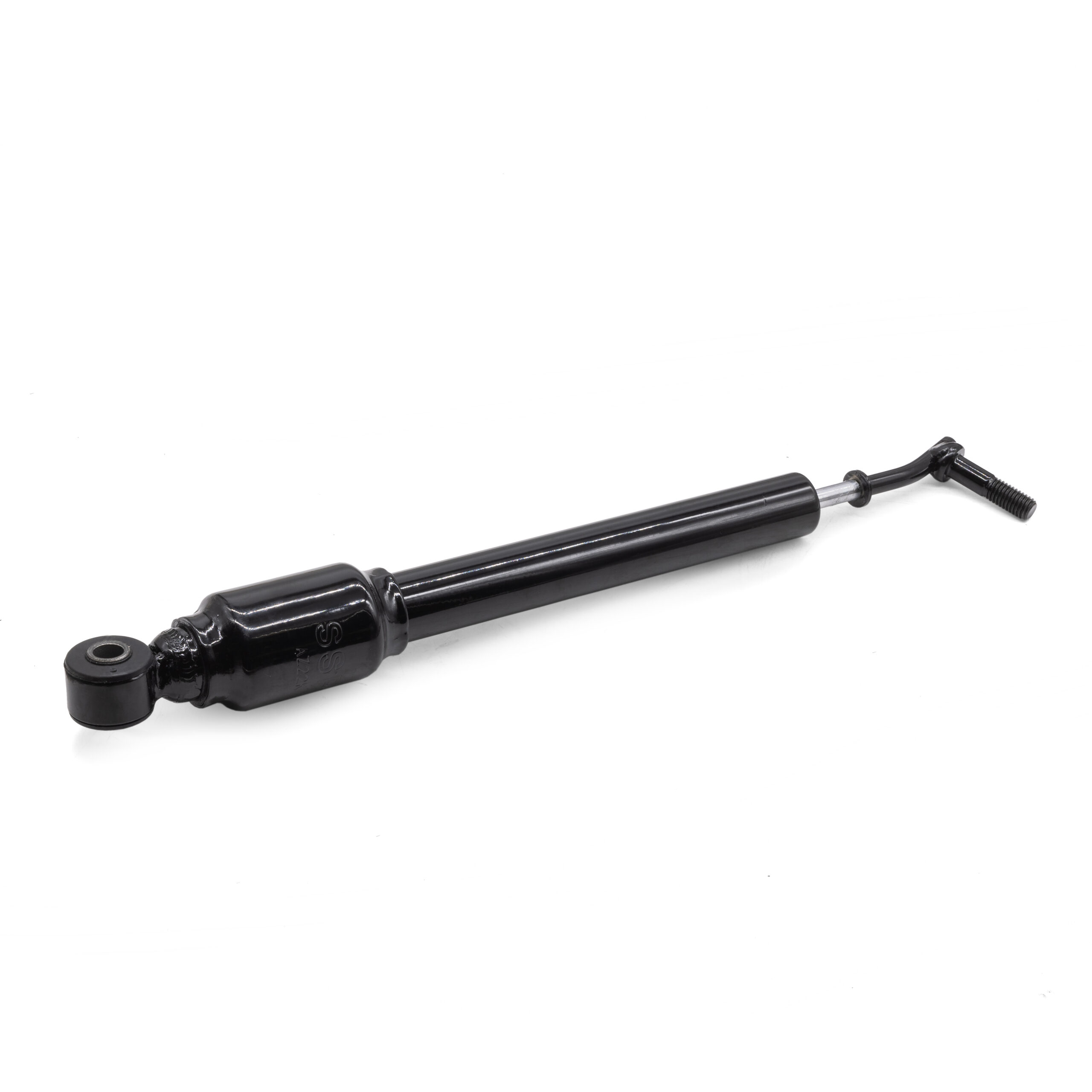
Steering dampers can weaken with age, reducing their ability to absorb bumps, vibration and sudden movement through the steering system. Replacing a tired damper can help restore a smoother, more controlled feel, especially on uneven roads.
With versions available for Beetle, Split Screen, Type 3 and Bay Window applications, a new steering damper is worth considering when fitting a front beam. Replacing it while the rest of the front end is being refreshed can avoid revisiting the job later.
Add to your build here.
Explore the Gen-II Beam Range
Choose the correct front axle for your vehicle year, suspension type, width and intended setup. Category links are used for ranges containing multiple SKUs; individual products can use the Stable SKU Links resolver.
Explore Titan static beams → Explore Jawbreaker air-ride beams →
Always confirm link-pin versus ball-joint fitment, right-/left-hand-drive requirements and the exact beam specification before ordering.