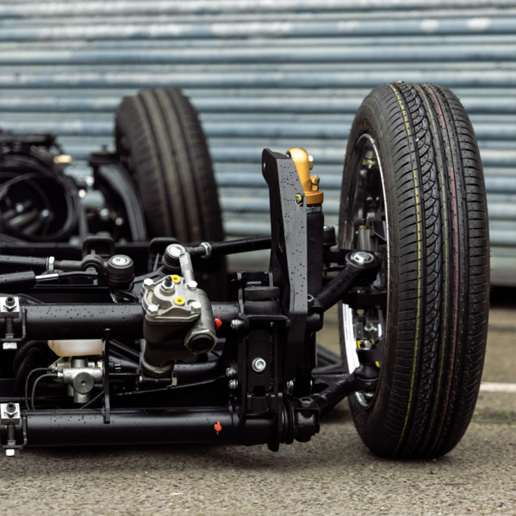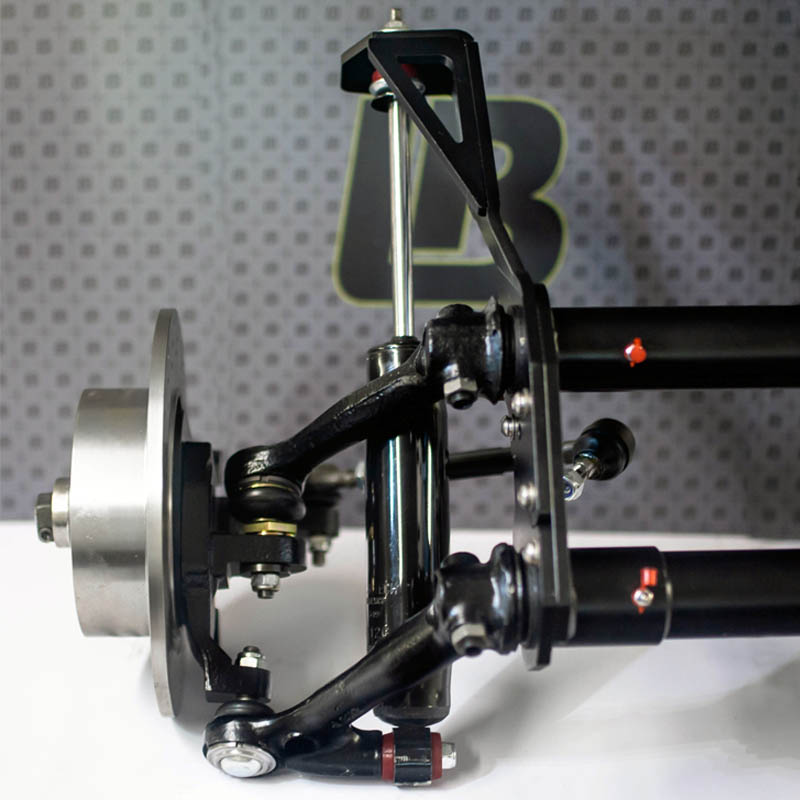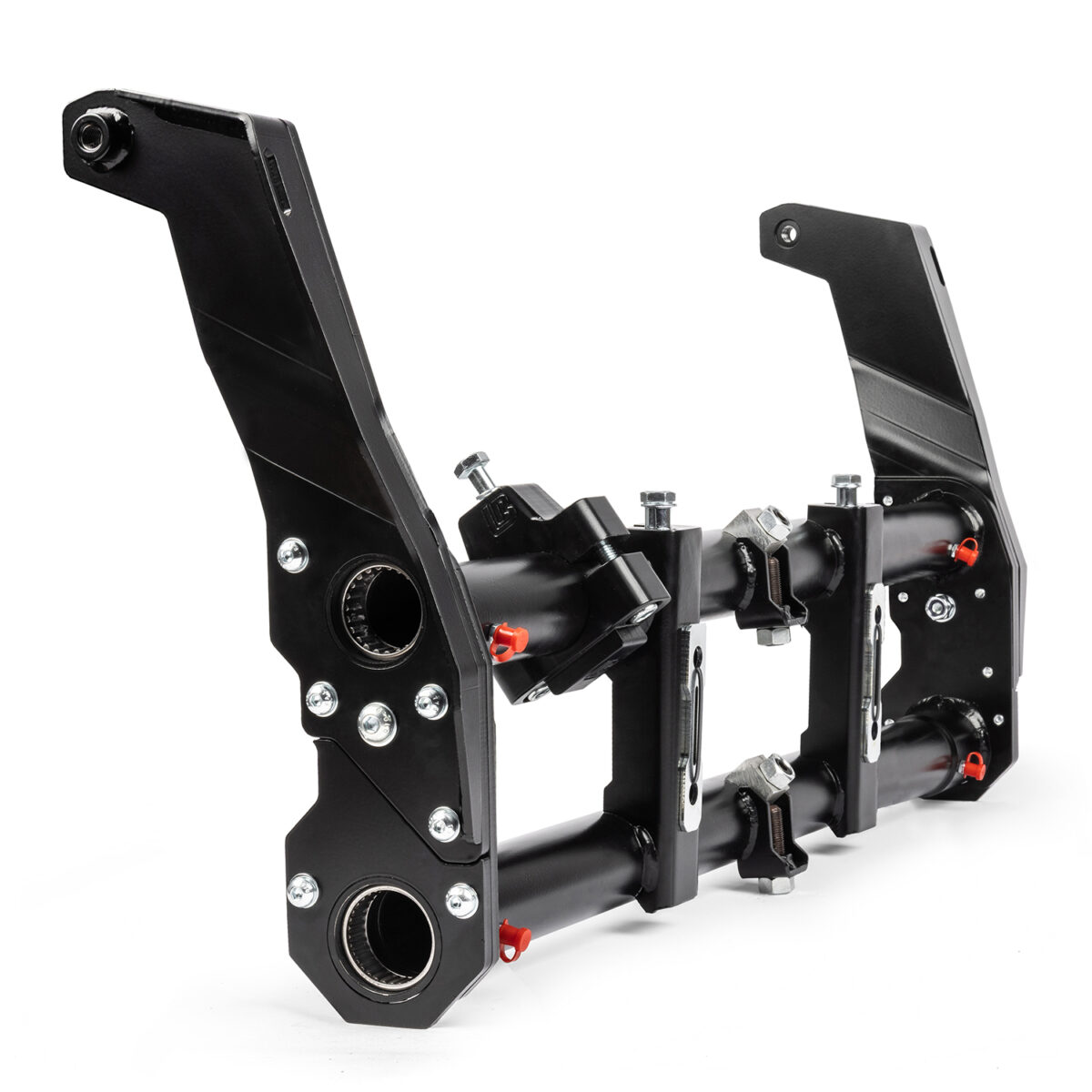

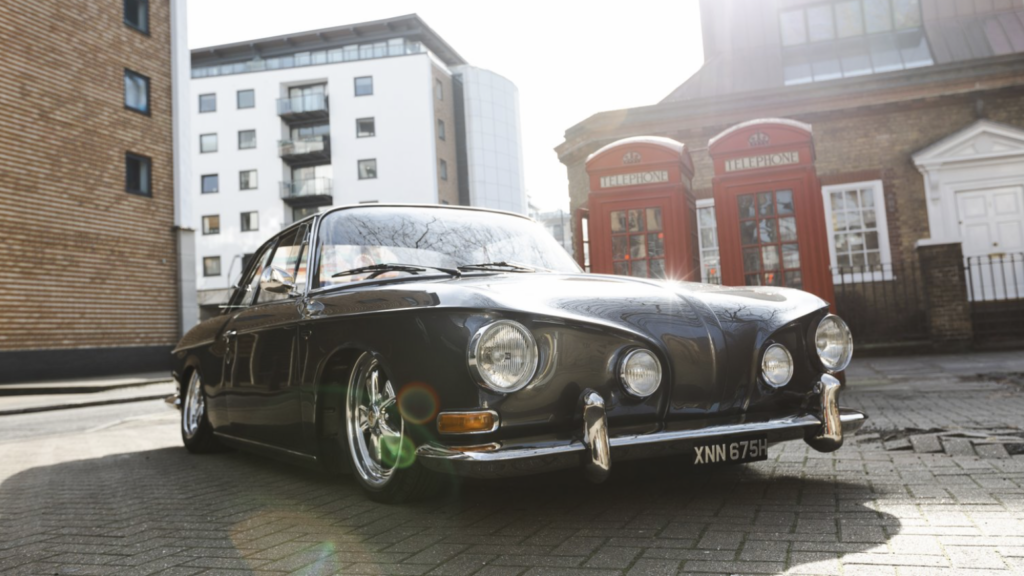
Dickies’ 69 Razor Edge puts a real-world finish on the Limebug catalogue, bringing together 1956-74 Type 3 / 34 4" Narrowed Deluxe Cantilever Swing Axle / IRS Air Ride Kit, Bolt on, 1962-73 Type 3 / 34 4" Narrowed Complete Front Air Ride Kit in one properly resolved setup.
THE RUSTY RAZOR REBORN
From a tired Type 34 nicknamed the Rusty Razor to one of Britain’s most admired Karmann Ghias. Dickie’s 1969 Razor Edge brought together metalwork by Deluxe Resto, paintwork by Spikes and a complete Limebug chassis overhaul—before earning a VolksWorld Top 20 award and a coveted Hayburner magazine cover.
Words by Limebug | Hall of Fame — Featured Builds
Rusty by name. Rather less rusty by nature.
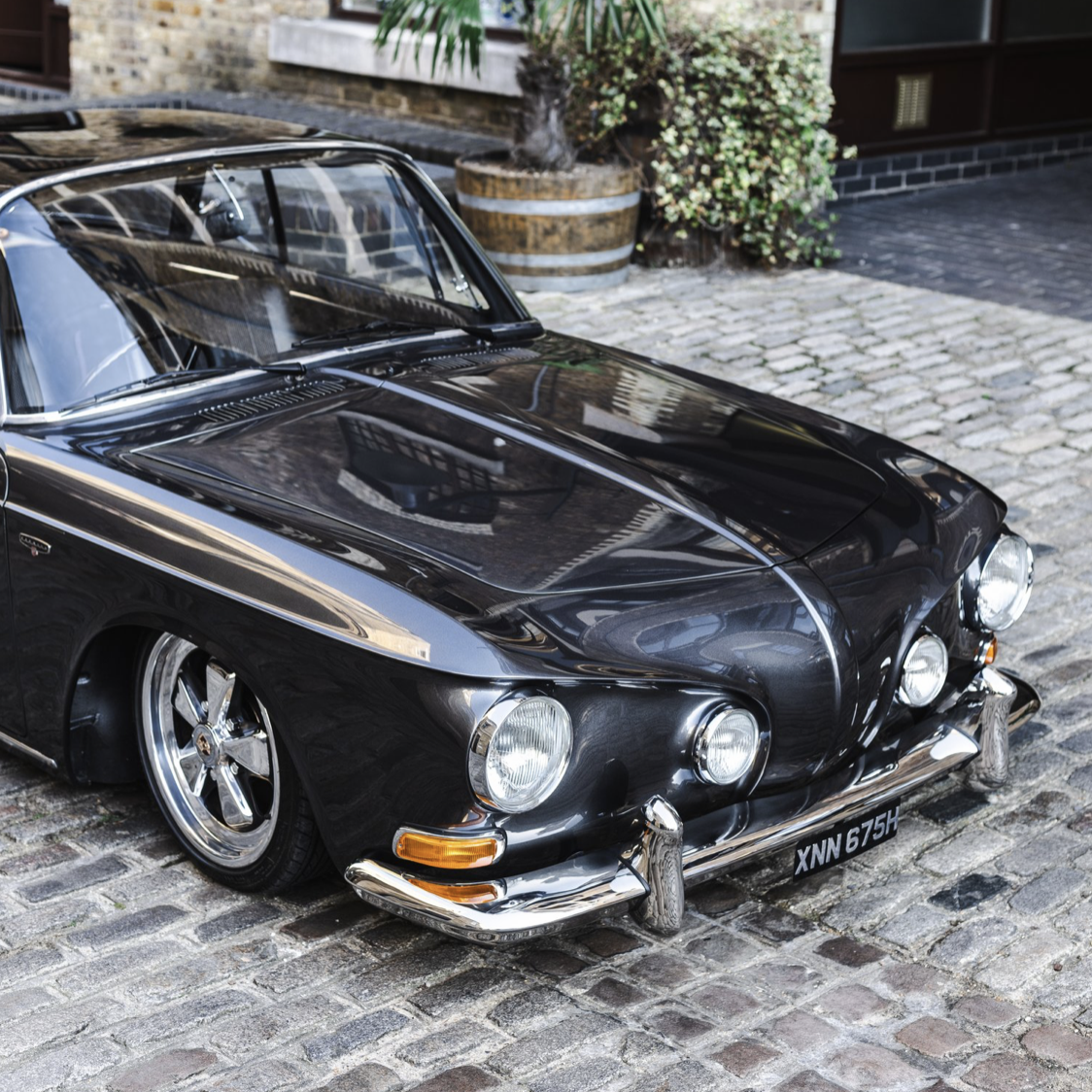
There’s something about a properly finished Type 34 Karmann Ghia that makes almost everything else in the car park look a little ordinary.
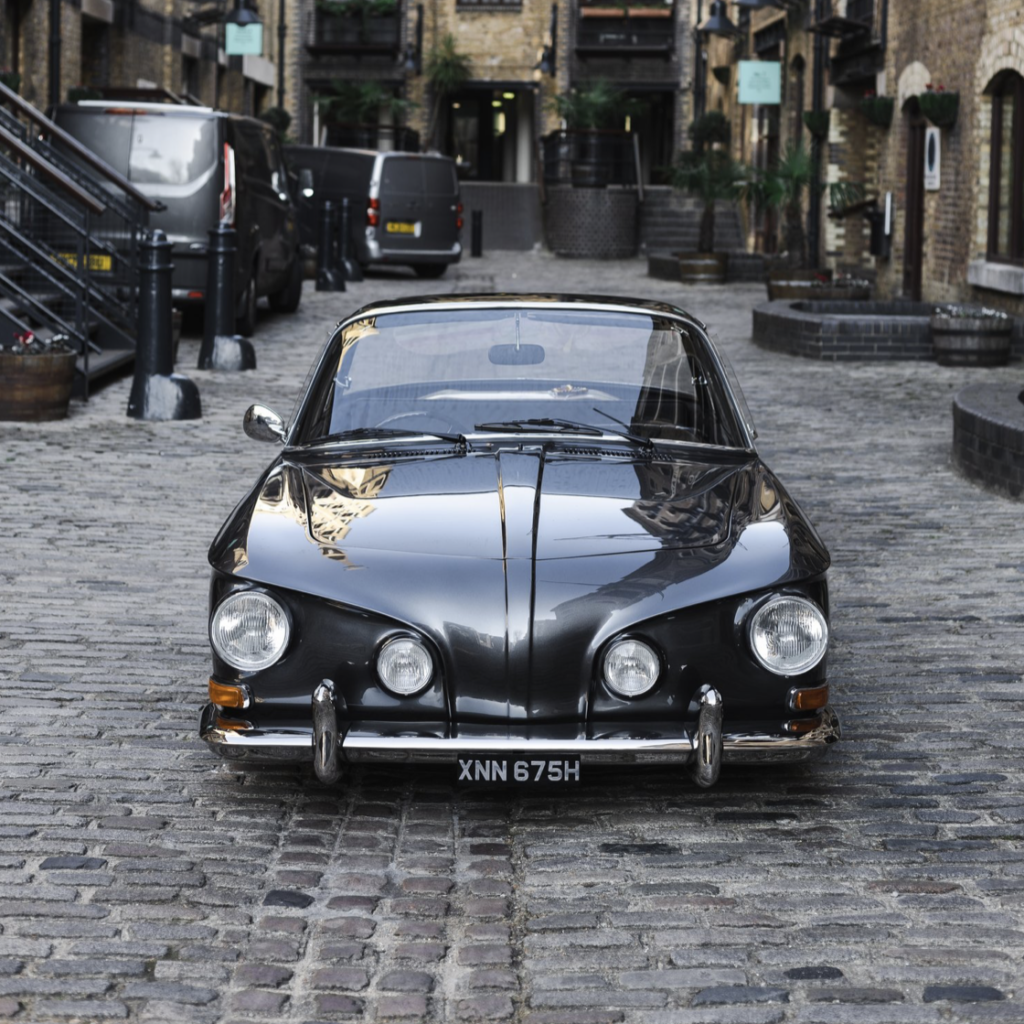
The angular roofline. The long, sharply defined wings. Those unmistakable front headlights.
It’s a car that already looks custom before anybody starts modifying it.
And in Dickie’s case, the modifications were going to be considerable.
Originally known as the Rusty Razor, his 1969 Type 34 was transformed through the combined work of three specialist businesses, each responsible for an important part of the finished vehicle.
Deluxe Resto handled the metalwork.
Spikes took care of the paintwork.
And at Limebug, we were given the chassis, suspension, brakes and mechanical improvements needed to bring the car together.
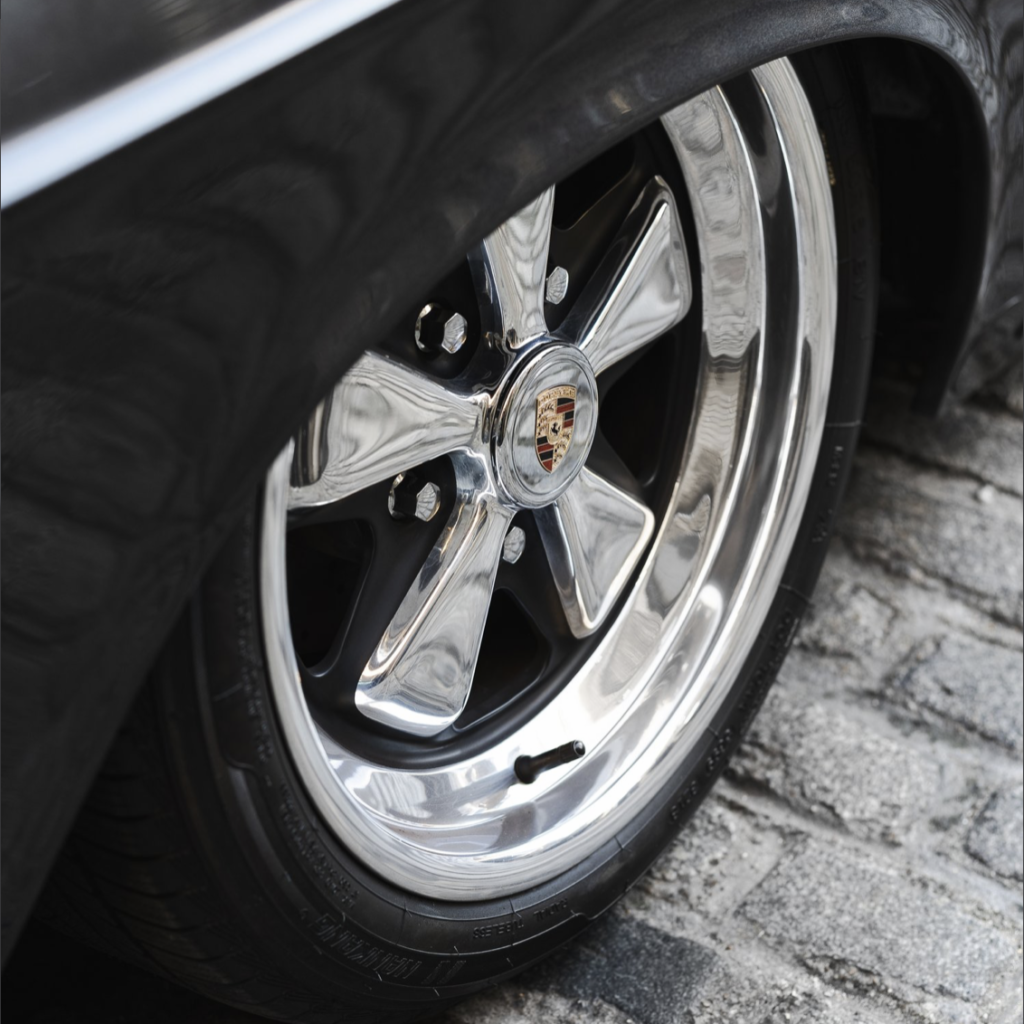
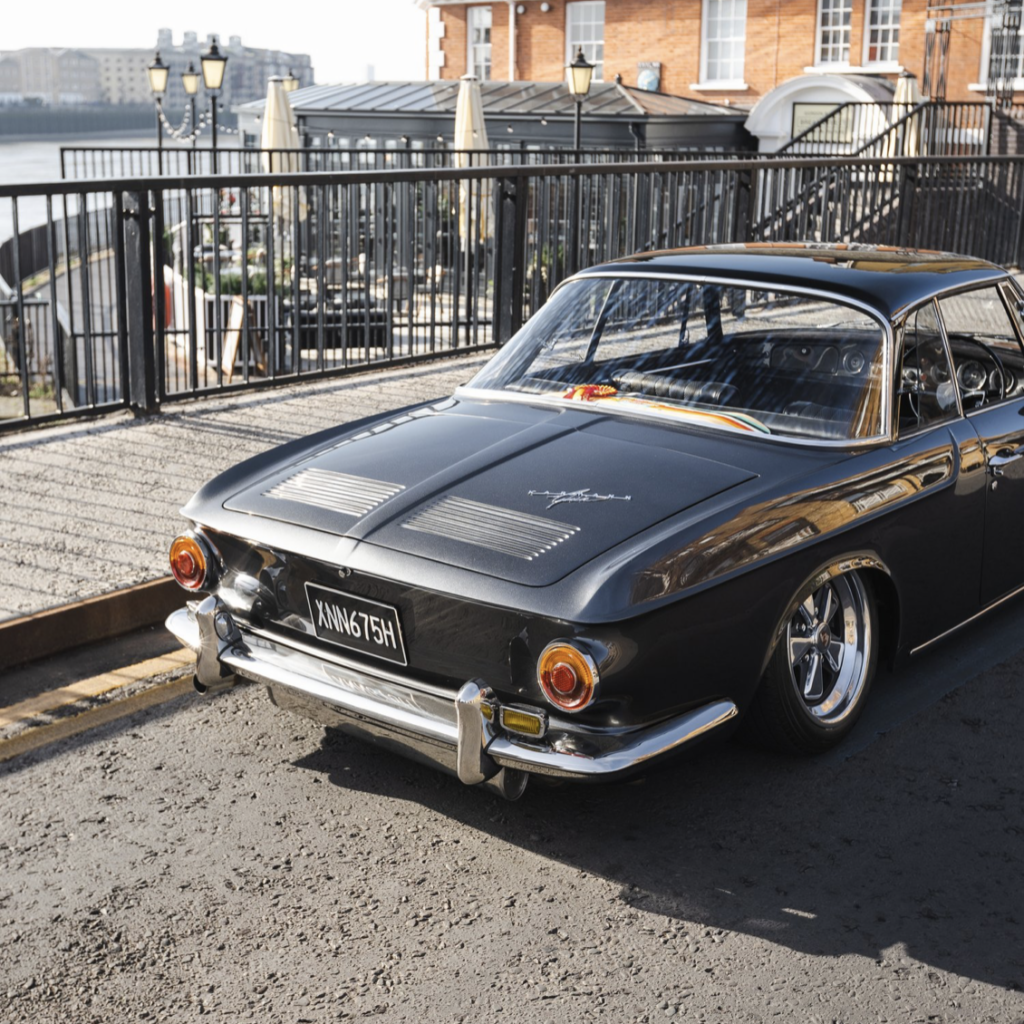
The result was an exceptionally clean Razor Edge, sitting low on 16-inch Fuchs and hiding a sophisticated air suspension installation beneath its restored bodywork.
It was built to turn heads, certainly.
But Dickie also wanted to drive it.
Around London, out on the road and to the occasional show without having to treat every change in road surface as a potential disaster.
As it turned out, the finished car would attract rather more attention than he’d probably expected.
The other Karmann Ghia
Volkswagen’s sharpest design
The Type 34 has always occupied an unusual position in Volkswagen history.
Introduced in 1961, it was the company’s more expensive and sophisticated alternative to the familiar Type 14 Karmann Ghia.
Underneath sat the Type 3 platform, while the bodywork took a completely different direction.
Gone were the rounded, flowing wings of the smaller Karmann Ghia.
Instead, the Type 34 featured sharp creases, distinctive front lighting and a much more architectural roofline.
It was ambitious, unusual and comparatively expensive.
Which helps explain why Volkswagen built far fewer of them than the familiar Beetle or Type 14.
Today, that rarity makes a good Razor Edge particularly special.
It also makes restoring one rather more complicated.
Body panels and original trim aren’t exactly waiting on every specialist’s shelf, and the unusual Type 3 chassis brings its own mechanical challenges.
But the proportions are extraordinary.
And when a Type 34 sits properly, there’s very little else in the Volkswagen world that looks quite like it.
The Rusty Razor
Dickie’s starting point
When Dickie acquired the car, it had already earned the nickname The Rusty Razor.
Not necessarily the most reassuring description when you’re considering an extensive restoration.
But the underlying car had the potential to become something special.
The plan was to transform it into a beautifully finished custom Type 34 without losing the features that made the original design so desirable.
Achieving that required much more than a set of wheels and a suspension conversion.
The shell needed proper attention.
The exterior had to be prepared and finished.
And the mechanical systems underneath needed to match the standard of the completed bodywork.
It was the sort of project where trying to rush one area would only undermine the effort invested everywhere else.
Deluxe Resto and the metalwork
The metalwork was entrusted to Deluxe Resto.
On a car like the Type 34, that stage is fundamental.
The crisp styling lines and broad panels are particularly unforgiving of poor preparation.
A rounded Beetle wing can disguise the occasional imperfection.
A sharply defined Razor Edge panel is much less accommodating.
The work carried out by Deluxe Resto established the foundation for the exterior restoration, allowing the body to progress towards the finish Dickie had in mind.
With the metalwork addressed, attention could turn to one of the most visually important parts of the project.
The paint.
The Spikes treatment
Making those lines count
The bodywork was painted by Spikes, bringing the exterior restoration to the standard needed for a serious show car.
It’s difficult to overstate how important paintwork is on a Type 34.
The body is full of strong horizontal lines and carefully defined transitions.
The relationship between the front wings, doors and rear quarters gives the car much of its visual character.
And the roofline is a design feature in its own right.
Get the finish right, and those details become extraordinary.
Get it wrong, and there’s nowhere for the imperfections to hide.
Spikes’ work helped transform the formerly Rusty Razor into the finished vehicle that would later attract so much attention at VolksWorld and in Hayburner.
But there was still a substantial amount of engineering required underneath.
Which is where Limebug came in.
A chassis arrives at Limebug
Shell off. Time to get underneath.
Once the shell had been separated, Dickie’s chassis arrived at Limebug with the engine and gearbox still attached.
Our task was to develop and install the mechanical specification.
And the brief was fairly clear.
Dickie wanted the Razor sitting exceptionally low, but he didn’t want a vehicle that was hopelessly impractical once it left the showground.
The car needed to be capable of cruising around London, travelling to events and coping with the realities of British roads.
So we planned the chassis around our Deluxe Type 3/34 air suspension system, together with upgraded braking and a longer-ratio gearbox.
The finished installation would combine adjustable ride height with the sort of mechanical improvements that made the car more enjoyable to use.
Rather than simply lower the existing suspension and hope for the best.
Four inches narrower
The Type 3 Jawbreaker
At the front, we installed our 4-inch narrowed Type 3 Jawbreaker conversion beam.
The reduction in track width allowed the wheels to sit further beneath the Razor’s distinctive front wings.
That was particularly important given the low stance Dickie wanted.
The beam was paired with Titan through rods and MOA430 front air shocks, creating an adjustable front suspension arrangement.
The Type 3 platform requires a different approach from the conventional Beetle front axle, and the conversion allowed us to develop the suspension around the required wheel positioning and ride height.
The finished setup gave the Razor the close-fitting front stance that would become one of its defining visual features.
MOA430 air shocks
The MOA430 shocks formed the adjustable element of the front suspension.
Their role was to provide the required height movement while working with the narrowed beam and associated components.
That adjustability was essential to Dickie’s intended use.
A car sitting low enough to make the most of the Type 34’s beautiful proportions is one thing.
Being able to raise it when the road becomes less accommodating is quite another.
And for a vehicle intended to spend time on London’s roads, that second ability was particularly useful.
Getting the rear down
The cantilever approach
At the rear, the car received Limebug’s swing-axle cantilever air suspension system, paired with 2-inch dropped rear air spring plates.
The cantilever system provided adjustable rear ride height, allowing the back of the car to work with the narrowed front suspension.
On the Type 34, the relationship between front and rear height makes an enormous difference to the overall appearance.
With its long body and sharply defined lower panels, even relatively modest changes in stance can transform the silhouette.
For Dickie’s Razor, we wanted that familiar low, elongated appearance while retaining practical adjustment.
The cantilever arrangement provided the rear suspension solution to complete the Deluxe package.
Air Lift 3P. Two compressors. One tidy installation.
Managing the suspension
With the front and rear suspension installed, attention turned to air management.
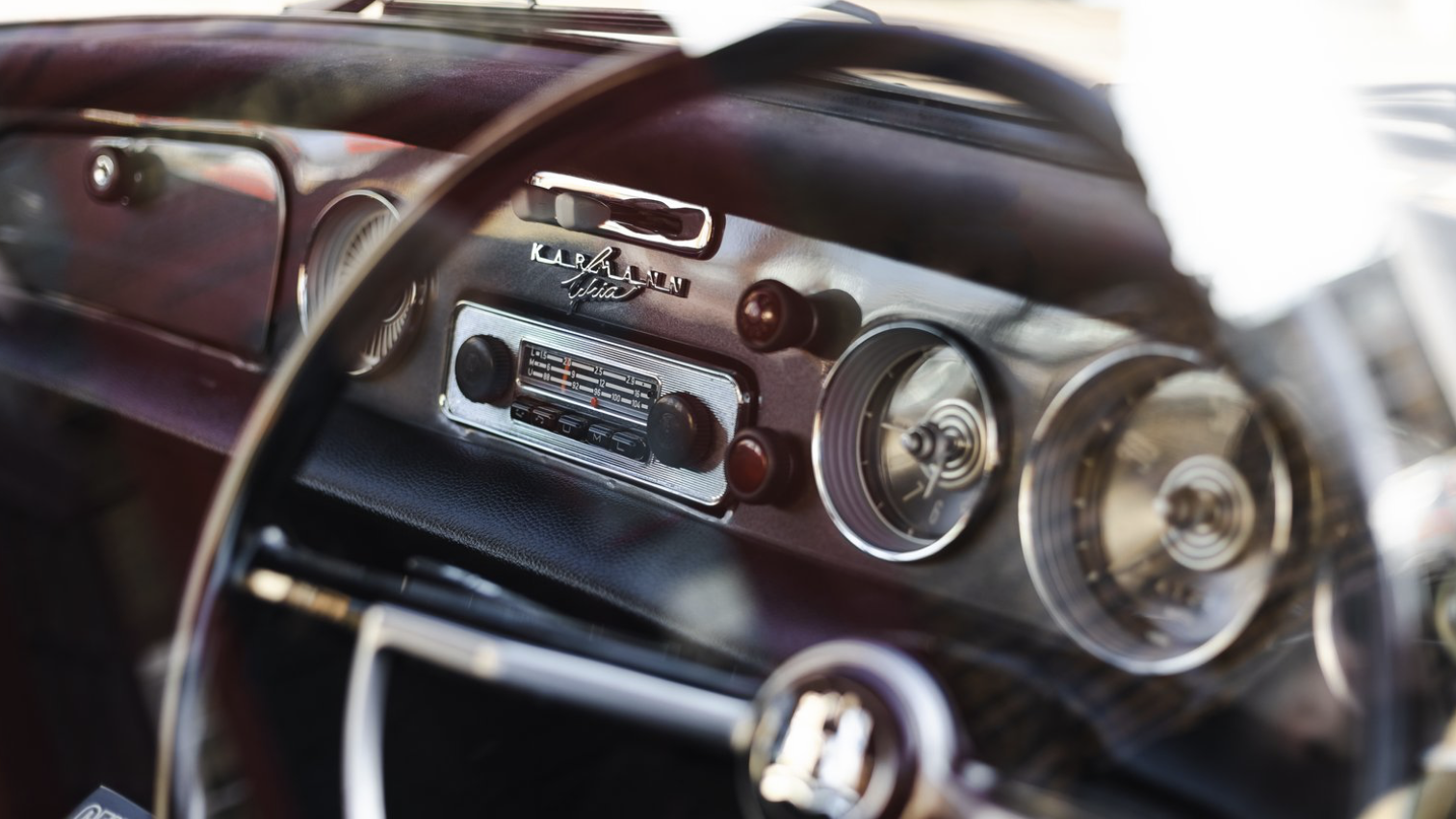
Dickie chose Air Lift 3P, providing electronic pressure-based control of the suspension.
To support the system, we fitted two chrome Viair 444C compressors.
The twin-compressor setup provided the air supply needed to replenish the receiver efficiently during operation.
But there was another detail we particularly liked.
Rather than scatter the management hardware around the vehicle, we used one of our Universal Air Management Cradles.
The passenger footwell installation
The cradle was mounted in the passenger footwell, bringing the principal management components together in one organised assembly.
It’s a straightforward idea, but an effective one.
The tank, compressors and manifold are easier to package neatly when the installation has been considered as a complete unit.
Our universal cradle is designed to mount onto suitable flat surfaces, allowing different vehicles to accommodate the system without requiring an entirely bespoke mounting solution every time.
For the Razor, it meant a clean, purposeful installation that complemented the rest of the chassis work.
And because the body had been removed during the restoration, we had an excellent opportunity to plan the system properly before final assembly.
The Freeway Flyer
Because the car was meant to be driven
With the suspension specification established, we turned to the drivetrain.
Dickie wanted to use the Razor on the road, not simply admire it in the garage.
And for longer journeys, the original gearbox ratios weren’t necessarily ideal.
So we supplied and fitted a Freeway Flyer long-ratio gearbox.
The intention was to make cruising at higher road speeds more relaxed, reducing engine speed in the taller cruising ratio compared with a shorter-geared arrangement.
It’s the sort of upgrade that isn’t immediately visible in photographs.
But it makes considerably more sense once a car starts covering real miles.
Particularly when those miles include journeys out of London to Volkswagen events.
Giving the engine some attention
The engine also received a light refurbishment across its principal components.
Rather than introduce an entirely new, highly modified engine specification, the work focused on improving the mechanical condition of the existing setup.
It suited the wider approach to the car.
The Razor already had an extraordinary body shape and an elaborate suspension system.
It didn’t need every mechanical element turned into a completely separate project.
Sometimes the most valuable improvements are the ones that make an old Volkswagen nicer to use.
Wilwoods at all four corners
Stopping the Razor
The final major chassis upgrade was the braking system.
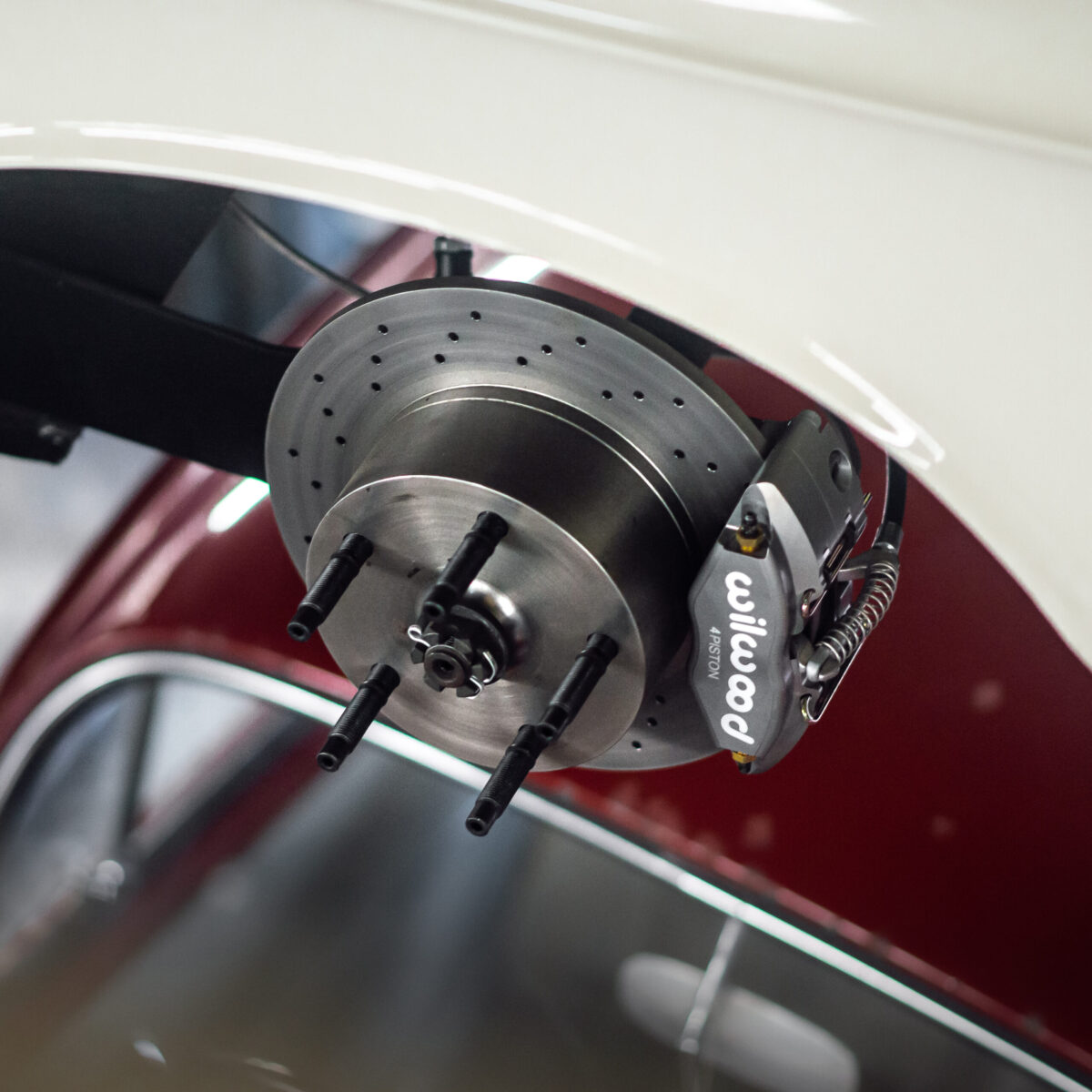
Dickie’s car received a complete Limebug Titan Wilwood disc brake conversion at both the front and rear.
The arrangement used the Porsche 5×130 wheel bolt pattern, matching the Fuchs wheel specification.
It’s an important detail because the brake conversion was designed as part of the complete vehicle rather than simply as an isolated upgrade.
Four-wheel disc brakes provided a substantial departure from the original Type 34 braking arrangement.
And they were a sensible addition to a car that had already received a thoroughly revised chassis and drivetrain.
Once assembled, the finished suspension and braking hardware provided a much more contemporary mechanical foundation beneath the restored 1969 bodywork.
It was a satisfying transformation.
The Razor still looked unmistakably like a classic Karmann Ghia.
But the specification underneath was considerably different from the one Volkswagen had supplied.
Sixteen-inch Fuchs
The finishing touch
Dickie’s choice of wheels was a particularly good one.
16-inch Fuchs complement the Type 34’s angular styling without making the car look overly modern.
The familiar five-spoke design has a long association with classic Porsche, and it works beautifully beneath the Razor’s sharply sculpted wings.
Combined with the narrowed front beam and adjustable suspension, the wheels sit neatly within the bodywork.
They also complement the 5×130 Wilwood braking conversion.
The result is a car with a very clear visual identity.
Classic German influences.
Beautifully restored bodywork.
And a stance that makes the most of the Type 34’s distinctive proportions.
There’s nothing excessively complicated about the wheel design.
It simply suits the car.
And sometimes that’s the most important part.
VolksWorld — The Top 20
From workshop project to show car
With the chassis work completed and the restored body reunited with its mechanical components, Dickie’s Razor was finally ready to be seen.
The finished car attracted attention at VolksWorld, where its combination of exceptional bodywork, carefully considered stance and unusual Type 34 styling made an impression.
The response was enthusiastic.
Limebug’s earlier feature even recorded somebody describing it as the coolest Razor they’d ever seen.
That’s quite a compliment given the standard of modified Type 34s that have appeared on the Volkswagen show scene.
The judges were impressed too.
Dickie’s Razor earned a place in the VolksWorld Top 20.
An excellent result for a project that had begun with the rather less flattering nickname Rusty Razor.
And one that recognised the quality of the finished vehicle as a whole.
Three workshops. One finished car.
The result was also a testament to the specialist work involved.
Deluxe Resto’s metalwork.
Spikes’ paintwork.
And the complete chassis transformation carried out by Limebug.
Different disciplines, all contributing to one finished vehicle.
It’s exactly the sort of collaborative project we enjoy being involved in.
Particularly when the outcome earns recognition at one of the UK’s best-known Volkswagen events.
From VolksWorld to Hayburner
The cover car
The VolksWorld recognition wasn’t the end of the story.
Dickie’s Razor went on to appear on the cover of Hayburner Magazine.
For a classic Volkswagen owner, that’s a particularly satisfying achievement.
Hayburner has long celebrated the character, individuality and enthusiasm behind the air-cooled scene.
A Type 34 with such a strong mixture of restoration quality, styling and mechanical engineering makes a natural subject.
And the Razor’s journey from a tired project to a magazine cover is a story that deserves telling.
The car had become something considerably more than a rare Volkswagen with an impressive stance.
It was a complete, carefully developed build that had earned the attention of enthusiasts and specialists alike.
The complete build specification
Vehicle and history
- 1969 Volkswagen Type 34 Karmann Ghia Razor Edge
- Owner: Dickie
- Formerly nicknamed the Rusty Razor
- Built through a collaboration between specialist workshops
- Intended for road use, London cruising and show appearances
Restoration and finishing
- Metalwork — Deluxe Resto
- Paintwork — Spikes
- Chassis and mechanical work — Limebug
Front suspension
- Limebug 4-inch narrowed Type 3 Jawbreaker beam
- Limebug Titan through rods
- MOA430 front air shocks
- Deluxe Type 3/34 air suspension installation
Rear suspension
- Limebug swing-axle cantilever rear air suspension
- 2-inch dropped rear air spring plates
Air management
- Air Lift 3P electronic management
- Dual chrome Viair 444C compressors
- Limebug Universal Air Management Cradle
- Passenger footwell-mounted installation
Transmission and mechanical
- Freeway Flyer long-ratio gearbox
- Light engine refurbishment
Braking
- Limebug Titan Wilwood front disc brake conversion
- Limebug Titan Wilwood rear disc brake conversion
- Porsche 5×130 wheel bolt pattern
Wheels
- 16-inch Porsche-style Fuchs
Awards and media
- VolksWorld — Top 20
- Hayburner Magazine — Cover feature
The Rusty Razor, no more.
There’s something satisfying about a restoration that changes a car’s reputation completely.
When Dickie first acquired his Type 34, it was known as the Rusty Razor.
A project with potential, but plenty of work ahead.
After Deluxe Resto had addressed the metalwork, Spikes had completed the exterior and we’d finished the chassis at Limebug, it was a very different Volkswagen.
The original Type 34 shape remained.
But the stance, mechanical specification and overall presentation had been transformed.
It had the clean lines of a properly restored classic, the adjustability of a modern air suspension system and the braking and gearing upgrades needed to make it more than a static display.
Then came the VolksWorld Top 20.
And the Hayburner cover.
Two achievements that helped establish Dickie’s Razor as one of the more memorable Type 34 builds on the British air-cooled scene.
From a rusty project to a magazine cover.
Same sharp lines. A completely different Razor.