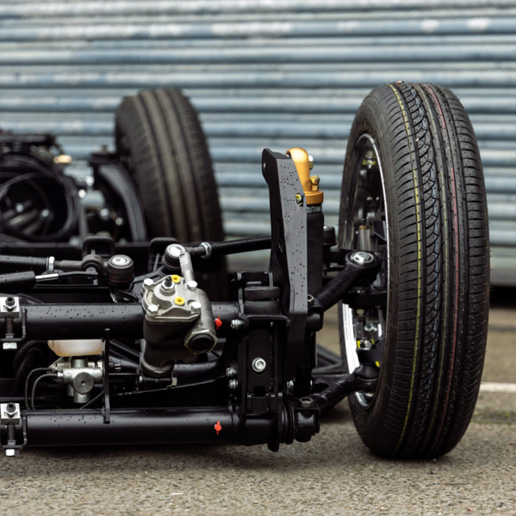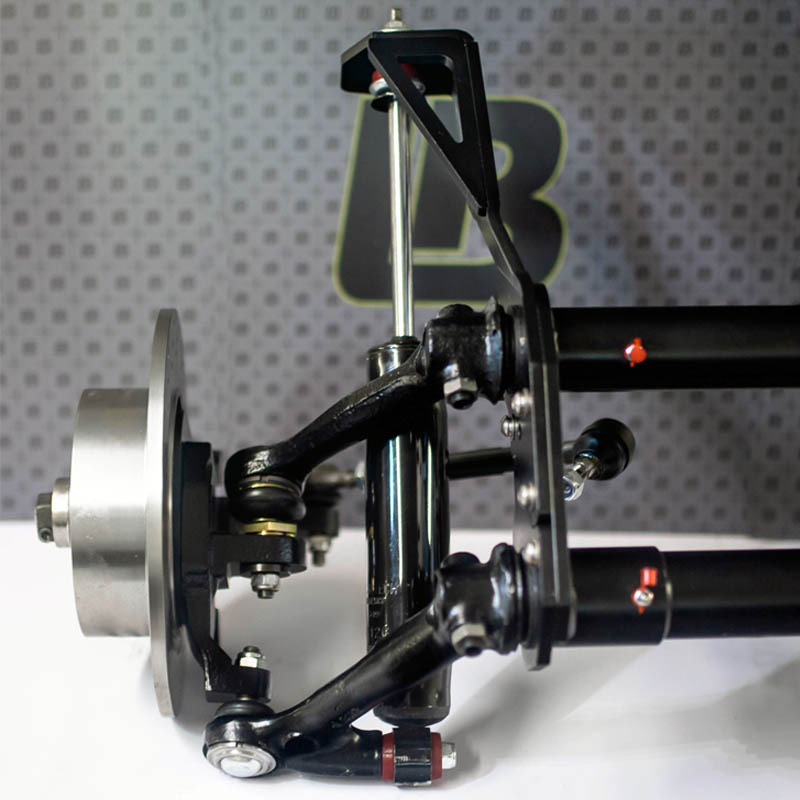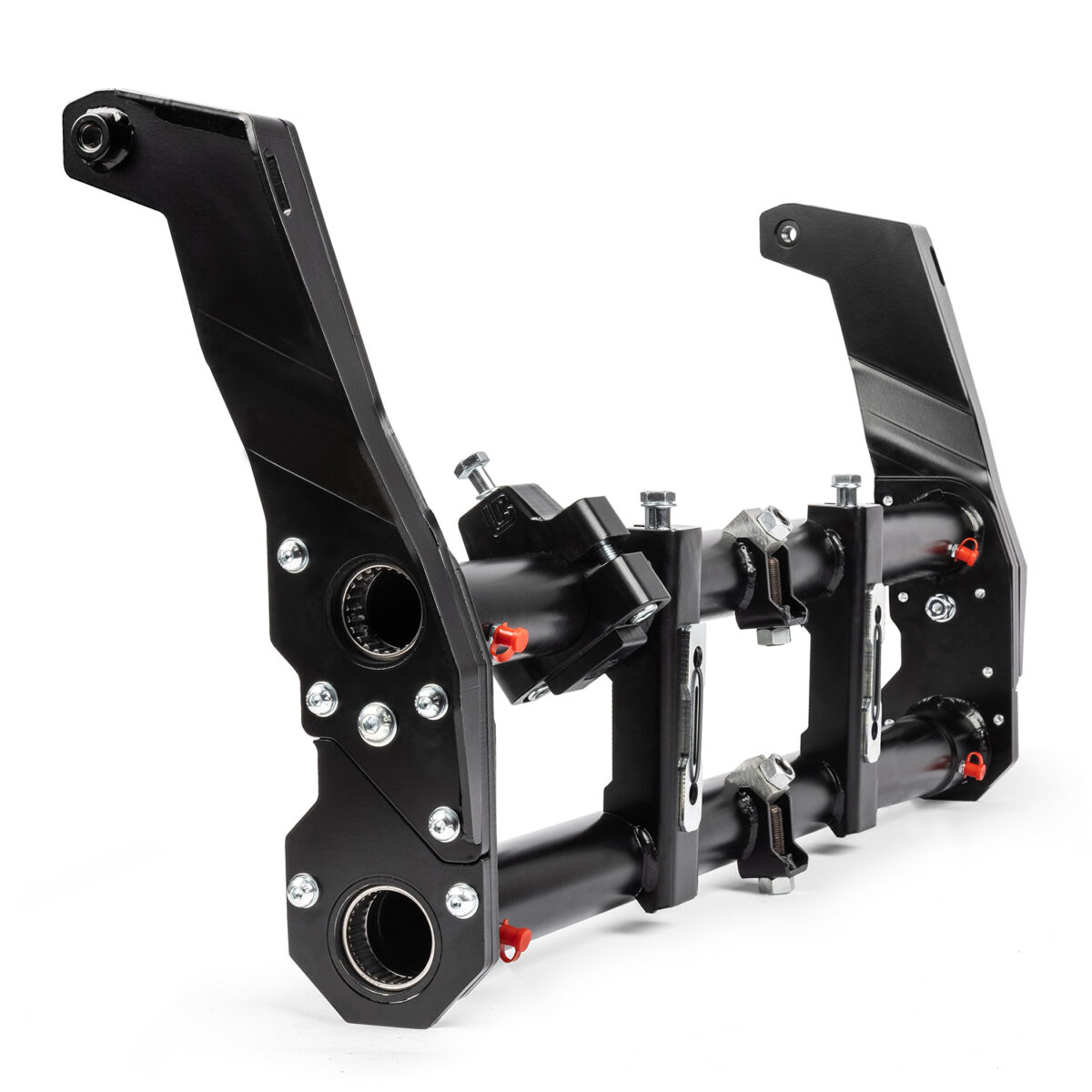

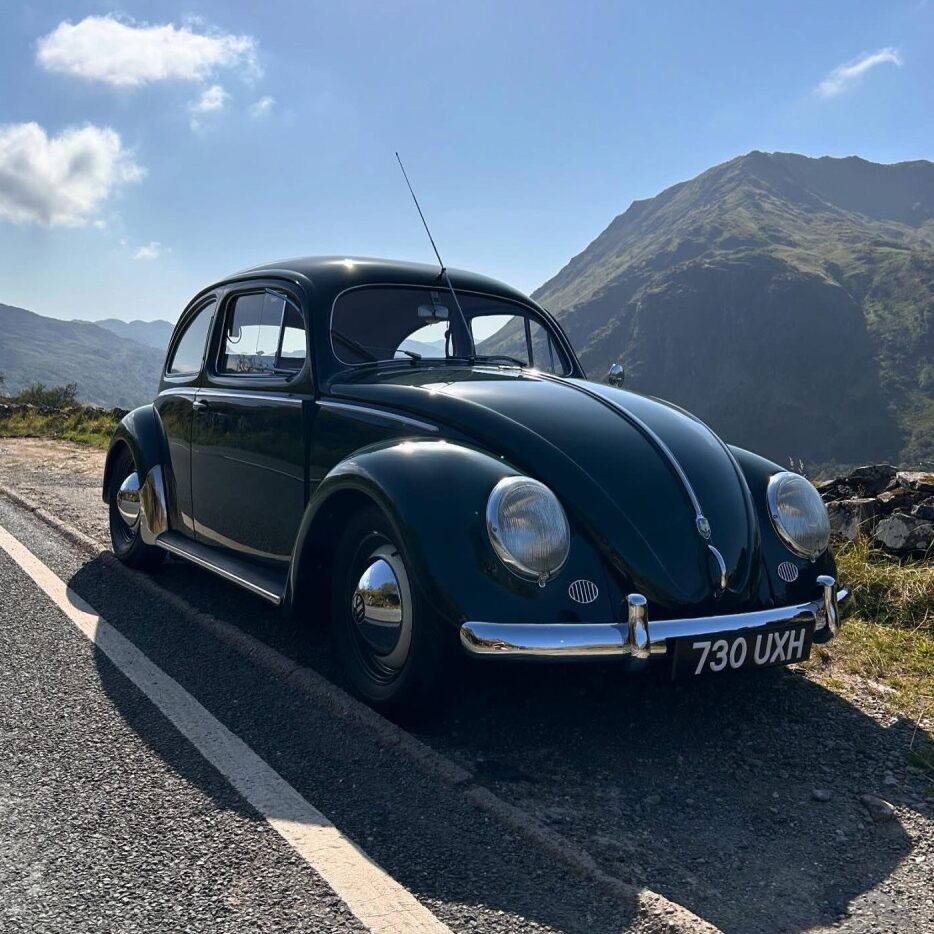
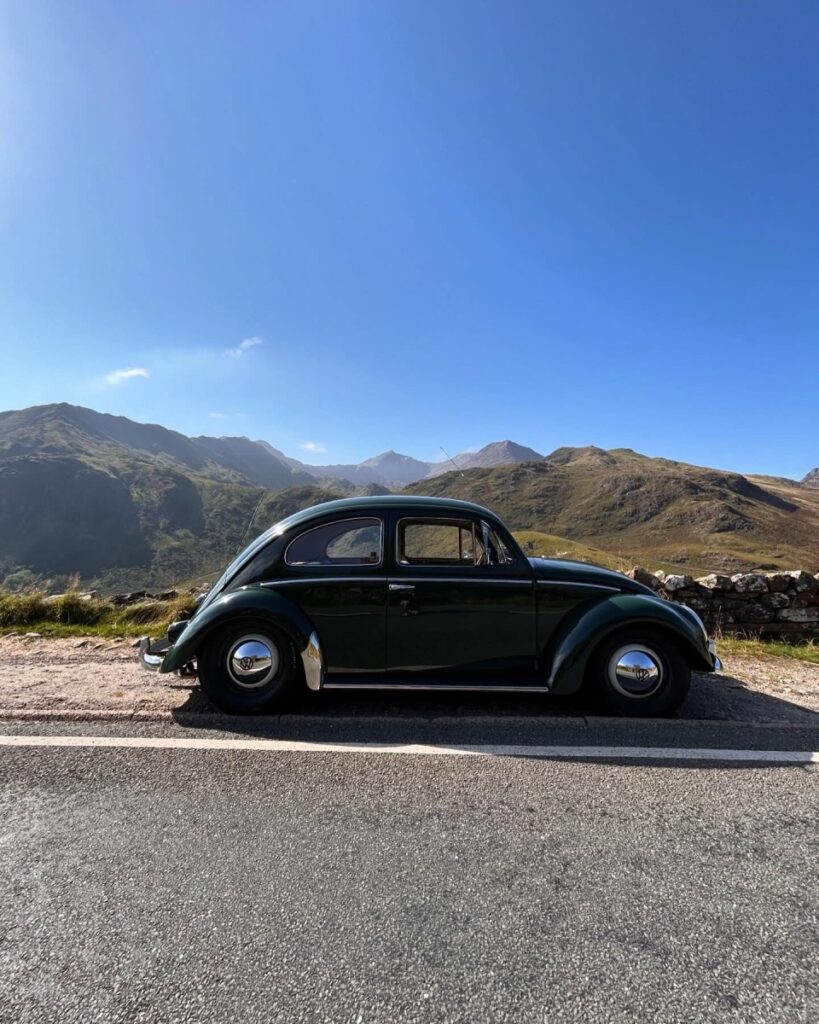
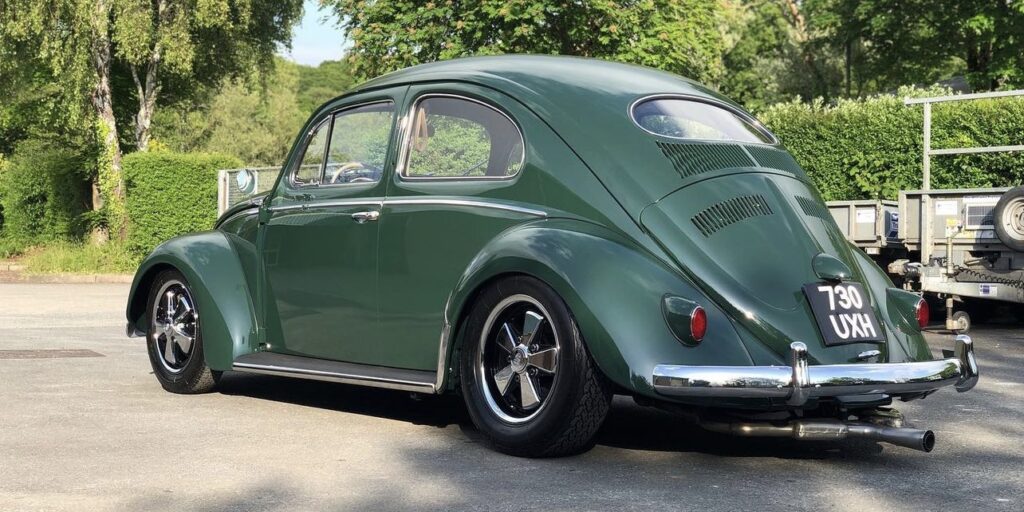
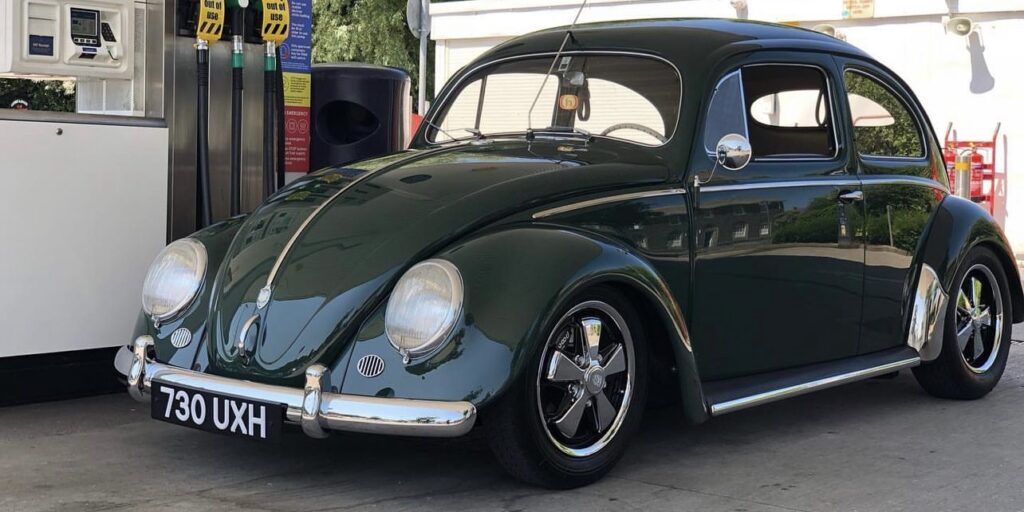
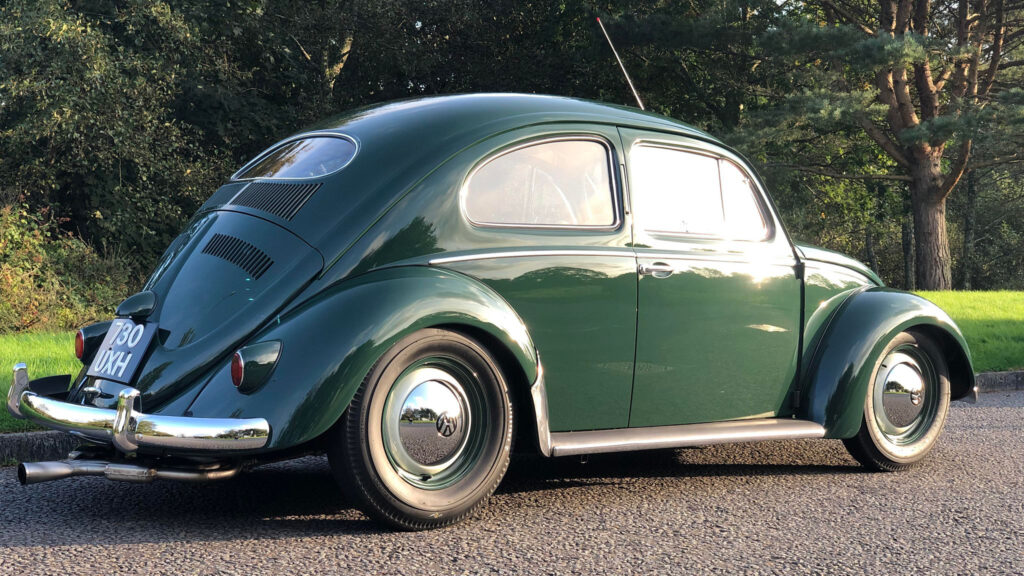
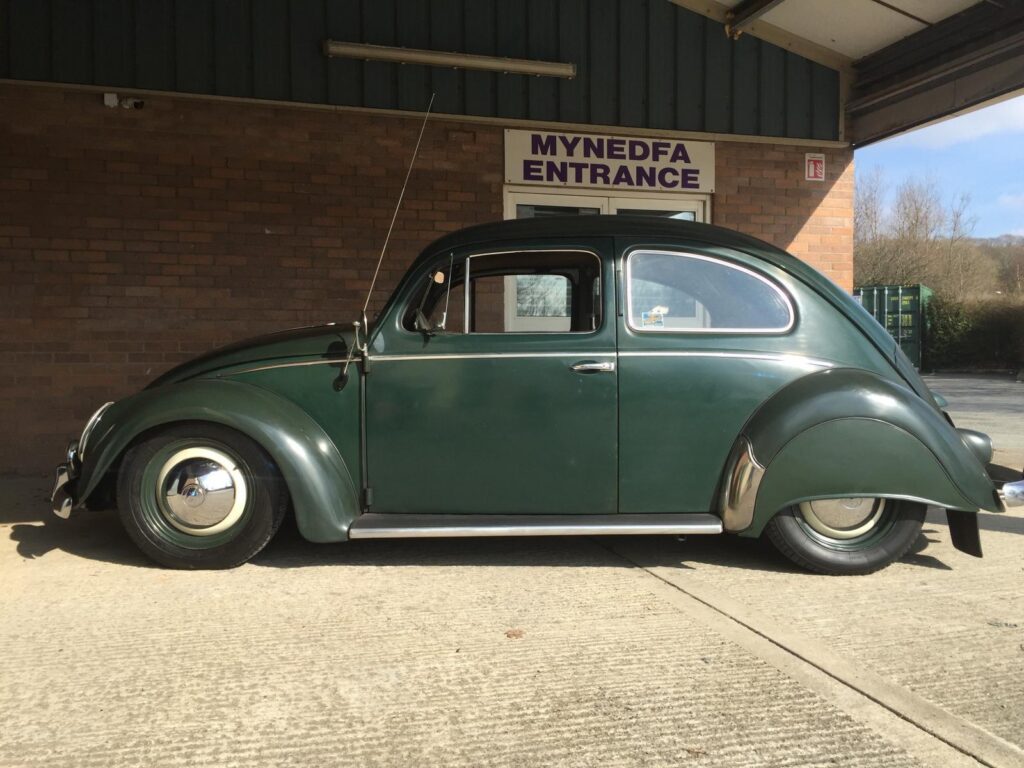
Lyndon C’ 1956 Beetle puts a real-world finish on the Limebug catalogue, bringing together 1950-65 Beetle / Ghia Link Pin 6" Ultra Narrowed Elite Series Titan Front Beam Axle, 4.5" x 15" Chrome / Gloss Black Correctly Detailed Fuch 5x130 ET45, 6" x 15" Chrome / Gloss Black Correctly Detailed Fuch 5x130 ET35 in one properly resolved setup.
THE ART OF RESTRAINT
A Jungle Green Oval Window Beetle, a succession of carefully considered transformations and a starring role in the development of Limebug’s Elite Series suspension. Lyndon Creamer’s Volkswagen proves that getting the details right can matter far more than making the biggest statement.
Words by Limebug | Hall of Fame — Featured Builds
Some people just don’t know when to stop.
And in Lyndon Creamer’s case, that’s probably a very good thing.
Anybody familiar with the British air-cooled Volkswagen scene will know that Lyndon has a rather particular approach to building cars.
Details matter. Originality matters. Engineering matters.
And if something isn’t quite right, chances are it won’t stay that way for very long.
His extraordinary 1964 Cal-Look Beetle, better known as FUBAR, had already established his reputation for exhaustive restorations and extraordinary attention to detail.
But when it came to his Jungle Green Oval Window Beetle, the approach was rather different.
Instead of another all-out custom show car, Lyndon wanted something that retained the charm of an early Volkswagen while offering the sort of road manners, braking performance and usability that would make it a pleasure to drive.
Over the years, that vision has evolved through several different versions of the same car.
Original styling. Porsche-inspired Fuchs wheels. Narrowed suspension. Factory-style steel wheels and whitewalls. And eventually, a sympathetic restoration that brought the whole concept together.
Along the way, the Oval also became an important test bed for a new generation of Limebug suspension components.
The man behind the Oval
Lyndon Creamer. A familiar name for a reason.
Lyndon is no stranger to taking a Volkswagen considerably further than most people would consider reasonable.
His 1964 Beetle, FUBAR, is a particularly good example.
Originally purchased in 1995 for just £500, the car served as everyday transport for several years before Lyndon embarked on an increasingly ambitious programme of restoration and modification.
It made its VolksWorld Show debut in 2003, winning Best in Show at Bug Jam later that year.
Then came a decision that would eventually prove difficult to live with.
He sold it.
In 2005, FUBAR moved on to a new owner, beginning a period in which the Beetle passed through several hands and underwent further changes.
But Lyndon never quite forgot about it.
By 2013, he had managed to track the car down and buy it back.
What followed was another extraordinary rebuilding programme, culminating in its return to the VolksWorld Show in 2018.
The same year, FUBAR won the Meguiar’s Club Showcase at the NEC Classic Motor Show.
That sort of history tells you quite a lot about the person responsible.
Lyndon doesn’t seem particularly interested in doing things by halves.
This time, something a little different.
The Jungle Green Oval represented another side of his enthusiasm for early Volkswagens.
Where FUBAR celebrated the engineering and visual extremes of the Cal-Look movement, the Oval was intended to preserve much more of the original car’s personality.
It wasn’t about creating the most radical thing in the show hall.
It was about making an early Beetle feel right.
And sometimes, that can be an even more demanding undertaking.
An Oval worth preserving
Jungle Green. A proper 1950s Volkswagen.
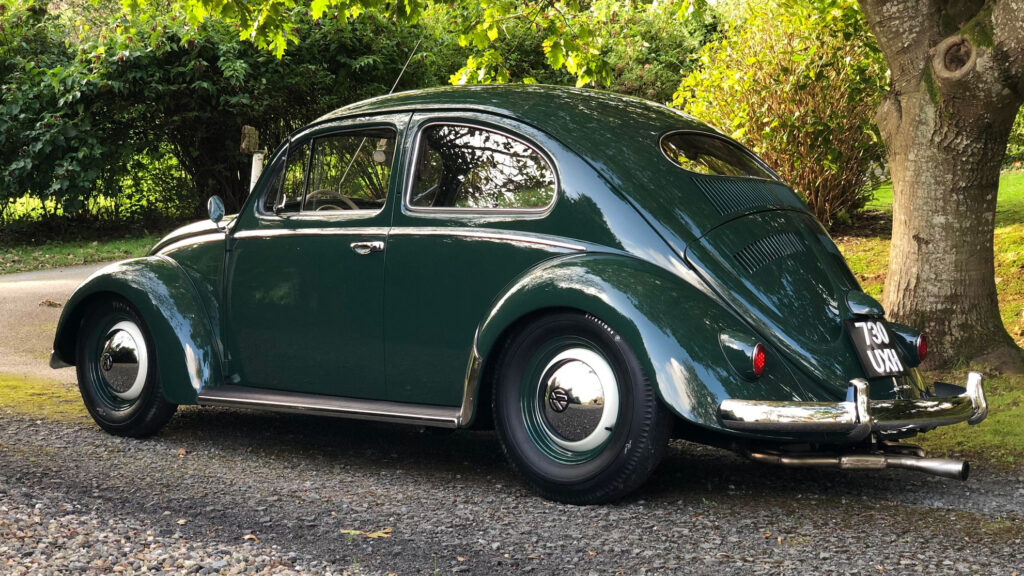
The foundation for the project was a 1956 Oval Window Beetle finished in Jungle Green.
There’s a particular elegance to Volkswagens from this period.
The distinctive oval rear window, compact proportions, restrained chrome detailing and rounded bodywork give these earlier cars an identity all of their own.
Jungle Green complements those details beautifully.
It’s a deep, understated colour that feels entirely at home on a 1950s Beetle, particularly when combined with period-correct exterior trim and traditional wheels.
The whole car has the kind of visual simplicity that Volkswagen managed remarkably well during the Oval Window years.
And Lyndon was determined not to lose that.
The temptation to change everything.
Once you’ve spent years modifying and restoring Volkswagens, leaving something alone can be surprisingly difficult.
There’s always a different set of wheels.
A slightly lower ride height.
Another suspension adjustment.
A component that could be improved.
Or a detail that doesn’t quite match the picture in your head.
For this particular Beetle, Lyndon wanted to strike a balance between retaining its original character and improving the way it behaved on the road.
That meant taking a rather more considered approach to the modifications.
The first transformations
From original to custom.
The Oval hasn’t remained in one specification throughout Lyndon’s ownership.
Quite the opposite.
Its appearance and running gear have evolved over several stages, each reflecting a slightly different interpretation of the same underlying car.
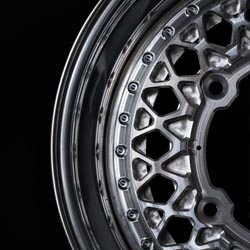
Earlier versions retained a more traditional Volkswagen character before the car adopted a set of staggered Flat 4 Fuchs-style wheels.
These introduced a Porsche-inspired influence that worked particularly well with the Oval’s narrow body and lowered suspension.
The wheels also served another purpose.
They provided a clear view of the braking hardware fitted behind them.
And on a car equipped with Limebug Wilwood disc conversions, there was certainly something worth looking at.
The Fuchs chapter.
Fuchs-style wheels have long been associated with modified air-cooled Volkswagens.
Their Porsche heritage, distinctive spokes and lightweight appearance make them a natural choice for anything with a Cal-Look influence.
On Lyndon’s Oval, the staggered Flat 4 wheels introduced a more purposeful custom appearance without dramatically changing the car’s underlying identity.
The narrowed front suspension brought the wheels neatly underneath the wings, while the lowered stance gave the Beetle an entirely different attitude.
But for Lyndon, this wasn’t necessarily the finished arrangement.
There was another look he wanted to explore.
The return of the smoothies
Sometimes the simplest wheels work best.
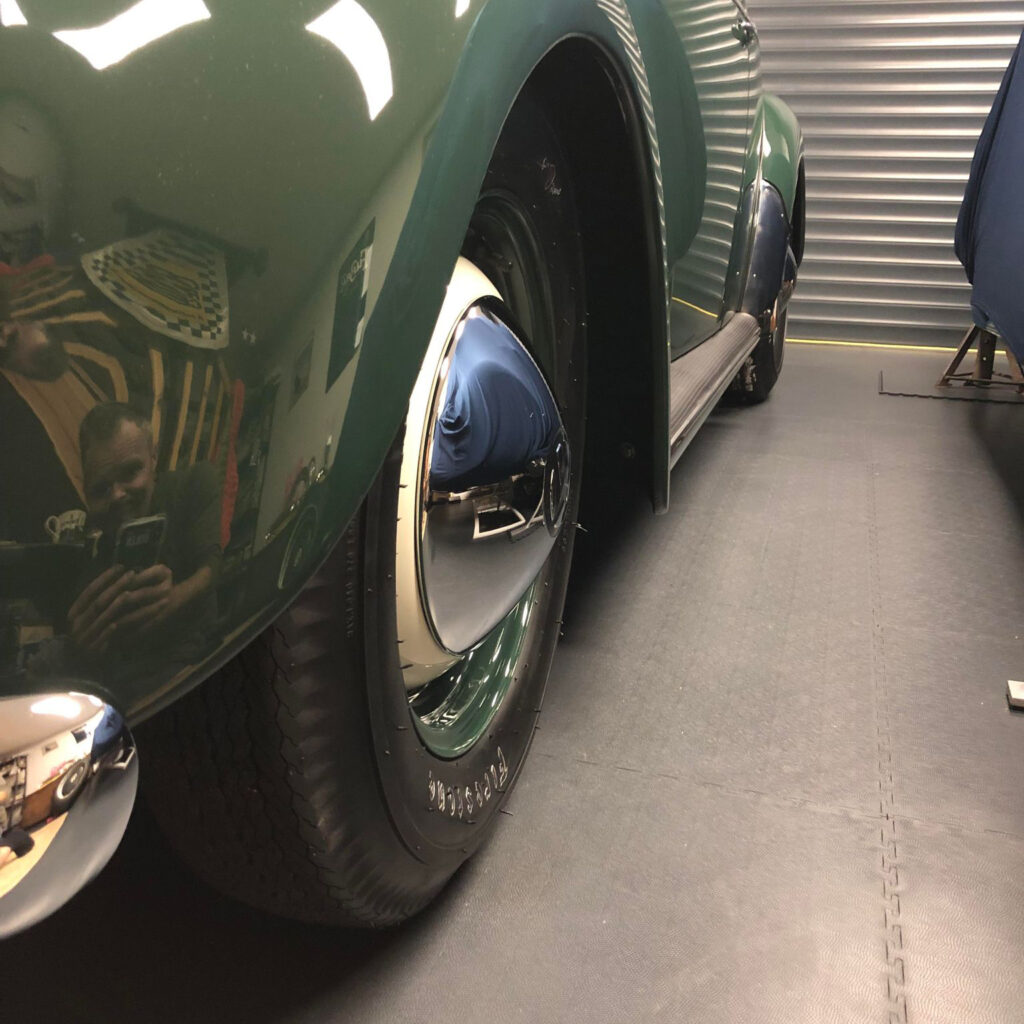
One of the most striking changes came when the Fuchs were replaced with traditional Volkswagen-style steel wheels.
Smoothies.
And whitewalls.
It’s a very different visual approach.
Where the Fuchs drew attention to the suspension and braking upgrades, the steel wheels brought the car back towards its 1950s roots.
The whitewall tyres added another unmistakably period detail.
Combined with the Jungle Green bodywork, the overall effect was beautifully restrained.
At first glance, the Beetle appeared to be a very carefully preserved early Volkswagen.
Then you noticed how it sat.
Six inches narrower. Almost invisible.
Beneath the traditional wheel choice was a far more developed front suspension arrangement.
The Oval was fitted with a Limebug 6-inch narrowed link-pin front beam, allowing the wheels to sit further underneath the front wings.
Combined with 2.5-inch dropped spindles, the arrangement created a subtle but unmistakable reduction in ride height.
The finished stance was low without visually overwhelming the car.
And that was the point.
The suspension needed to complement the factory-inspired exterior rather than compete with it.
Where the Elite Series began
A proper road-going development car.
For Limebug, Lyndon’s Oval has significance well beyond its appearance.
It became an early real-world test bed for the suspension development that would lead into our Elite Series front beam range.
At the time, we were exploring ways to improve the operating characteristics of narrowed Volkswagen front beams, with particular attention paid to trailing-arm support, suspension movement and the way the car responded on the road.
The traditional Volkswagen front beam relies on the relationship between its torsion leaves, trailing arms and the bearing and bush arrangements supporting those arms.
Changing the width of the beam creates additional design considerations, particularly when the objective is to preserve the quality of movement and steering behaviour associated with the original suspension.
For us, the goal was never simply to produce another narrowed beam.
It was to develop a system that could retain the advantages of a carefully engineered aftermarket front end without sacrificing the qualities that made the original Volkswagen arrangement so effective.
The bearing and bush hybrid.
The development work centred on a hybrid bearing-and-bush approach to supporting the front trailing arms.
Rather than treating a narrowed beam as little more than a shortened version of the original assembly, the objective was to examine how the internal support system influenced suspension movement and road feel.
Bearing support offers a different operating characteristic from a conventional plain bush, while the relationship between the various support surfaces remains important to the overall behaviour of the assembly.
Combining those principles provided an opportunity to explore a system intended to deliver controlled trailing-arm movement while retaining the necessary support within the beam.
Lyndon’s Oval became an ideal vehicle for evaluating the concept.
It wasn’t an extreme air ride installation built primarily around achieving the lowest possible stance.
It was a road-going Beetle whose owner was particularly sensitive to the way a properly restored early Volkswagen should drive.
Which made his feedback especially valuable.
The verdict from behind the wheel.
Lyndon summed up his experience with the Limebug beam arrangement rather neatly.
It’s a simple observation, but an important one.
For a narrowed, lowered Beetle running very different hardware from the original factory specification, retaining that familiar road feel was exactly the sort of result we wanted to pursue.
The development experience helped inform the direction of the Elite Series range, particularly our emphasis on bearing-supported suspension systems and properly engineered front beam construction.
What began as an exercise in making one enthusiast’s Oval drive the way he wanted became part of a wider engineering programme.
From one Oval to a complete beam range.
The Elite Series would go on to develop into a broader family of suspension components for classic air-cooled Volkswagens.
The underlying principle remained consistent.
A narrowed front beam should not automatically mean accepting unnecessarily compromised suspension movement, poor fitment or disappointing steering behaviour.
Careful component selection, appropriate internal support, accurate construction and correct installation all play a part.
Lyndon’s car helped demonstrate why those details mattered.
And why we were prepared to spend time developing them.
Getting the steering right
Narrowing the beam is only half the job.
There is another important consideration when narrowing the front suspension of a Beetle.
The steering.
Reducing the width of the beam changes the packaging available around the front axle, and retaining useful steering movement requires careful attention to the relationship between the steering arm, linkage and surrounding components.
For Lyndon’s Oval, we incorporated the Limebug Ultrarm M10 Big Spline steering arm.
The Ultrarm was selected to address the steering geometry and clearance considerations associated with the 6-inch narrowed setup.
Its inclusion reflects the overall philosophy of the build.
There was little point producing an attractive stance if it came at the expense of the qualities Lyndon wanted from the car.
The steering needed to feel right.
The suspension needed to move correctly.
And the finished Beetle needed to remain enjoyable to drive.
Modern brakes. Original appearance.
Wilwood at all four corners.
The braking system received equally serious attention.
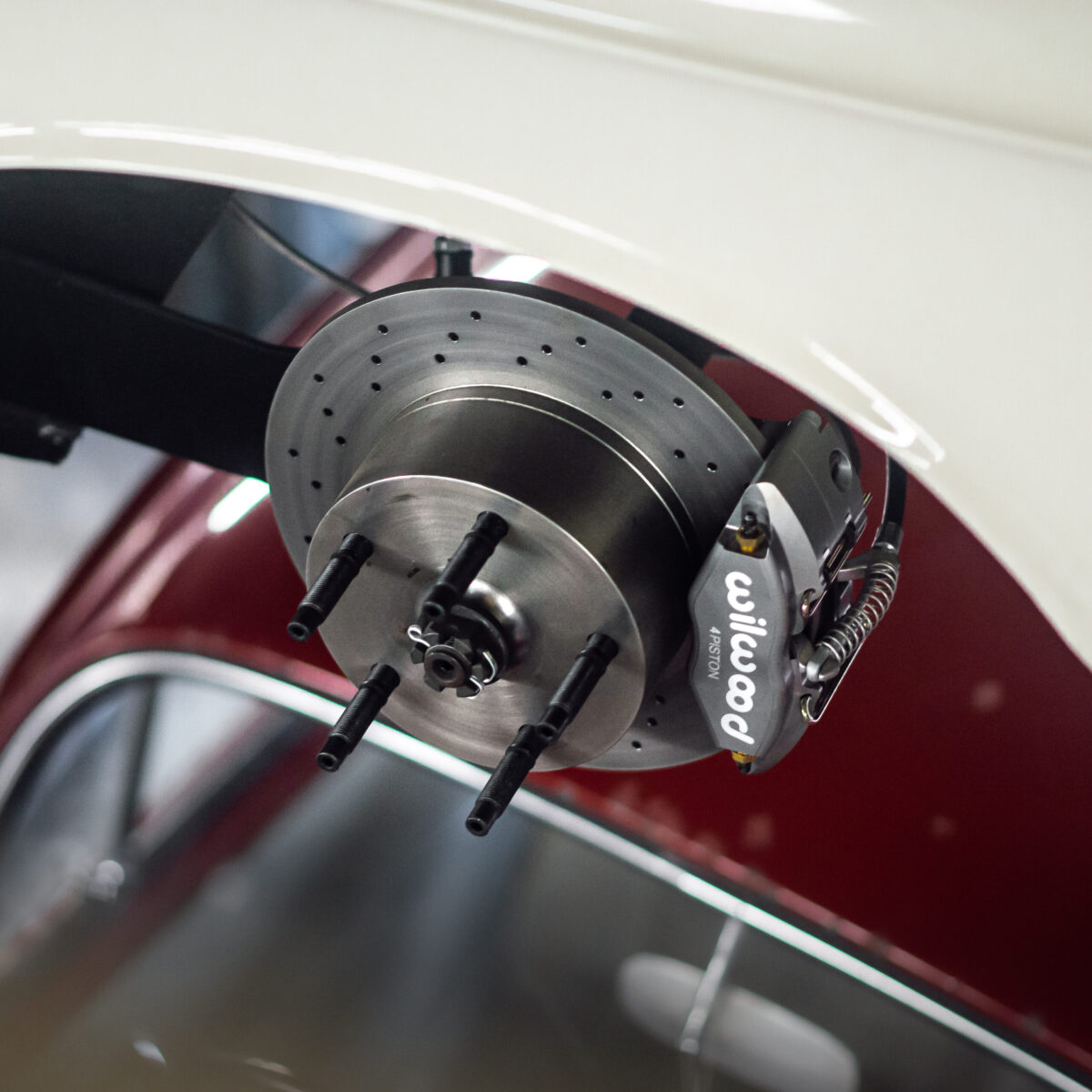
Lyndon’s Oval was equipped with Limebug’s 5×205 Wilwood disc brake conversions at both the front and rear.
The system incorporated drilled and grooved discs with Wilwood callipers, providing a more contemporary braking package while retaining the wide-five wheel fitment associated with early Volkswagens.
With the staggered Fuchs fitted, portions of the braking system were visible through the spokes.
It was a particularly attractive arrangement for anybody who appreciates mechanical details.
But when Lyndon returned to the traditional steel wheels, the brake conversions became largely hidden from view.
And somehow, that made the finished car even more interesting.
The details you don’t see.
From the outside, the Beetle could easily be mistaken for a predominantly original car with a modest reduction in ride height.
The smoothies and whitewalls reinforce that impression.
But behind those wheels sits a full upgraded braking system.
It’s exactly the sort of sympathetic modification that suits this particular project.
The visual character remains firmly rooted in the 1950s.
The mechanical specification takes a more contemporary approach.
And neither needs to undermine the other.
A place in VolksWorld
The Oval gets its moment.
Lyndon’s Beetle has also attracted attention well beyond the Limebug workshop.
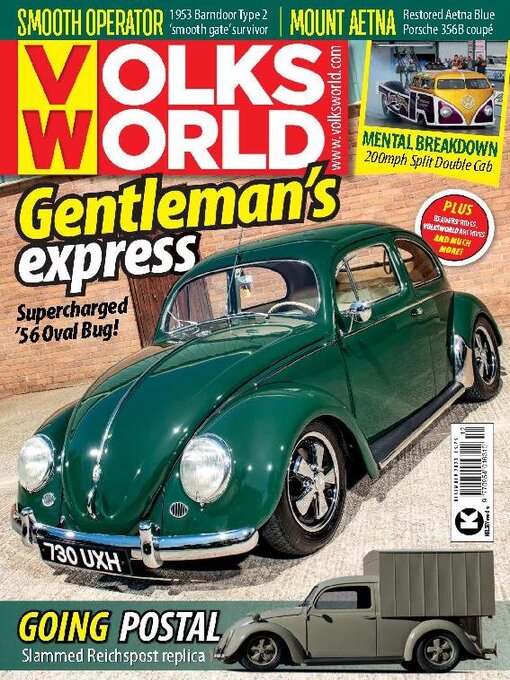
The December 2023 issue of VolksWorld featured his supercharged Oval Window Beetle, bringing the project to a wider international audience.
For somebody already familiar with the magazine through the extraordinary FUBAR project, it represented another important chapter in his Volkswagen story.
The Oval was a rather different expression of the same enthusiasm.
Instead of relying on dramatic custom bodywork or an aggressively modified appearance, it brought together traditional styling, extensive attention to detail and a carefully developed mechanical specification.
The magazine’s identification of the car as supercharged also points to another dimension of its mechanical development beyond the suspension and brake specification documented in our earlier Limebug feature.
From workshop development to show-floor recognition.
The car’s appearances at VolksWorld also reflect the different stages of its evolution.
What makes an Oval Window Beetle like this interesting is that its appeal doesn’t depend entirely on a single finished specification.
The earlier, more original presentation has its own charm.
The Fuchs-equipped version offers a more recognisably custom look.
The smoothie-and-whitewall arrangement celebrates the classic Volkswagen silhouette.
And the later sympathetic restoration brings another level of finish and detail to the story.
Each stage is recognisably the same car.
Just seen through a different lens.
A sympathetic restoration
Taking it further without taking anything away.
The Oval’s evolution eventually led to a more complete, sympathetic restoration.
After years of refinement, changes in wheel specification and mechanical development, attention returned to the fundamental character of the car itself.
A sympathetic restoration is a rather particular exercise.
The goal isn’t necessarily to make everything brighter, shinier or more modern.
It’s about understanding which details define a vehicle and ensuring those qualities aren’t lost during the work.
On an early Oval Window Beetle, seemingly small decisions can have a substantial effect on the overall appearance.
The relationship between paintwork and chrome.
The correct stance.
The style of the wheels.
The way the interior complements the exterior.
And the countless little details that make a car feel convincingly period rather than simply old-fashioned.
Original in spirit. Developed underneath.
For Lyndon, the challenge was to bring those elements together without undoing the mechanical development that had already gone into the Beetle.
The car had travelled a considerable distance from its earlier configuration.
Different wheels.
Different suspension.
A substantially upgraded braking system.
And years of attention devoted to getting the details right.
Yet the underlying objective remained remarkably consistent.
Preserve the character of an early Volkswagen.
Make it better to use.
And ensure the finished result feels like a coherent car rather than a collection of modifications.
The build specification
Front suspension and steering
- Limebug 6-inch narrowed link-pin front beam
- Early roller-bearing / bearing-and-bush hybrid development arrangement
- Limebug 6-inch narrowed torsion leaves
- Limebug Ultrarm M10 Big Spline steering arm
- 2.5-inch dropped spindles
- OEM-inspired suspension and steering characteristics as a development objective
Braking
- Limebug 5×205 Wilwood front disc brake conversion
- Limebug 5×205 Wilwood rear disc brake conversion
- Drilled and grooved brake discs
- Wide-five wheel compatibility
Wheel configurations through the years
- Earlier original-style wheel arrangement
- Staggered Flat 4 Fuchs-style wheels
- Original-style smoothie steel wheels
- Whitewall tyres
Vehicle and history
- 1956 Volkswagen Type 1 Oval Window Beetle
- Jungle Green exterior
- Multiple appearance and mechanical configurations
- Early Limebug Elite Series suspension development involvement
- Featured in VolksWorld, December 2023
- Subsequent sympathetic restoration
More than just another Oval
There is a particular satisfaction in looking at a project like Lyndon’s Beetle.
It has never been about following the obvious route.
He’s already proved with FUBAR that he can build a Volkswagen capable of standing among the best show cars in the country.
With the Oval, he has demonstrated something rather different.
That an early Beetle can retain an enormous amount of its original character while benefiting from carefully selected engineering improvements.
The Fuchs version had its appeal.
The smoothies and whitewalls brought the styling back towards the factory.
The Wilwood braking system added another layer of development.
And the suspension became a particularly important part of Limebug’s own engineering history.
What makes the story worth telling isn’t simply the finished appearance.
It’s everything that happened along the way.
Where good ideas begin
For Limebug, this particular Jungle Green Oval will always have a special place in the story of our suspension development.
It was one of the cars that helped us explore the relationship between narrowed beam construction, internal trailing-arm support and real-world ride behaviour.
And perhaps more importantly, it provided the sort of honest feedback that is difficult to replicate in a workshop.
A car can look right.
A component can be beautifully machined.
A suspension assembly can fit perfectly.
But ultimately, somebody has to get behind the wheel and drive it.
Lyndon’s assessment that the setup felt close to stock captured exactly why the development was worthwhile.
Six inches narrower. Decades of Volkswagen character preserved.
Sometimes the biggest improvements are the ones you barely notice.
Until you drive the car.