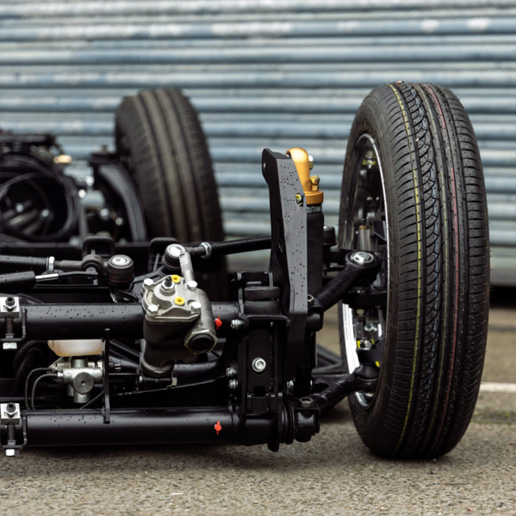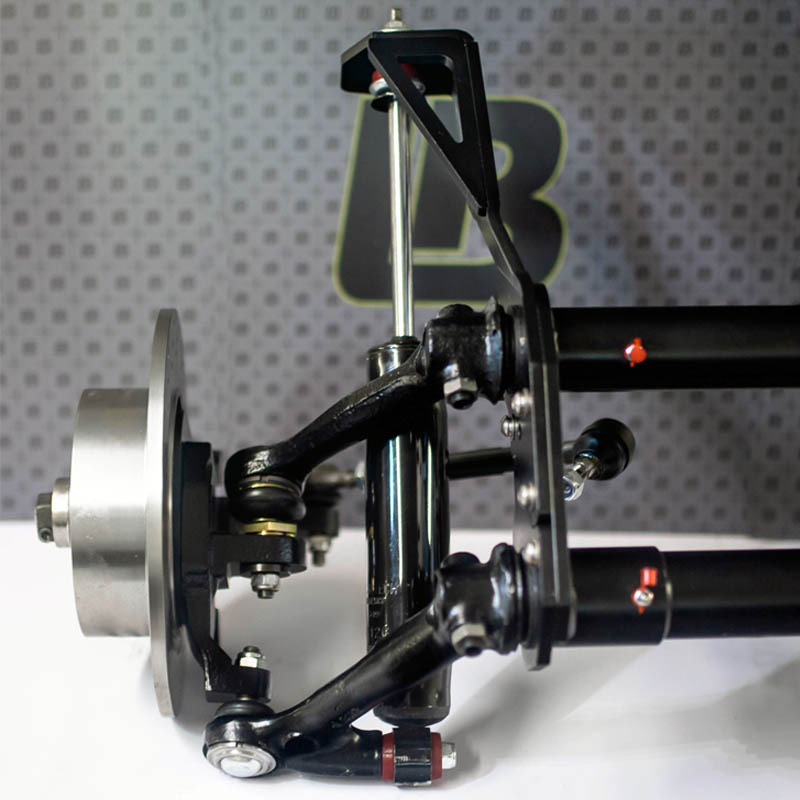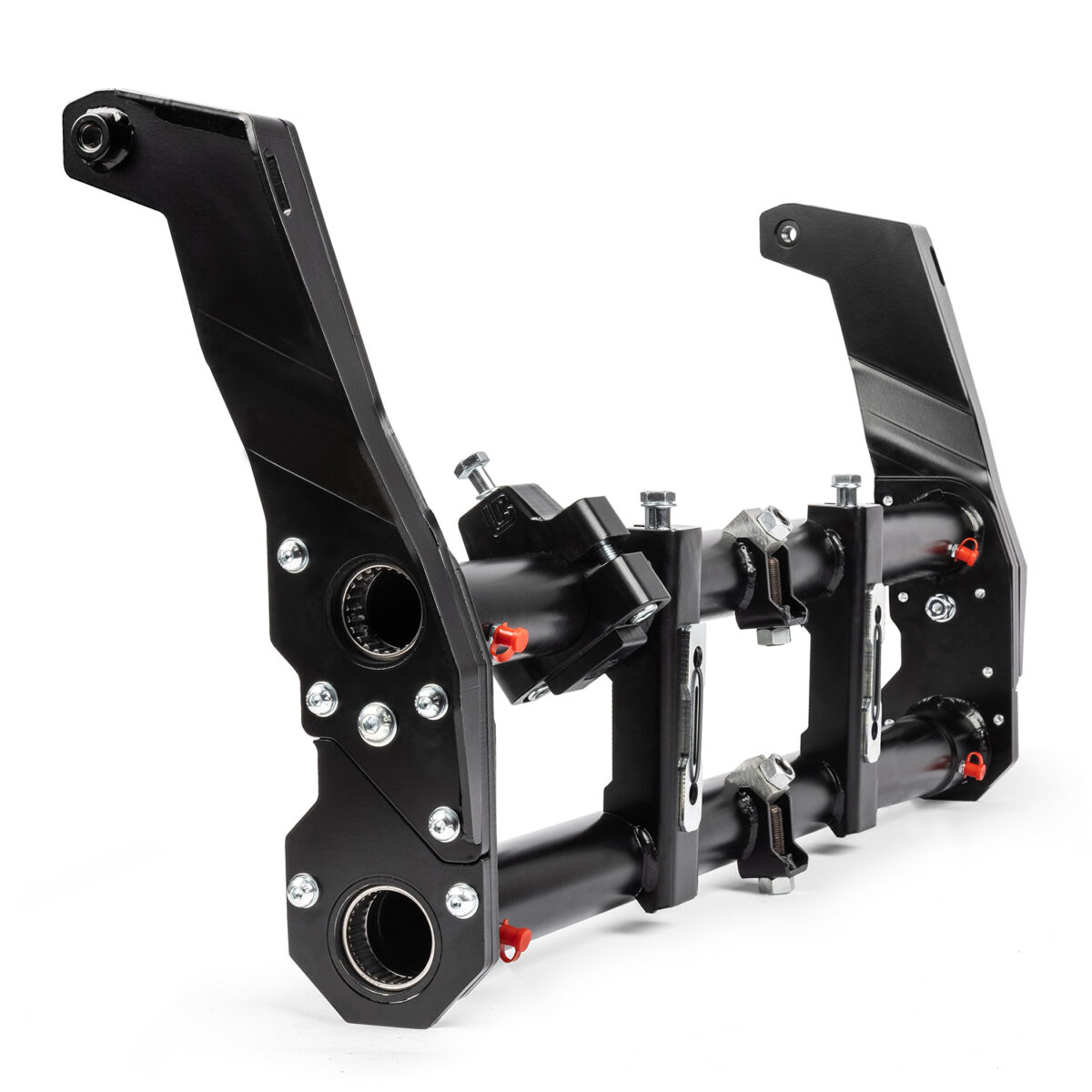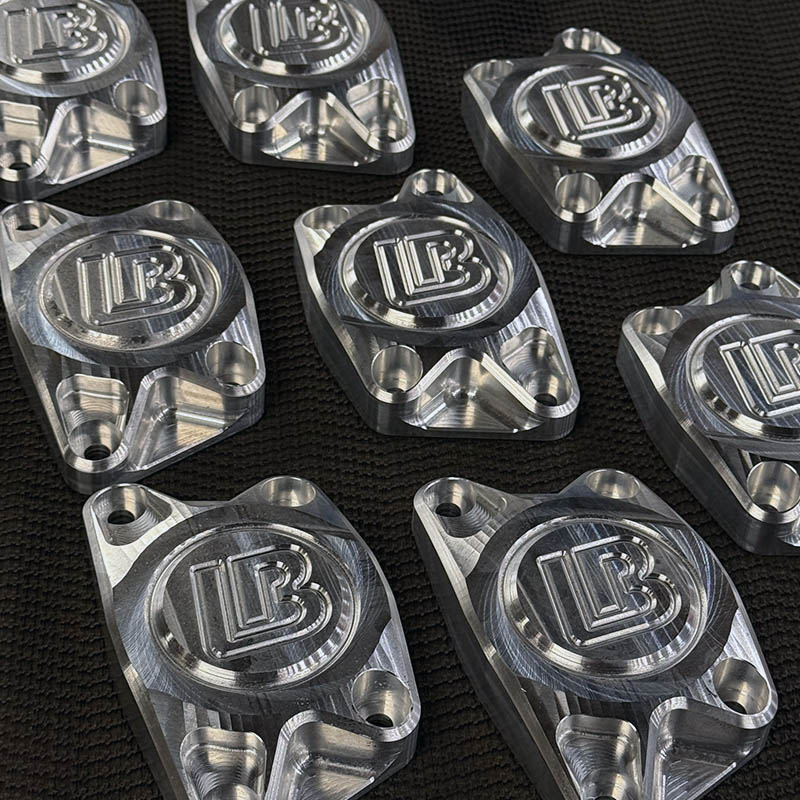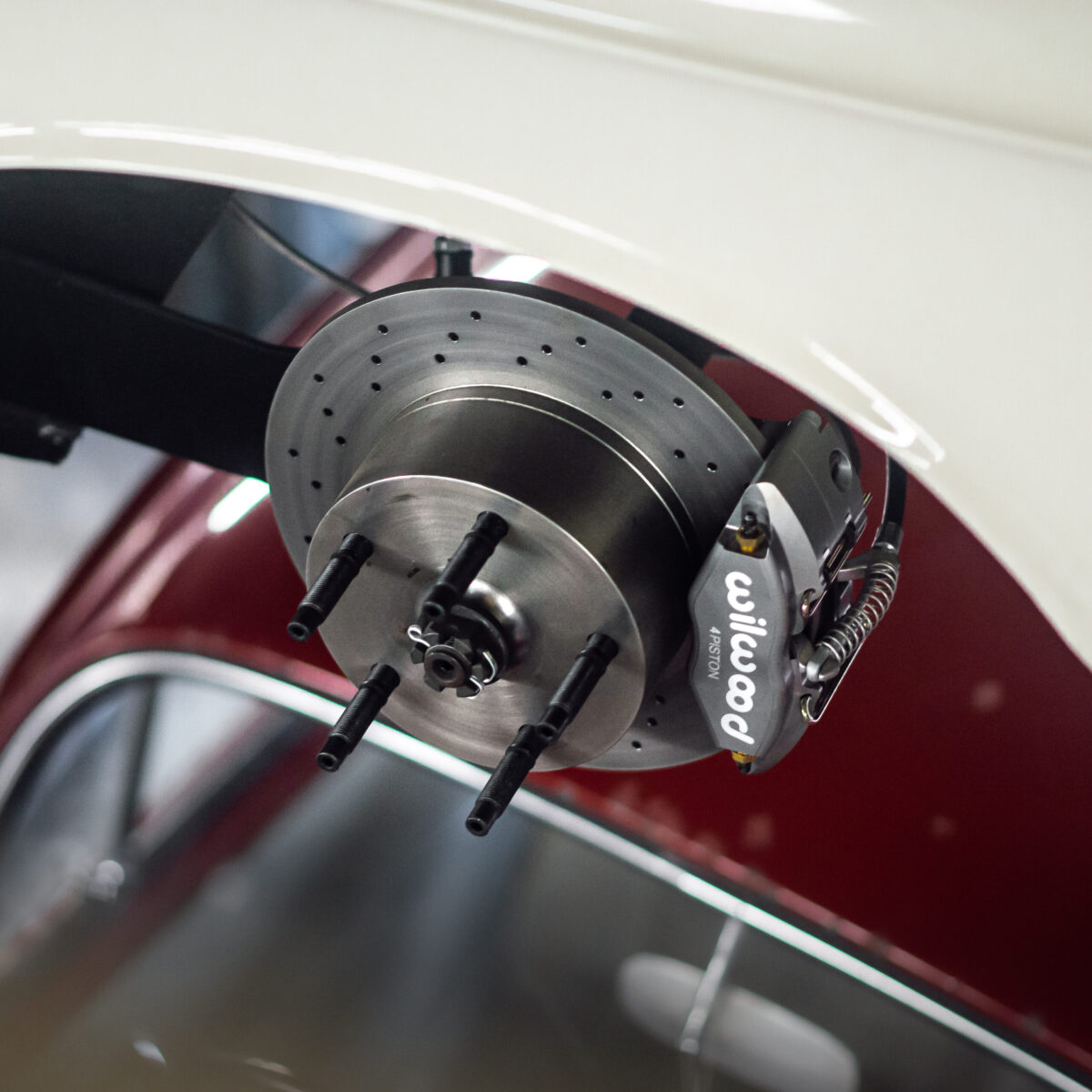

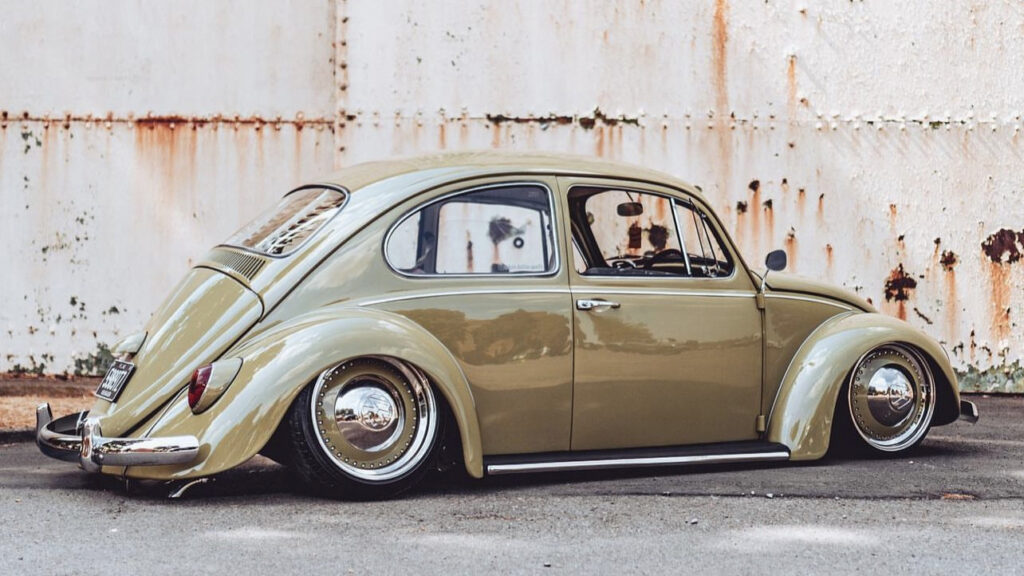
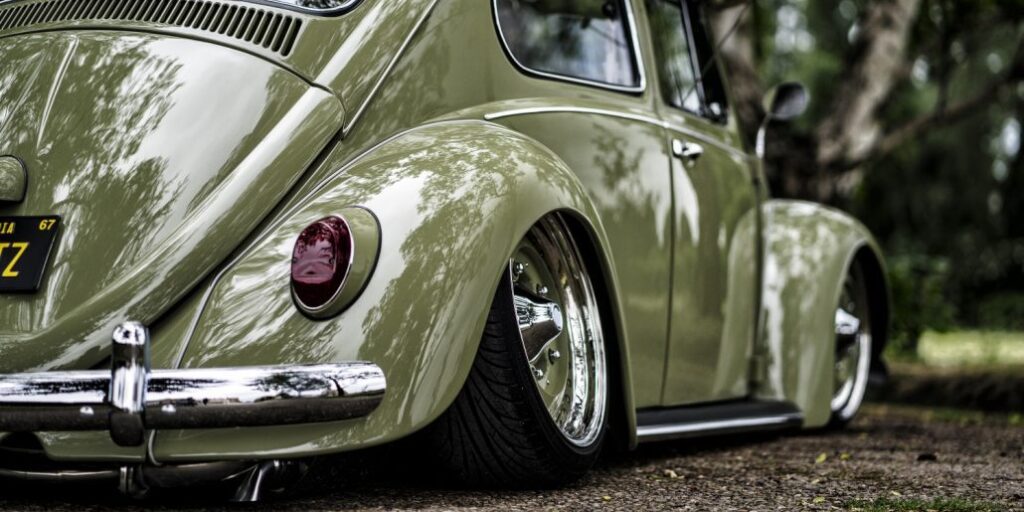
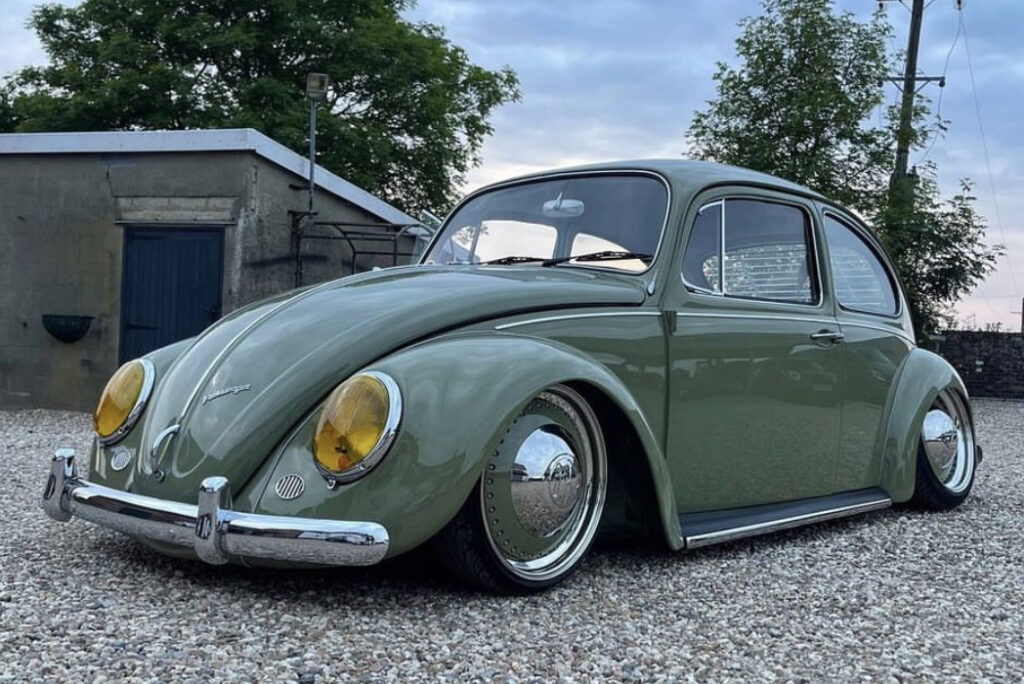
Limebug’ 1967 Beetle puts a real-world finish on the Limebug catalogue, bringing together 1966-79 Beetle / Ghia 4" Narrowed Ball Joint Deluxe Cantilever Swing Axle / IRS Air Ride Kit, 1966-79 Beetle / Ghia Ball Joint 4" Narrowed Elite Series Jawbreaker Front Air Ride Beam Axle, Limebug 17" SM35 3-Piece Split Rim Wheels in one properly resolved setup.
THE ONE THAT STARTED SOMETHING
A £1,500 Beetle with a drag-racing past, Reed Green paint and a burgundy floorpan. Limebug’s 1967 development car helped shape our early air suspension range before beginning a second life with new wheels, new owners and a rather different collection of ideas.
Not every important car starts with a grand plan.
Some projects arrive with a detailed specification, a realistic budget and a carefully prepared schedule.
Others begin with a £1,500 Beetle shell.
Our 1967 Volkswagen belonged firmly in the second category.
It had previously been used for drag racing by Volkswagen engine builder Stefan Rossi and, by the time it came to us, was little more than the foundation for another project.
Fortunately, it was a fairly decent foundation.
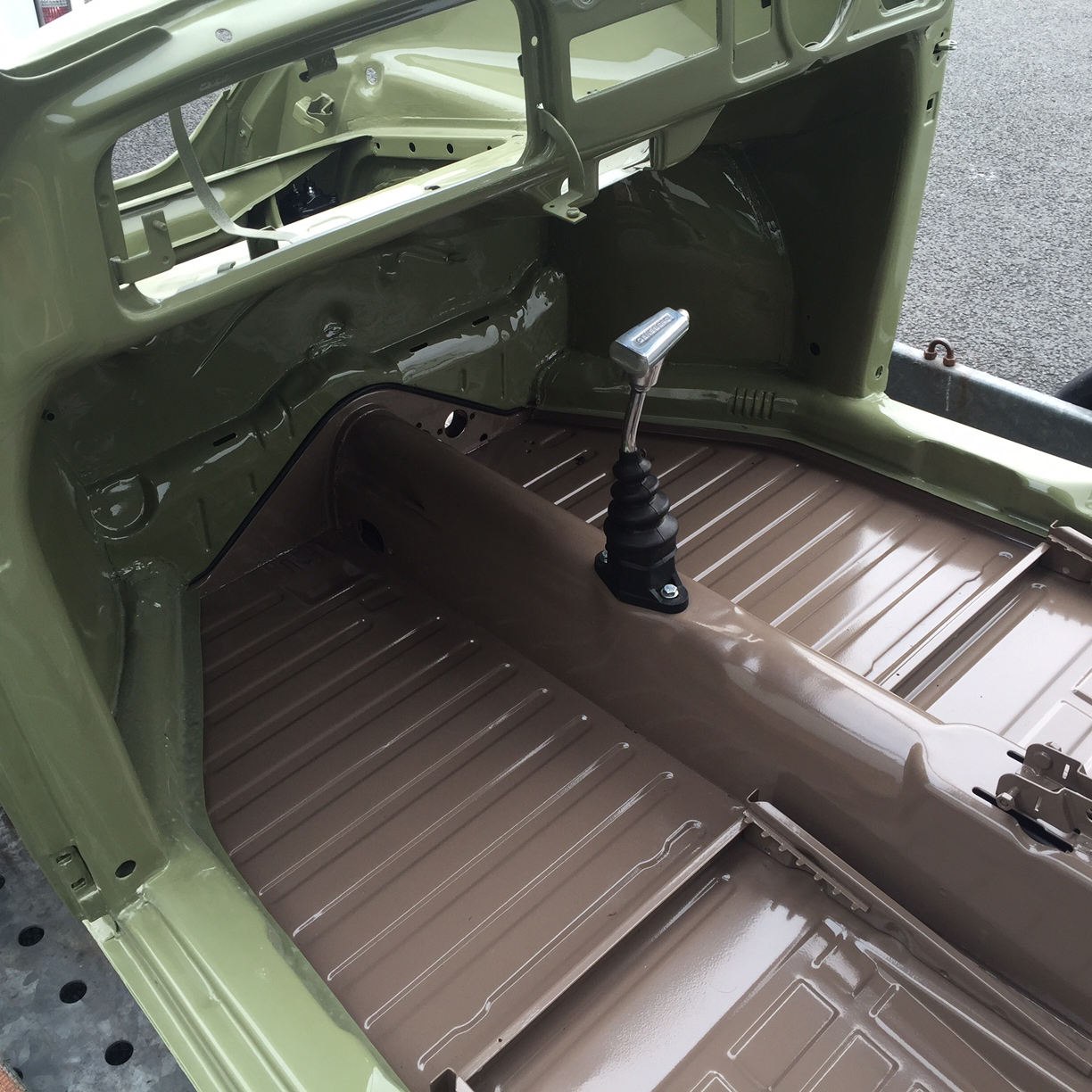
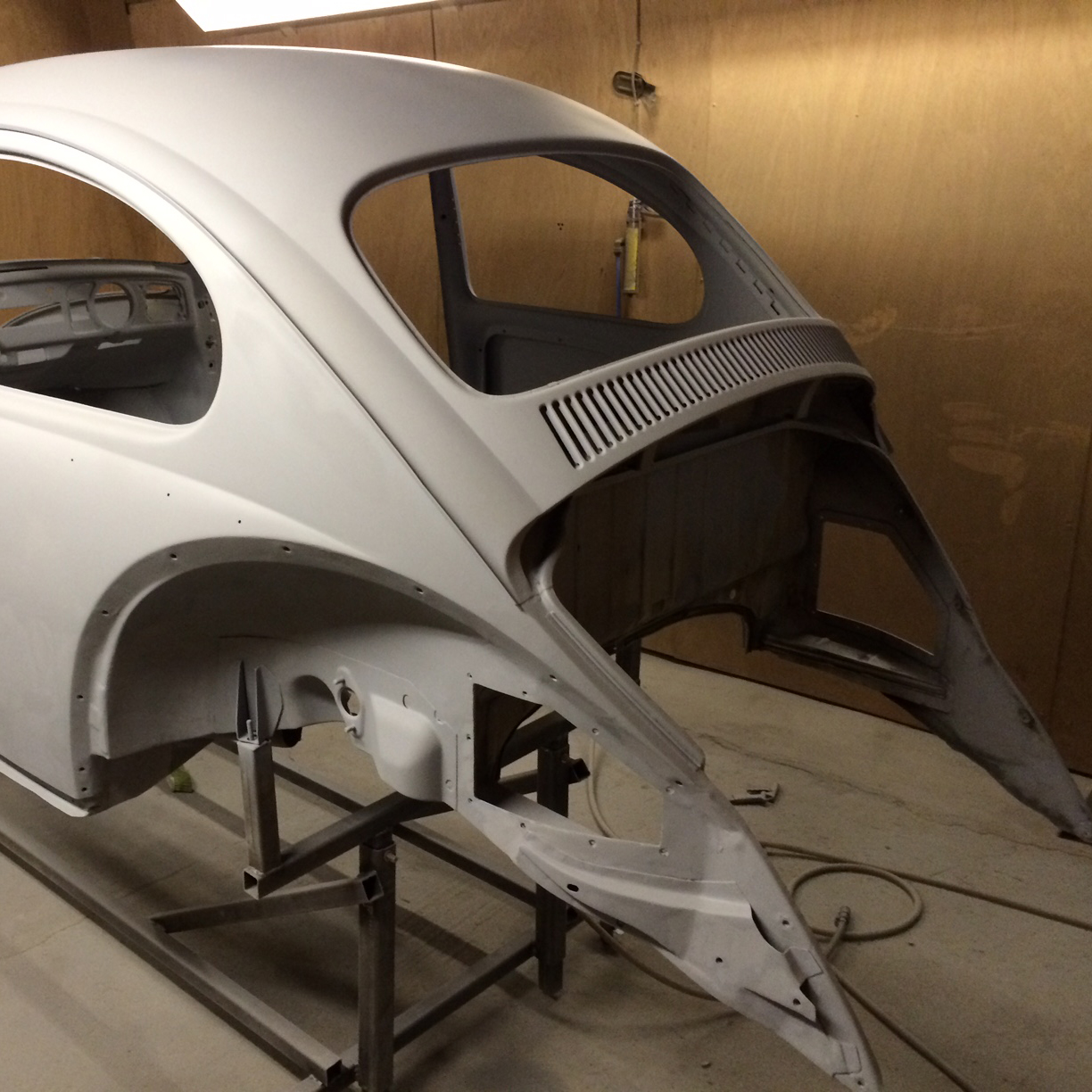
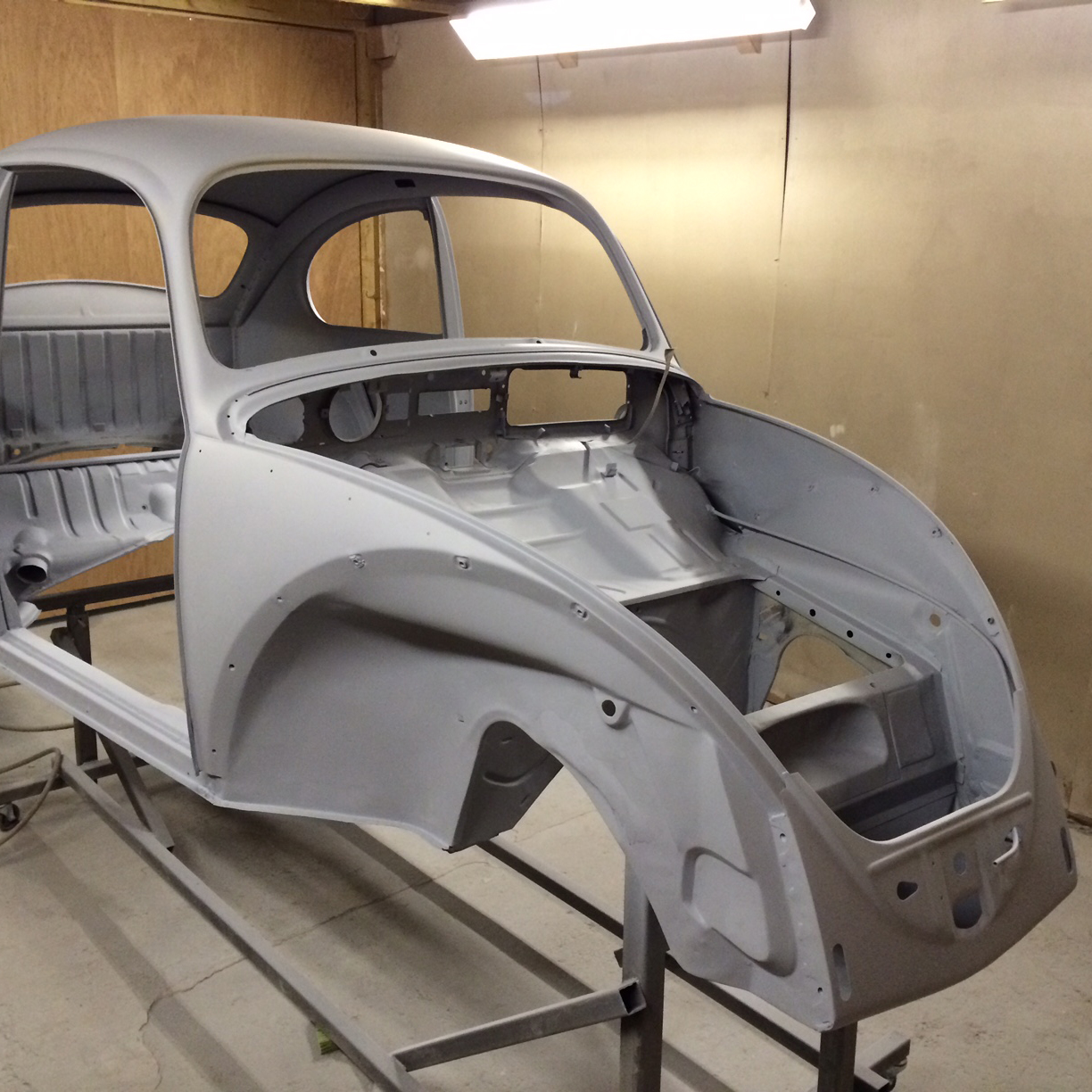
The shell was in surprisingly good condition, with relatively little bodywork required compared with some of the restoration projects we’d tackled.
And for a company increasingly interested in developing its own suspension systems, it presented an opportunity.
We needed cars on which to experiment.
Something we could dismantle, measure, modify and reassemble without worrying too much about preserving an immaculate factory specification.
The 1967 Beetle was ideal.
We didn’t necessarily appreciate it at the time, but it would become one of the more significant early development cars in Limebug’s history.
From drag strip to development car
Stefan Rossi’s former racer
Before arriving at Limebug, the Beetle had been associated with Stefan Rossi and used in drag racing.
That gave it a rather different history from the conventional road cars that often form the basis of our builds.
But the former competition use wasn’t the main attraction.
We were interested in what the shell could become.
The 1967 model year offered the later ball-joint front suspension alongside much of the traditional sixties Beetle appearance.
That combination made the car particularly useful for the products we wanted to develop.
And because the bodywork was relatively sound, we could concentrate on the more interesting mechanical work rather than spend months reconstructing the car before anything else could begin.
Reed Green and burgundy
The finished colour combination became one of the car’s defining features.
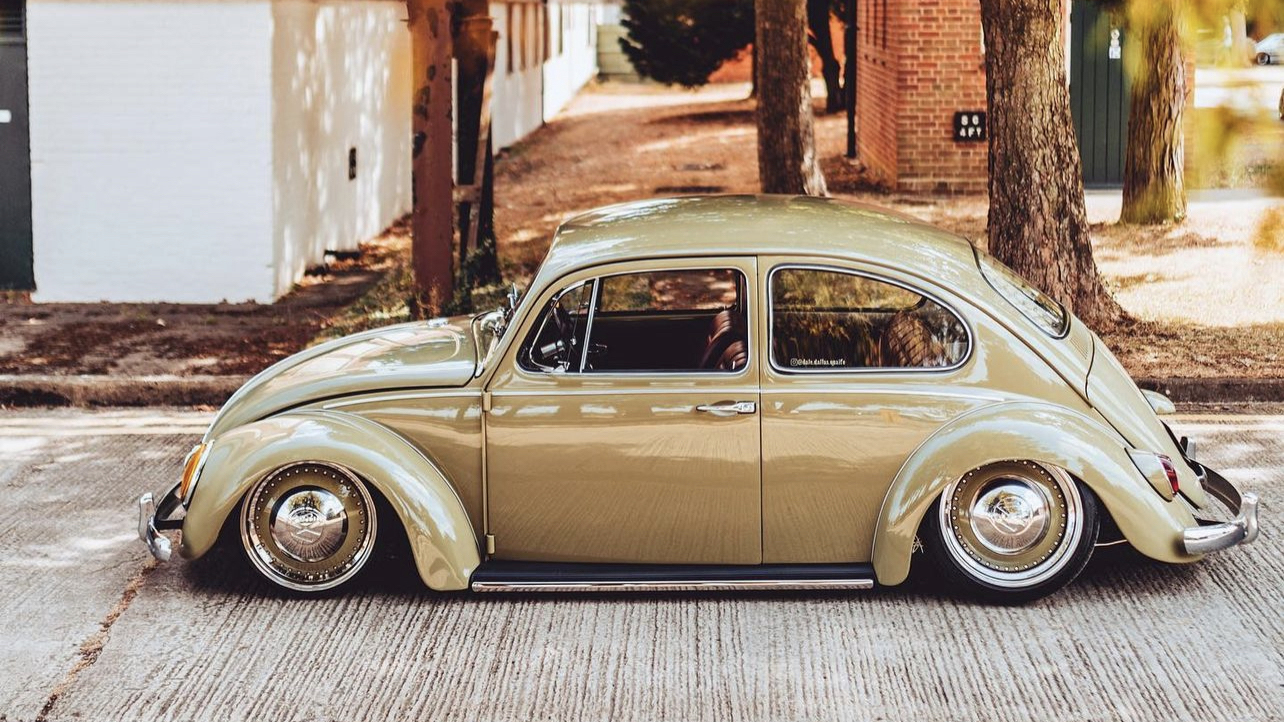
The shell was painted Reed Green.
The floorpan received a contrasting Burgundy Red finish.
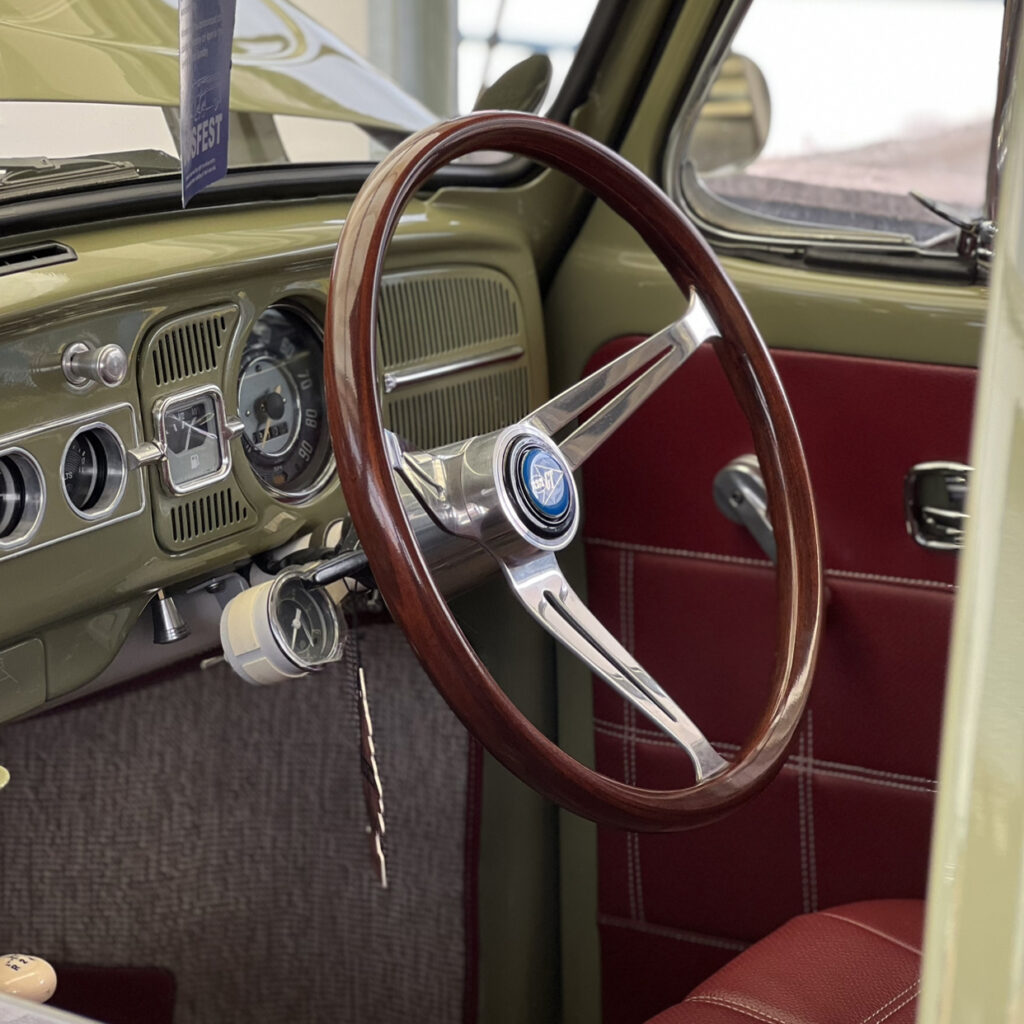
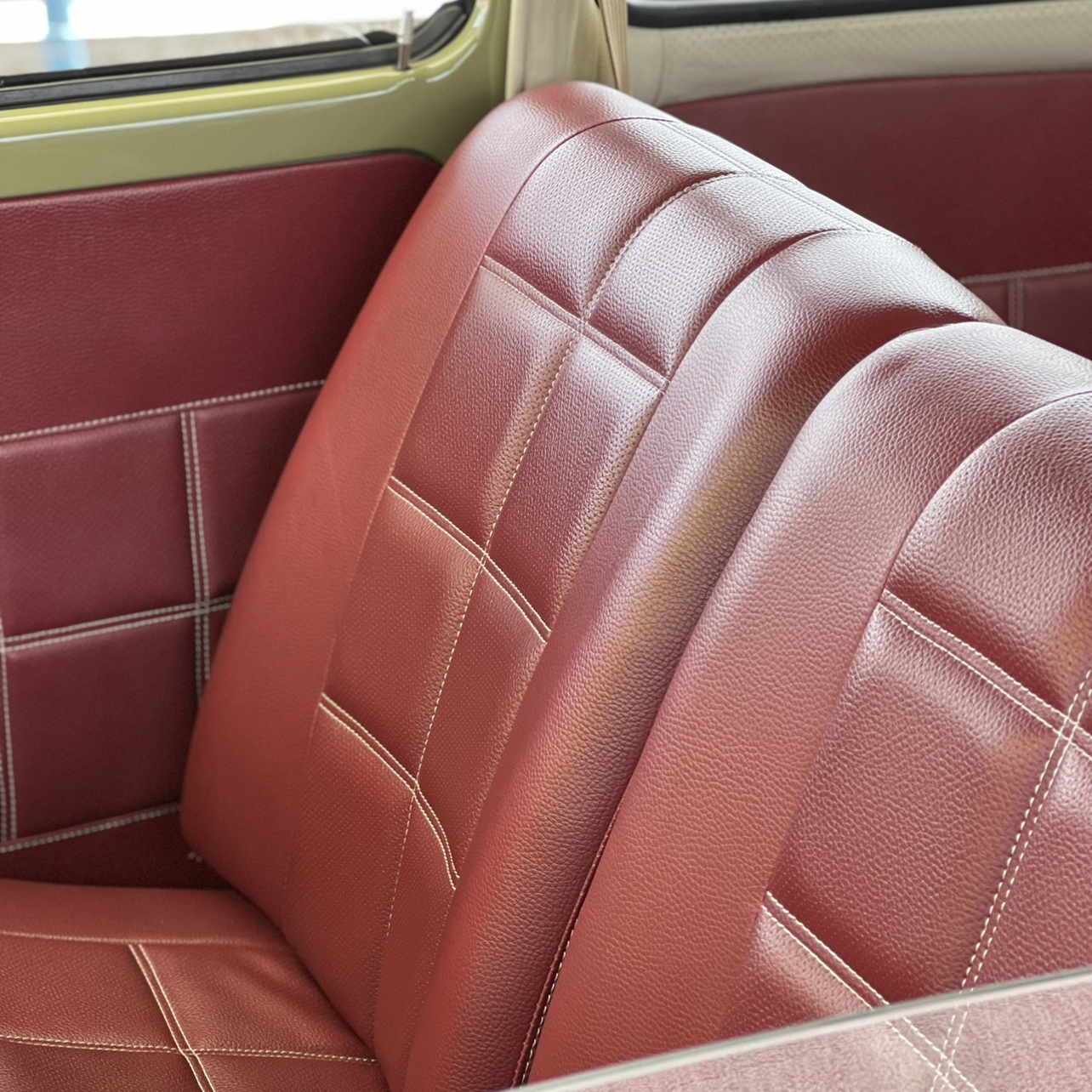
And the interior followed the same theme with red leather seats.
It’s an unusual combination, but one that worked beautifully with the Beetle’s simple body shape.
The Reed Green gave the car a classic, understated exterior.
The burgundy chassis and interior introduced a much warmer contrast.
And the mechanical components beneath the car were treated as part of the finished design rather than something to hide away.
Developing the early Jawbreaker
Four inches narrower
The front suspension became one of the most important areas of the build.
We used the car during the development of our early 4-inch narrowed ball-joint air beam arrangements, part of the engineering that would eventually contribute to the Jawbreaker range.
The narrowed beam provided additional clearance beneath the original front wings.
But the real value of the project came from being able to evaluate the arrangement as a complete system.
Beam geometry.
Suspension movement.
Component fitment.
And the practical requirements of installing adjustable suspension onto an existing Volkswagen platform.
Those details mattered far more than simply achieving an impressive parked stance.
The car gave us an opportunity to work through them on our own chassis.
Titan through rods
The front-end development also involved our Titan through-rod arrangements.
These became part of the wider suspension specification and contributed to the way the modified beam was assembled.
It was another example of using a complete vehicle to assess how different parts of the suspension worked together.
Rather than develop components entirely in isolation, we could see how they behaved once installed.
And the resulting experience helped shape later product development.
The first rear air experiments
Generation I bolt-on suspension
The rear suspension was equally significant.
The car formed part of our early work on Generation I bolt-on rear air suspension.
At the time, we were exploring ways of making adjustable rear suspension more practical and straightforward to install on classic Volkswagens.
The objective was to develop something repeatable.
A product that could eventually be supplied to customers rather than remain a unique fabrication exercise for one particular car.
The 1967 Beetle helped us evaluate that idea.
How the components could be positioned.
How the system operated.
And how the complete installation could be brought together.
The arrangement belonged to the Generation I period, before the later Revolution cantilever system became part of our range.
That distinction is important when looking back at the car.
It represents an early chapter in the engineering, not simply another vehicle fitted with the products available today.
The beginnings of the Air Cradle
Finding a home for the management system
One of the more interesting developments involved the air management hardware.
Installing air suspension is only part of the job.
The compressor, tank, valves and associated equipment also need somewhere sensible to live.
An exposed collection of components might be perfectly functional, but we wanted a more organised approach.
The 1967 Beetle became an early platform for what would develop into our Air Cradle concept.
A dedicated arrangement for mounting and presenting the air management equipment.
The idea was to make the installation cleaner, more consistent and easier to incorporate into a finished vehicle.
That early prototype was another example of how the car helped move Limebug from individual installations towards purpose-developed products.
An evolving installation
The car’s air management specification changed as our systems developed.
A later documented arrangement included Air Lift 3P electronic management.
That shouldn’t be confused with the earliest development stage, which belonged to the period when we were still working through the original suspension and cradle concepts.
Over time, the Beetle accumulated different components and refinements.
Not because the original build was necessarily wrong.
But because the technology and our understanding of it continued to change.
And that’s exactly what a useful development car is for.
On the road. Across Europe.
More than a workshop prototype
The Reed Green Beetle wasn’t confined to the workshop.
Once assembled, it became a car we could take to events and enjoy.
It travelled to shows in Britain and Europe, giving us opportunities to demonstrate the developing suspension systems to other Volkswagen enthusiasts.
One particularly memorable outing was its appearance at the Volkswagen event at Spa-Francorchamps.
A famous circuit.
An enormous gathering of air-cooled Volkswagens.
And a fitting setting for a car that represented so much of our early development work.
The Beetle was never intended to become an elaborate, permanently trailered showpiece.
It was a vehicle we could use, exhibit and continue refining.
The combination of Reed Green paint, burgundy detailing and carefully considered suspension gave it a particularly distinctive appearance.
The original wheels
During its early Limebug life, the car wore Titanio wheels.
They complemented the bodywork and suspension specification of that period, forming part of the original finished appearance.
But this wasn’t the final wheel arrangement the Beetle would receive.
As with much of the car’s history, the next chapter came after it left our ownership.
Sold in 2017. Not forgotten.
A new chapter begins
In 2017, we sold the Beetle.
By that point, it had already played an important role in several areas of our suspension development.
The narrowed front beam.
Generation I rear air.
And the early Air Cradle arrangement.
It had served as a useful platform for testing and demonstrating ideas that would help shape the Limebug catalogue.
But unlike some projects, its story didn’t end when it left the workshop.
Later owners continued developing the car in their own direction.
And one of the most noticeable changes involved the wheels.
The BiffsDetailing era
Enter the SM35
Following its Limebug years, the car underwent further changes associated with BiffsDetailing.
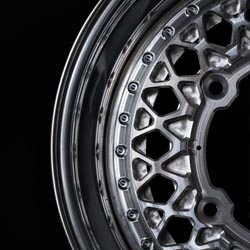
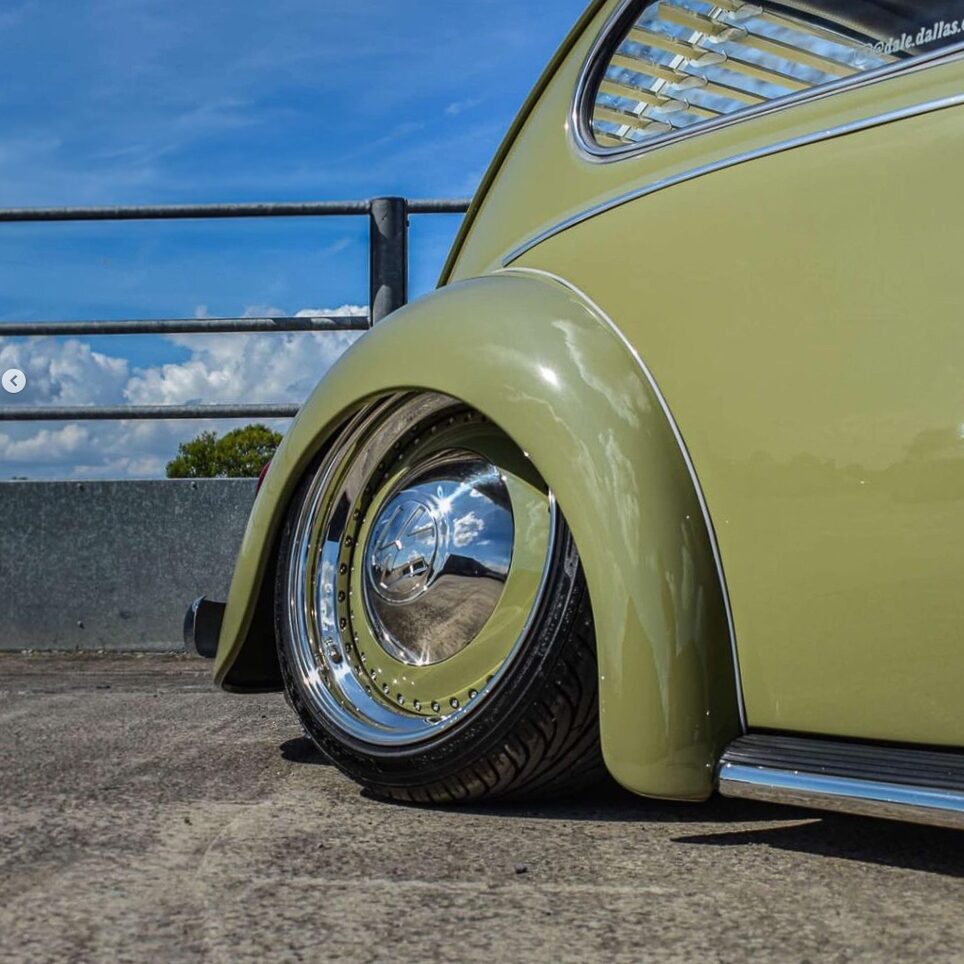
The original Titanio wheels were replaced with 17-inch Limebug SM35 three-piece split rims, complete with centre caps.
The SM35 design draws on traditional Volkswagen smoothie styling, but translates it into a modern modular wheel.
Against the Reed Green bodywork, the new wheels created a noticeably different appearance.
The basic character of the Beetle remained.
But the larger three-piece rims gave the car a more contemporary custom look.
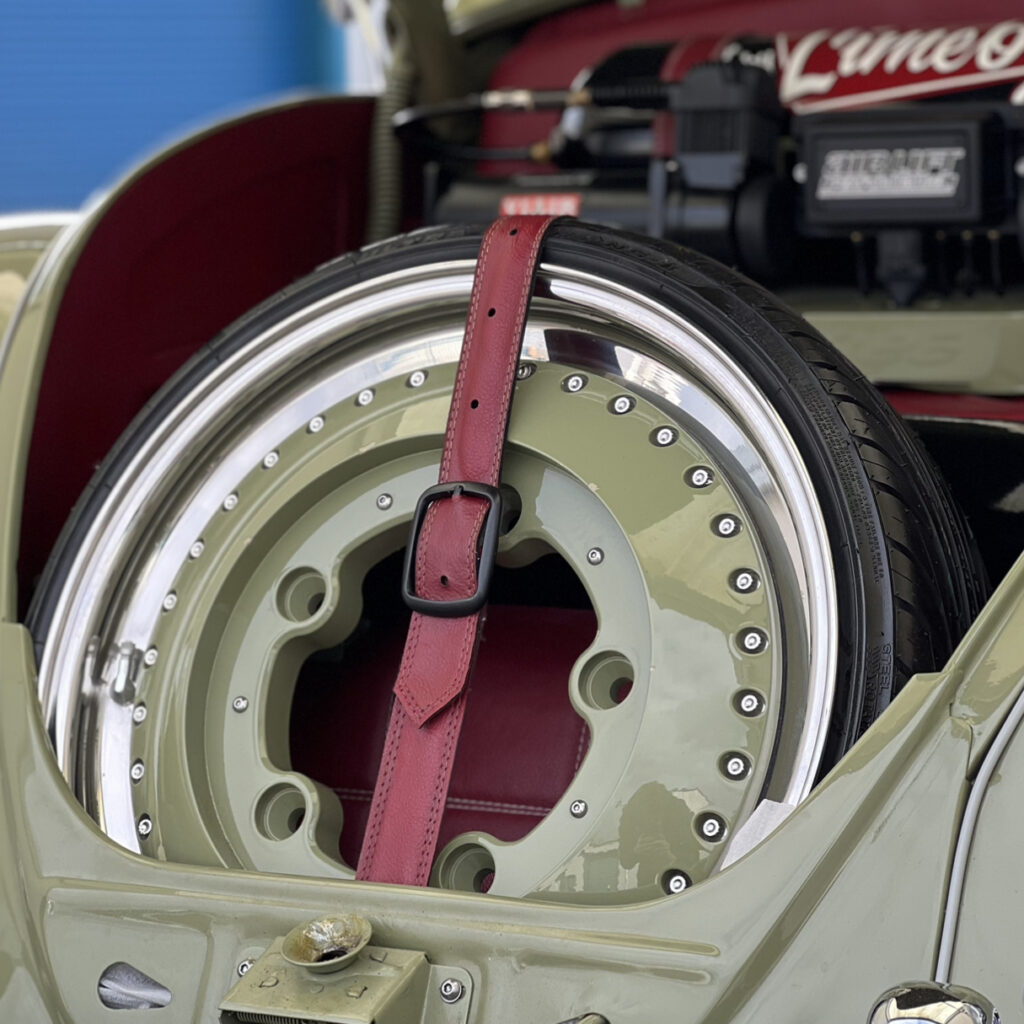
A fresh luggage compartment
The front luggage compartment also received attention.
It was retrimmed around the original early Air Cradle installation, giving the management equipment a more integrated appearance.
It’s one of the particularly interesting details in the car’s history.
An early Limebug prototype component continuing to form part of the vehicle, even as the surrounding finish and wheel specification changed.
A reminder of what the Beetle had originally been built to develop.
Dale takes over
Still part of the Limebug family
The Beetle now belongs to Dale, a close friend of Limebug.
And despite changing hands over the years, the car remains connected to the business.
We’ve continued discussing and developing bespoke components with Dale, keeping the relationship between the Beetle and our engineering work alive.
That’s one of the more satisfying parts of the story.
A development vehicle doesn’t always need to remain in company ownership to stay relevant.
Sometimes the most interesting outcome is watching somebody else continue building on the work that came before.
The Reed Green Beetle has changed considerably since its original £1,500 shell days.
But its identity has remained consistent.
A classic-looking Volkswagen with an unusual colour combination and a history closely tied to the development of Limebug suspension.
The complete build specification
Vehicle and early history
- 1967 Volkswagen Type 1 Beetle
- Formerly used for drag racing by Stefan Rossi
- Acquired by Limebug as a shell for approximately £1,500
- Relatively sound bodywork when purchased
- Early Limebug suspension development vehicle
- Sold by Limebug in 2017
Limebug-era exterior and interior
- Reed Green bodywork
- Burgundy Red floorpan
- Red leather seating
- Original Limebug-era Titanio wheels
Early suspension development
- 4-inch narrowed ball-joint front air beam development
- Early Jawbreaker front suspension concepts
- Titan through-rod arrangements
- Generation I bolt-on rear air suspension development
- Early Air Cradle prototype
Air management
- Early Limebug air management cradle development
- Later documented Air Lift 3P electronic management
- Front luggage compartment subsequently retrimmed around the cradle
Later developments
- 17-inch SM35 three-piece split rims
- Centre caps
- Wheel upgrade associated with BiffsDetailing
- Further bespoke component development under Dale’s ownership
Events and ownership
- Limebug ownership and development period until 2017
- UK and European Volkswagen events
- Appearance at Spa-Francorchamps
- Subsequent BiffsDetailing-era modifications
- Current owner: Dale
The one that started something.
Looking at the Beetle today, it’s easy to appreciate it simply as a nicely finished 1967 Volkswagen.
The Reed Green paint is distinctive.
The burgundy detailing gives it character.
And the SM35 wheels provide a completely different look from the original Limebug specification.
But its real importance lies underneath.
It helped us explore early narrowed front suspension, bolt-on rear air ride and the practicalities of a dedicated air management cradle.
Those ideas would continue developing long after the Beetle left our ownership.
Some evolved into entirely different products.
Others became part of the engineering experience that shaped later builds.
And the car itself continued to change, first through later ownership and now with Dale.
From a £1,500 shell to a lasting piece of Limebug history.
Not the most expensive car we’ve built. But certainly one of the most useful.