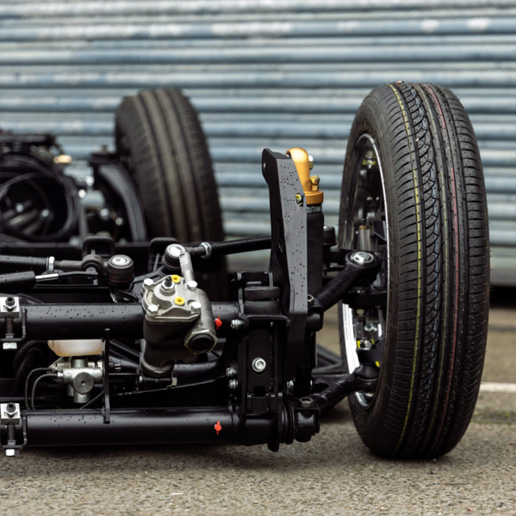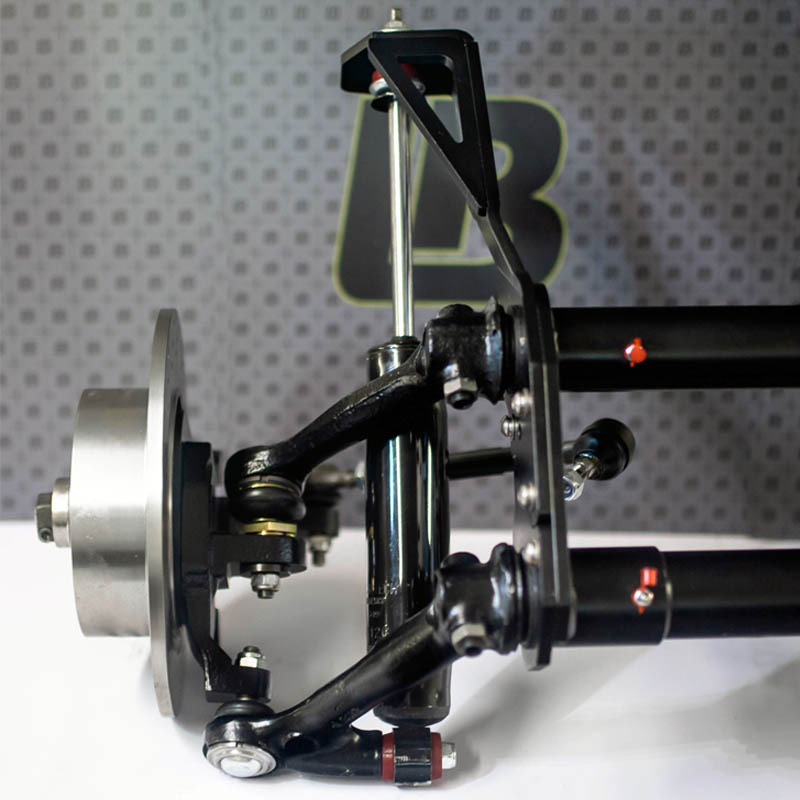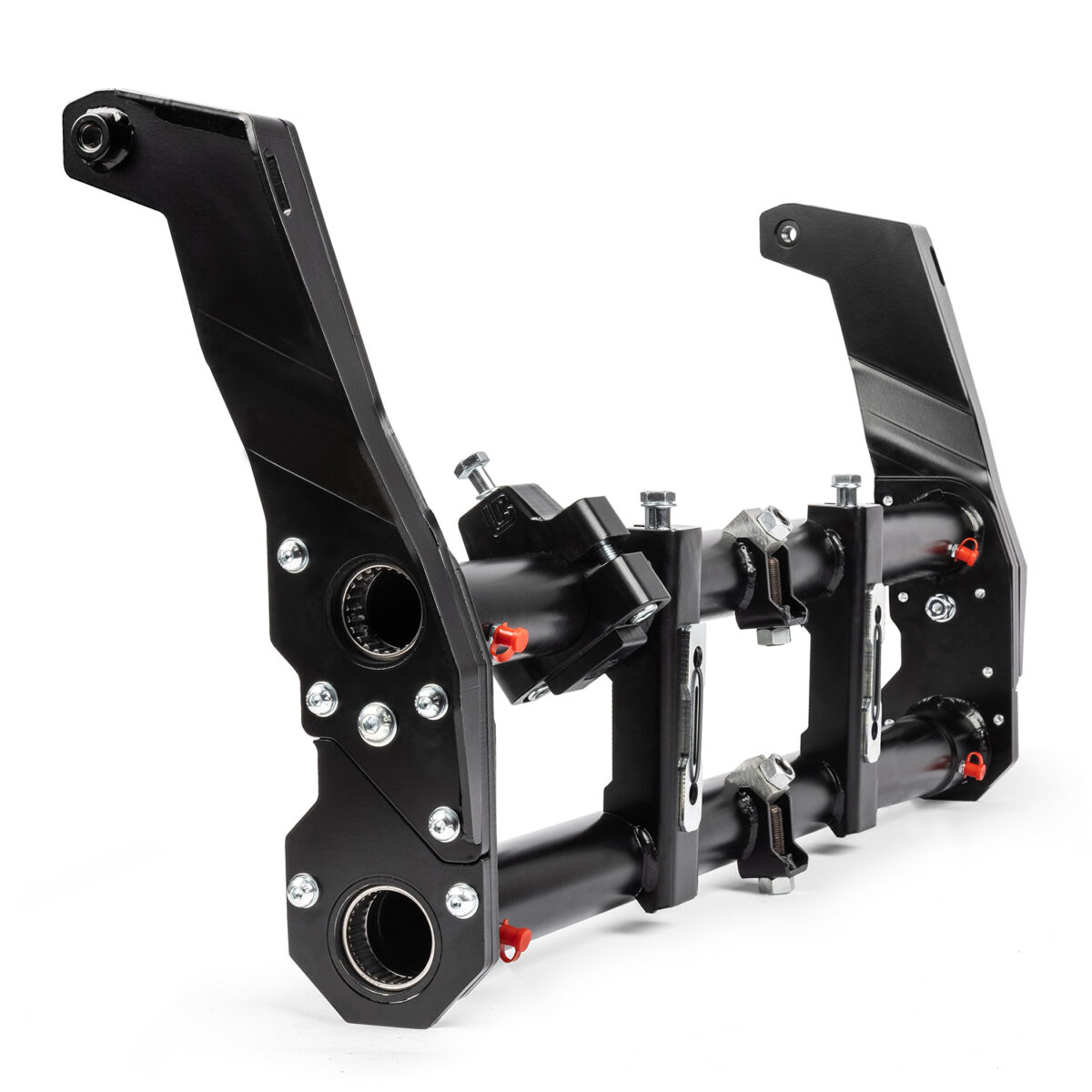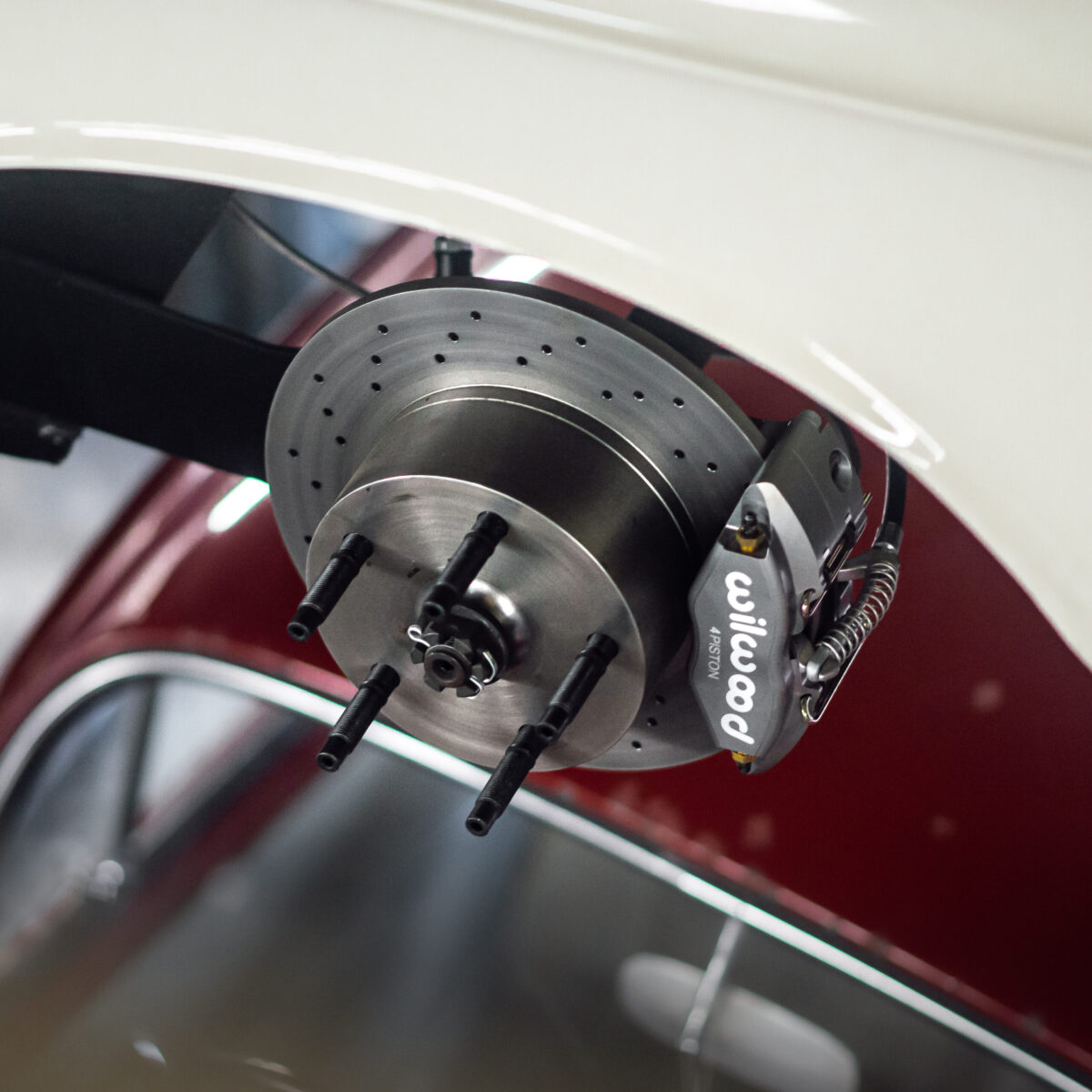

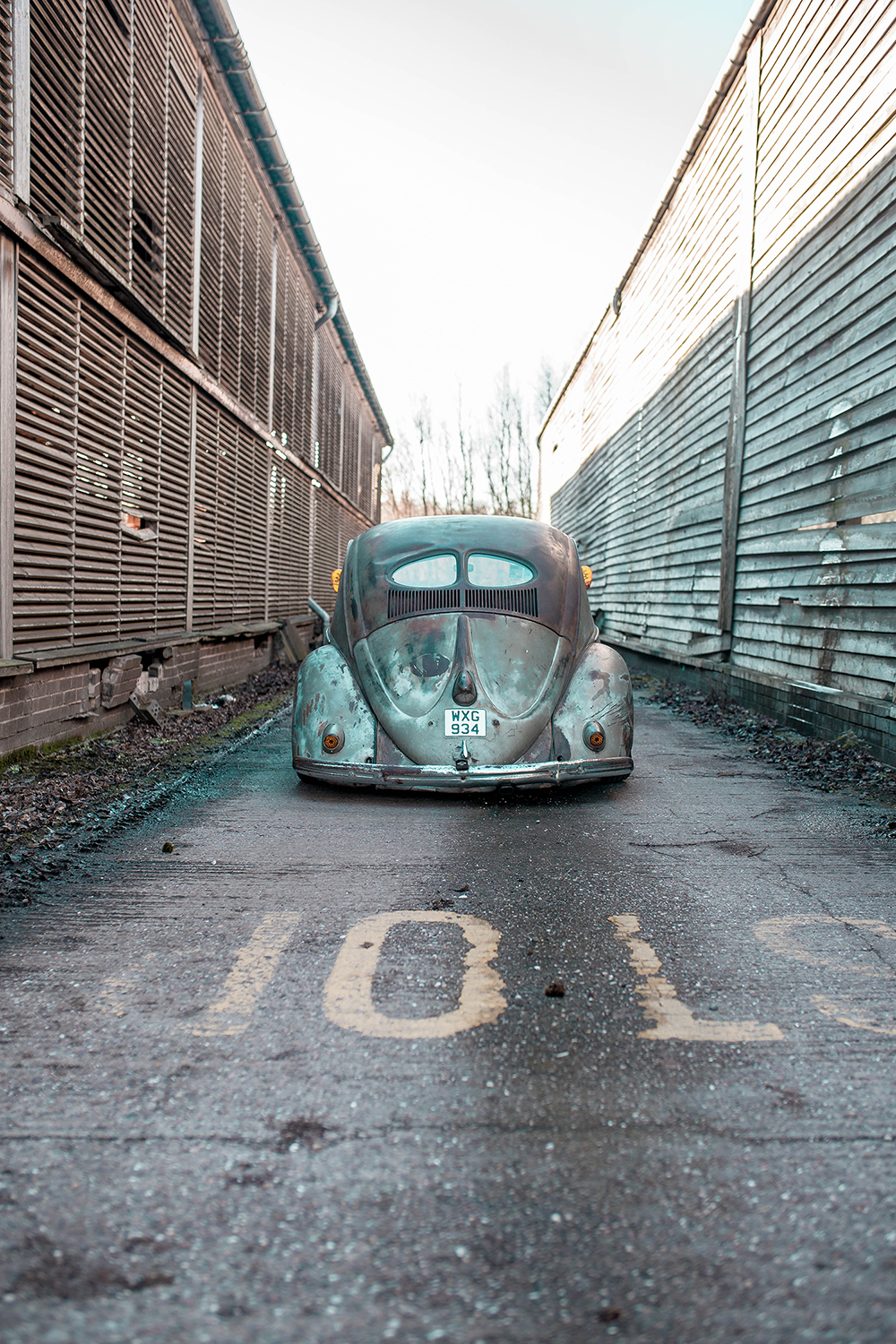
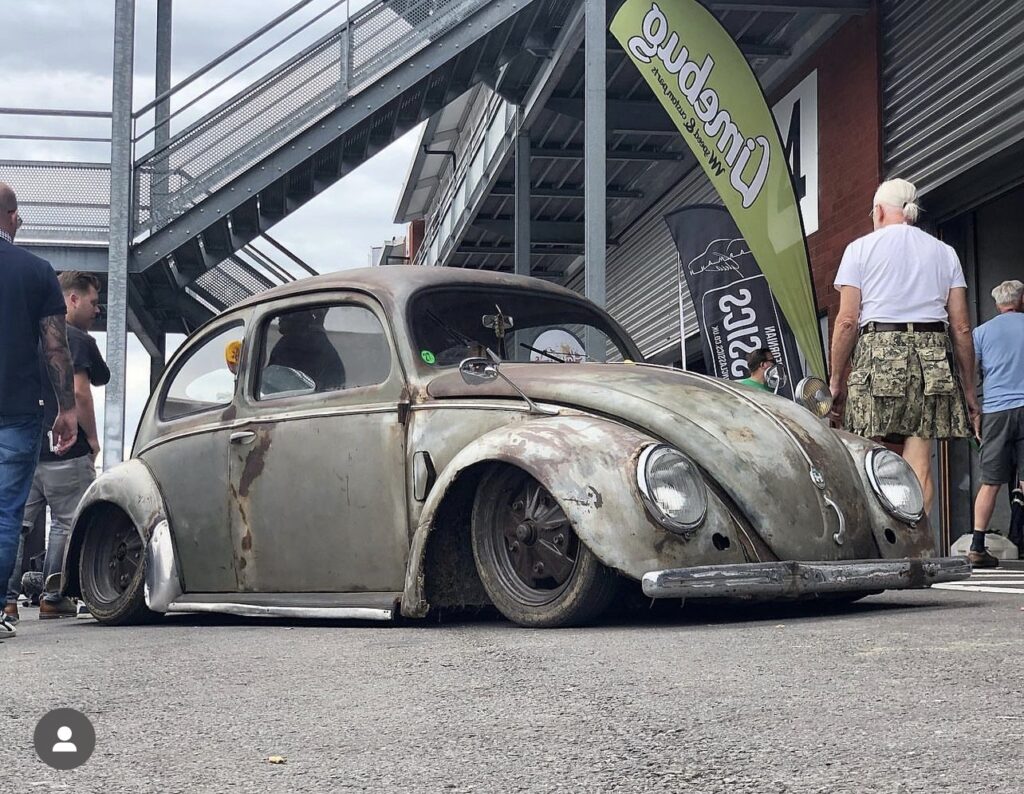
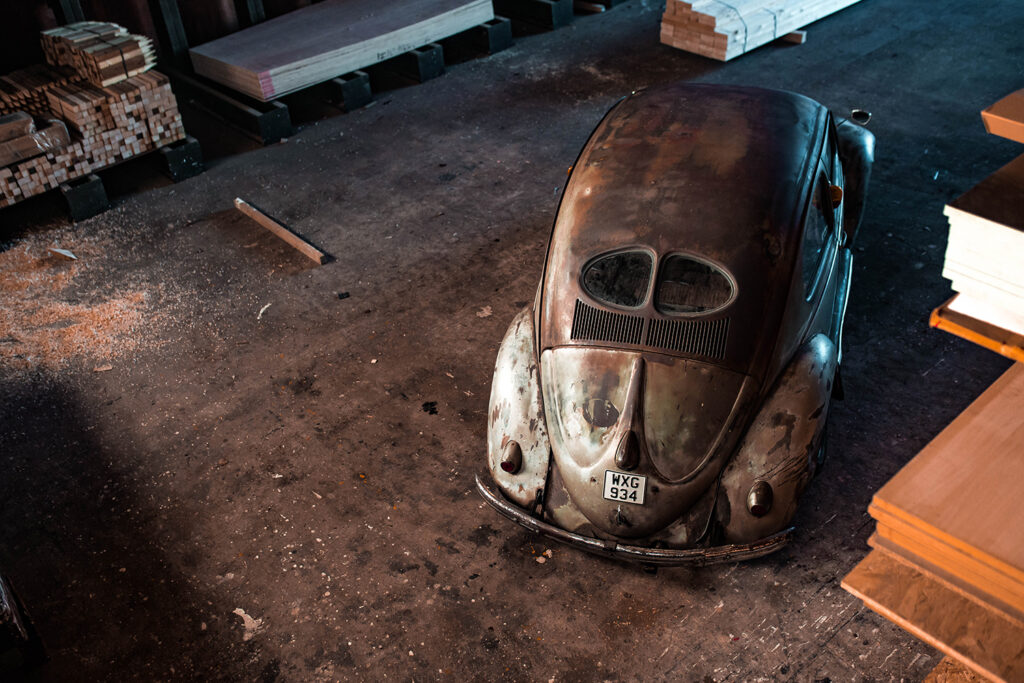
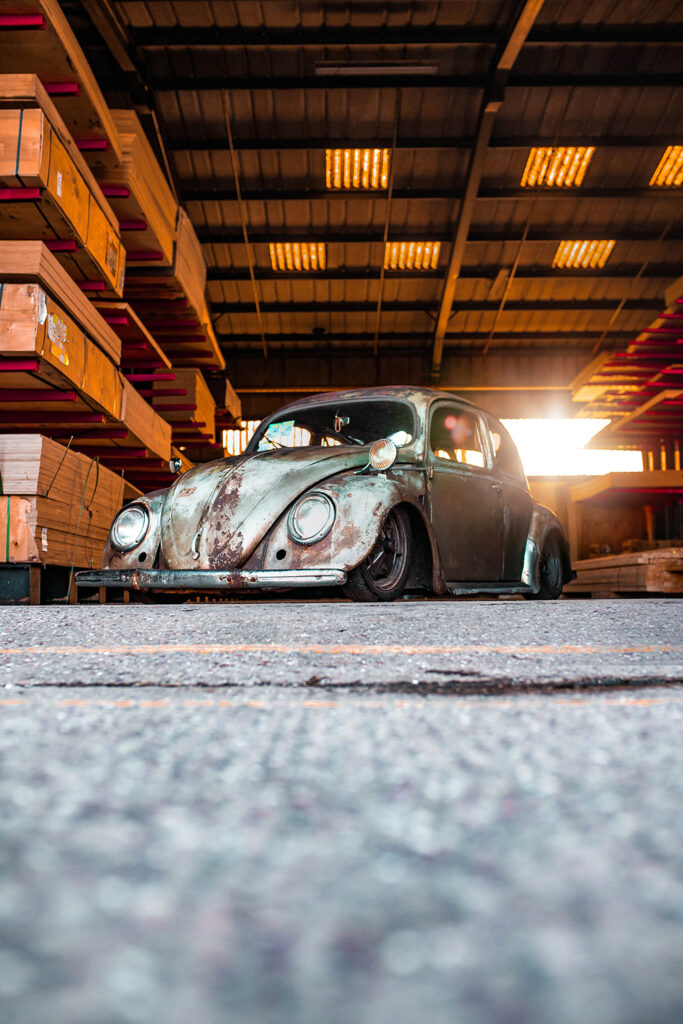
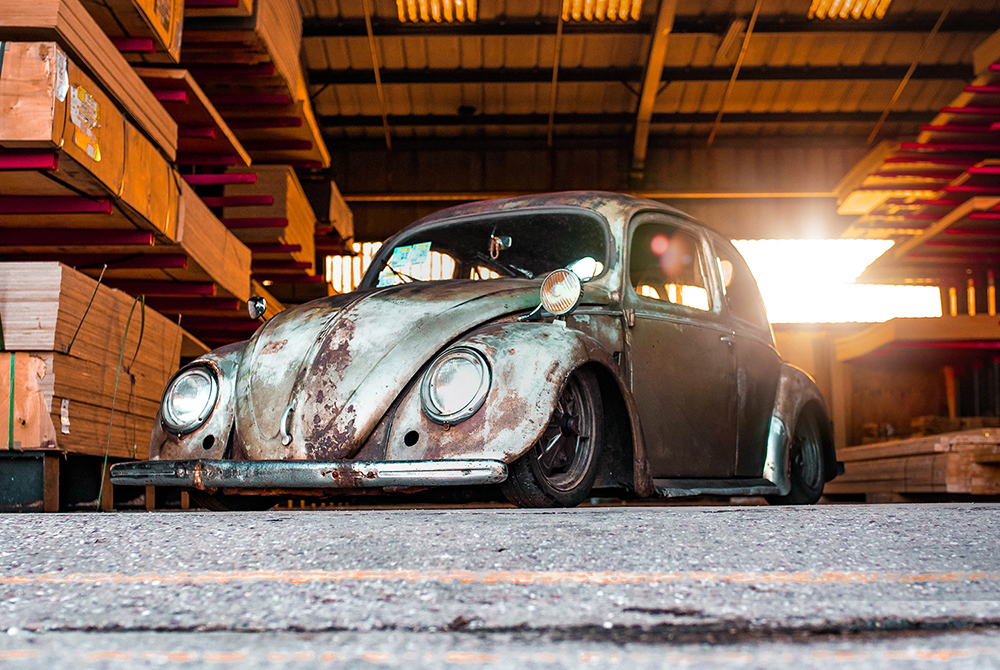
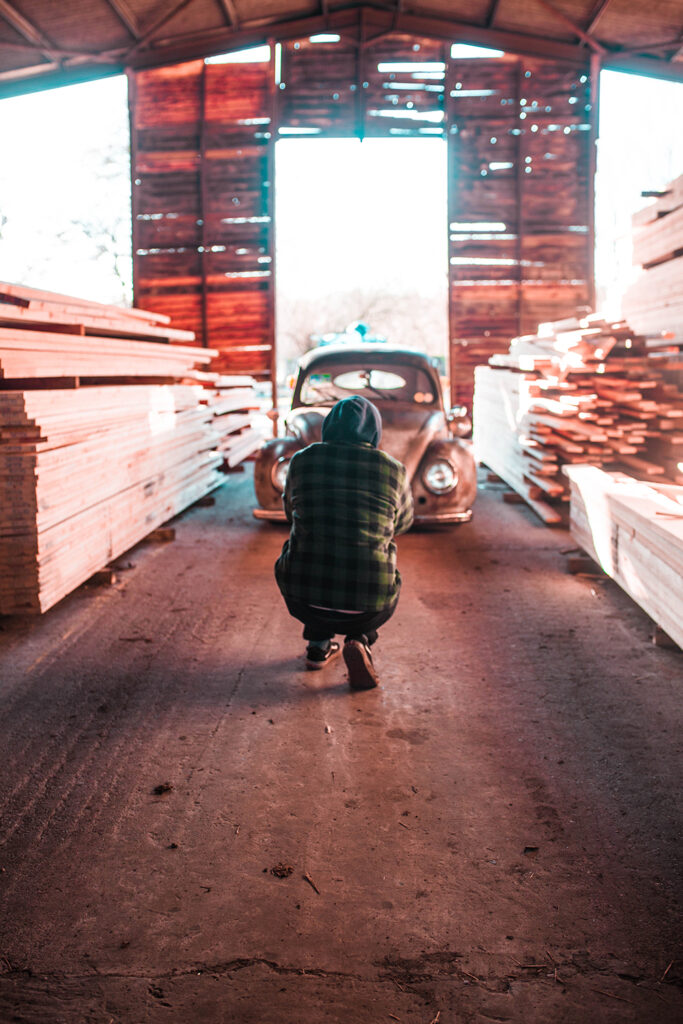
Scott A’ 51 Beetle puts a real-world finish on the Limebug catalogue, bringing together 1948-65 Beetle / Ghia 4" Narrowed Link Pin Deluxe Cantilever Swing Axle / IRS Air Ride Kit, 1948-79 Beetle / Ghia "The Revolution" Cantilever Swing Axle / IRS Rear Air Ride Kit, Bolt on, 1948-65 Beetle / Ghia Link Pin 4" Narrowed Complete Front Air Ride Kit with Elite Series Jawbreaker Beam in one properly resolved setup.
THE SWAMP COOLER
Forty years abandoned in a Swedish forest, six inches deep in muddy water and slowly being reclaimed by nature. Scott Ashton’s 1951 Split Window Beetle should probably never have survived. Instead, it found a second life with Limebug air suspension, rare Fumagalli wheels and a new owner determined to drive it.
Words by Limebug | Hall of Fame — Featured Builds
Some barn finds don’t bother with the barn.
The classic Volkswagen world has a rather unhealthy obsession with discovering old cars.
Barn finds.
Garage finds.
Cars recovered from abandoned buildings.
And the occasional supposedly untouched Beetle that somehow manages to appear on an auction website every six months.
But every now and then, something turns up with a history so unlikely that it sounds almost invented.
A 1951 Split Window Beetle.
Abandoned in the Swedish wilderness.
Left sitting in swampy ground for approximately forty years.
And eventually discovered with the lower part of its body submerged in muddy water.
Not exactly the storage conditions Volkswagen would have recommended.
Yet somehow, the car survived.
The panels weathered.
The metalwork deteriorated.
And the forest gradually worked its way around a vehicle that somebody had once decided wasn’t worth keeping.
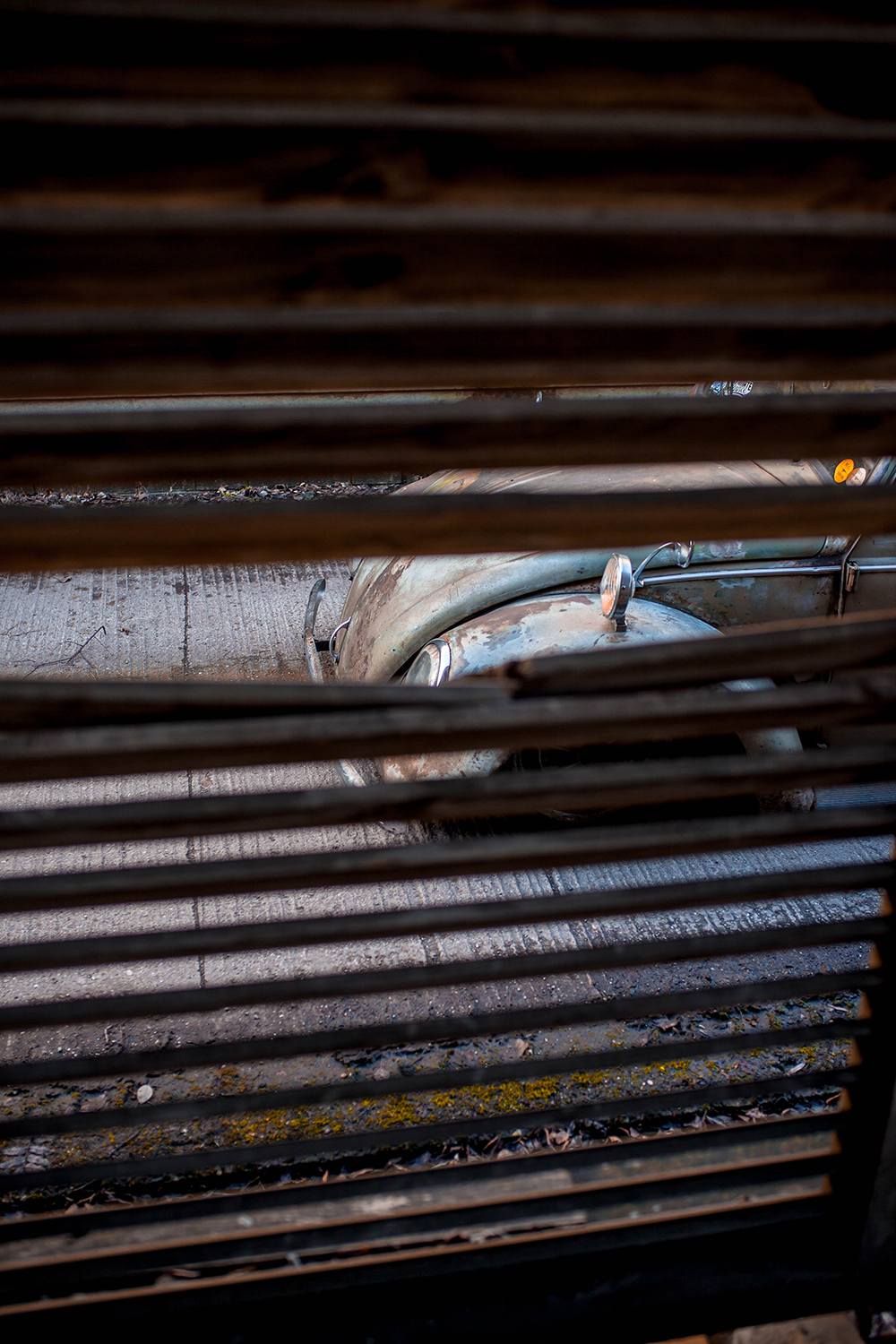
Decades later, that same Beetle would be back on the road, wearing its original scars, a set of unusual Fumagalli wheels and a complete Limebug air suspension system.
Quite a remarkable change of circumstances.
Abandoned to the elements
When scrapping cost more than keeping it
The story begins in Sweden, during a period when disposing of an unwanted vehicle could involve paying a scrapping fee.
According to the history passed down with the Beetle, the original owner decided the car simply wasn’t worth the expense.
Early Volkswagens weren’t always valuable collector’s items.
There was a time when a tired Split Window Beetle was just another obsolete vehicle.
And if repairing or disposing of it cost more than it was worth, the temptation to leave it somewhere out of the way was considerable.
Unfortunately for this particular car, that somewhere was a patch of wet Swedish woodland.
There it remained.
Through decades of rain, frost, snow and damp conditions.
With the ground slowly swallowing the lower bodywork.
Forty years later
Imagine walking through a remote area of Swedish forest and finding the unmistakable outline of a Volkswagen Beetle emerging from the undergrowth.
Not parked neatly beside a barn.
Not protected beneath a cover.
But sitting in muddy water, its bodywork deteriorating and vegetation growing around it.
That’s the remarkable situation in which the car was eventually recovered.
By then, early Split Window Beetles had become far more desirable than they had been when this example was abandoned.
What had once been considered worthless was now a significant piece of Volkswagen history.
A salvage operation brought the Beetle out of the swamp.
Its survival was extraordinary enough.
But getting it back onto the road would require somebody willing to see beyond the corrosion and decades of neglect.
Enter Scott Ashton
A car worth saving
Years after the original recovery, the Beetle found its way into the ownership of Scott Ashton.
A self-employed mechanical engineer and friend of Limebug, Scott acquired the car from the person who had originally rescued it from the Swedish swamp.
By this point, the Beetle was in considerably better condition than when it had emerged from the forest.
But it still carried the evidence of its unusual history.
And that was exactly what Scott wanted to preserve.
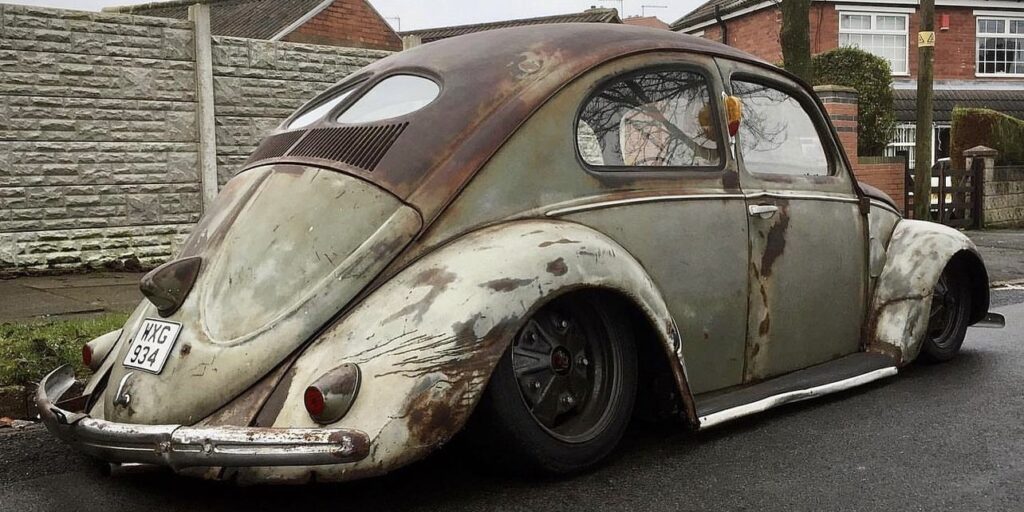
There would be no attempt to disguise the car’s past beneath flawless new paintwork.
The weathered panels were part of its identity.
The marks and ageing told the story of where it had been.
And removing them would have made the Beetle considerably less interesting.
Scott wanted to make the car his own without losing the character that made it worth saving.
A different kind of restoration
On a vehicle like this, restoration doesn’t necessarily mean making every surface look new.
The objective was to create a usable, enjoyable classic Volkswagen while retaining its unmistakably aged appearance.
The body had already been through more than most cars experience in several lifetimes.
It didn’t need to pretend otherwise.
Instead, Scott concentrated on the mechanical specification, comfort and the little details that would make the car more enjoyable on the road.
And one of the first things he wanted to change was the stance.
The Limebug treatment
Four inches narrower
For the suspension, Scott turned to Limebug.
The front end received a 4-inch narrowed Link Pin Jawbreaker air ride beam, forming part of our Deluxe suspension package.
The narrowed arrangement helps position the wheels beneath the original wings while accommodating the adjustable front suspension.
On a 1951 Beetle, the front-end proportions are particularly important.
The early bodywork is simple and beautifully rounded, with a shape that doesn’t benefit from unnecessarily complicated modifications.
The Jawbreaker allowed Scott to achieve the stance he wanted without changing the essential appearance of the car.
The installation also included Titan 4-inch through rods, 2.5-inch dropped link-pin spindles and lower shock relocators.
A quick-steer kit completed the front steering specification.
Together, those components provided a comprehensive front-end conversion suited to the car’s intended ride height.
Deluxe rear air suspension
The rear suspension was also converted as part of the Limebug Deluxe air ride package.
The recorded specification includes rear air spring plates, allowing the back of the Beetle to work with the adjustable front suspension.
Rather than concentrating on one end of the car, the installation was developed around the complete stance.
The objective was straightforward.
Get the Split Window sitting correctly.
Make the suspension adjustable.
And retain the ability to drive a car that had spent far too much of its life standing still.
Air Lift 3P
A little modern technology
The air suspension is managed through Air Lift 3P, providing electronic pressure-based ride-height control.
It’s a particularly interesting contrast against a Beetle from 1951.
On the outside, the car carries decades of weathering and the unmistakeable details of an early Volkswagen.
Underneath, it uses electronically managed air suspension.
The combination might sound unlikely.
But in practice, it suits the car rather well.
Scott can enjoy the low stance when parked while adjusting the suspension for the conditions encountered on the road.
And given the Beetle’s history, there’s something rather satisfying about a car once buried in muddy water now being raised and lowered at the press of a button.
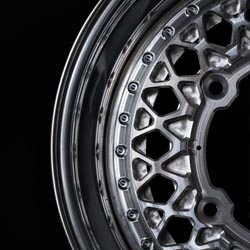
The wheels from Belgium
Finding the right set
One of the more difficult decisions involved the wheels.
On an early Split Window Beetle, choosing something appropriate can be surprisingly challenging.
A modern design risks overpowering the simple bodywork.
But a conventional steel-wheel setup wasn’t necessarily the direction Scott wanted either.
The solution appeared during a visit to a Volkswagen show in Belgium.
There, Scott came across a set of Fumagalli wheels.
And they looked exactly right.
The unusual design complemented the car’s aged exterior without drawing attention away from it.
They had the sort of period character that made them seem entirely at home beneath the early Beetle’s wings.
Like they’d always been there
Some wheel choices transform a vehicle by deliberately creating contrast.
Others work because they feel completely natural.
The Fumagallis belong to the second category.
Against the weathered bodywork and carefully adjusted stance, they appear almost as though they’ve been part of the car for decades.
Which is quite an achievement for wheels discovered at a show on the other side of Europe.
The combination gives the Beetle a distinctive appearance without abandoning its original character.
It’s an excellent example of knowing when a modification complements a car rather than competing with it.
Comfort. At last.
The trouble with bare seat frames
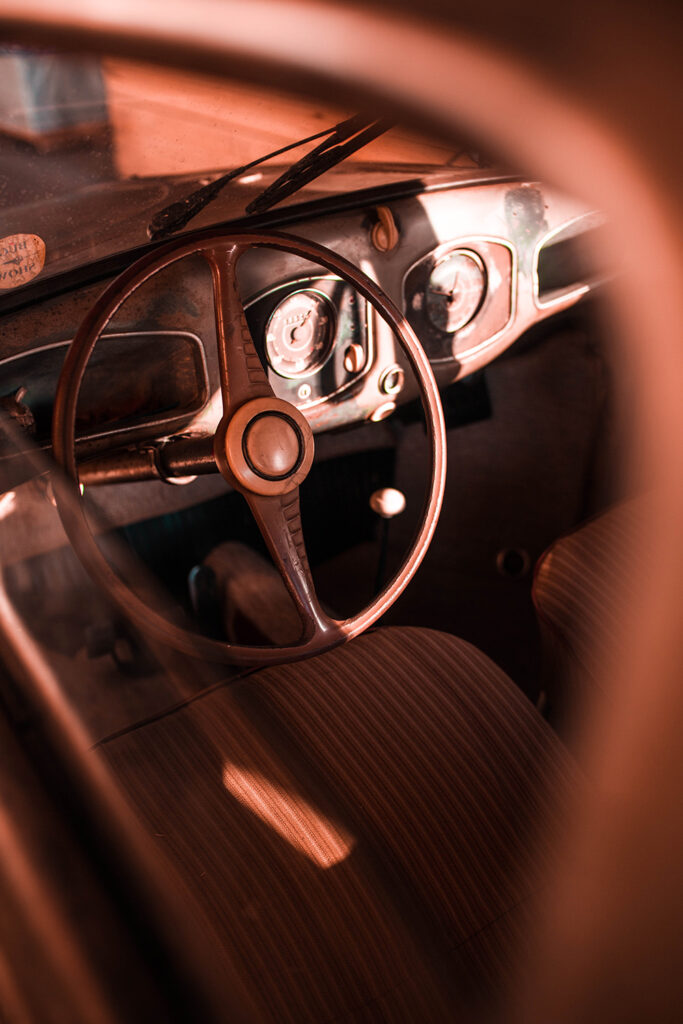
The first stages of Scott’s ownership weren’t exactly luxurious.
For a while, he was driving the Beetle around with little more than the metal seat frames to sit on.
A perfectly effective way to understand just how much work Volkswagen put into making its original seats comfortable.
And also a rather good way to decide that the interior needs finishing.
Eventually, Scott contacted a trusted upholsterer recommended by a friend.
The brief was to retain the character of the original interior while making it considerably more pleasant to spend time in.
A little more padding
The finished upholstery took inspiration from the original Volkswagen trim but introduced subtle modern improvements.
Most importantly, the seats received additional padding.
It might not sound like the most exciting modification on a heavily customised Split Window Beetle.
But Scott described the difference as transformative.
Suddenly, the car became somewhere he could comfortably spend a few hours.
Rather than something he needed to recover from after every journey.
It’s a useful reminder that not every worthwhile improvement needs to involve complicated fabrication or impressive engineering.
Sometimes it’s simply nice to have somewhere comfortable to sit.
A few details for the road
Swan-neck mirrors and modern indicators
The exterior also received a handful of carefully chosen practical improvements.
Swan-neck mirrors were fitted to improve rearward visibility.
Their traditional appearance suited the early bodywork, while making the car more manageable in modern traffic.
Scott also added retro-style indicator lights, replacing the original semaphore arrangement for signalling.
It’s the sort of modification that makes practical sense on a car intended to be driven regularly.
The period-inspired appearance remains.
But the vehicle becomes easier for other road users to understand.
Which is particularly valuable when sharing the road with considerably newer and faster traffic.
Looking after the engine
The existing engine received attention aimed primarily at improving reliability and road manners.
Rather than immediately pursue a radical increase in power, Scott concentrated on making the car dependable enough to enjoy.
At the time of the original feature, he also had another 30hp engine prepared for a future installation.
Whether that later engine has since been fitted isn’t established in the available build history, so it remains part of the car’s documented plans rather than its confirmed current specification.
Three hundred miles to Spa
The real test
One of the most satisfying parts of the story came after the suspension and interior work had been completed.
Scott took the Beetle on a round trip of more than 300 miles to the Le Bug Show at Spa-Francorchamps.
For a car that had once spent four decades abandoned in a Swedish forest, that was quite a milestone.
But the journey was significant for another reason.
It demonstrated how much the driving experience had changed.
Before the Limebug suspension installation, Scott remembered the car rattling and wandering across the road.
Afterwards, he described the difference as remarkable.
In his own words:
That assessment means more to us than simply seeing the car photographed at its lowest setting.
Because the whole point of the installation was to make Scott’s Beetle more enjoyable.
Not just more dramatic to look at.
From swamp to Spa
There’s something beautifully appropriate about the journey.
A Beetle abandoned because it was considered worthless.
Rescued decades later.
Restored and modified by somebody who appreciated its history.
Then driven hundreds of miles to one of Europe’s best-known Volkswagen gatherings.
From a Swedish swamp to Spa-Francorchamps.
It’s difficult to imagine a more fitting second life.
The complete build specification
Vehicle and history
- 1951 Volkswagen Type 1 Split Window Beetle
- Early crotch-cooler-era body
- Recovered from Swedish woodland and swamp conditions
- Reportedly abandoned for approximately forty years
- Original aged exterior character preserved
- Owner: Scott Ashton
- Mechanical engineer and friend of Limebug
Front suspension
- Limebug 4-inch narrowed Link Pin Jawbreaker air ride beam
- Titan 4-inch through rods
- 2.5-inch dropped link-pin spindles
- Lower shock relocators
- Quick-steer kit
Rear suspension
- Limebug Deluxe rear air suspension
- Rear air spring plates
Air management
- Air Lift 3P electronic management
- Adjustable front and rear ride height
Wheels
- Period-style Fumagalli wheels
- Discovered at a Volkswagen show in Belgium
Interior
- Retrim inspired by original Volkswagen upholstery
- Additional seat padding
- Improved comfort for regular road use
Exterior and mechanical
- Original weathered paint and patina retained
- Swan-neck mirrors
- Retro-style indicator lights replacing semaphore operation
- Engine reliability improvements
- Separate 30hp engine recorded as a future installation plan
Notable journeys
- More than 300-mile round trip to Le Bug Show, Spa-Francorchamps
- Regular road use following the suspension conversion
The Swamp Cooler in motion
The car’s story is particularly good on video. The weathered exterior, unusual wheels and adjustable suspension are much easier to appreciate when the Beetle is moving.
Watch Scott’s 1951 Swamp Cooler on Limebug air ride:
[YouTube video: https://www.youtube.com/watch?v=yfyuaorykIg]
Too good to disappear.
It’s difficult to imagine what somebody thought when they originally abandoned this Beetle.
Perhaps it was simply an old car that had become too expensive to repair.
Something that had served its purpose.
And something nobody expected to see on the road again.
Decades later, its value had changed completely.
The Split Window bodywork had become desirable.
The damage and weathering had developed an appeal of their own.
And the car had found an owner who wanted to preserve its past while giving it a future.
Scott’s Beetle isn’t a conventional restoration.
It’s a rescued survivor, improved with carefully chosen modern components and driven with the sort of enthusiasm that old Volkswagens deserve.
And for Limebug, it’s been particularly satisfying to play a part in bringing it back to the road.
Forty years forgotten. Hundreds of miles enjoyed.
The Swamp Cooler. Proof that even the most unlikely Volkswagen deserves a second chance.