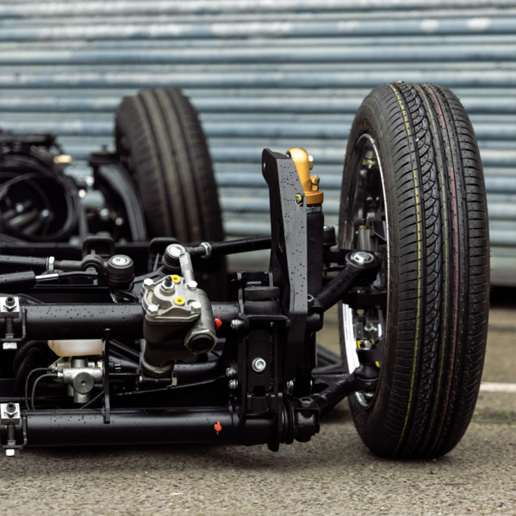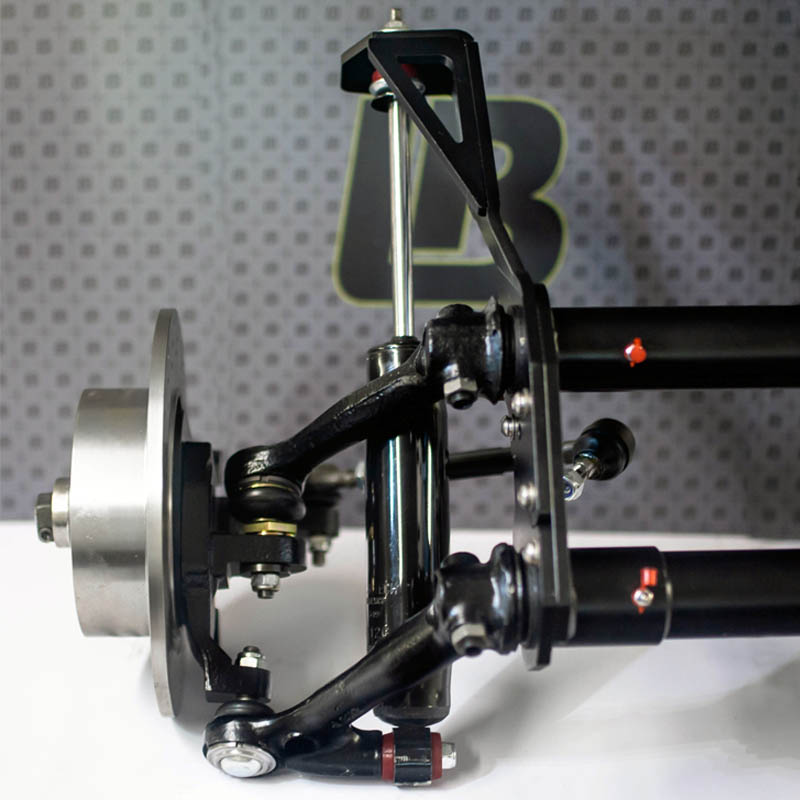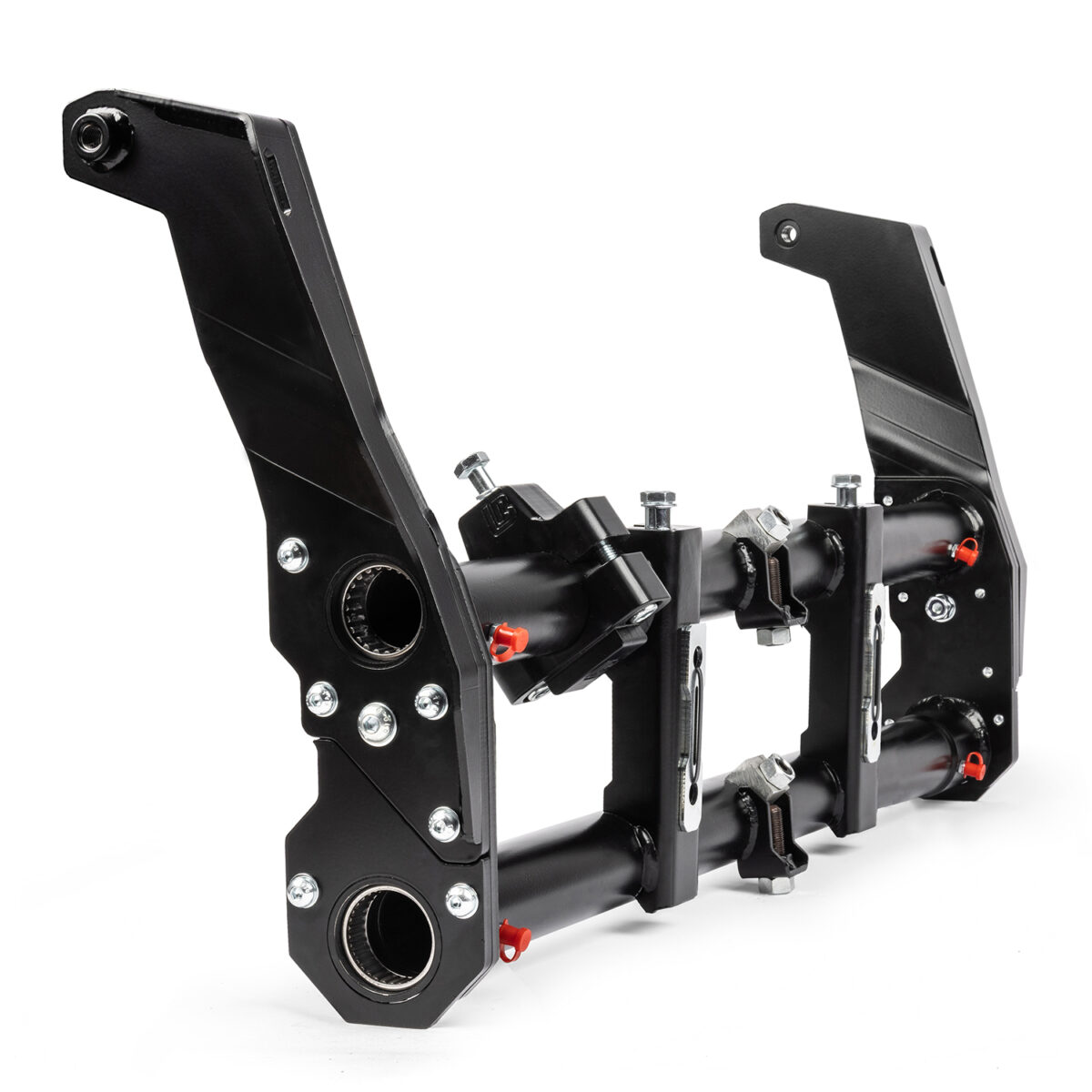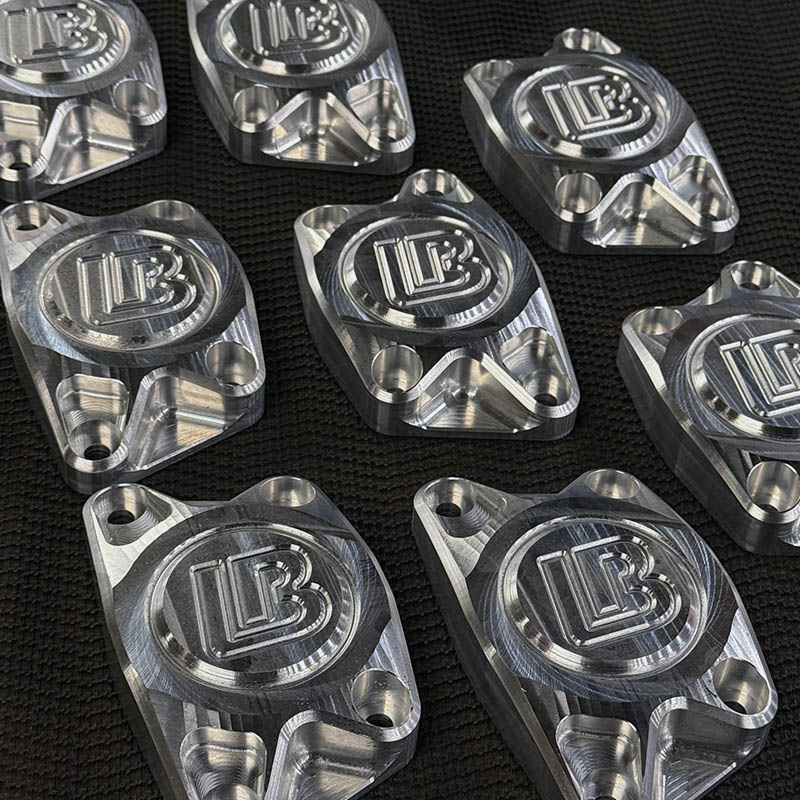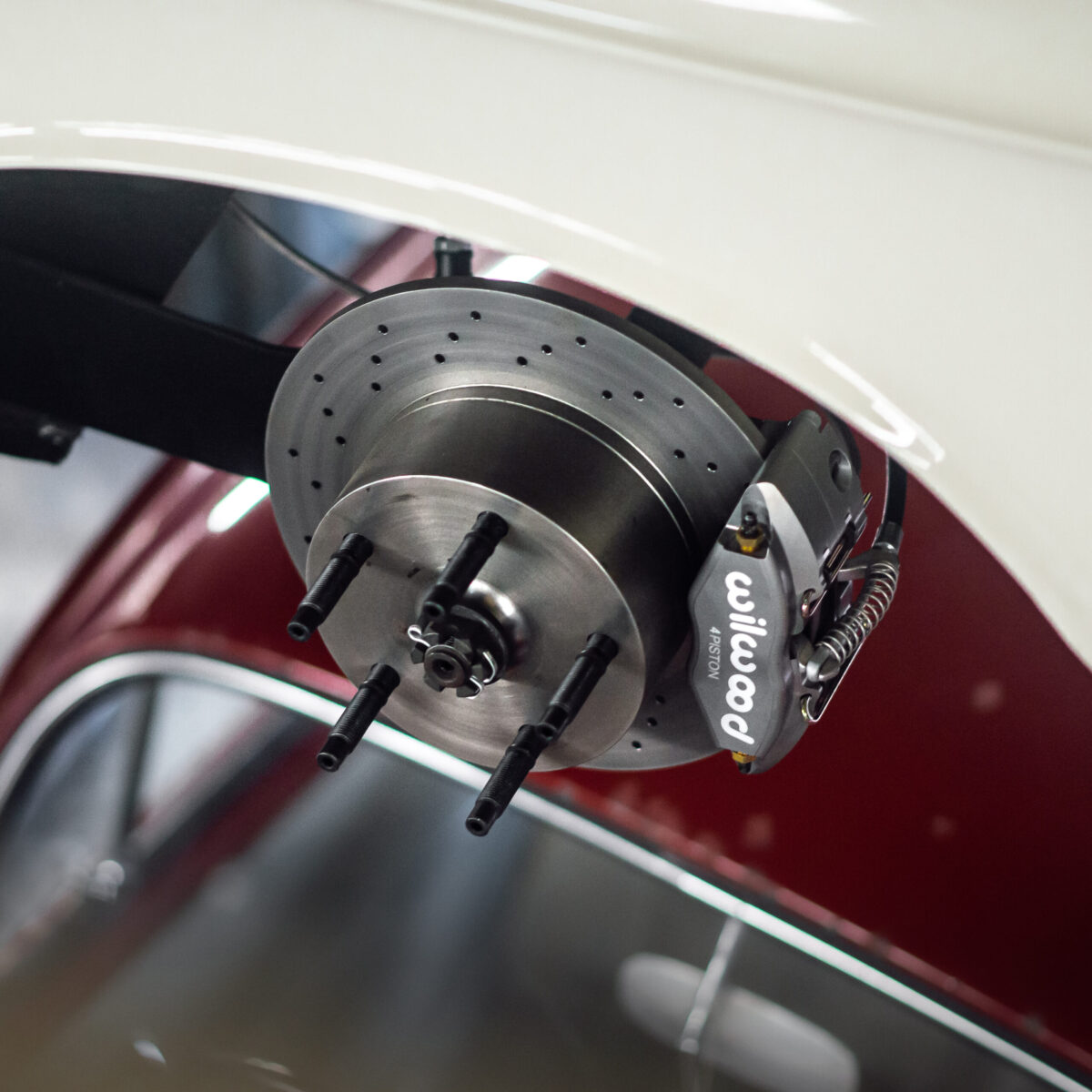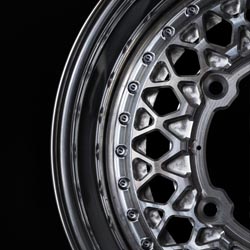

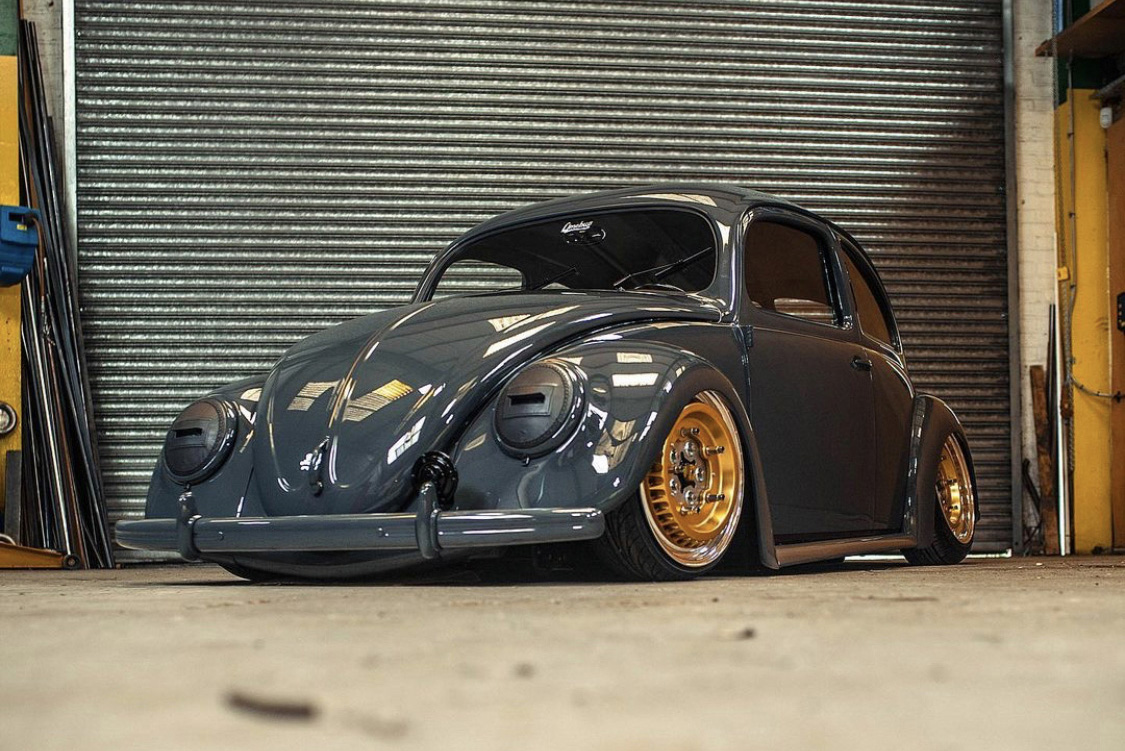
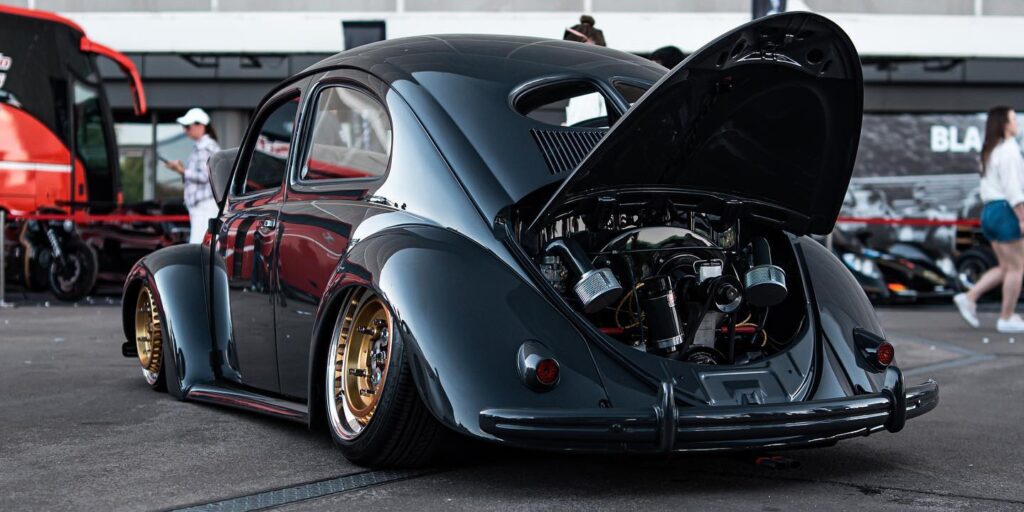
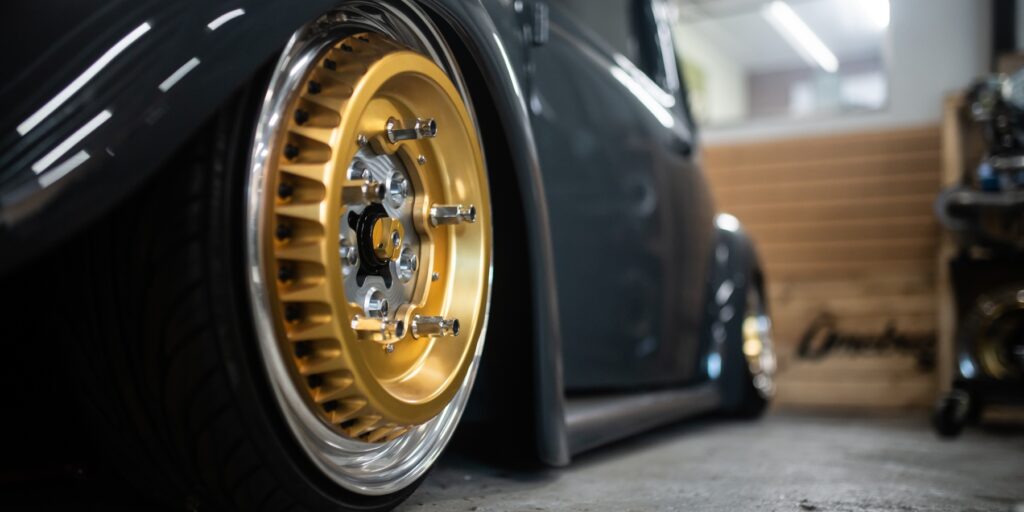
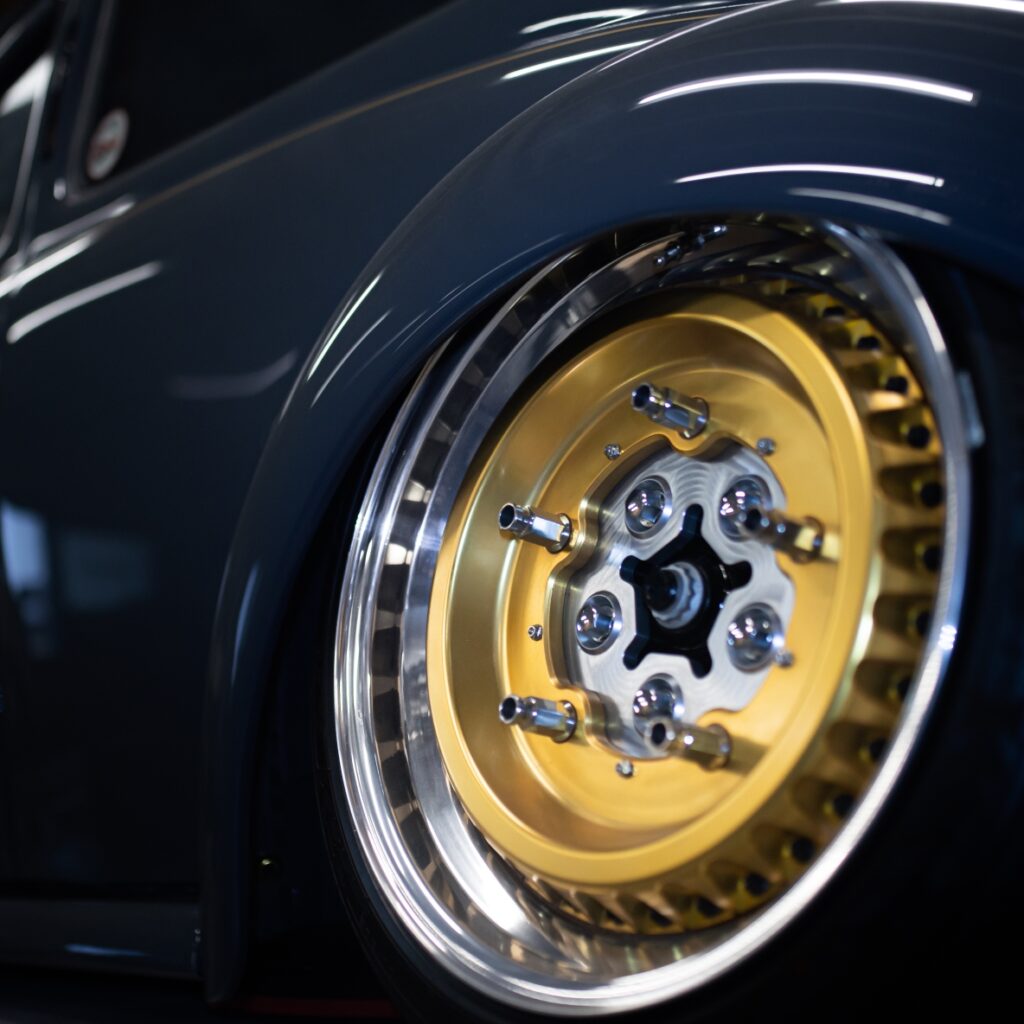
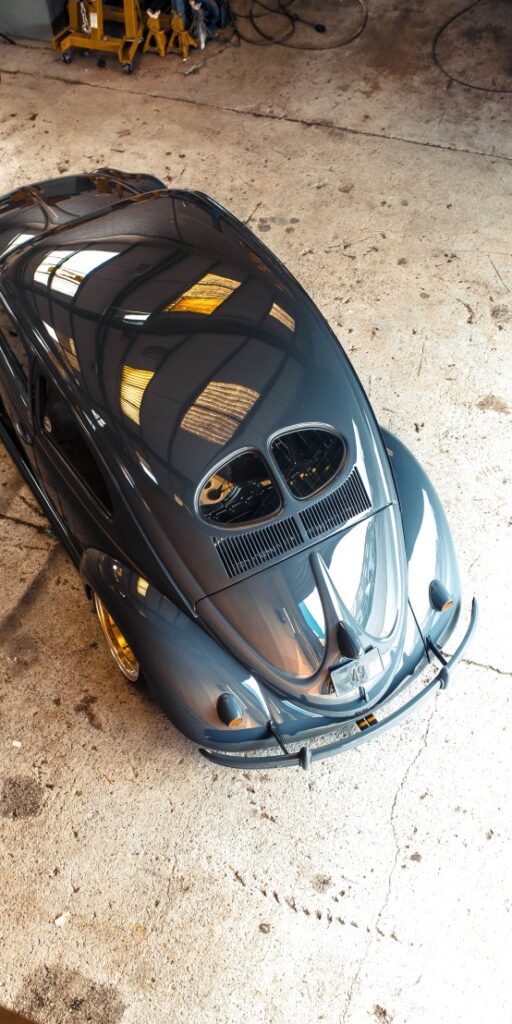
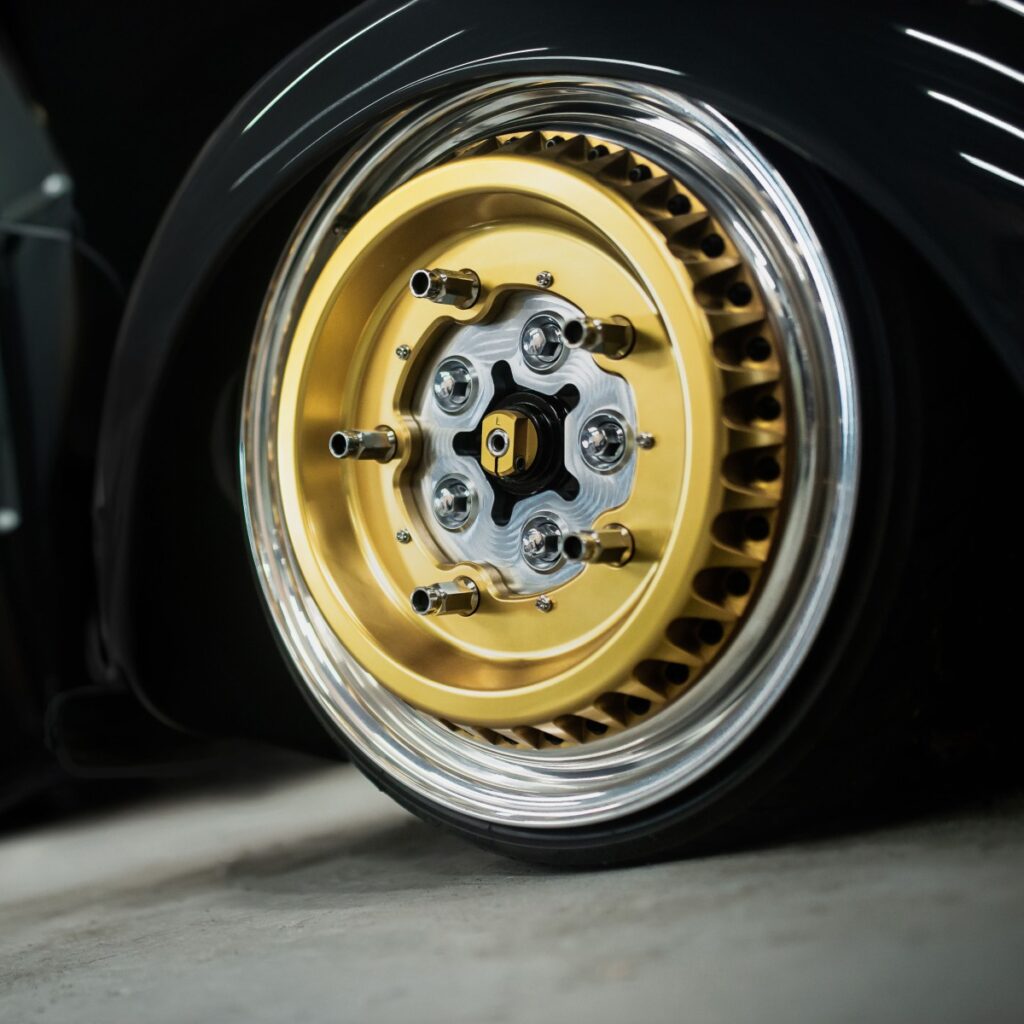
Limebug’ 1949 Beetle puts a real-world finish on the Limebug catalogue, bringing together 1959-79 Beetle / Ghia Swing Axle Revolution Cantilever Rear Air Ride Kit, 5x130 to 5x205 PCD Billet CNC Wheel Adapters, (Porsche - Early Wide 5), Limebug 17" GT35 3-Piece Split Rim Wheels in one properly resolved setup.
THE 49 — BUILT DIFFERENT
3,500 hours. Two Best of Show victories. International magazine covers. A 1949 Standard Beetle taken further than anybody at Wolfsburg could ever have imagined.
Never meet your heroes. Or so they say.
There’s an old saying about never meeting your heroes.
Apparently, reality rarely lives up to the picture you’ve built in your head.
But what happens when your hero isn’t a person?
What happens when it’s a battered 1949 Volkswagen that needs an extraordinary amount of work just to become a respectable car again?
Well, you buy it.
Take it apart.
And somewhere around the three-thousand-hour mark, begin wondering whether it was such a good idea after all.
Welcome to The 49.
Our 1949 Split Window Standard Beetle became one of the most ambitious projects in Limebug’s history.
A genuine early Volkswagen, transformed through custom chassis engineering, concealed air management, bespoke billet components and three-piece wheels designed specifically for the build.
The finished car went on to win Best of Show at VolksWorld 2019 and FittedUK 2021, appear on international magazine covers and earn a place in the Ultrace Top 16.
But to understand why it became such an important car, we need to start considerably earlier.
From Sweden to Stoke-on-Trent
A very early Volkswagen
The 49 began life as a Swedish-export Volkswagen.
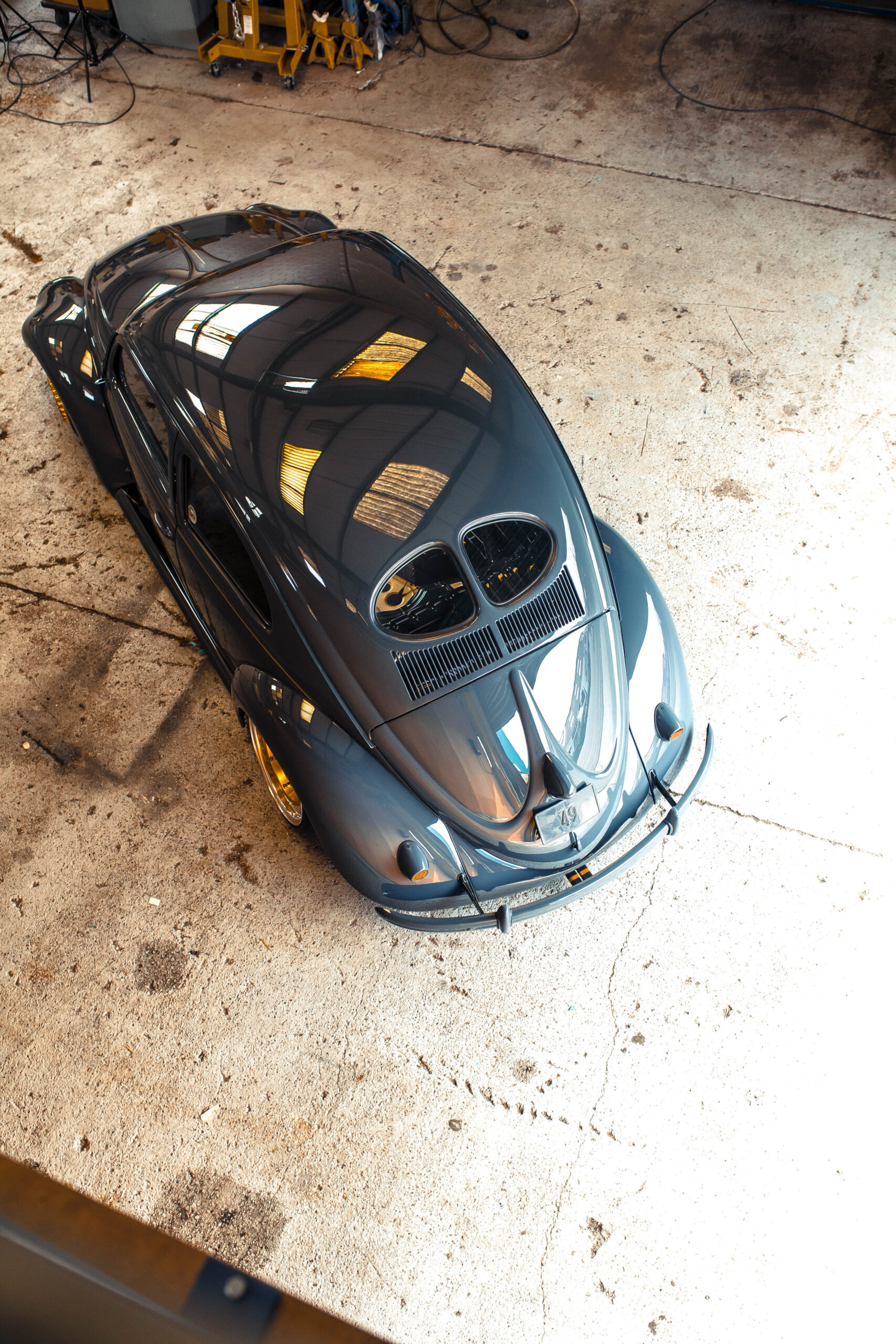
Built in 1949, it belonged to the earliest generation of post-war Beetles, recognisable by its split rear window and beautifully simple bodywork.
As a Standard model, the car represented Volkswagen’s more utilitarian offering, without the additional trim and equipment associated with the more luxurious versions.
That simplicity was exactly what made it interesting to us.
The original car had no pretensions of luxury or performance.
It was basic, functional transport.
Which made it an especially unlikely starting point for the level of engineering we had in mind.
By the time it arrived in Britain and eventually found its way into our hands, it was in exceptionally poor condition.
The restoration alone would have been a substantial undertaking.
But this was never going to be a conventional restoration.
The trouble with building a 1949 Beetle
Early Volkswagens present their own challenges.
Numerous mechanical and body components differ from later models, and original parts can be difficult to source.
For The 49, the problem became considerably more complicated because we weren’t simply replacing worn components.
We were combining early Volkswagen architecture with completely different suspension, chassis and interior engineering.
Every significant modification had consequences elsewhere.
Wheel position affected suspension specification.
Suspension layout affected the chassis.
And the decision to conceal the air management equipment introduced one of the most involved fabrication jobs on the car.
There were easier ways to build a show Beetle.
We just weren’t particularly interested in them.
Three thousand five hundred hours
When a project becomes an obsession
By the time The 49 was completed, approximately 3,500 hours had gone into the build.
Even allowing for the normal complications of restoring an old Volkswagen, it’s an extraordinary figure.
But much of that time went into details that aren’t immediately visible.
Custom mounting arrangements.
Mechanical finishing.
Carefully prepared components.
And the repeated process of designing something, fitting it and deciding it could be done better.
The car became an exercise in following an idea to its conclusion, regardless of how much work that involved.
Occasionally, that meant doing things twice.
Aircooled Auto Electrics, for example, later described completing the wiring again because the first result hadn’t met the standard being pursued.
It’s a small story.
But one that says rather a lot about the build.
The people who helped make it happen
A project of this scale needed specialist help.
The original Limebug build credits include Sam Trigg of Kens Customs, Lloyd Jackson of Deluxe Metalwork, Andy Finch of Spikes, Phil James of The Install Company, Alan Wooton of Custom Paintworks and Brett of OB1.
Their work formed part of the collective effort needed to bring the vehicle together.
The 49 may have become closely associated with Craig and Limebug, but it was never the achievement of one pair of hands.
It needed a collection of people willing to spend an unreasonable amount of time getting the smallest details right.
The chassis nobody expected
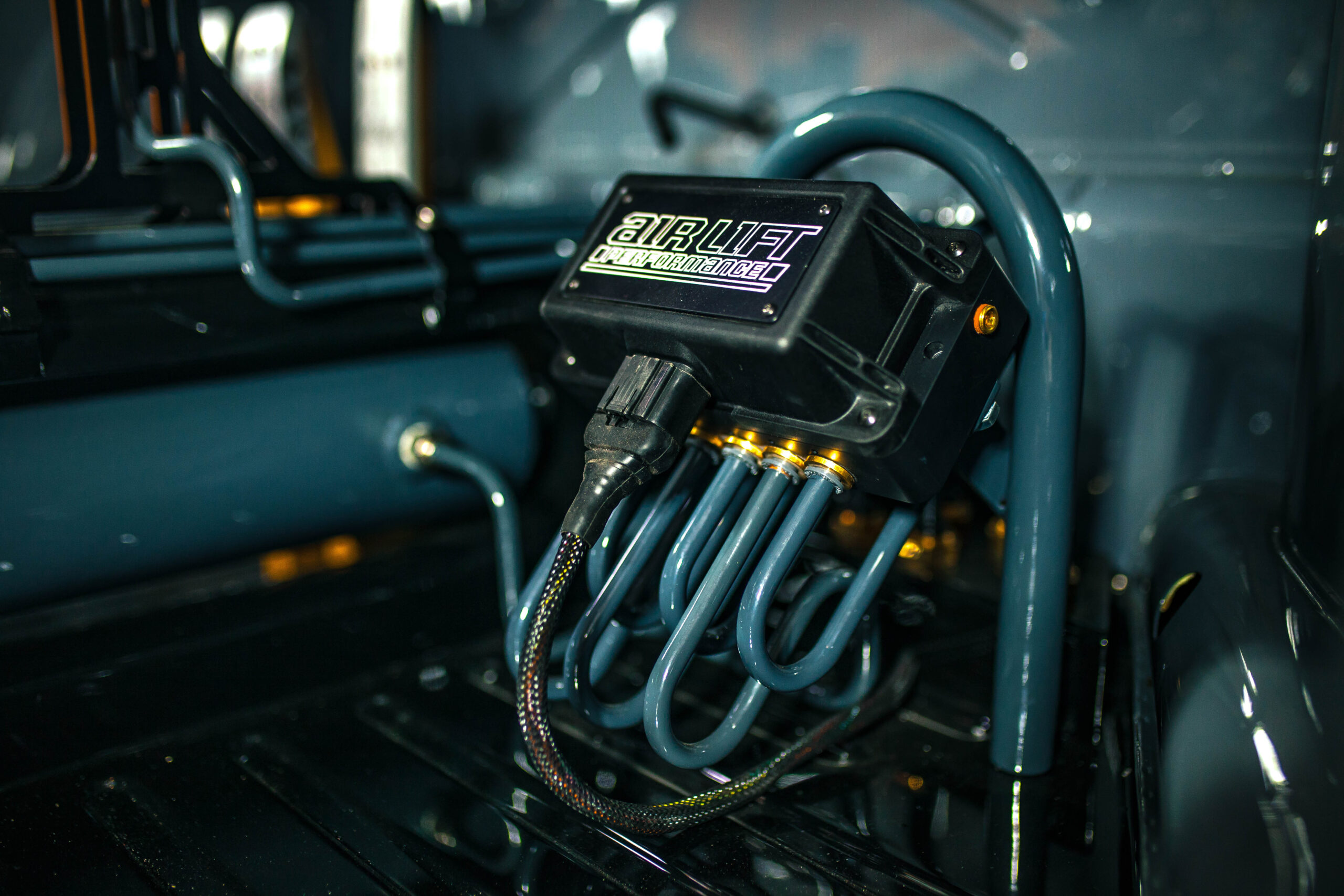
Hiding the air system inside the spine
One of the most unusual engineering decisions involved the central chassis spine.
Rather than install a conventional exposed air tank in the cabin or luggage area, we wanted the management hardware to be as unobtrusive as possible.
The solution involved raising the central chassis spine to accommodate the tank within the structure.
It was hardly the easiest approach.
But the resulting arrangement kept the installation discreet and allowed the interior to retain a much cleaner appearance.
For a car built around the visual simplicity of a 1949 Standard Beetle, that mattered.
The air suspension was intended to transform the way the car sat.
Not dominate every view of the interior.
The finished specification incorporated Air Lift 3P electronic management and a compact MOA 1.5-gallon Skinny Tank.
A considerable amount of fabrication for something we largely wanted people not to see.
Four inches narrower
The Jawbreaker front end
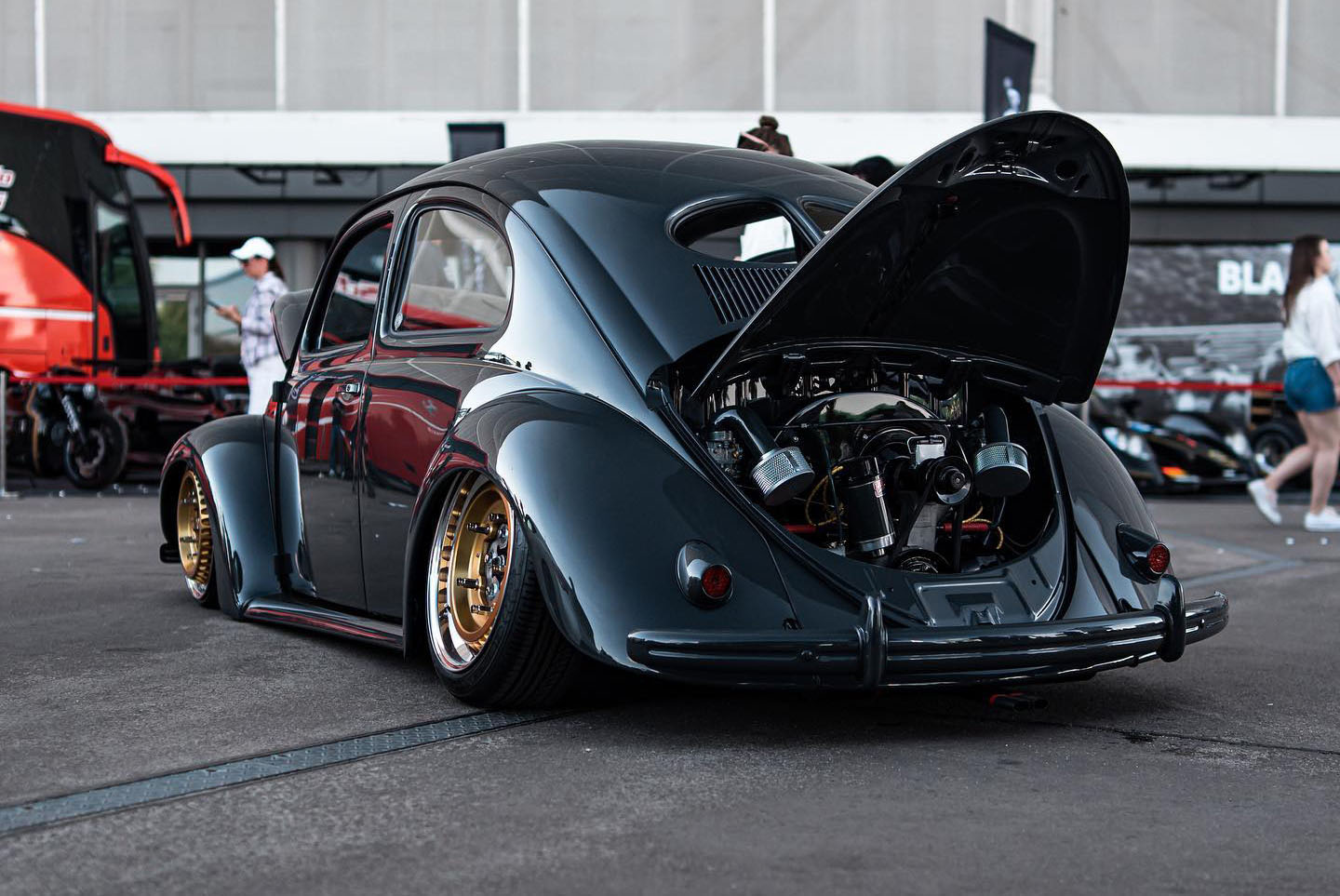
At the front, The 49 runs a Limebug 4-inch narrowed Link Pin Jawbreaker beam.
The reduced track width allows the wheels to sit further beneath the original front wings.
The installation also includes 2.5-inch dropped spindles, 4-inch through rods and MOA430 air shocks.
Together, these components provide the adjustable front suspension arrangement responsible for the car’s dramatic stance.
The relationship between wheel width, beam narrowing and ride height was particularly important.
A 1949 Beetle has very different proportions from a modern custom car, and we wanted the finished fitment to complement those early body lines rather than overpower them.
Swing-axle cantilever at the rear
At the rear, we incorporated our swing-axle cantilever air ride system.
The arrangement provided adjustable ride height while keeping the operating hardware carefully packaged.
With the front and rear suspension working together, the car could settle into its distinctive low stance without sacrificing the familiar split-window silhouette.
That’s what makes The 49 work visually.
The shape remains unmistakably early Volkswagen.
Everything underneath tells a different story.
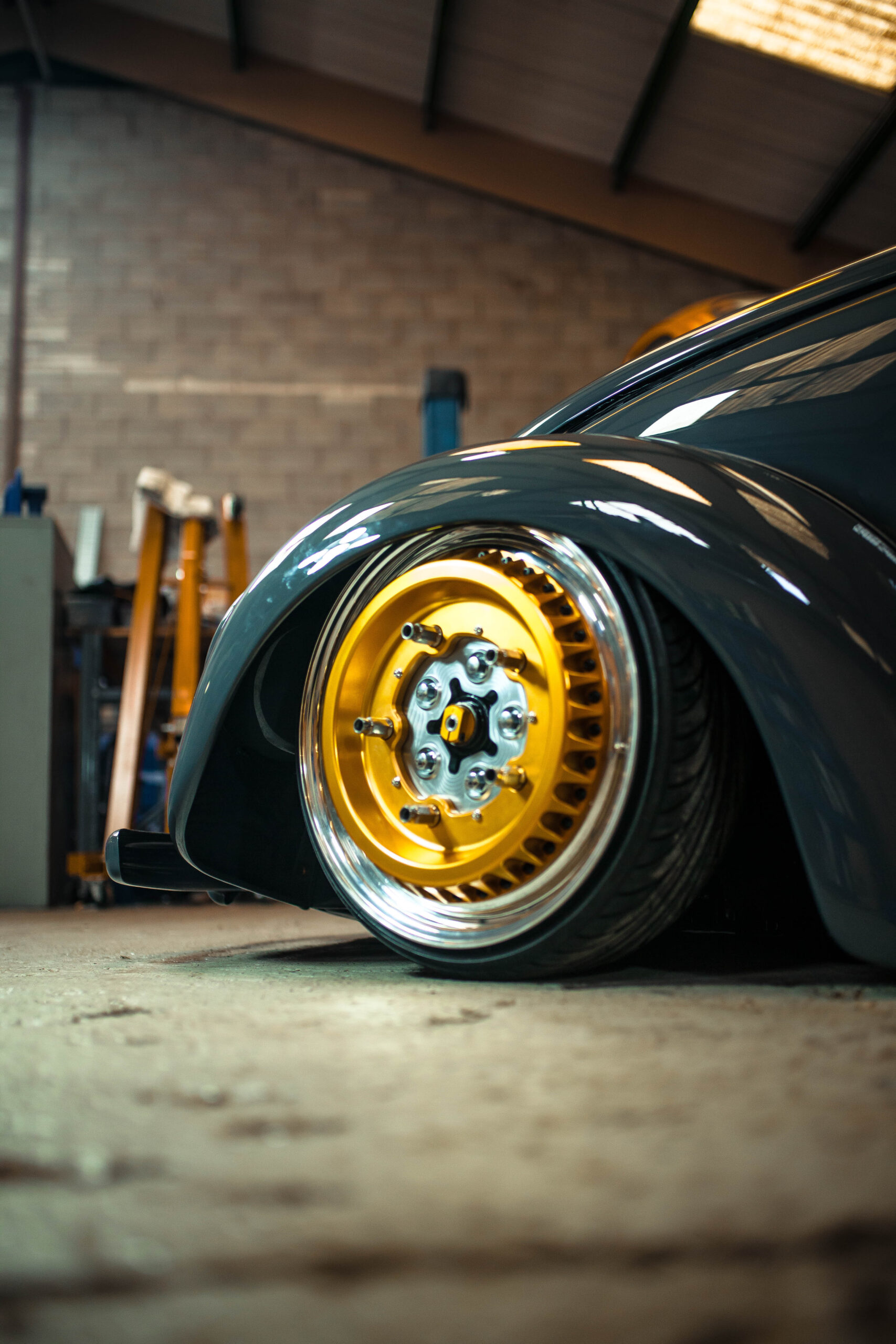
The wheels that became the GT35
Gold. Seventeen inches. Three pieces.
The wheels were another area where an existing product simply wasn’t what we wanted.
We developed the GT35 design specifically for The 49.
A 17-inch, three-piece split rim with a staggered fitment and distinctive anodised gold finish.
The design brought a traditional motorsport influence into a much more contemporary modular wheel.
Against the understated bodywork, the gold provided the perfect contrast.
But the wheels became important for another reason.
They weren’t simply a one-off solution for the car.
The GT35 became part of Limebug’s wider wheel development, illustrating how an original workshop idea could evolve into a product for other Volkswagen owners.
The 49 wasn’t just demonstrating our engineering.
It was helping create it.
Beyond the suspension
Custom details throughout
The attention given to the chassis continued into the mechanical and interior specification.
Custom billet pedal and gearshift components formed part of the build, alongside an OBP pedal assembly.
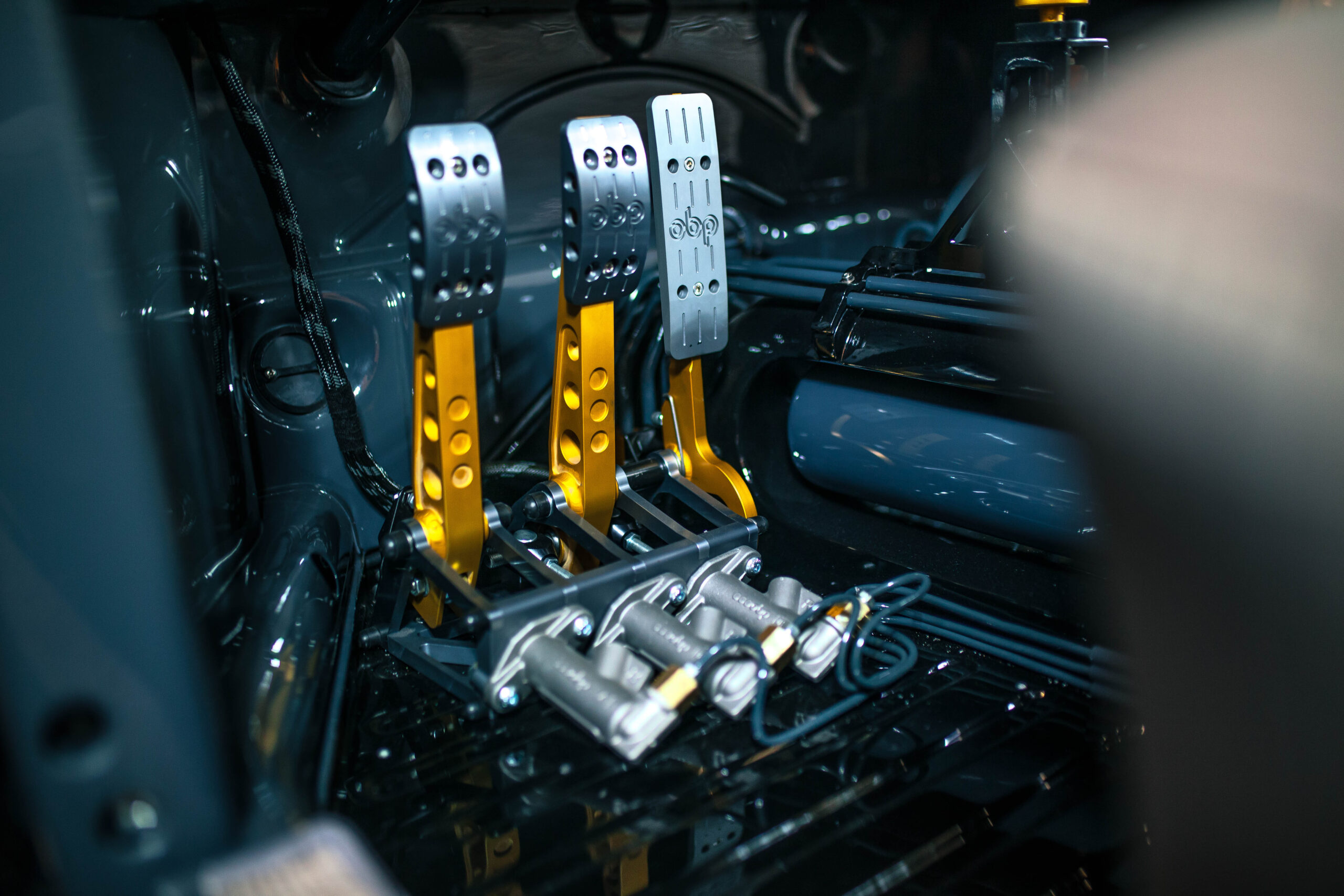
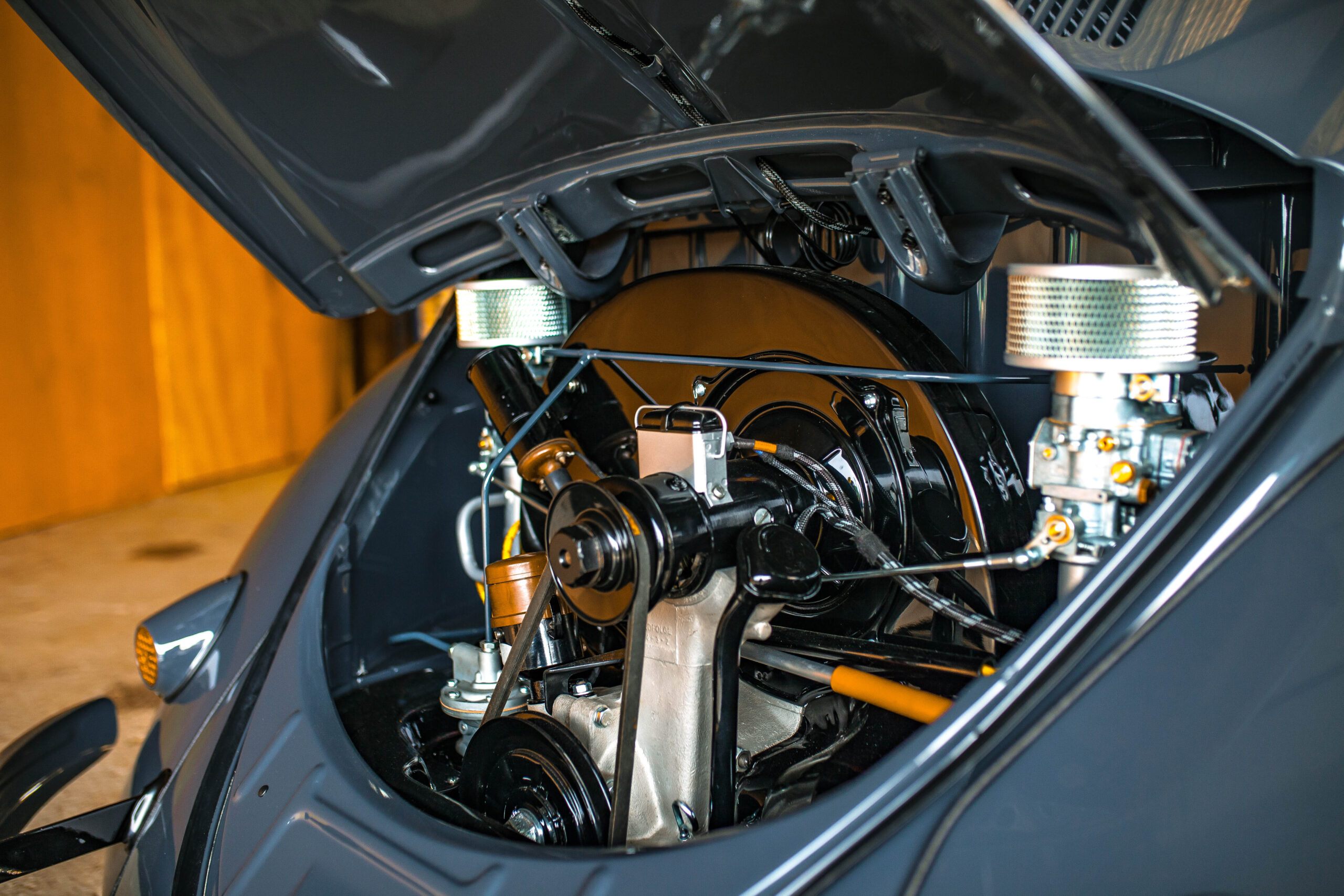
A Hunt distributor featured in the mechanical specification.
And the extensive finishing work ensured that the visible engineering was treated with the same care as the exterior.
The intention wasn’t to cover the car in accessories.
It was to create a consistent standard throughout.
A simple early Volkswagen body with a remarkable amount of bespoke work beneath the surface.
By the time everything came together, we had created something rather difficult to categorise.
Not a factory restoration.
Not a conventional custom Beetle.
And certainly not anything Volkswagen had imagined in 1949.
VolksWorld 2019
The moment it all became worthwhile
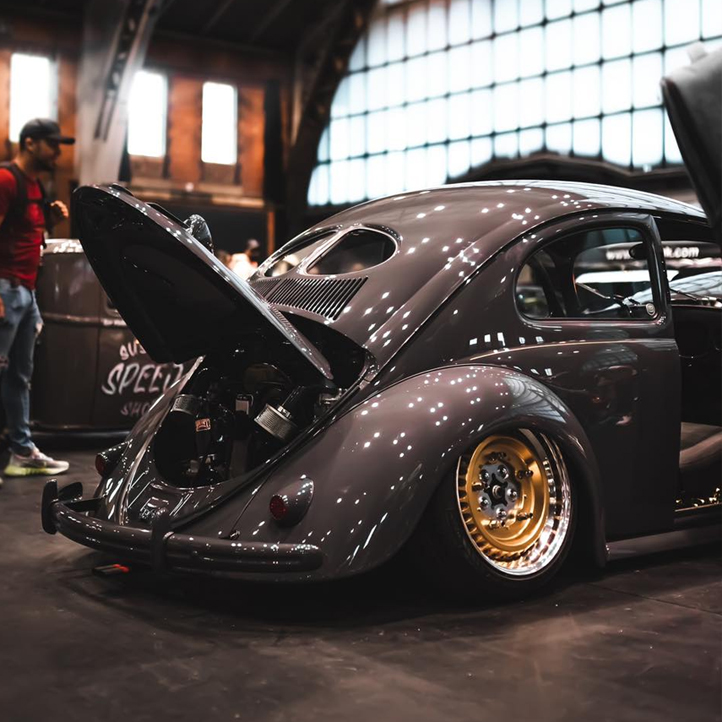
In March 2019, The 49 appeared at the VolksWorld Show at Sandown Park.
For Limebug, it represented the public culmination of years of work.
VolksWorld had long been one of Britain’s most important air-cooled events, bringing together exceptional restorations and custom builds from across the scene.
The 49 attracted attention for its unusual combination of early Volkswagen character and elaborate engineering.
There was plenty for people to examine.
The concealed chassis installation.
The suspension.
The custom wheels.
And the extraordinary amount of finishing work.
Then came the awards.
The 49 won Best of Show at VolksWorld 2019.
For a project that had consumed around 3,500 hours, it was an enormous moment.
Not simply because of the trophy.
But because it demonstrated that the unconventional ideas behind the build could come together as one complete, award-winning car.
The 49 in motion
More than a photograph
The finished stance and unusual proportions are impressive in photographs.
But seeing the Beetle on film gives a much better appreciation of how the various parts of the build come together.
The original body shape.
The gold GT35 wheels.
And the deliberately understated appearance that conceals so much custom engineering.
Watch The 49 — Limebug’s 1949 Split Window Beetle:
[Embedded video: https://www.youtube.com/watch?v=UPL1b7T5Z5w]
International attention
Air Lift Performance and Hayburner
Following the VolksWorld success, The 49 attracted attention beyond the UK show circuit.
Air Lift Performance featured Craig and the Beetle in its 2019 #LifeOnAir series, exploring the story behind the build and the unusual integration of its air suspension.
The car also appeared on the cover of Hayburner Magazine, Issue 33.
For Limebug, that was another particularly satisfying moment.
The car had begun as a challenging personal project.
Now it was appearing on the cover of one of the best-known publications in the British air-cooled scene.
But The 49’s show history was only beginning.
FittedUK 2021
Best of Show. Again.
In 2021, The 49 appeared at FittedUK.
Unlike VolksWorld, FittedUK brings together vehicles from a much wider range of manufacturers and automotive disciplines.
Contemporary performance cars.
Custom classics.
Highly developed stance builds.
And some exceptionally detailed show vehicles.
It was a different audience and an entirely different competitive environment.
Yet the Beetle made an impression once again.
The 49 won Best of Show at FittedUK 2021.
A seventy-year-old Volkswagen Standard Beetle had taken the top award at one of the UK’s major contemporary custom-car events.
There was something particularly satisfying about that.
Its appeal had moved well beyond the traditional air-cooled scene.
Ultrace 2022
Three years in the making
By 2022, The 49 had developed an international reputation.
One event especially keen to feature it was Ultrace in Wrocław, Poland.
According to the organisers, they’d been attempting to bring the Limebug Beetle to the event for three years.
In 2022, they finally succeeded.
Ultrace attracts an extraordinary collection of custom vehicles, from elaborately modified European cars to rare and highly developed international builds.
Among them sat a 1949 Volkswagen Standard Beetle.
And once again, the car earned recognition.
The 49 was selected for the Ultrace 2022 Top 16, finishing 10th overall.
It wasn’t the overall winner, but being ranked among that year’s leading vehicles was a remarkable achievement.
The appearance also brought further international media attention, including the cover of VOLXZONE Issue 4.
The car that helped define Limebug
Looking back, The 49 represents an important stage in the company’s development.
It brought together several areas of engineering that would become increasingly significant to Limebug.
Narrowed Jawbreaker front beams.
Cantilever rear air suspension.
Compact management installations.
Custom billet components.
And original three-piece wheel design.
The GT35 is a particularly clear example.
A wheel developed for one ambitious build became part of a wider product range.
That relationship between vehicle development and component manufacturing has continued through later projects.
The 49 helped demonstrate just how valuable it could be.
The complete build specification
Vehicle
- 1949 Volkswagen Type 1 Split Window Standard Beetle
- Originally a Swedish-export vehicle
- Restored and extensively modified by Limebug
- Approximately 3,500 hours invested
Front suspension
- Limebug 4-inch narrowed Link Pin Jawbreaker beam
- 2.5-inch dropped spindles
- 4-inch through rods
- MOA430 air shocks
Rear suspension
- Limebug swing-axle cantilever air ride system
Chassis and air management
- Raised central chassis spine
- Concealed air management installation
- Air Lift 3P electronic management
- MOA 1.5-gallon Skinny Tank
Wheels
- Limebug GT35 17-inch three-piece split rims
- Staggered configuration
- Anodised gold finish
- Original GT35 development vehicle
Interior and mechanical
- Custom billet pedal components
- Bespoke gearshift assembly
- OBP pedal assembly
- Hunt distributor
Major awards
- VolksWorld 2019 — Best of Show
- FittedUK 2021 — Best of Show
- Ultrace 2022 — Top 16, 10th overall
Magazine and media
- Hayburner Magazine — Issue 33 cover
- VOLXZONE — Issue 4 cover
- Air Lift Performance — #LifeOnAir feature, 2019
- Limebug — Dedicated build and VolksWorld videos
Built different. Still unmistakably Volkswagen.
There’s a temptation to measure The 49 entirely through its awards.
And certainly, VolksWorld and FittedUK Best of Show are significant achievements.
The international recognition at Ultrace is another milestone.
But the real importance of the car lies in what it took to create it.
The original engineering.
The enormous amount of fabrication.
The willingness to develop components rather than settle for something that was simply available.
And the determination to retain the character of one of Volkswagen’s earliest models beneath all that work.
Underneath the custom suspension, billet components and gold three-piece wheels, there’s still a genuine 1949 Standard Beetle.
That’s what makes the whole thing so appealing.
From Sweden to Stoke-on-Trent.
From a wreck to an international show car.
And from one ambitious idea to a project that helped shape Limebug’s engineering identity.
One car. Three thousand five hundred hours. A lifetime of ideas.
Never meet your heroes?
We’re rather glad we did.