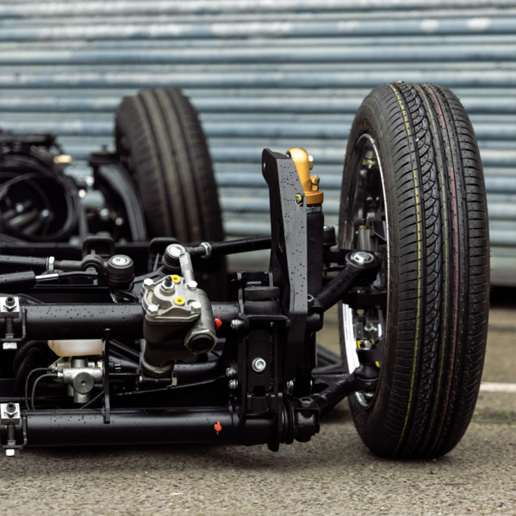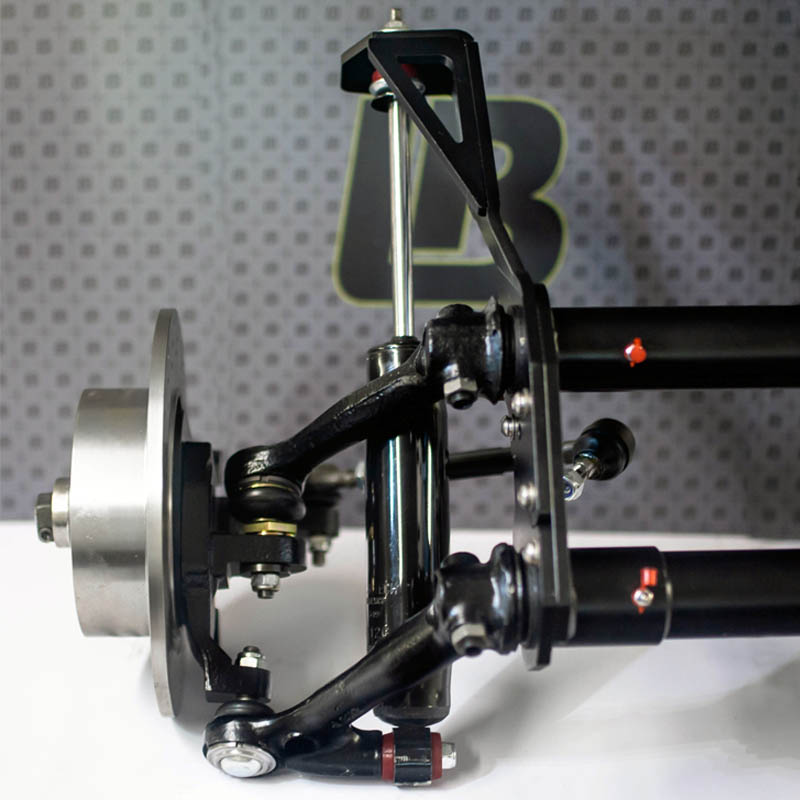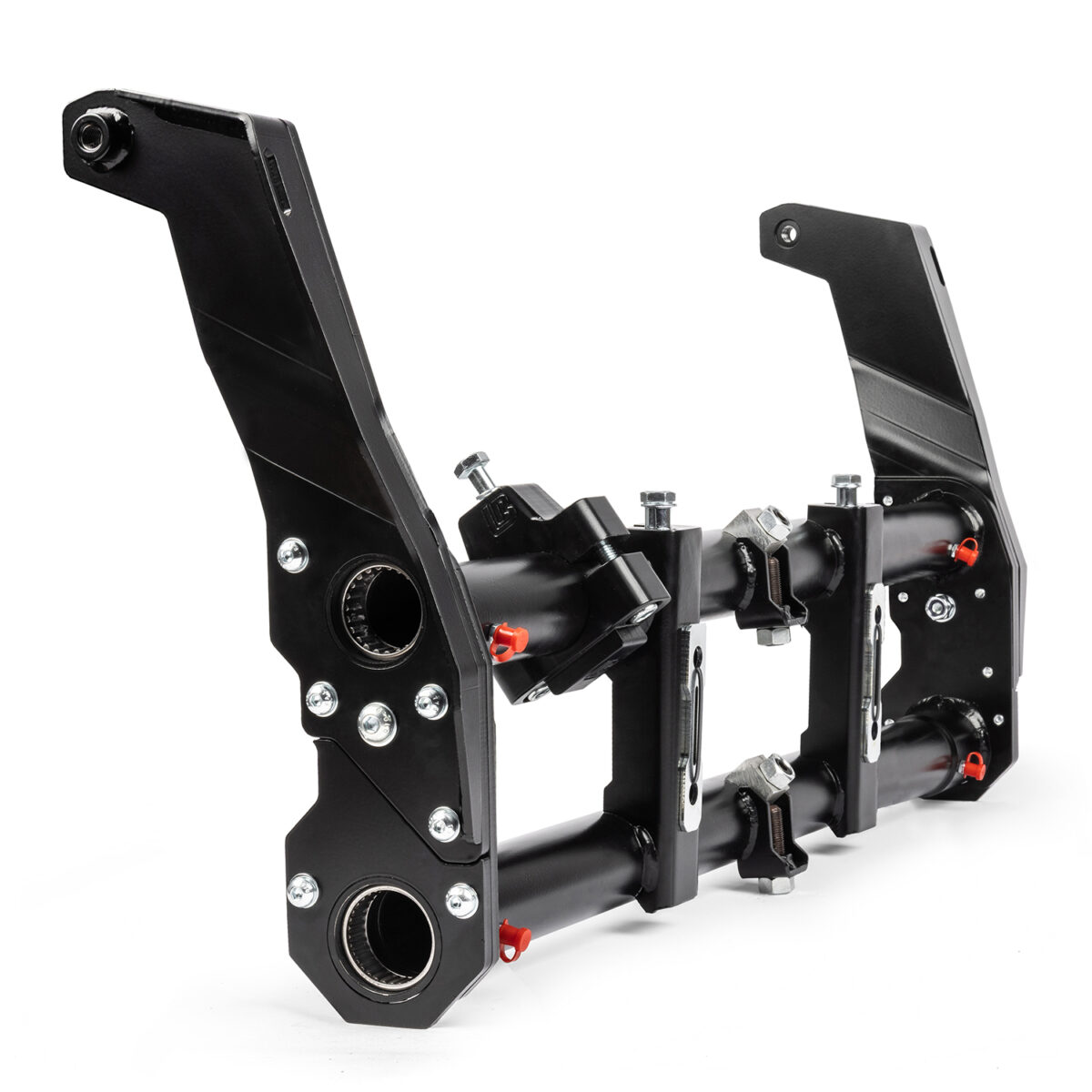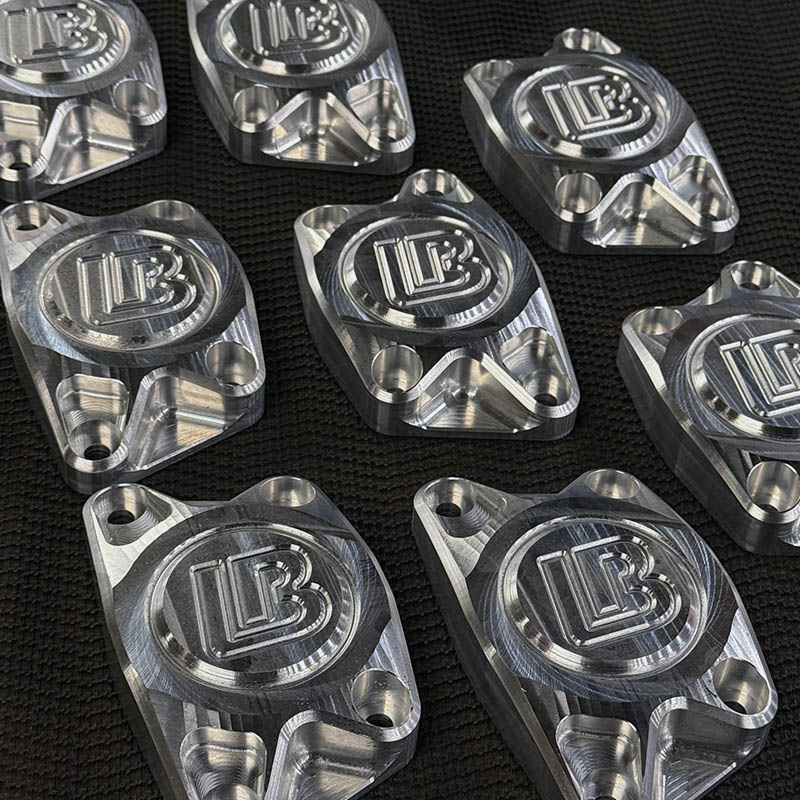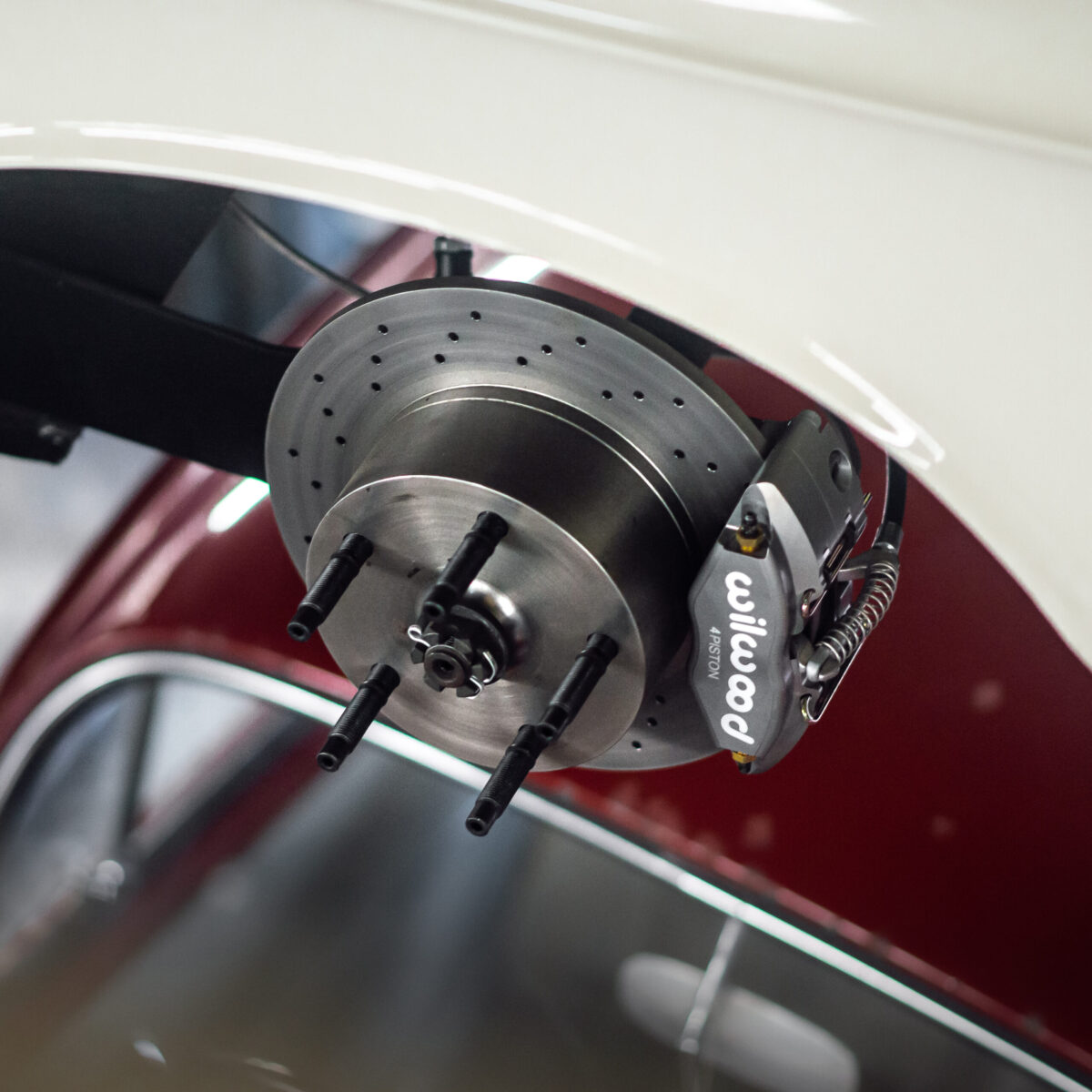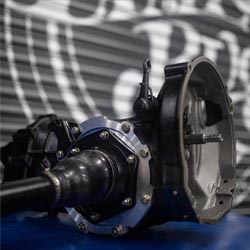

Limebug’ 1966 Beetle “Ouch” puts a real-world finish on the Limebug catalogue, bringing together 1966-79 Beetle / Ghia Ball Joint 4" Narrowed Complete Front Air Ride Kit with Elite Series Jawbreaker Beam, 1966-79 Beetle / Ghia Ball Joint 4" Narrowed Elite Series Jawbreaker Front Air Ride Beam Axle, MOA430 Goldtops Ultimate Air Ride Front Shock / Sleeve Bag Struts, Pair in one properly resolved setup.
OUCH — VANDALISM OR ART?
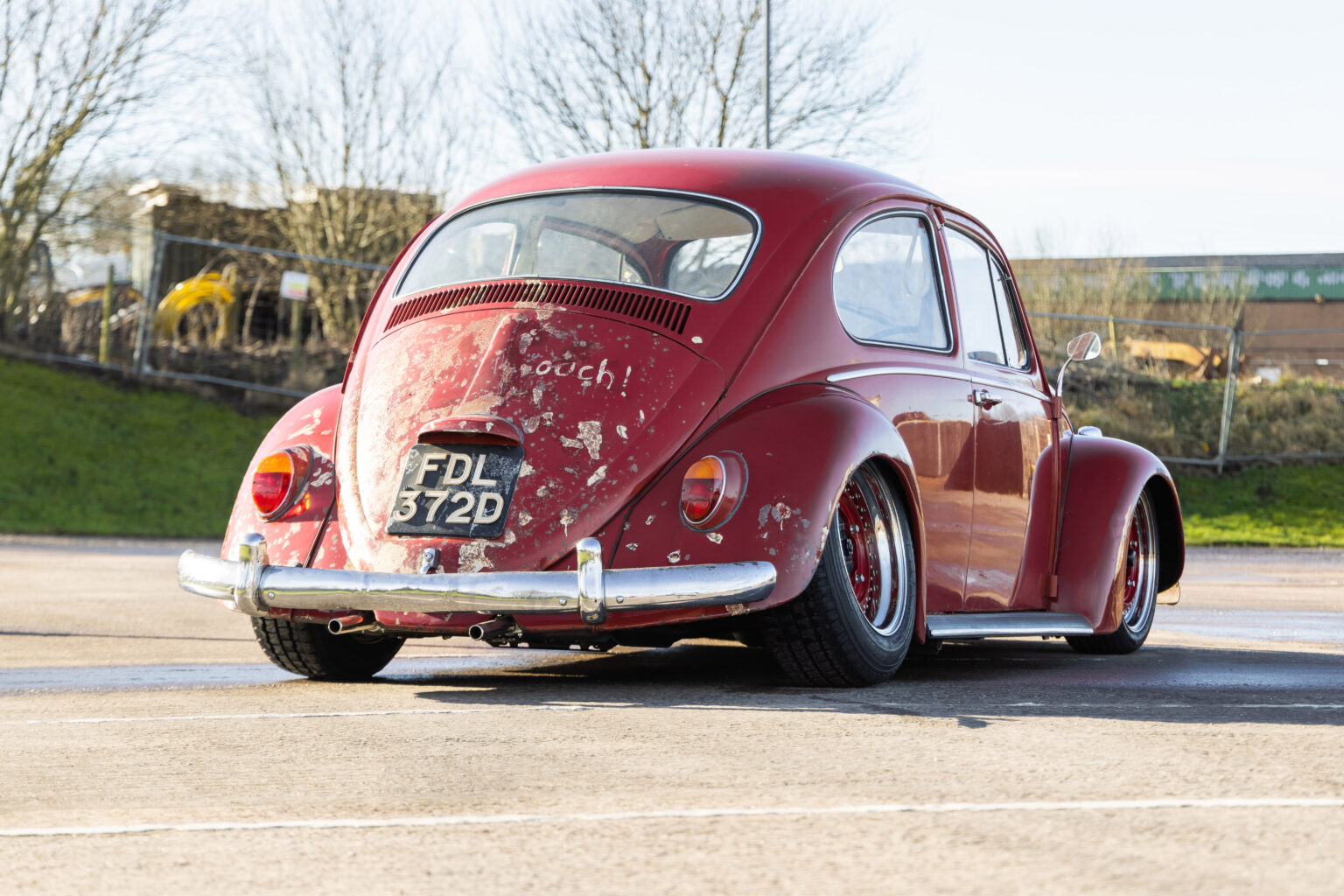
An original right-hand-drive 1966 Beetle, a lifetime on the Isle of Wight and an alleged act of revenge that gave it an unforgettable name. Ouch went on to become a development car for two generations of Limebug air suspension—without losing the scars that made us want it in the first place.
Some cars have character. This one had an argument.
We have a slightly complicated relationship with the term survivor.
It’s become one of those phrases that appears in nearly every classic Volkswagen advert, usually alongside barn find, unmolested and the occasional wildly optimistic asking price.
At this point, we’re fairly certain there are more barn finds advertised in Britain than actual barns.
But every so often, something genuinely unusual appears.
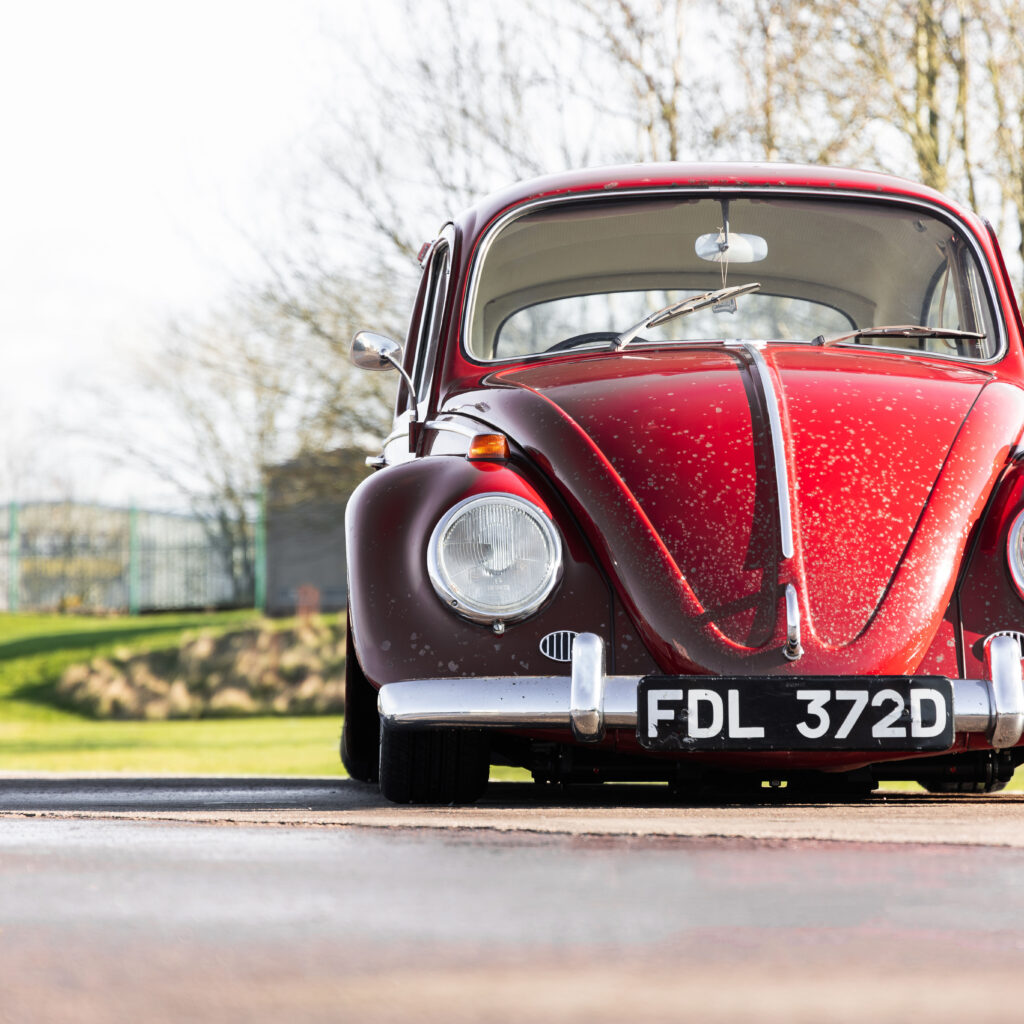
And our 1966 Ruby Red Beetle was certainly that.
Original right-hand drive. Never welded or extensively modified when we found it. Faded paint, an unusual period parking lamp and the majority of its life spent on the Isle of Wight.
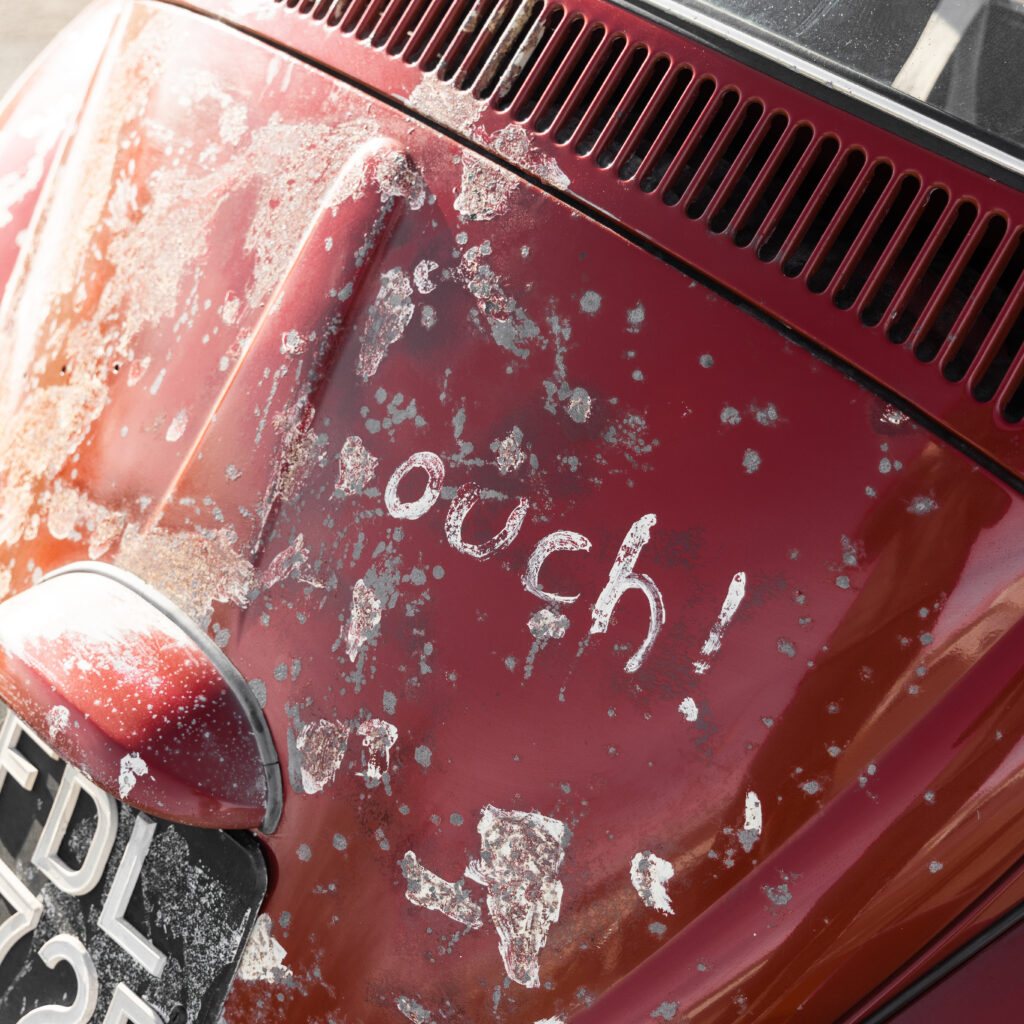
Oh, and the word OUCH scratched across the engine lid.
Quite a memorable optional extra.
From the Isle of Wight, with a story
Another dangerous evening on the classifieds
We first spotted the Beetle during one of those evenings spent looking at old Volkswagens we definitely weren’t planning to buy.
Advertised from Bognor Regis, it immediately caught our attention.
For us, 1966 is a particularly appealing model year. The Beetle gained its ball-joint front suspension while retaining much of the earlier bodywork and detailing.
This particular car had another attraction: a remarkable amount of originality.
It had originally been supplied to the Isle of Wight, where it spent most of its early life. Its registration still reflected that history.
Then there was the small B-pillar-mounted parking lamp, a wonderfully peculiar period accessory associated with historic parking-light requirements.
The sort of detail that would be easy to remove during a restoration, but nearly impossible to replace with the same sense of history.
And then, of course, there was the paintwork.
Ouch. Literally.
According to the story passed on by the previous owner, the Beetle had once become the unfortunate casualty of a relationship breakdown.
The account involved an allegedly unfaithful husband, an unhappy former partner and a revenge attack on the car.
Paint stripper.
Scratches from keys.
And the finishing touch: OUCH, written across the rear engine lid.
An attempt to disguise the damage apparently contributed to the unusual paint splatters across the rear bodywork.
Whether every detail of that account is accurate is impossible to establish now.
But the marks themselves certainly exist.
And somewhere along the way, what had once been damage became something rather more interesting.
The Beetle acquired a name.
The splattered rear end developed an almost accidental artistic quality.
And the feature somebody had originally wanted to hide became the reason everybody remembered the car.
Why we didn’t restore it
A freshly repainted 1966 Beetle can be a beautiful thing.
But repainting Ouch would have removed the very details that distinguished it from every other Ruby Red example.
The faded colour.
The original registration.
The B-pillar light.
And the rather unfortunate artwork.
We weren’t interested in recreating any of that with artificial ageing or a carefully distressed respray.
It was genuine.
So we kept it.
Instead of concentrating on making the bodywork look new, we decided to use the car for something rather more relevant to Limebug.
Suspension development.
As it turned out, that decision would make Ouch one of the most important vehicles in our workshop.
2014 — The Generation I test bed
Making bolt-on air suspension more accessible
In 2014, Ouch became the development platform for our first-generation bolt-on air ride kit.
At the time, one of our main objectives was to make adjustable suspension simpler to install on classic Volkswagens.
Rather than relying on extensive custom fabrication, we wanted a repeatable arrangement that combined straightforward fitting with dependable operation.
Ouch provided a useful starting point.
A remarkably sound 1966 Beetle, with the later ball-joint front suspension architecture and no need for a major structural rebuild before work could begin.
We could fit components, assess the arrangement and refine the design on a car that actually belonged to us.
The Generation I kit went on to attract international interest, particularly for its relatively simple installation and reliability.
But the most useful feedback came from continuing to run the system ourselves.
A car that actually gets tested
It’s one thing to fit a suspension kit and demonstrate that it works.
It’s another to live with it for years.
Ouch ran the Generation I arrangement throughout that system’s production life.
That meant we could evaluate the things that don’t always reveal themselves during initial installation.
Practicality.
Component access.
Long-term operation.
And the small improvements that only become obvious after a system has been used repeatedly.
Those lessons would eventually shape the next generation.
2020 — The Revolution
By 2020, we had accumulated enough experience to rethink our original approach.
The Generation I system had served us well, but we wanted more.
Greater suspension movement.
A wider lowering range.
Improved packaging.
And the opportunity to retain or reinstate the Beetle’s factory heating equipment, which had proved more difficult with some earlier arrangements.
The result was the Revolution.
Our second-generation rear air suspension concept introduced substantial changes to the way the system operated and was installed.
And once again, Ouch became part of the development story.
The little Beetle had already helped establish our original bolt-on system.
Now it was contributing to the evolution of its successor.
There was something rather satisfying about that.
A car wearing decades-old paintwork underneath which the engineering was moving steadily forward.
OE34 — Nostalgia reimagined
Traditional styling. Three-piece construction.
Suspension wasn’t the only area in which Ouch became useful.
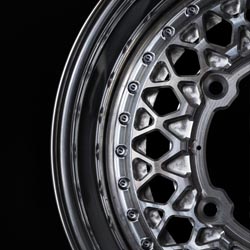
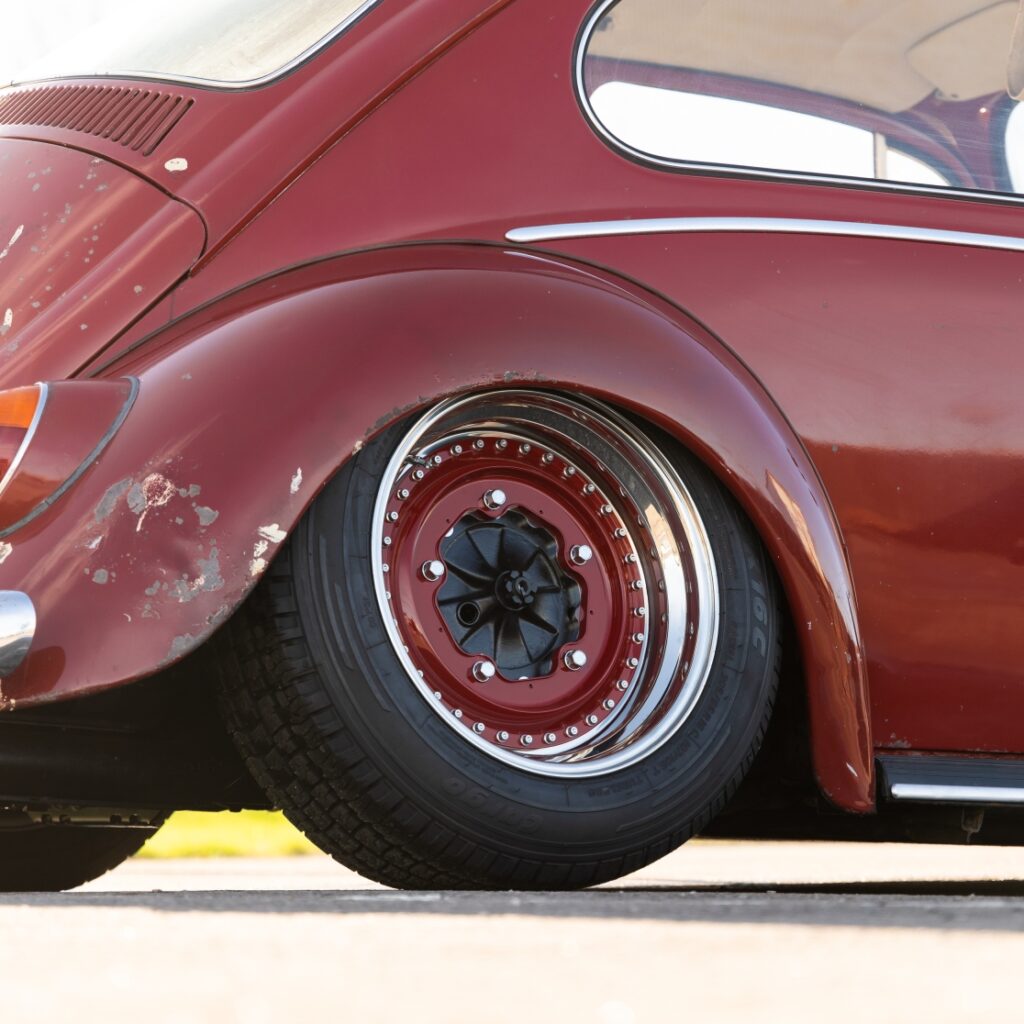
We also used it to demonstrate the OE34-16 split-rim design.
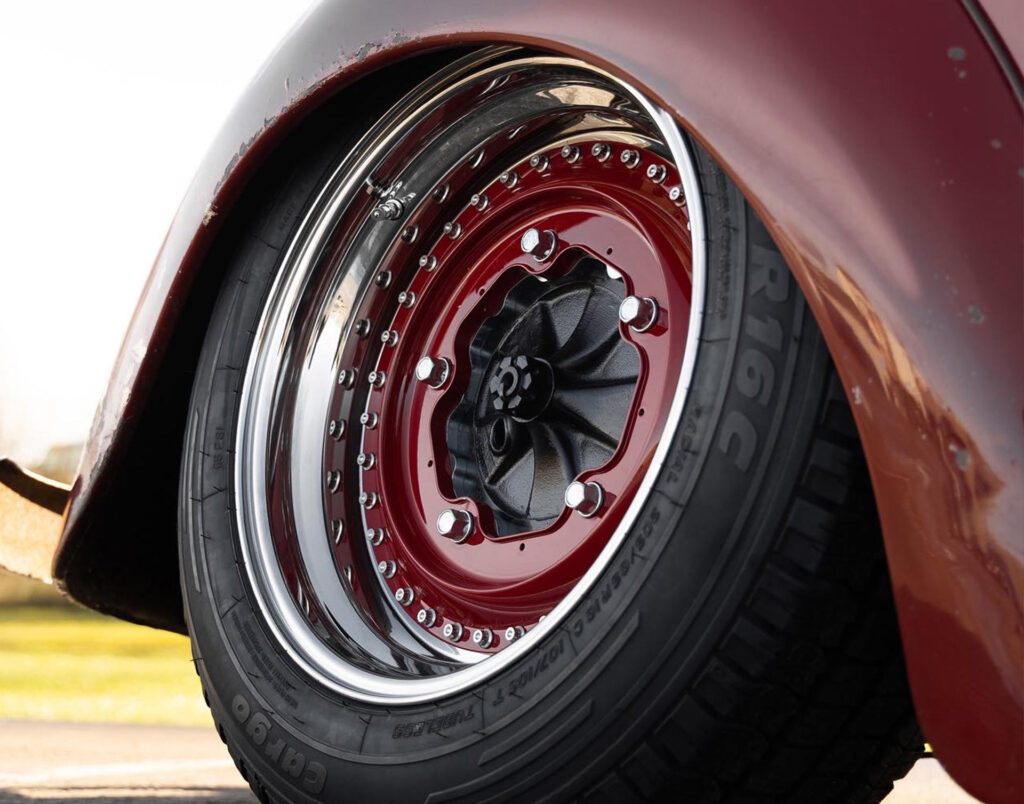
The idea was to reinterpret an original Volkswagen smoothie-style wheel through modern forged construction, while retaining an appearance sympathetic to the Beetle’s character.
For Ouch, the centres were finished in Volkswagen L456 Ruby Red.
Against the weathered exterior, the freshly finished wheel centres provided a striking contrast without looking out of place.
The design used forged, scalloped wheel centres with stainless Radinox outer lips, aluminium barrels and 34-bolt BBS-style construction.
The specification was staggered, with narrower front lips and deeper rear lips.
And the result suited the Beetle remarkably well.
Modern engineering, without abandoning the original Volkswagen influence.
The OE34 specification
Front
- OE34-16 fully forged centre
- L456 Ruby Red centre finish
- 1.5-inch stainless Radinox outer lip
- 5-inch aluminium barrel
- 34-bolt modular construction
Rear
- OE34-16 fully forged centre
- L456 Ruby Red centre finish
- 3-inch stainless Radinox outer lip
- 5-inch aluminium barrel
- Stainless-steel hardware
The original 1200 needed some attention
The carburettor wasn’t helping
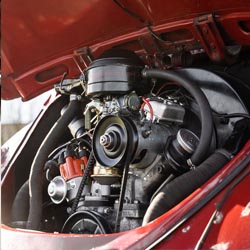
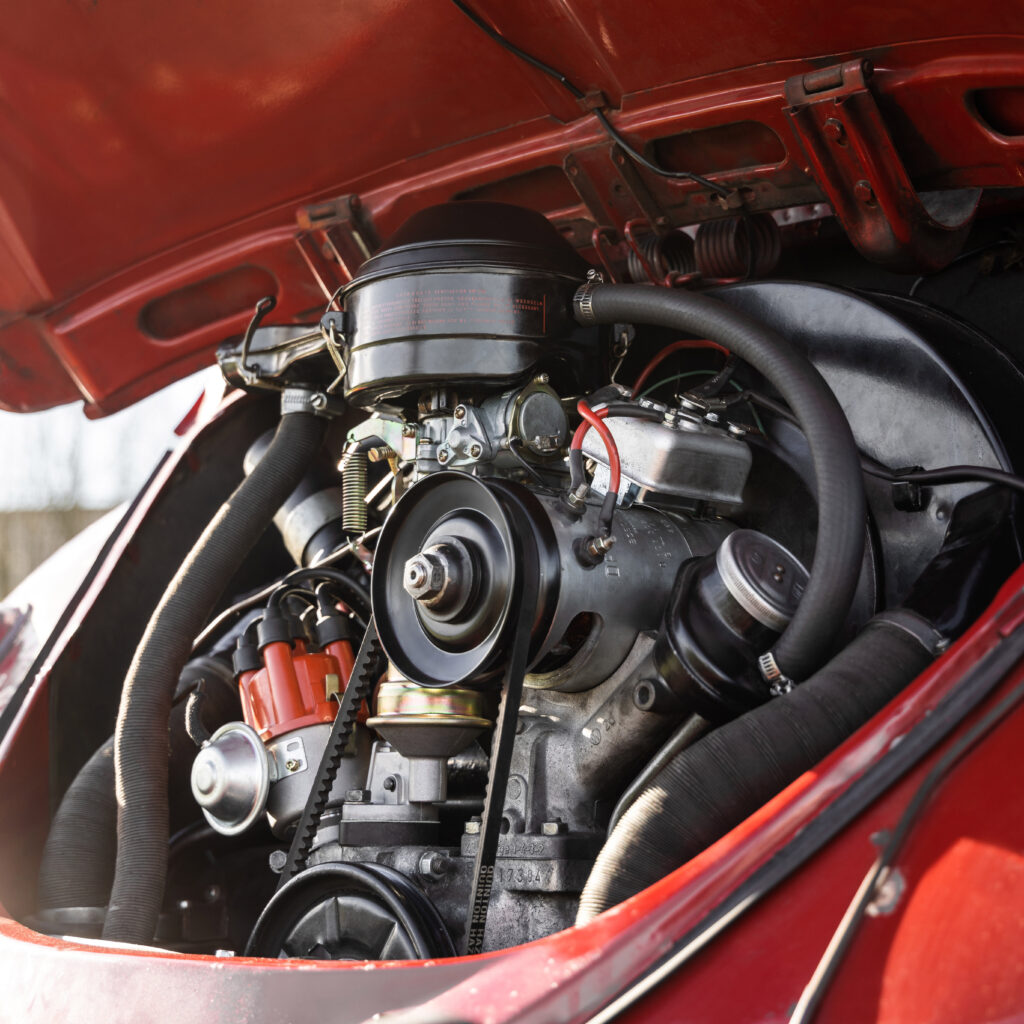
While the chassis continued to evolve, the Beetle’s original 1200cc engine had been developing problems of its own.
The original Solex carburettor had excessive wear around its throttle-shaft bushes, allowing unwanted air into the induction system.
The resulting mixture problems, along with the engine’s accumulated age and wear, meant a more substantial overhaul was required.
The piston rings and major bearings needed attention.
Rather than replace the engine with something bigger, we chose to rebuild the original unit.
It was an important part of the car’s history, and we wanted to retain it.
A few sensible improvements
The rebuilt engine received an OE-quality Solex 30/31 PICT-style carburettor, replacing the worn original.
An 034 vacuum-advance distributor with electronic ignition provided a more modern ignition arrangement.
We also converted the electrical system from six volts to twelve.
But rather than introducing a visually obvious modern alternator, we chose a twelve-volt dynamo-style setup with a directly mounted regulator that retained the character of the original installation.
A satin-black finish brought the engine bay together.
Nothing extravagant.
No pursuit of enormous horsepower figures.
Just an original 1200cc Volkswagen engine rebuilt and subtly modernised for continued use.
The complete build specification
Vehicle and history
- 1966 Volkswagen Type 1 Beetle
- Original right-hand-drive UK-market car
- Originally supplied to the Isle of Wight
- Retained island registration
- Original L456 Ruby Red paint
- Unwelded when acquired by Limebug
- Distinctive B-pillar parking lamp
- Historic paint damage and OUCH lettering
Suspension development
- 2014 — Generation I Limebug bolt-on air ride development
- Long-term use throughout the Generation I production period
- 2020 — Revolution second-generation suspension development
- Revised range of movement, lowering capability and component packaging
- Development work concerning factory heating compatibility
OE34 wheels
- Limebug 16-inch OE34 three-piece split rims
- Forged smoothie-inspired centres
- L456 Ruby Red finish
- Stainless Radinox lips
- Aluminium barrels
- 34-bolt BBS-style construction
- 1.5-inch front and 3-inch rear lips
Engine and electrical
- Original 1200cc Volkswagen engine, rebuilt
- Renewed bearings and piston rings as required
- Solex 30/31 PICT-style carburettor
- Electronic ignition with 034 vacuum-advance distributor
- Twelve-volt electrical conversion
- Dynamo-style generator and regulator
- Satin-black engine finishing
Vandalism or art?
Ouch has never been the most polished car in the Limebug fleet.
It isn’t the rarest.
And it certainly doesn’t have the most impressive paintwork in any conventional sense.
But it has something more interesting.
An unusually complete personal history, written into its bodywork.
And an equally important engineering history beneath it.
The same Beetle that spent decades on the Isle of Wight went on to help us develop our Generation I bolt-on air ride system in 2014 and the Revolution in 2020.
Along the way, it became a showcase for the OE34 wheels and received a careful rebuild of its original engine.
Yet the scratches remain.
The paint splatters remain.
And the name that began as an insult is now part of Limebug history.
Would we repaint it?
Not a chance.
Ouch. By name, by nature, and still one of the most interesting cars we’ve owned.