
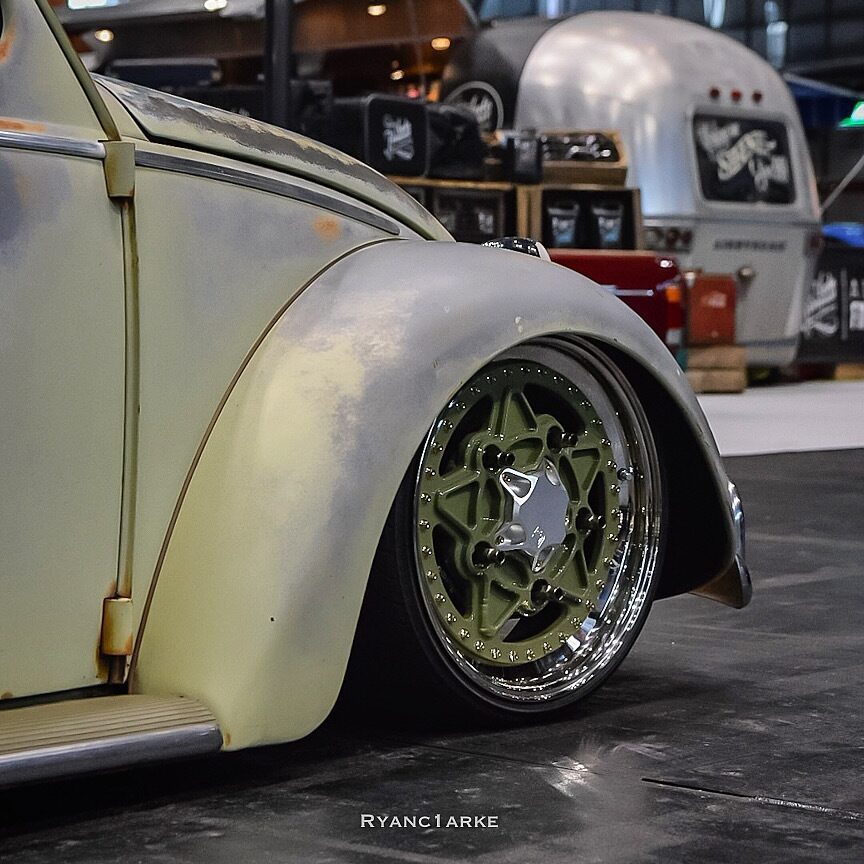
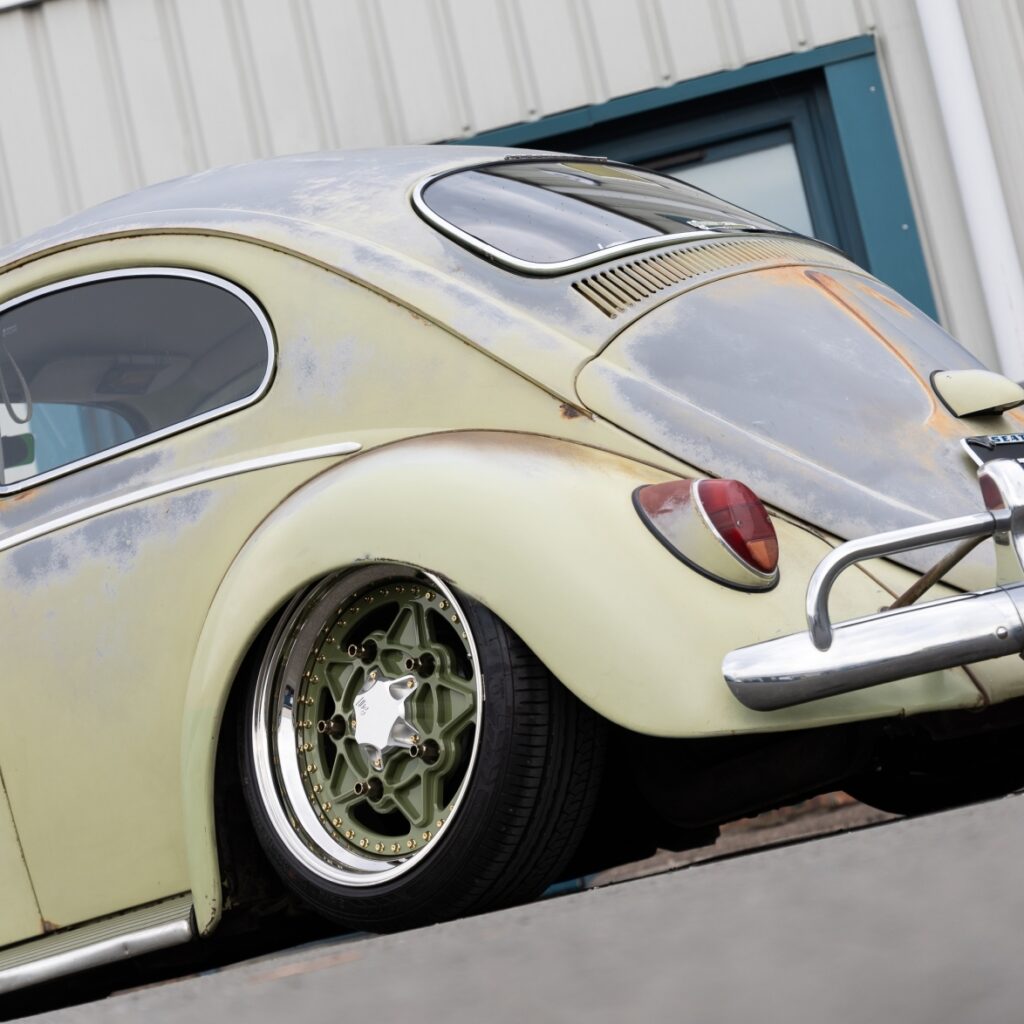
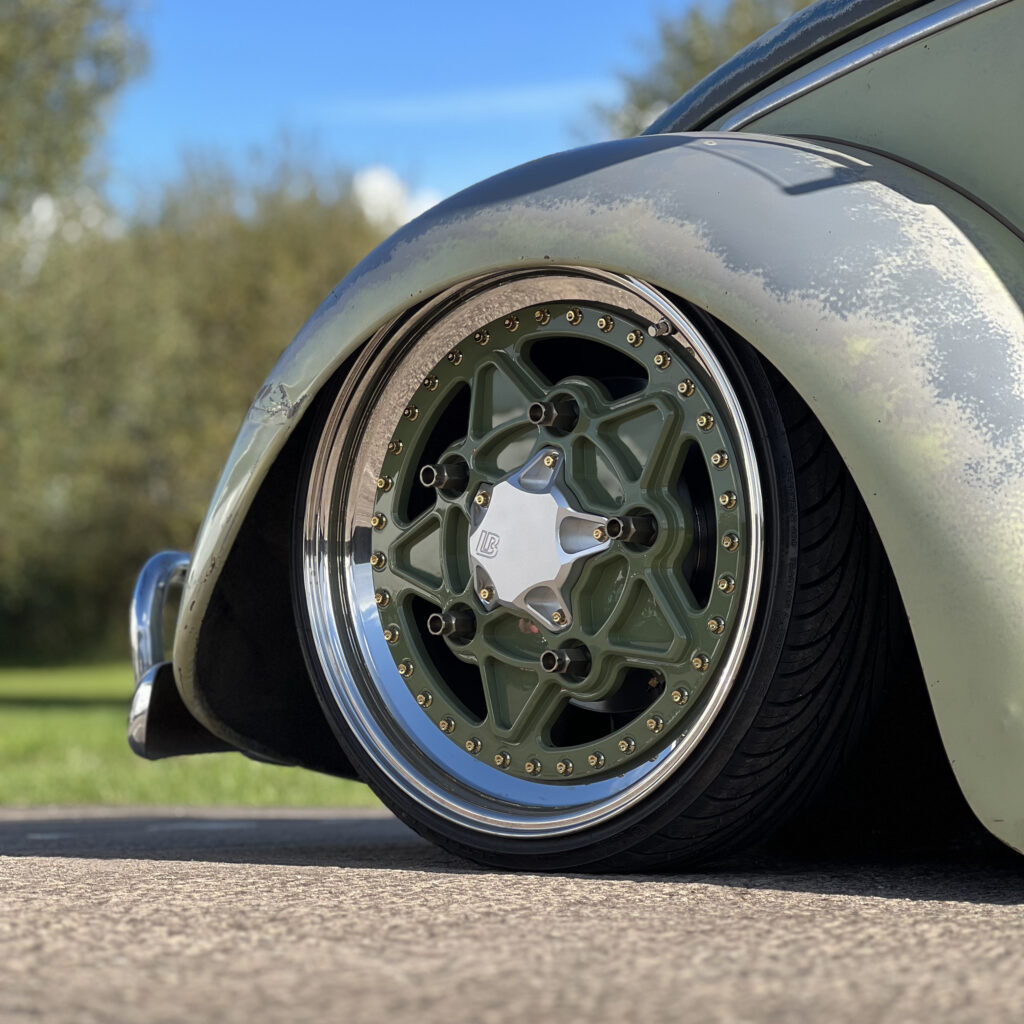
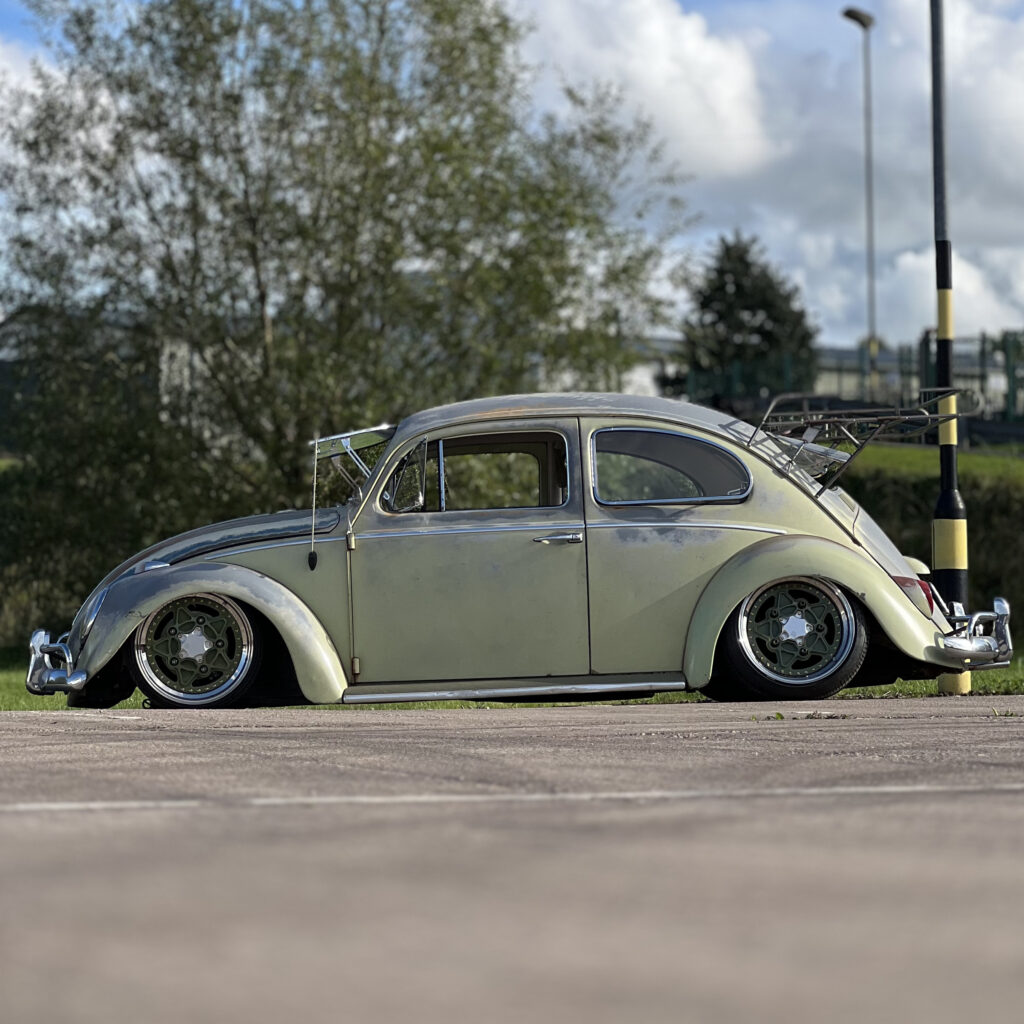
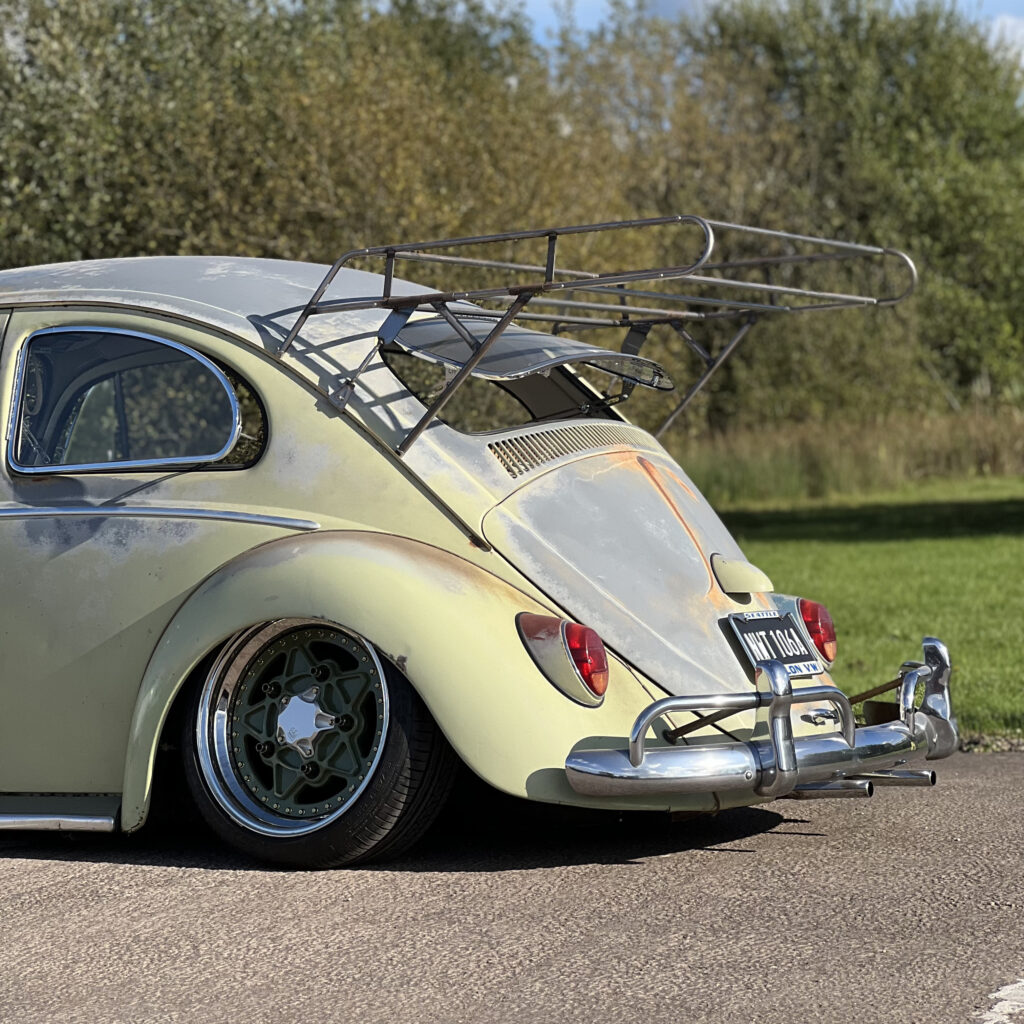
Limebug’ 1963 Beetle puts a real-world finish on the Limebug catalogue, bringing together 1950-65 Beetle / Ghia Link Pin 6" Ultra Narrowed Elite Series Jawbreaker Front Air Ride Beam Axle, Limebug 17" 6335 3-Piece Split Rim Wheels, T1 Beetle Jim Dandy Original Style Boot / Roof Rack Roofrack Reproduction in one properly resolved setup.
A LITTLE GREEN WITH ENVY
Original Beryl Green patina, an unusual Triple Green heritage, a chapter in the Hayburner story and a complete Limebug air ride transformation. Our 1963 Volkswagen Beetle proves that sometimes the best paint job is the one you leave untouched.
Words by Limebug | Hall of Fame — Featured Builds
Some things are better left alone.
In 2019, we came across a 1963 US-import Volkswagen Beetle that immediately caught our attention.
It wasn’t wearing an immaculate, freshly polished paint job. It didn’t have the flawless finish you’d expect from a ground-up restoration. Instead, it had something far more difficult to recreate.
Character.
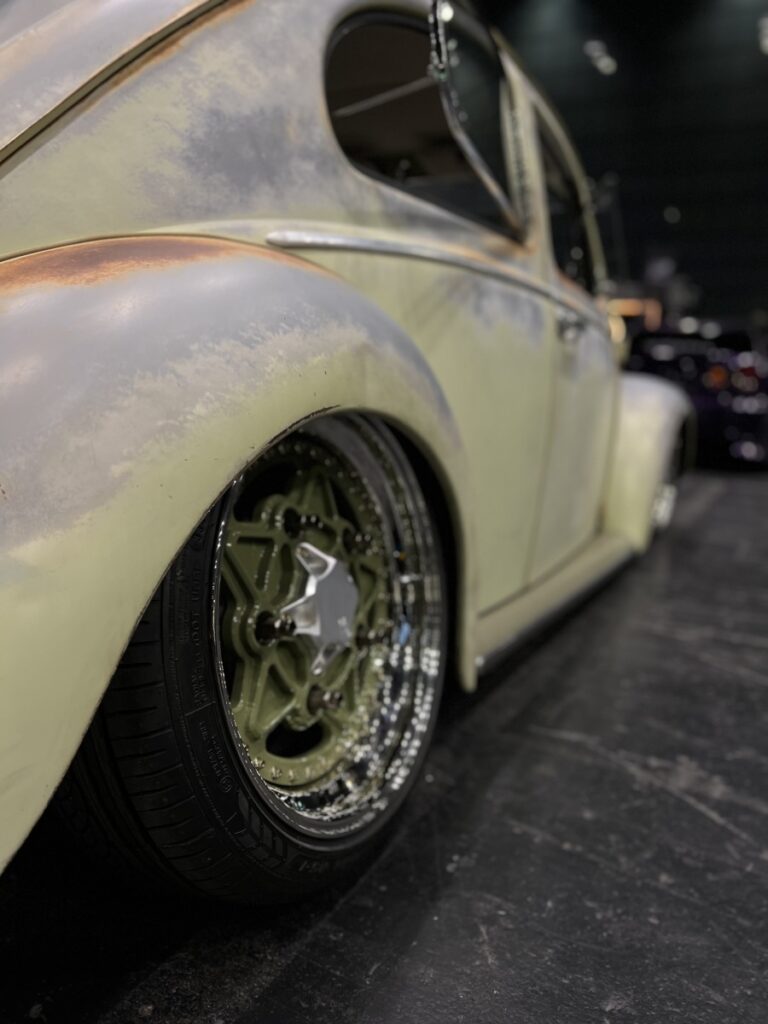
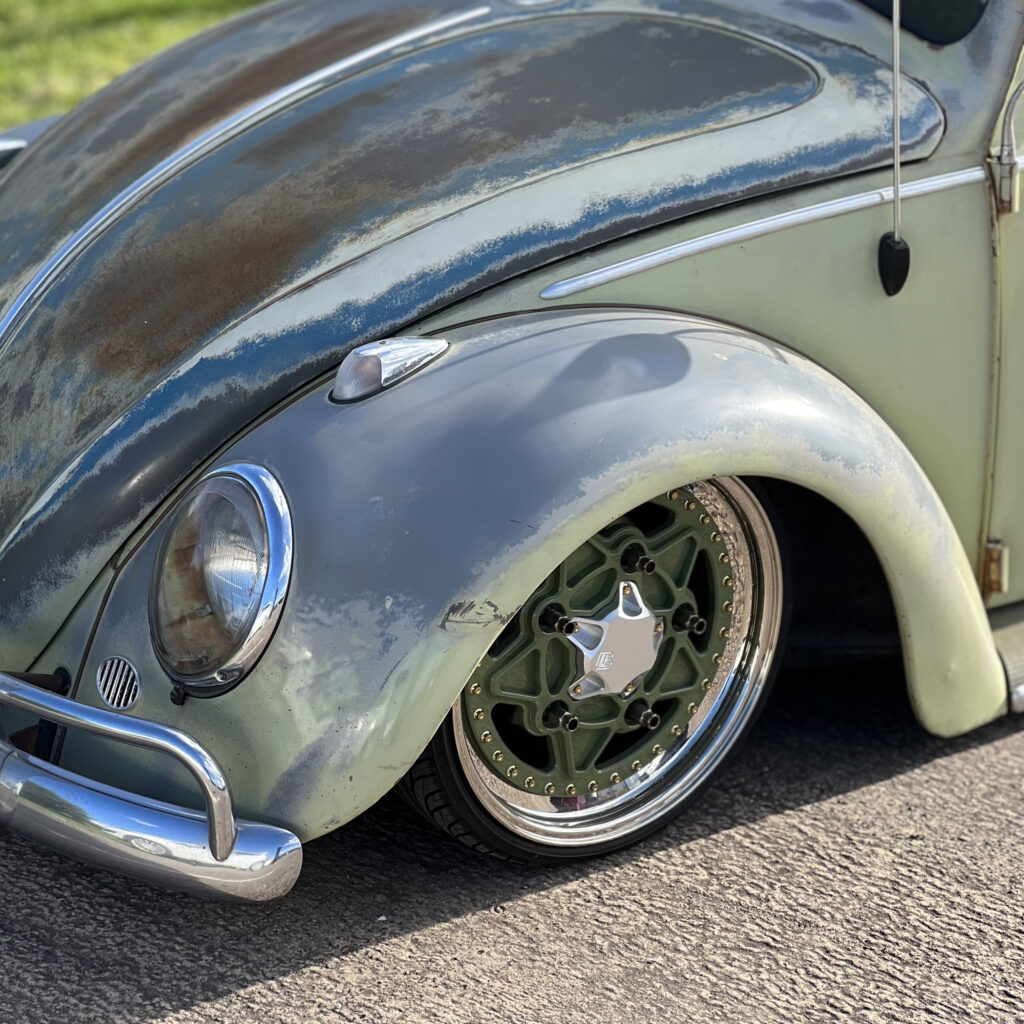
The original Beryl Green bodywork had developed a beautiful natural patina over the years, giving the car a weathered, sun-soaked appearance that looked as though it had rolled straight out of California.
One look at the photographs online, and we knew we had to own it.
But what initially appeared to be a particularly attractive early-sixties Beetle turned out to have a rather more interesting story.
It had already spent time in the hands of Volkswagen enthusiasts, had a connection with Hayburner Magazine and was reported to have left the factory in an unusual Triple Green colour combination.
For us, it was the perfect starting point.
Before Limebug. A little piece of Volkswagen history.
The story didn’t begin in 2019.
Like many of the most interesting air-cooled Volkswagens, the Beryl Green Beetle had a history long before it arrived at our workshop in Stoke-on-Trent.
Originally supplied to the American market, the car eventually found its way into the wider Volkswagen enthusiast scene.
Along the way, it became associated with several familiar names, including a period of ownership by Hayburner Magazine.
There are also reported earlier connections with European Volkswagen enthusiasts Rienold Vaulk and Sven, although the precise sequence of ownership remains to be established.
What was clear when we found it was that this wasn’t simply a freshly imported Beetle waiting to be restored.
It was a car that had already lived a life.
And that was exactly what made it interesting.
A chapter with Hayburner
Before coming into our ownership, the Beetle spent a short period with Hayburner, the independent Volkswagen magazine known for celebrating the culture, creativity and characters of the traditional air-cooled scene.
It seems particularly fitting.
Hayburner’s pages have always been a natural home for Volkswagens with personality. Cars wearing original paint, unusual accessories, carefully considered modifications and the marks of years spent on the road.
The Beryl Green Beetle fitted that philosophy beautifully.
Its naturally aged bodywork was never going to appeal to somebody looking for a flawless, factory-fresh restoration.
But for anybody who appreciates the originality and character of an old Volkswagen, it had something considerably more interesting.
The paint was weathered.
The finish was imperfect.
And every mark seemed to belong exactly where it was.
Triple Green. Three times the charm.
More than just Beryl Green paint.
One of the most interesting details associated with our Beetle is its reported original Triple Green specification.
Beryl Green, Volkswagen paint code L478, is a distinctive early-sixties colour. Softer and more understated than many of the brighter shades associated with classic Beetles, it has a slightly muted appearance that works particularly well with period chrome and original trim.
But the Triple Green description goes beyond the body colour.
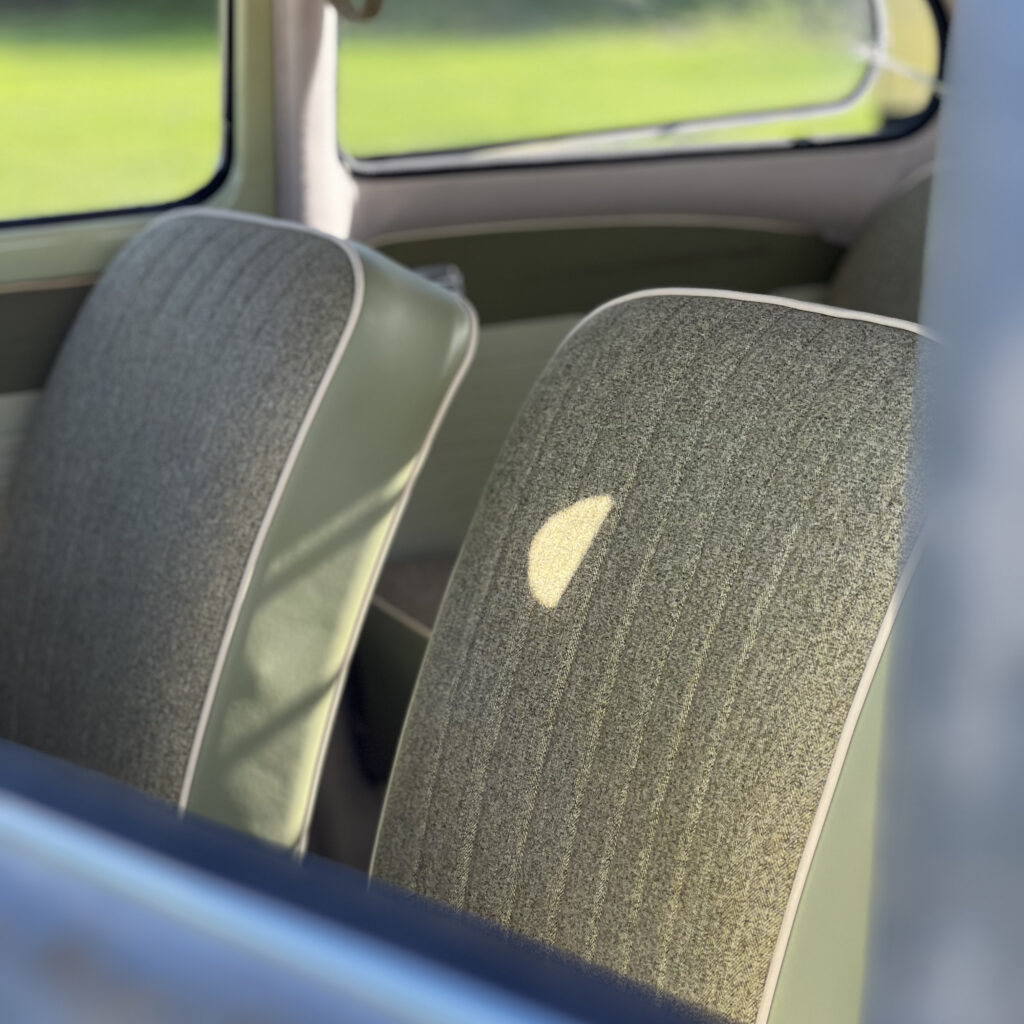
It is used by enthusiasts to describe cars featuring a coordinated combination of green exterior paint and green interior finishes.
These combinations can be especially desirable when the original materials and details have survived.
There is an important distinction, though.
Triple Green is best understood as a colour and trim description, rather than a confirmed, separately numbered limited-edition Volkswagen model.
Its appeal lies in the unusual combination and, particularly, the originality of the surviving vehicle.
An uncommon combination worth preserving
By the time we acquired the Beetle, the Beryl Green exterior had developed the sort of patina that could only come from decades of natural ageing.
The colour had softened, the finish had weathered, and the whole car had acquired a distinctive appearance.
It would have been easy to strip everything back and start again.
Fresh paint. New trim. A perfectly restored exterior.
But doing that would have removed the very thing that attracted us to the car in the first place.
Instead, the decision was made to preserve its appearance and concentrate our attention on the mechanical side of the build.
Because once original paintwork and its history are gone, they’re gone.
And no matter how carefully somebody attempts to recreate patina, it will never quite be the same as the real thing.
The perfect starting point
A 1963 Beetle with a story to tell
There is something particularly appealing about an early-sixties Beetle.
By 1963, Volkswagen had refined the Type 1 into a dependable, practical little car while retaining the distinctive proportions that made the earlier models so desirable.
The rounded wings, understated chrome detailing, compact windows and simple interior all contribute to a shape that needs very little help to look right.
Our American-import example had something extra.
Years of natural ageing had given the Beryl Green paintwork a finish that simply couldn’t be convincingly replicated with a fresh coat of paint.
It was imperfect in all the right ways.
And that was exactly how we wanted to keep it.
Preserve the body. Transform what lies beneath.
The plan was relatively straightforward.
Leave the original bodywork and its wonderful patina alone, but overhaul the chassis and suspension using our own Limebug components.
Over the next few years, we gradually worked through the running gear, transforming the Beetle underneath without losing the character that had attracted us to it in the first place.
It was never intended to become a concours restoration.
We wanted something that looked as though it had spent its entire life in the Californian sunshine, but with the stance and engineering of a thoroughly considered custom build.
Getting down to business
Six inches narrower. A whole different attitude.
At the front, we fitted one of our 6-inch ultra-narrowed Link Pin Jawbreaker air ride beams.
Reducing the front track width by six inches allowed us to bring the wheels further underneath the front wings, creating the proportions we wanted without interfering with the exterior’s original character.
The setup was complemented by 2.5-inch dropped spindles, through rods, Ultrarm components, MOA430 and a steering stop.
Each component had its part to play in creating the finished stance.
When lowered, the front end tucks neatly beneath the wings, allowing the Beetle to sit dramatically closer to the ground.
But the real objective wasn’t simply getting it as low as possible.
It was getting the proportions exactly right.
Taking care of the rear
At the rear, the Beetle retained its swing-axle arrangement, incorporating a Limebug cantilever air ride system and rear air plates.
The Air Lift 3P management system brought everything together, providing electronically controlled adjustment of the suspension.
The result is a Beetle that can sit low for display while allowing the ride height to be adjusted when needed.
For a car that would spend time both on the road and in the showroom, that flexibility was an important part of the finished specification.
The wheels that became the 6335
A familiar idea, taken a little further
With the suspension completed, there was one particularly important decision still to make.
The wheels.
We wanted something that would complement the period character of the Beetle without looking like another off-the-shelf combination.
Drawing inspiration from our previous 1949 Beetle build, we revisited the idea of a custom three-piece split-rim wheel.
The design needed to work with the narrow front end, fill the arches correctly and give the Beetle a more contemporary stance without overwhelming its classic appearance.
So rather than settle for something already available, we designed and built our own.
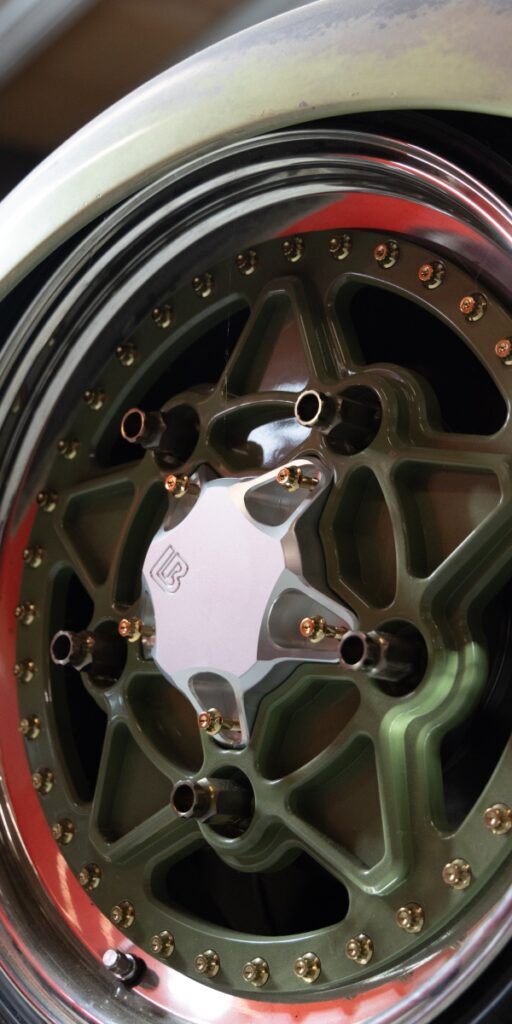
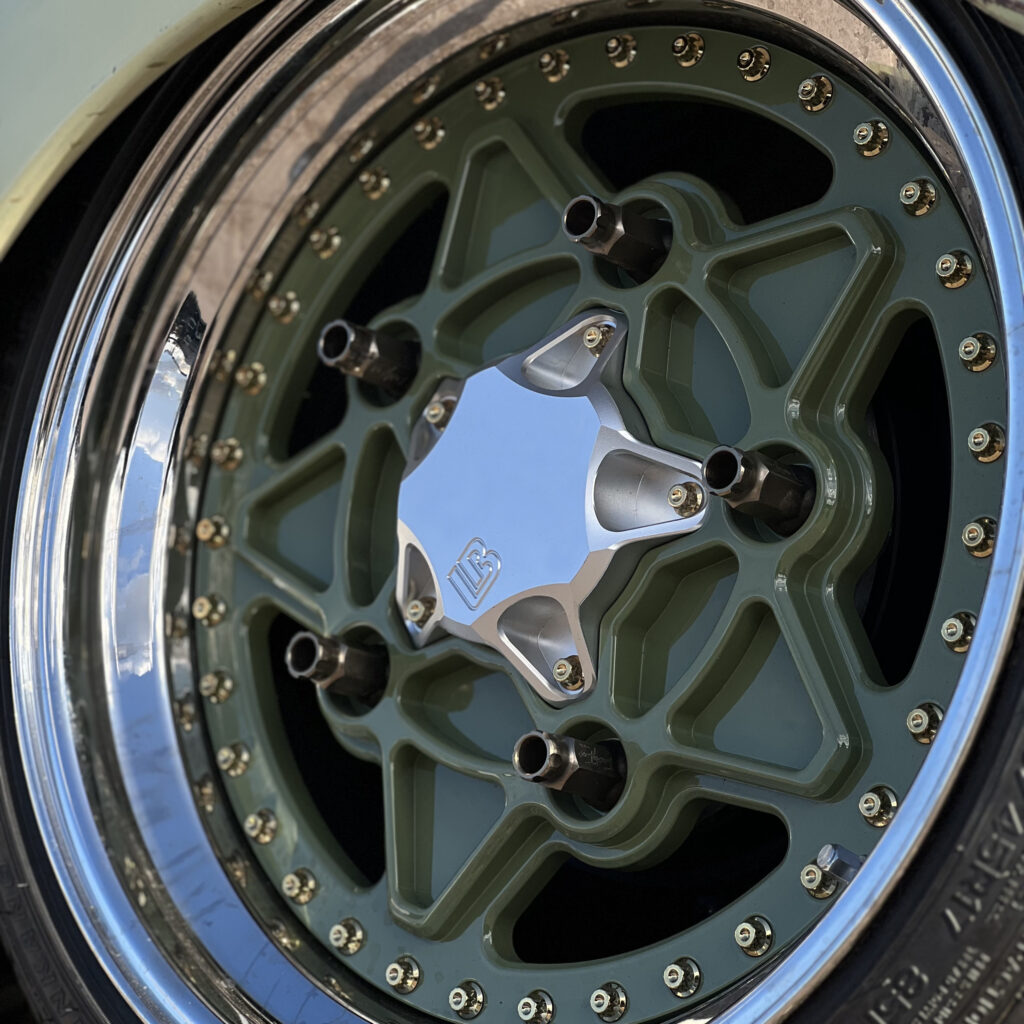
The result became what is now known as the Limebug 6335.
From one-off design to Limebug product
The 6335 three-piece split rims are one of the most distinctive elements of the finished car.
Their combination of exposed hardware, defined centres and deep outer rims provides an interesting contrast with the Beetle’s weathered paintwork.
Modern wheel construction against sixty-year-old bodywork.
It shouldn’t necessarily work as well as it does.
But it does.
The wheel design also became part of our wider product range, turning an idea developed for one of our own builds into something available for other air-cooled Volkswagen projects.
A little California inspiration
Windows that do more than just open
With the running gear and wheels sorted, we turned our attention to the finishing details.
The important thing was not to overwhelm the car.
The original Beryl Green bodywork was already the star of the show, so any additions needed to complement its character rather than compete with it.
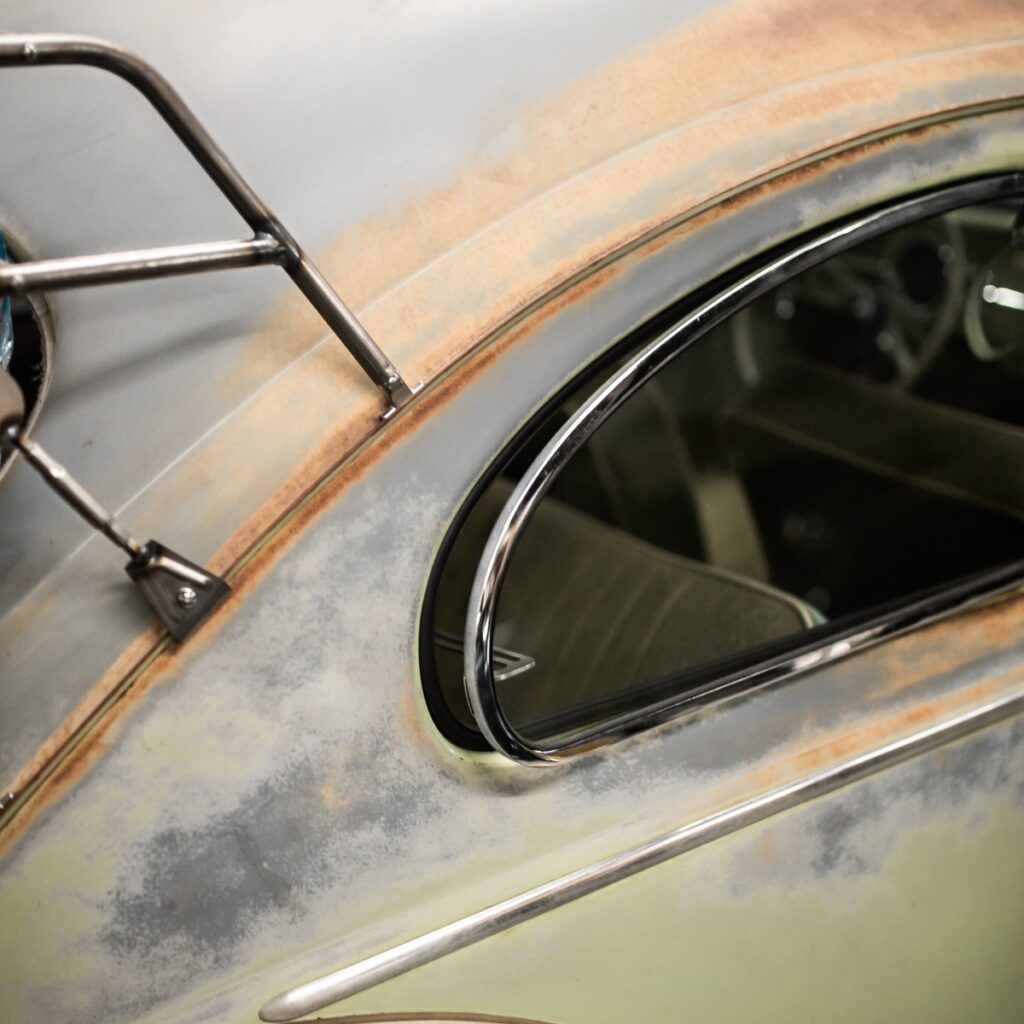
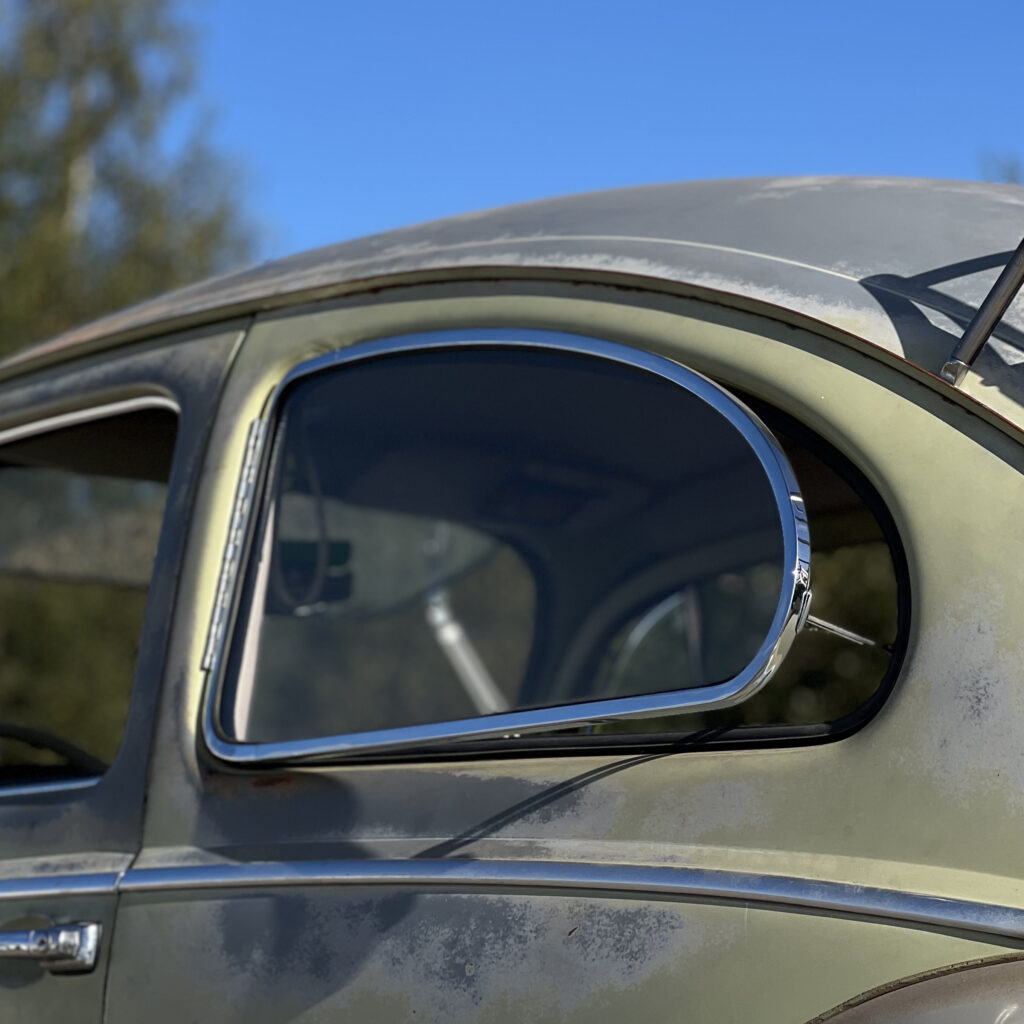
One of the most noticeable modifications was the installation of front, side and rear Safari-style pop-out windows.
These have become something of a talking point whenever customers see the Beetle in our showroom.
They add another layer of California-inspired custom styling, while also providing some very welcome ventilation when the weather warms up.
And unlike some modifications that exist purely for appearance, these actually make a noticeable difference when driving.
Summer of 2022. Windows open.
During the exceptionally hot summer of 2022, we took the Beetle out of the workshop for a week of driving.
It turned out to be the perfect opportunity to appreciate the Safari windows properly.
With the glass opened up, the cabin benefits from airflow that a conventional closed-window setup simply can’t offer in quite the same way.
It is one of those modifications that feels entirely in keeping with the relaxed, open-air spirit of classic Volkswagen motoring.
And on a particularly hot day, it quickly becomes more than just a styling detail.
The Marmite effect
A Jim Dandy on the back
Not every modification receives universal approval.
And perhaps that’s part of the fun.
To finish off the Beetle’s exterior, we fitted a Jim Dandy rear luggage rack.
It’s the kind of accessory that tends to divide opinion.
Some people love the distinctive shape and vintage touring-car feel. Others would rather leave the engine lid completely unobstructed.
We happen to think it looks just right.
The rack adds another period-inspired detail without taking attention away from the car’s original bodywork.
More importantly, it suits the overall personality of the build.
FittedUK 2022
From the Limebug workshop to Manchester
With the build complete, we took the Beetle to FittedUK 2022 in Manchester.
FittedUK brings together a wide variety of modified vehicles, from classic custom builds to contemporary performance cars, all sharing an emphasis on stance, wheel fitment and presentation.
Our Beryl Green Beetle sat comfortably among them.
The combination of naturally weathered bodywork, ultra-narrowed front suspension, custom split rims and air ride gave it a very different character from many of the freshly painted and highly polished builds surrounding it.
The reception was fantastic.
For us, it was particularly satisfying to showcase a car built around our own suspension and wheel components, demonstrating what could be achieved without sacrificing the original charm of a classic Volkswagen.
Proof that patina belongs on the show floor
There’s a certain irony in taking a car with weathered paintwork to an event filled with meticulously detailed show vehicles.
But that’s exactly what makes builds like this interesting.
You don’t always need flawless paint, acres of polished chrome or a completely redesigned interior to make an impression.
Sometimes it’s about finding the right starting point and knowing which details to change.
And, just as importantly, which ones to leave alone.
The complete build specification
Front suspension
- Limebug 6-inch Link Pin Jawbreaker front air ride beam
- MOA430
- Through rods
- Ultrarm
- Steering stop
- 2.5-inch dropped spindles
Rear suspension and air management
- Swing-axle cantilever air ride system
- Rear air plates
- Air Lift 3P management
Wheels and exterior
- Limebug 6335 three-piece split-rim alloy wheels
- Front Safari pop-out window
- Side Safari pop-out windows
- Rear Safari pop-out window
- Jim Dandy rear luggage rack
- Preserved Beryl Green patina bodywork
Back where it belongs
A permanent place in the Limebug showroom
Following its appearance at FittedUK, the Beetle returned to Stoke-on-Trent, where it now resides in the Limebug showroom.
These days, it serves as both a display vehicle and a reminder of what can be achieved by combining carefully chosen custom components with an original, characterful car.
It occasionally ventures outside for some fresh air, but most of its time is spent doing what it does remarkably well.
Making customers stop, look and ask questions.
The Safari windows usually attract the first comments.
Then come the wheels.
Then somebody notices just how narrow the front beam is.
And before long, we’re explaining how a fairly simple idea turned into a complete chassis overhaul and a new wheel design.
Original character. Limebug engineering.
There is something particularly satisfying about looking back at the finished Beetle.
We didn’t need to repaint it, replace every piece of trim or attempt to erase the evidence of its previous life.
The whole point was to retain what made the car special in the first place.
Instead, we concentrated on the chassis, the suspension, the wheels and a handful of carefully selected accessories.
The result is unmistakably a 1963 Beetle, complete with the imperfections and character it has accumulated over the decades.
But underneath, it tells a very different story.
From its early years in America to its reported Triple Green origins, its connection with Hayburner and its eventual arrival at Limebug, the Beetle has accumulated quite a history.
And we’re pleased that our part of that story involved preserving so much of what came before.
Sixty years of patina. A completely different stance.
Proof that sometimes the best approach to restoring a classic Volkswagen is knowing what not to restore.