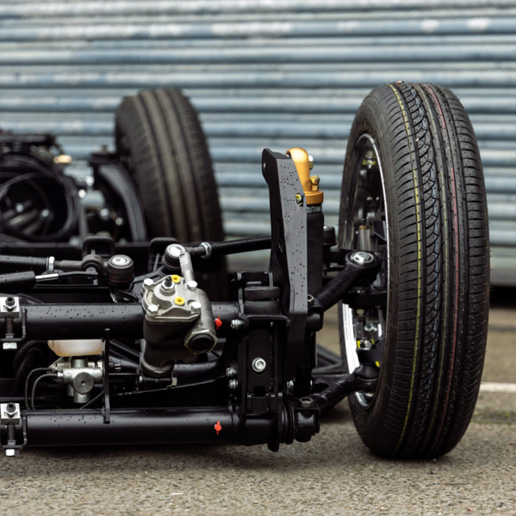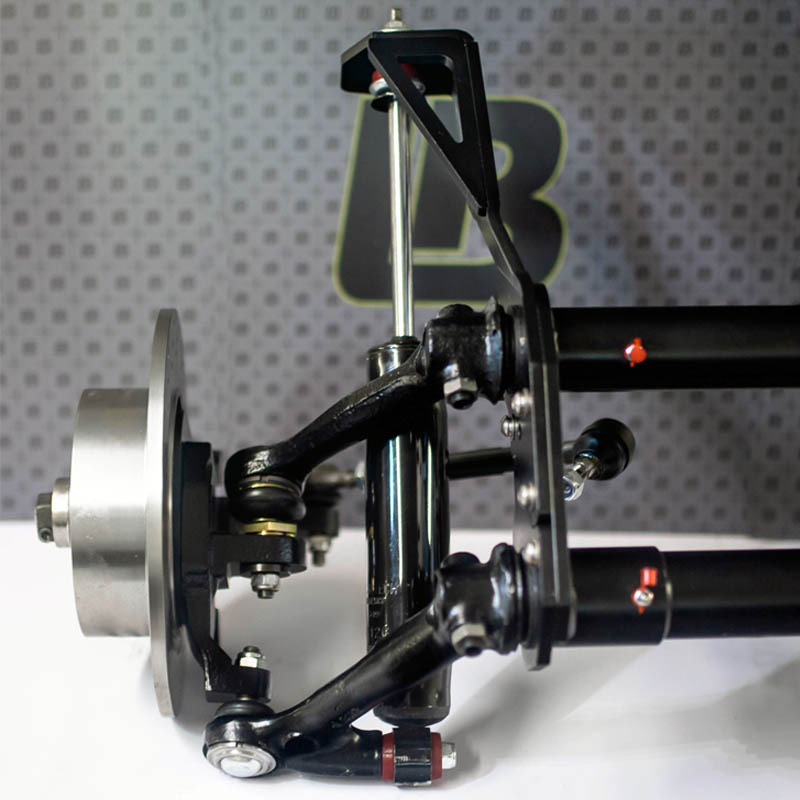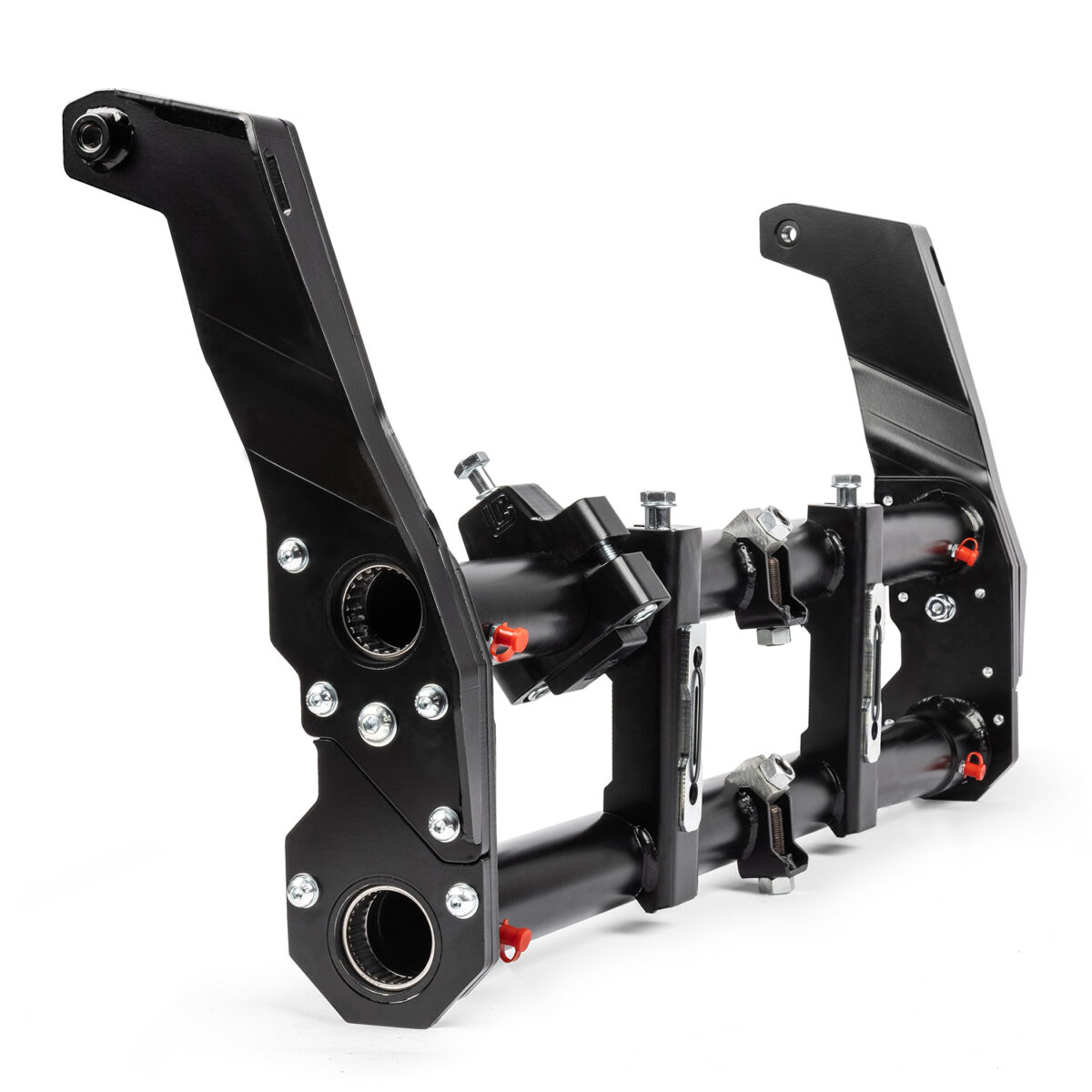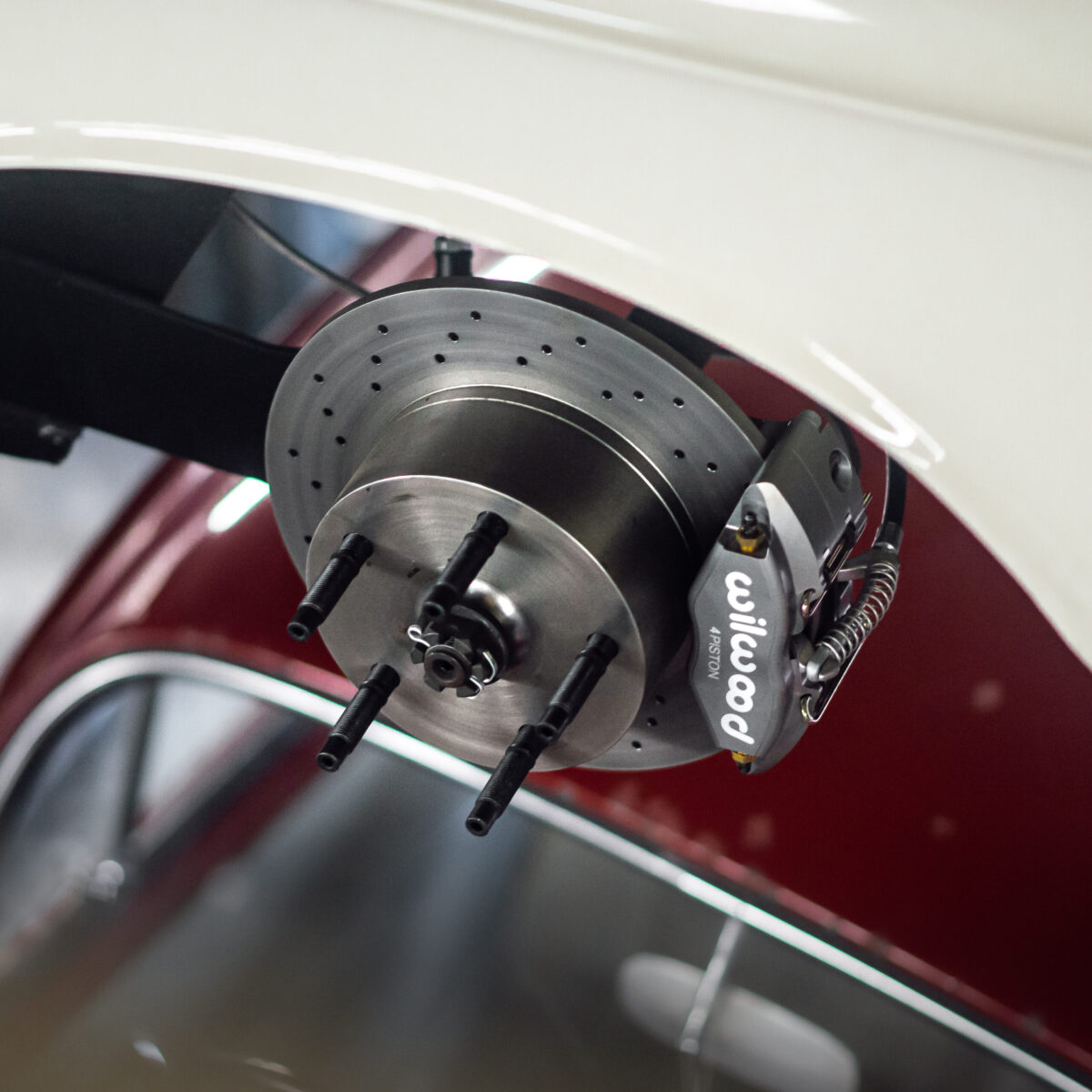

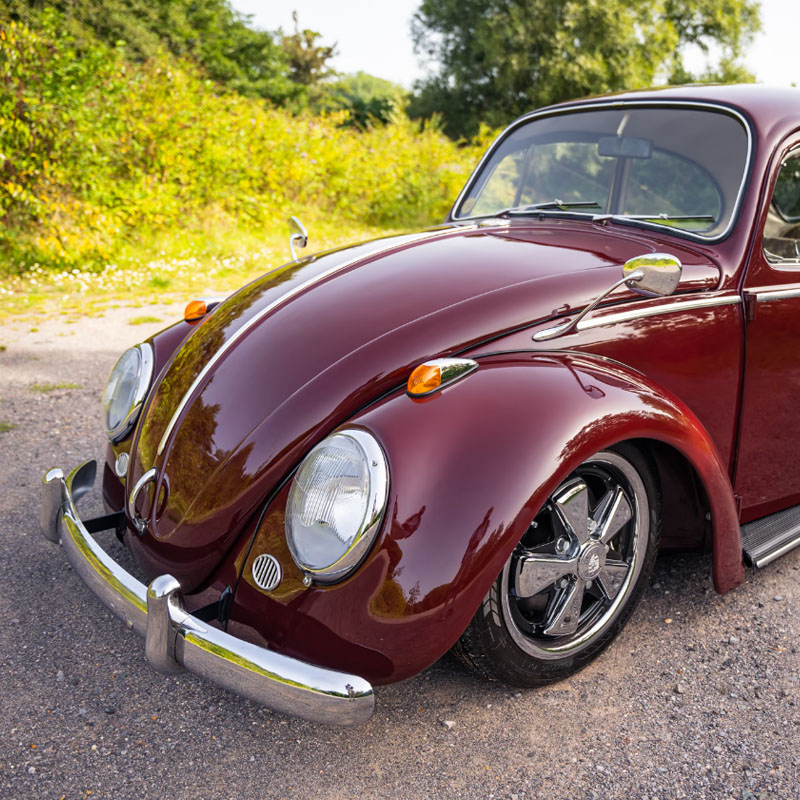
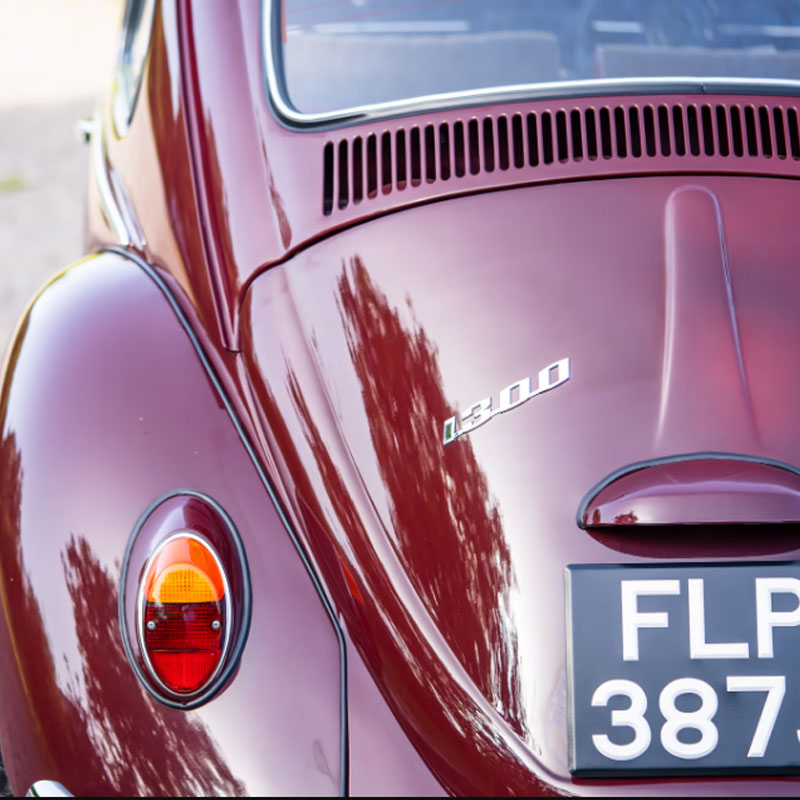
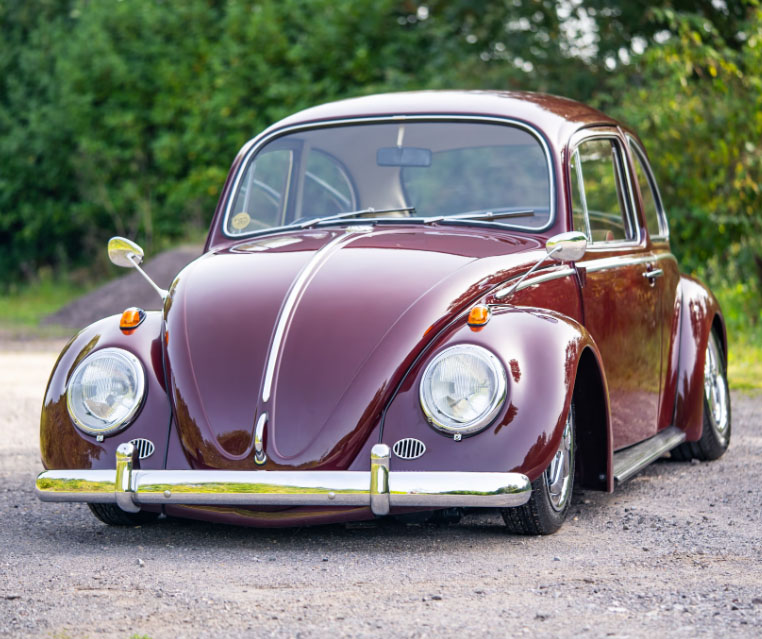
Limebug’ 1971 Beetle puts a real-world finish on the Limebug catalogue, bringing together 1966-79 Beetle / Ghia 4" Narrowed Ball Joint Deluxe Cantilever Swing Axle / IRS Air Ride Kit, 1966-79 Beetle / Ghia Ball Joint 4" Narrowed Complete Front Air Ride Kit with Elite Series Jawbreaker Beam, 1966-79 Beetle / Ghia Ball Joint 4" Narrowed Elite Series Jawbreaker Front Air Ride Beam Axle in one properly resolved setup.
FOURTEEN YEARS IN THE MAKING
A 1971 Beetle, a driveway, fourteen years of changing ambitions and the unmistakable colour of an early Split Window Volkswagen. The Bordeaux Bug is more than another Limebug build. It’s a reminder of where it all began.
Words by Limebug | Hall of Fame — Featured Builds
Before the workshop, there was a driveway.
Every business has a starting point.
Sometimes it’s a carefully prepared business plan, a well-equipped workshop and a clear idea of where everything is heading.
And sometimes it’s an old Volkswagen sitting on a driveway, surrounded by borrowed tools, second-hand parts and an increasingly unrealistic collection of ideas.
For Limebug, the Bordeaux Bug belongs to that earlier chapter.
The story began in 2009, with a 1971 Beetle and the sort of determination that makes perfectly sensible people spend their evenings lying underneath rusty cars.
There wasn’t an unlimited budget.
There wasn’t a professional restoration facility.
And there certainly wasn’t a convenient collection of brand-new panels waiting to be fitted.
What there was, however, was enthusiasm.
An awful lot of it.
The Beetle would become a project that developed alongside the skills, experience and resources available to build it.
Repairs were revisited.
Earlier decisions were reconsidered.
And components that had once seemed perfectly acceptable were eventually replaced with better alternatives.
Fourteen years later, the result bore very little resemblance to the sort of driveway project that had started it all.
But that was exactly what made the car special.
The long way round
Begged, borrowed and repurposed
Anyone who’s restored an old Volkswagen on a limited budget will recognise the early stages of this story.
You make do with what you’ve got.
Tools are borrowed.
Materials are repurposed.
And jobs that would take a properly equipped workshop an afternoon somehow occupy an entire weekend.
The Bordeaux Bug was built largely in that environment.
An ordinary driveway, limited resources and the constant process of working out how to complete the next job without spending money that wasn’t available.
But that’s also where a great deal of practical experience comes from.
You learn how things fit together because you’ve taken them apart.
You discover which repairs last because you’ve had to revisit the ones that didn’t.
And eventually, you start recognising the difference between completing a job and completing it properly.
That distinction became increasingly important as the years passed.
When good enough isn’t good enough anymore
One of the unusual things about a fourteen-year project is that the person finishing it isn’t necessarily the same builder who started.
Not in terms of experience, anyway.
Techniques improve.
Expectations change.
And work that seemed perfectly acceptable years earlier can suddenly become something you’re no longer happy with.
The Bordeaux Bug went through exactly that process.
As more experience was gained and the budget improved, earlier repairs were reconsidered.
Rather than simply continue building on top of work that could have been better, sections were revisited and replaced.
It extended the project considerably.
But the resulting car benefited from those decisions.
The intention had shifted from getting an old Beetle back together to building one that reflected everything learned along the way.
Doing the metalwork properly
Sometimes you have to start again
Over the course of the restoration, the Beetle received substantial replacement metalwork.
New OE-thickness floorpan halves replaced the earlier floor sections.
The heater channels were renewed.
A complete front clip was fitted.
The bumper irons were replaced.
And original doors were sourced as part of the continuing restoration.
It’s an extensive list.
And one that gives a much better indication of the work involved than the finished photographs alone.
Floorpan halves and heater channels are fundamental structural components on a Beetle.
Replacing them correctly requires considerable attention to alignment and fitment, particularly when different sections of the body are being repaired over an extended period.
The front clip introduces another major area of work.
And with a project that has already been through numerous stages, every new panel brings the possibility of uncovering something else that needs attention.
Fourteen years is a long apprenticeship
There’s something quite satisfying about the fact that the Bordeaux Bug was improved repeatedly rather than simply declared finished at the first opportunity.
The later repairs benefited from everything learned during the earlier stages.
Better tools.
Better panels.
Better preparation.
And a much clearer understanding of the standard being pursued.
It might not be the quickest way to restore a Volkswagen.
But it’s certainly an effective way to learn one.
By the time the bodywork reached its final stages, the Beetle had become far more than the original driveway project.
It was a record of fourteen years of developing skills.
A 1971 Beetle dressed for the fifties
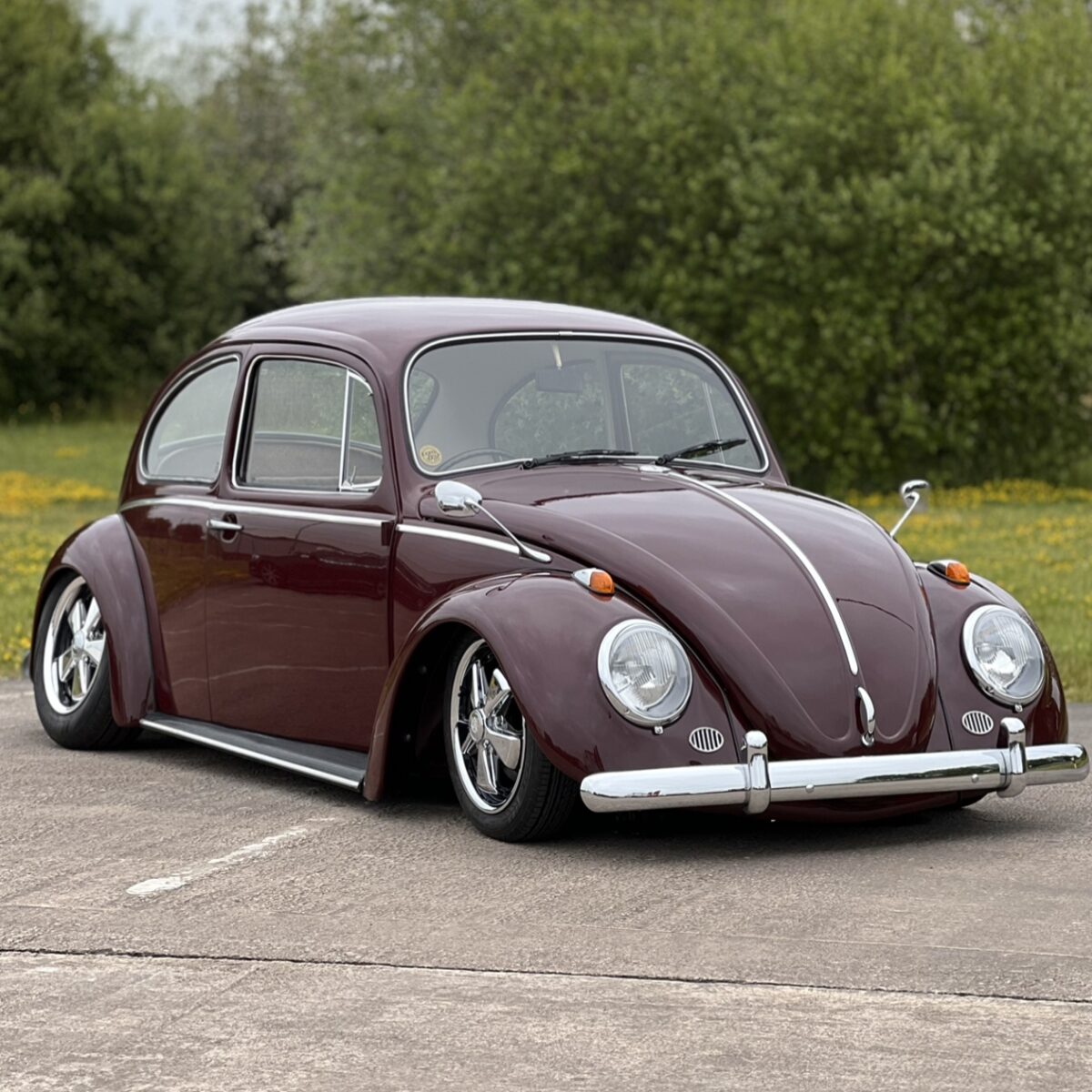
L51 Bordeaux Red
The finished colour was one of the most important decisions.
Rather than choose a finish associated with the Beetle’s original 1971 model year, we went considerably further back through Volkswagen’s history.
L51 Bordeaux Red.
A deep, elegant factory colour associated with early Split Window Beetles.
It’s a beautiful shade.
Rich enough to give the bodywork considerable presence, but understated in a way that suits the original Volkswagen shape.
Against chrome trim and gloss-black detailing, it creates an appearance more closely associated with the early post-war period than the beginning of the seventies.
Which was precisely the intention.
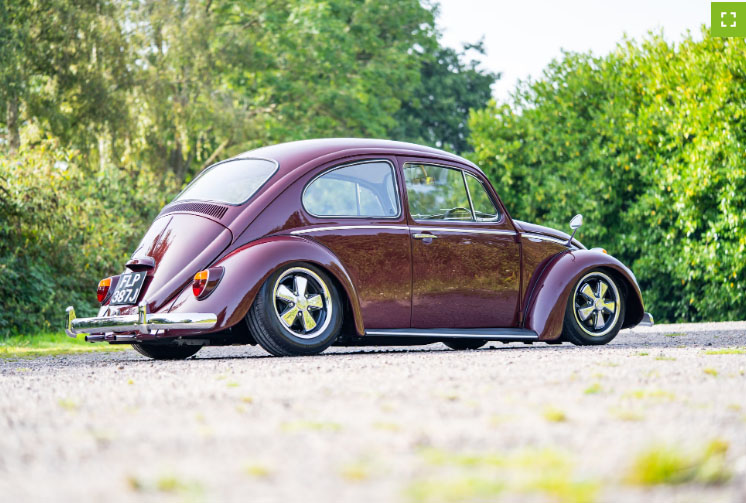
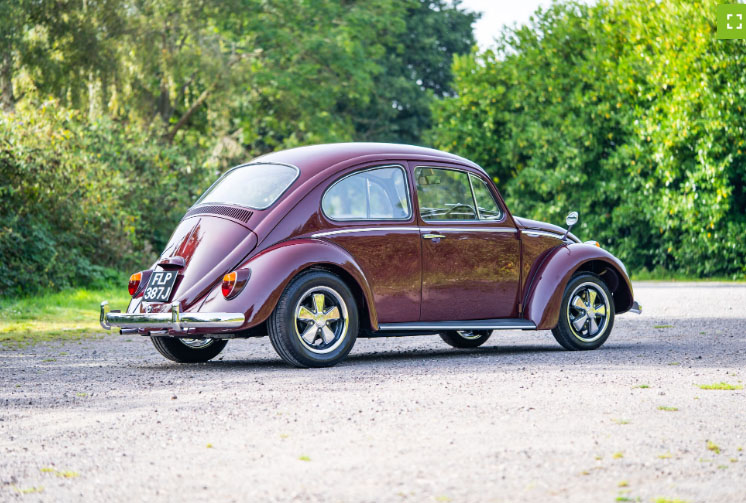
The car wasn’t being rebuilt as a strictly original 1971 Beetle.
We wanted to combine an earlier visual character with the mechanical possibilities offered by the later chassis.
The best of two generations
The 1971 Beetle has an important advantage over the earliest Volkswagen models.
Its ball-joint front suspension provides a different foundation for lowering and modification from the original link-pin arrangement.
That makes it particularly useful for the kind of suspension engineering Limebug has developed over the years.
The Bordeaux Bug uses that later architecture while drawing its visual inspiration from much earlier cars.
Deep red paintwork.
Traditional chrome details.
Gloss-black accents.
And a carefully selected wheel and tyre combination.
The result is an interesting mixture of eras.
A seventies Beetle with an unmistakably old-school personality.
The Jawbreaker treatment
Four inches narrower
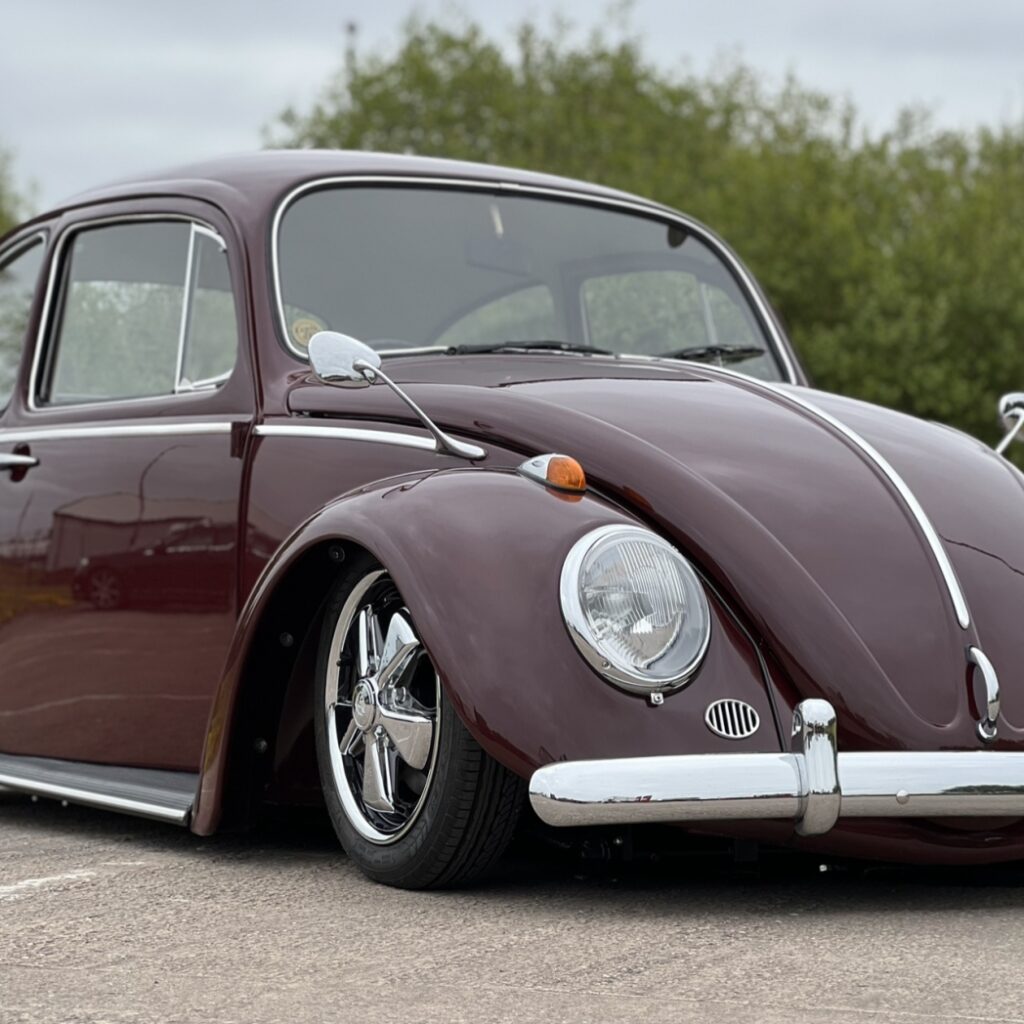
Underneath the Bordeaux Red bodywork sits a 4-inch narrowed Limebug Ball Joint Jawbreaker air ride beam.
The reduced front track width allows the wheels to sit further beneath the original wings, complementing the stance without requiring major alterations to the bodywork.
The installation also incorporates 4-inch narrowed Titan through rods and matching narrowed track rods.
Those components were specified as part of the complete front-end arrangement rather than treating the beam as an isolated modification.
It’s an important detail on any significantly narrowed Volkswagen.
Changing the width of the front suspension affects the steering components and the available clearances.
Getting the finished combination right requires the associated hardware to suit the altered geometry.
The right-hand-drive Ultrarm
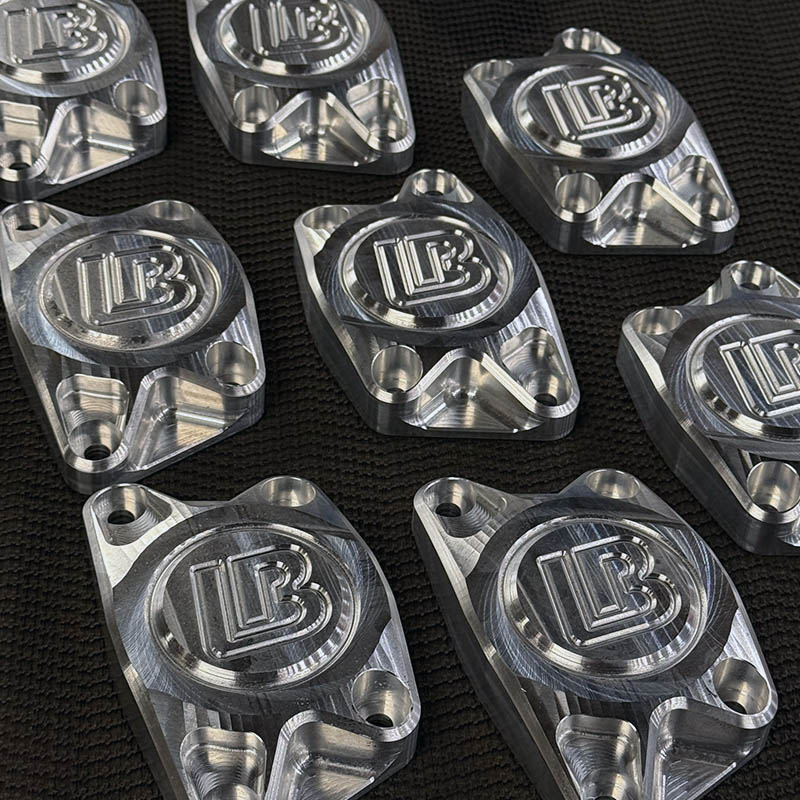
The Bordeaux Bug uses Limebug’s right-hand-drive M12 Ultrarm steering-angle corrector, designed for the later steering-box arrangement.
It provides another important part of the narrowed front suspension package.
The objective is to address the steering limitations that can arise with heavily narrowed beam installations.
And on a car that has taken fourteen years to complete, it makes sense to ensure the mechanical details receive the same attention as the bodywork.
There’s little satisfaction in creating a beautifully restored Beetle if the finished steering arrangement becomes an unnecessary compromise.
The Fuchs finish
Chrome and gloss black
The wheels complete the contrast between traditional styling and later mechanical engineering.
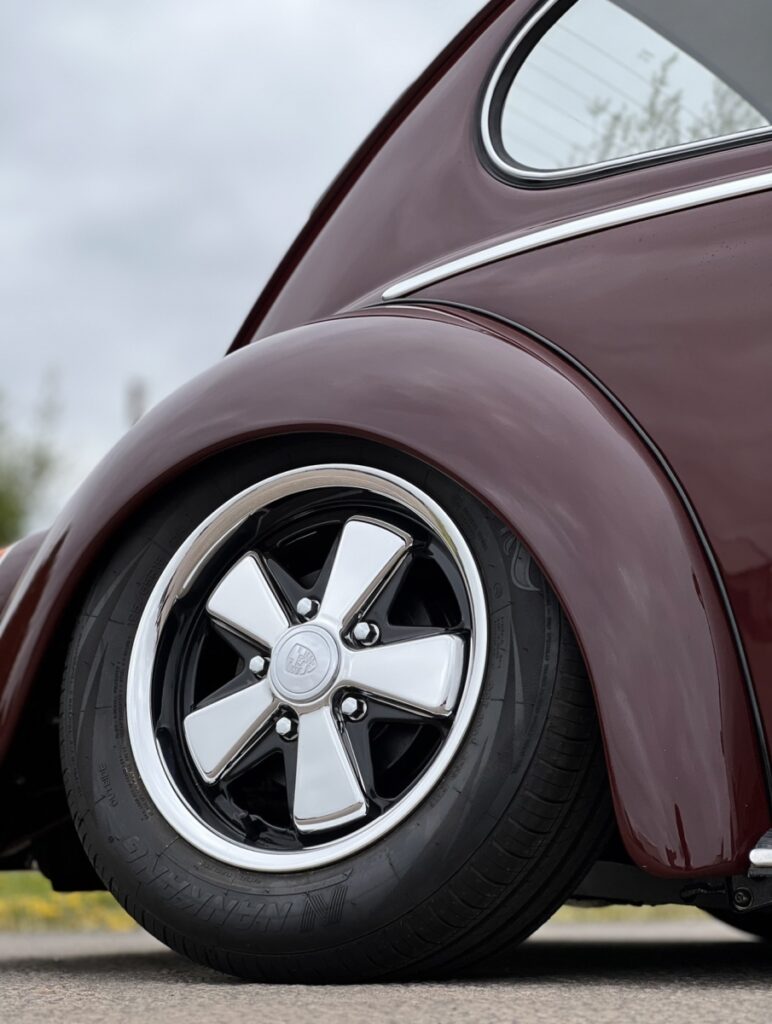
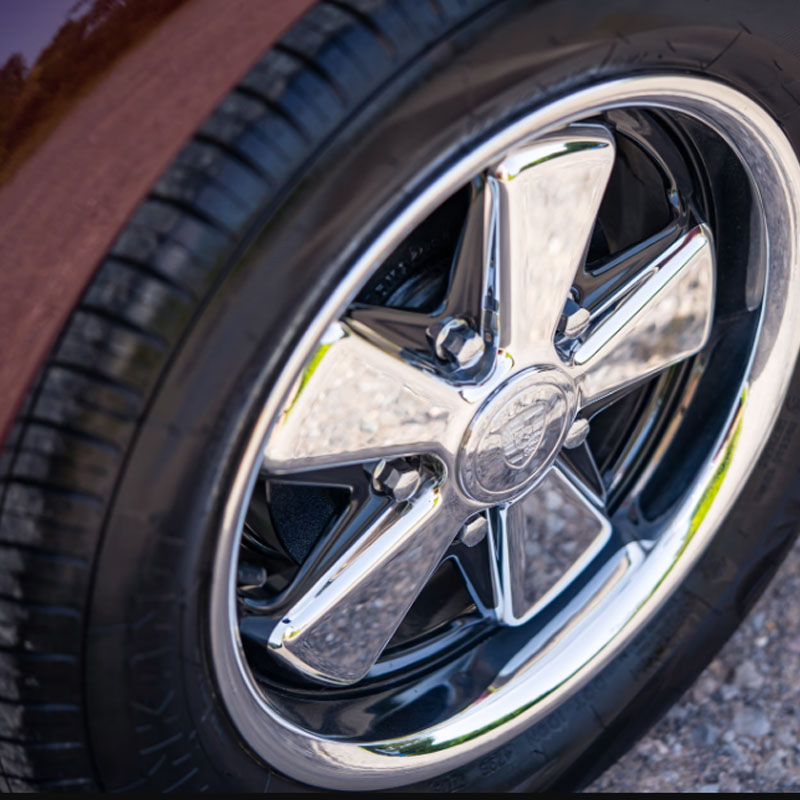
A staggered set of correctly detailed Fuchs-style wheels, finished in chrome and gloss black, brings a classic Porsche influence to the Beetle.
It’s a combination that works particularly well against L51 Bordeaux Red.
The darker wheel centres tie into the gloss-black detailing, while the bright outer surfaces complement the chrome trim.
And the staggered arrangement adds a little more visual weight at the back of the car.
The tyre selection follows the same approach.
135/70 at the front and 195/65 at the rear.
The narrower front tyres help maintain the intended tuck beneath the wings.
The wider rear tyres create a more substantial stance without taking away from the Beetle’s traditional appearance.
The result is well balanced.
Nothing excessively modern.
Nothing unnecessarily complicated.
Just a carefully chosen combination that suits the shape.
The highs and the lows
Two sides of the same Beetle
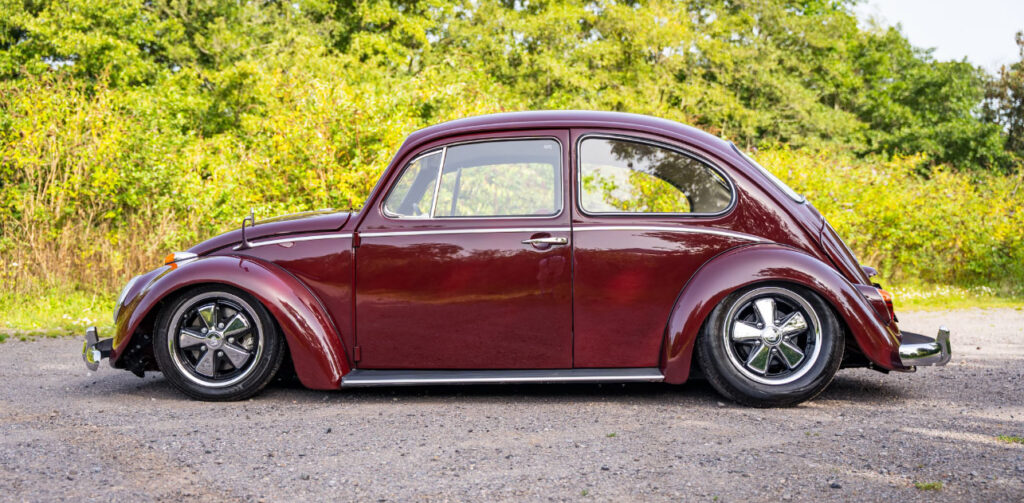
One of the best ways to appreciate the Bordeaux Bug is to see it in its different suspension positions.
With the air suspension raised, it retains a recognisably traditional Beetle appearance.
The deep red paint and Fuchs wheels dominate the view.
Lower the front suspension and the character changes considerably.
The narrowed beam allows the wheels to tuck closer beneath the wings, creating a much more deliberate custom stance.
It’s a particularly effective contrast because the rest of the car remains visually restrained.
The styling doesn’t rely on dramatic body modifications.
The suspension and wheel fitment do the work.
Fourteen years for the details to come together
That balance reflects the wider history of the project.
The Bordeaux Bug wasn’t finished in one concentrated build period.
It evolved gradually.
Bodywork was improved.
Mechanical choices were reconsidered.
And the final visual specification developed alongside everything else.
What emerged was a Beetle with a coherent appearance, despite drawing on ideas from several different decades.
A fifties-inspired colour.
A seventies chassis.
Classic Porsche-influenced wheels.
And modern adjustable suspension.
Fourteen years is a long time to bring those ingredients together.
But the result has a character that would have been difficult to achieve through a much quicker build.
The complete build specification
Vehicle and history
- 1971 Volkswagen Type 1 Beetle
- Known as the Bordeaux Bug
- Project began in 2009
- Fourteen-year build and development history
- Originally restored largely on a driveway
- Significant early Limebug-associated project
Bodywork and restoration
- Replacement OE-thickness floorpan halves
- New heater channels
- Complete replacement front clip
- Replacement bumper irons
- Original Volkswagen doors
- Multiple stages of metalwork refinement
- L51 Bordeaux Red paintwork
- Chrome and gloss-black exterior detailing
Front suspension and steering
- Limebug 4-inch narrowed Ball Joint Jawbreaker air ride beam
- Right-hand-drive Ultrarm steering-angle corrector
- Later M12 steering-box specification
- 4-inch narrowed Titan through rods
- 4-inch narrowed right-hand-drive track rods
- Adjustable front air suspension
Wheels and tyres
- Correctly detailed Fuchs-style wheels
- Staggered front and rear fitment
- Chrome and gloss-black finish
- Front tyres: 135/70
- Rear tyres: 195/65
Styling concept
- Early Split Window-inspired colour scheme
- Traditional Volkswagen chrome detailing
- Later ball-joint Beetle chassis architecture
- Porsche-inspired wheel styling
- Modern narrowed front air suspension
The one we’ll always remember.
Every car we build becomes part of Limebug’s history in one way or another.
Some introduce new products.
Others demonstrate the latest engineering.
A few go on to win awards or appear in magazines.
But the Bordeaux Bug belongs to a different chapter.
It represents the years when an old Volkswagen, a driveway and a determination to learn were enough to keep a project moving.
The days of borrowed tools.
The repairs that seemed perfectly acceptable until a few years of experience proved otherwise.
And the gradual progression from simply getting something finished to wanting every part of it done properly.
Fourteen years is an extraordinary amount of time to spend building one Beetle.
But in many ways, the finished car is only half the achievement.
The other half is everything learned while building it.
A fifties colour. A seventies Beetle. Fourteen years of lessons.
The Bordeaux Bug. Affectionately remembered as the first.