
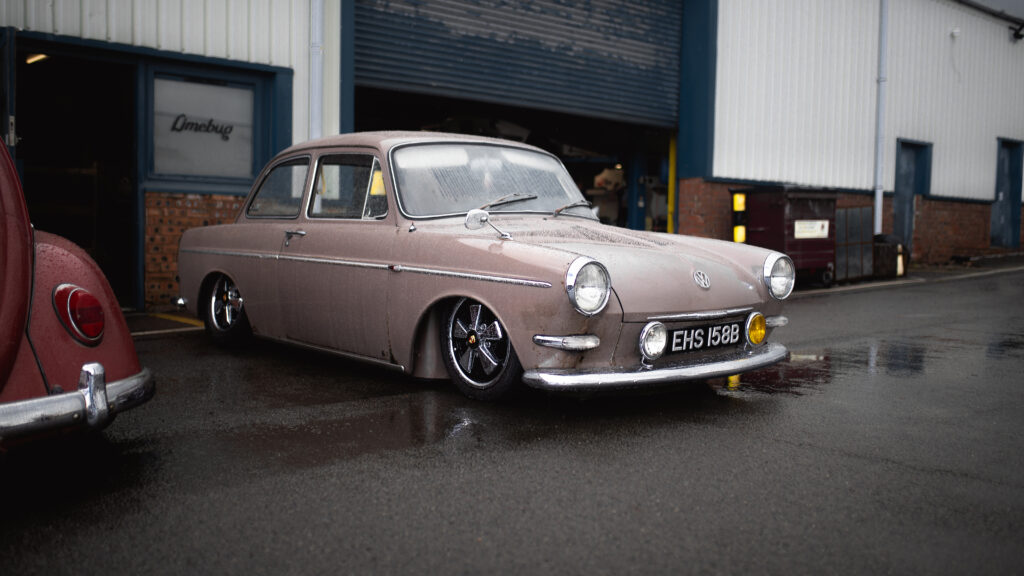
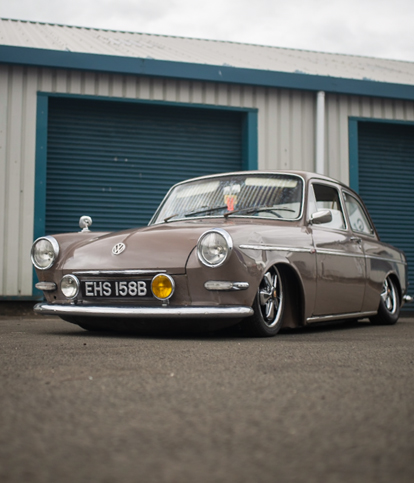
Rob M’ 1964 Notchback puts a real-world finish on the Limebug catalogue, bringing together 1956-74 Type 3 / T34 "The Revolution" Cantilever Swing Axle / IRS Rear Air Ride Kit, Bolt on, 1956-74 Type 3 / 34 4" Narrowed Deluxe Cantilever Swing Axle / IRS Air Ride Kit, Bolt on, 66- Beetle / Ghia / Type 3 5x130 Cross Drilled Front Disk Brake, Each in one properly resolved setup.
A NOTCH ABOVE THE REST
From Fuchs and swing-axle air ride to a turbocharged, race-inspired Type 3 with bespoke ER34 split rims. Rob’s 1964 Volkswagen Notchback is proof that the best builds rarely stand still.
Words by Limebug | Hall of Fame — Featured Builds
Some builds are never really finished.
There’s a particular sort of Volkswagen project that refuses to stay in one configuration for very long.
You get the suspension right.
Then you start thinking about the wheels.
The wheels lead to a different stance.
The stance leads to another suspension change.
And before long, the car you thought was finished has become something else entirely.
Rob’s 1964 Type 3 Notchback is a rather good example.
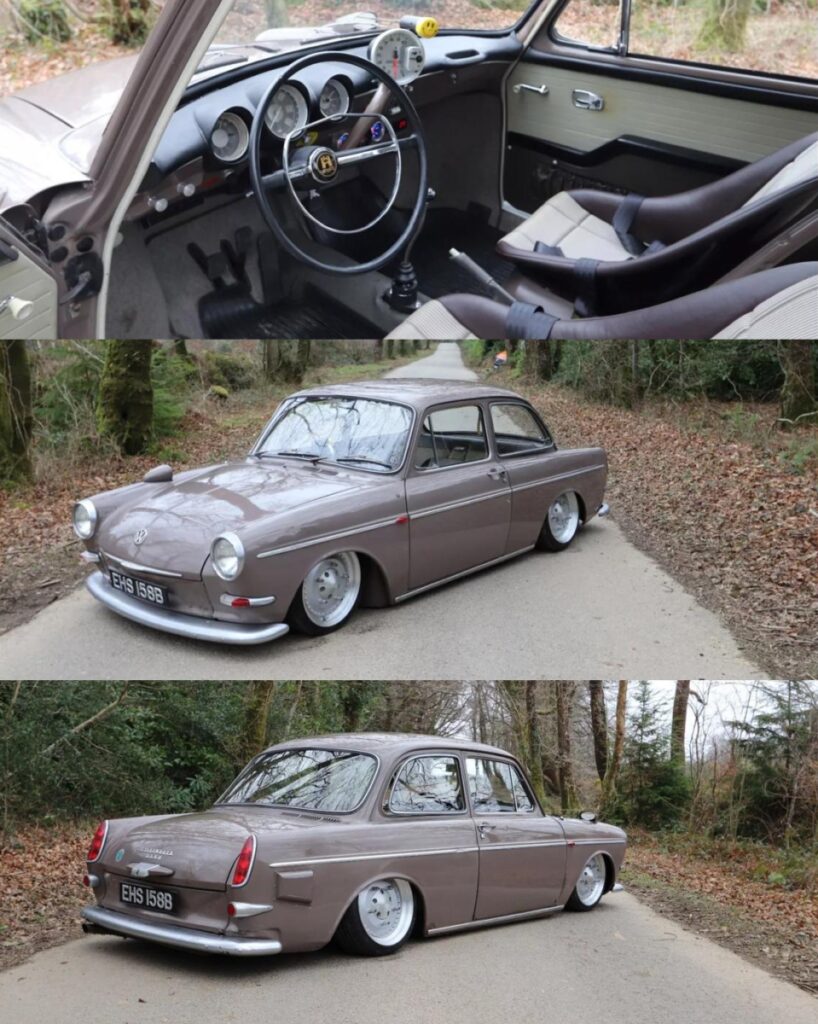
Over the years, it has evolved from a low-slung street car on detailed Fuchs wheels into something considerably more aggressive, with an independent rear suspension conversion, bespoke three-piece split rims and a turbocharged engine.
Along the way, it’s also provided an interesting demonstration of just how adaptable our Limebug Revolution cantilever air ride system can be.
Three different approaches to the same Volkswagen.
And a car that seems to get more interesting with every transformation.
A different sort of Volkswagen
The appeal of a 1964 Notchback
The Type 3 has always occupied an interesting corner of the air-cooled Volkswagen world.
Introduced as a more refined alternative to the Beetle, it offered familiar rear-engined engineering wrapped in a completely different body.
And of all the Type 3 variations, there’s something particularly appealing about the Notchback.
The long, relatively low bonnet, squared-off roofline and defined rear boot give it a character quite unlike the rounded shape of a traditional Beetle.
It’s understated, almost formal in its proportions.
Which makes it a rather interesting starting point for something low, wide and thoroughly unconventional.
Rob’s 1964 example has been through several different incarnations, each moving the car a little further from its original character.
Yet the unmistakable Type 3 shape has remained central to the build.
A familiar face. A changing specification.
By the time Rob first brought the Notchback to Limebug HQ, the car was already running our air suspension system at the front.
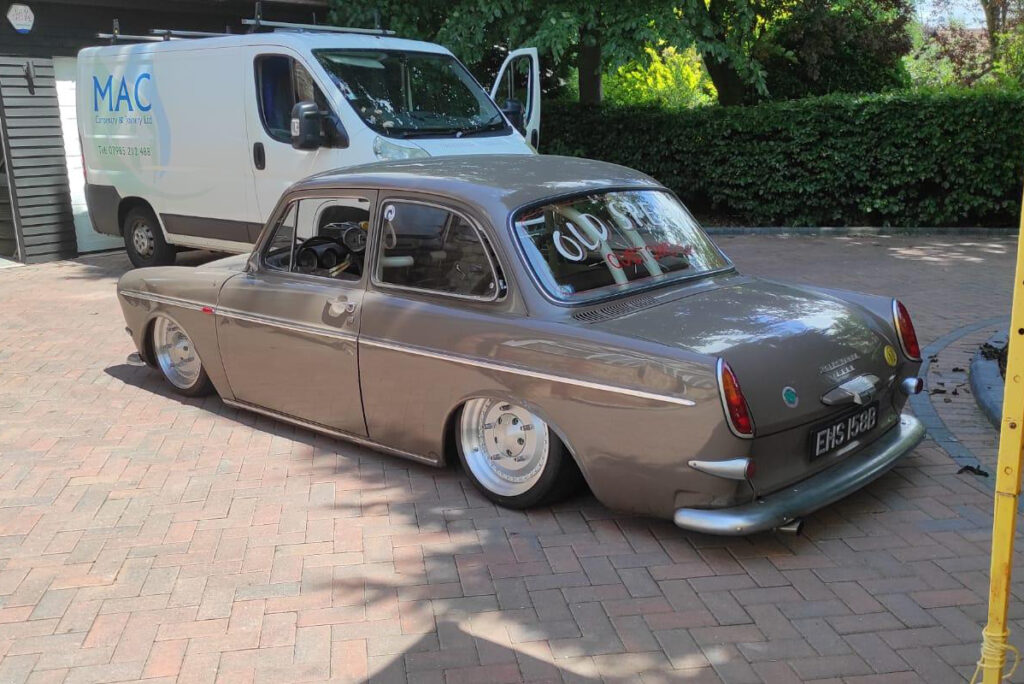
At the rear, however, it remained statically lowered.
Visually, it worked.
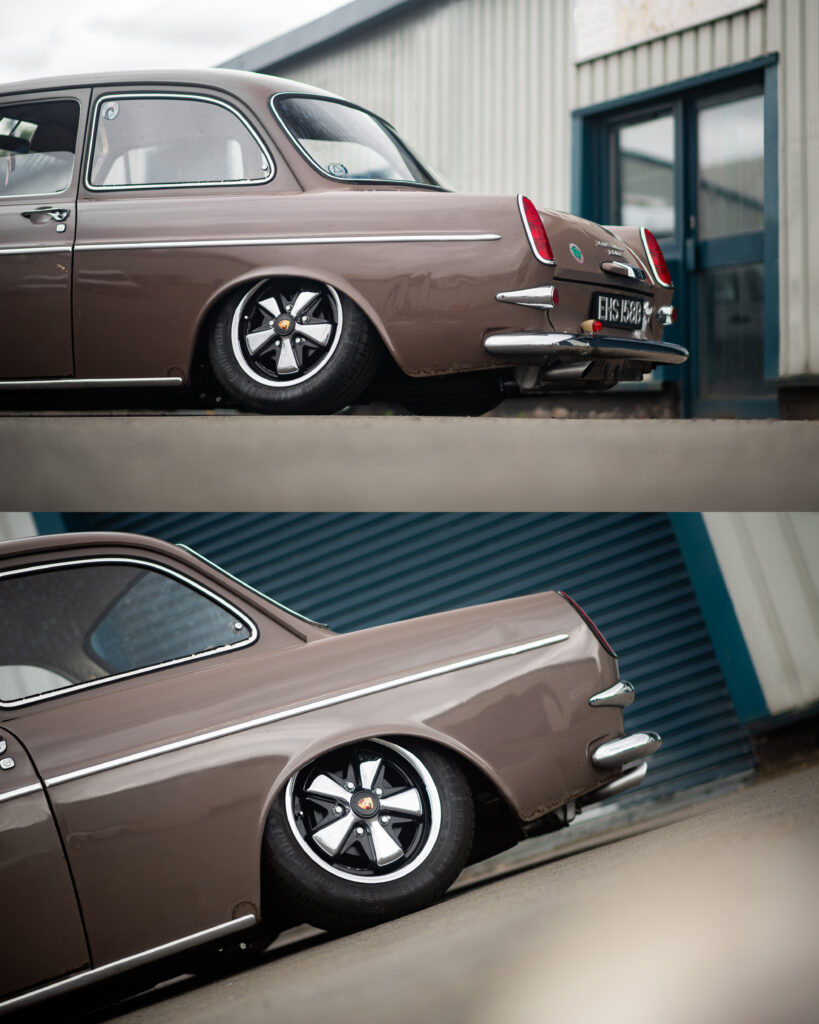
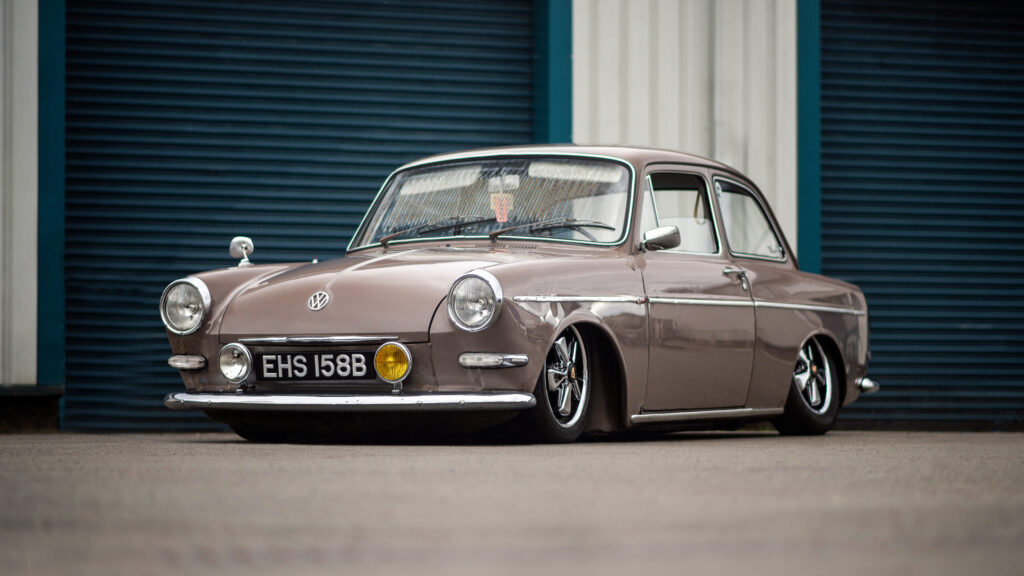
The stance was low, the proportions looked right, and the staggered Fuchs-style wheels suited the shape of the car beautifully.
There was just one problem.
It didn’t drive particularly well.
And as anybody who has spent time modifying a swing-axle Volkswagen will know, there can be quite a difference between achieving the right stance and making the car enjoyable to use.
Rob wanted both.
The first big change
Goodbye static. Hello cantilever.
The solution was to move the rear suspension onto our Revolution cantilever air ride system.
Unlike a conventional static lowering arrangement, the system allows the rear ride height to be adjusted through an air-operated cantilever mechanism.
The central assembly uses a compact cartridge-style layout, with the air spring and damper operating through a linkage system mounted high within the vehicle’s rear suspension area.
It’s a system we developed to provide greater flexibility in how an air-cooled Volkswagen can be lowered and driven.
For Rob, the difference was particularly useful.
The car could retain the low stance he wanted for shows while offering the ability to raise the rear when required.
It also allowed a more considered approach to the rear suspension arrangement than the static setup it replaced.
Getting the Fuchs to sit just right
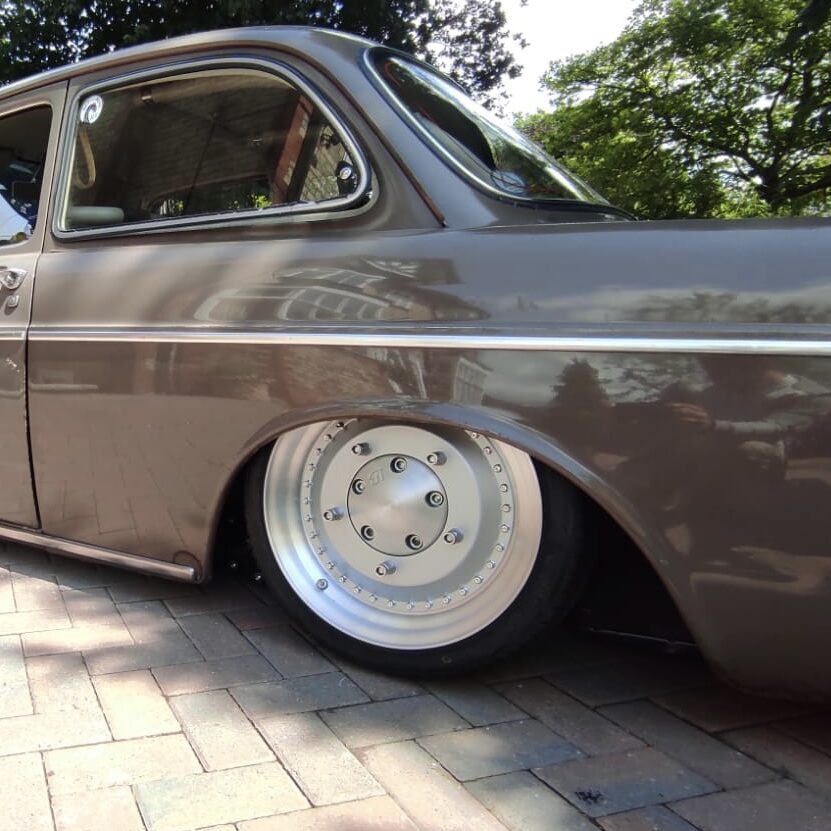
At this stage, Rob’s Notchback was wearing a staggered set of 15-inch detailed Fuchs-style wheels.
The rear cantilever conversion allowed the car to sit neatly around them, giving the Type 3 a low, clean appearance.
The relationship between the long Notchback body and the detailed wheels worked particularly well.
Low without appearing exaggerated.
Custom without losing the shape of the original Volkswagen.
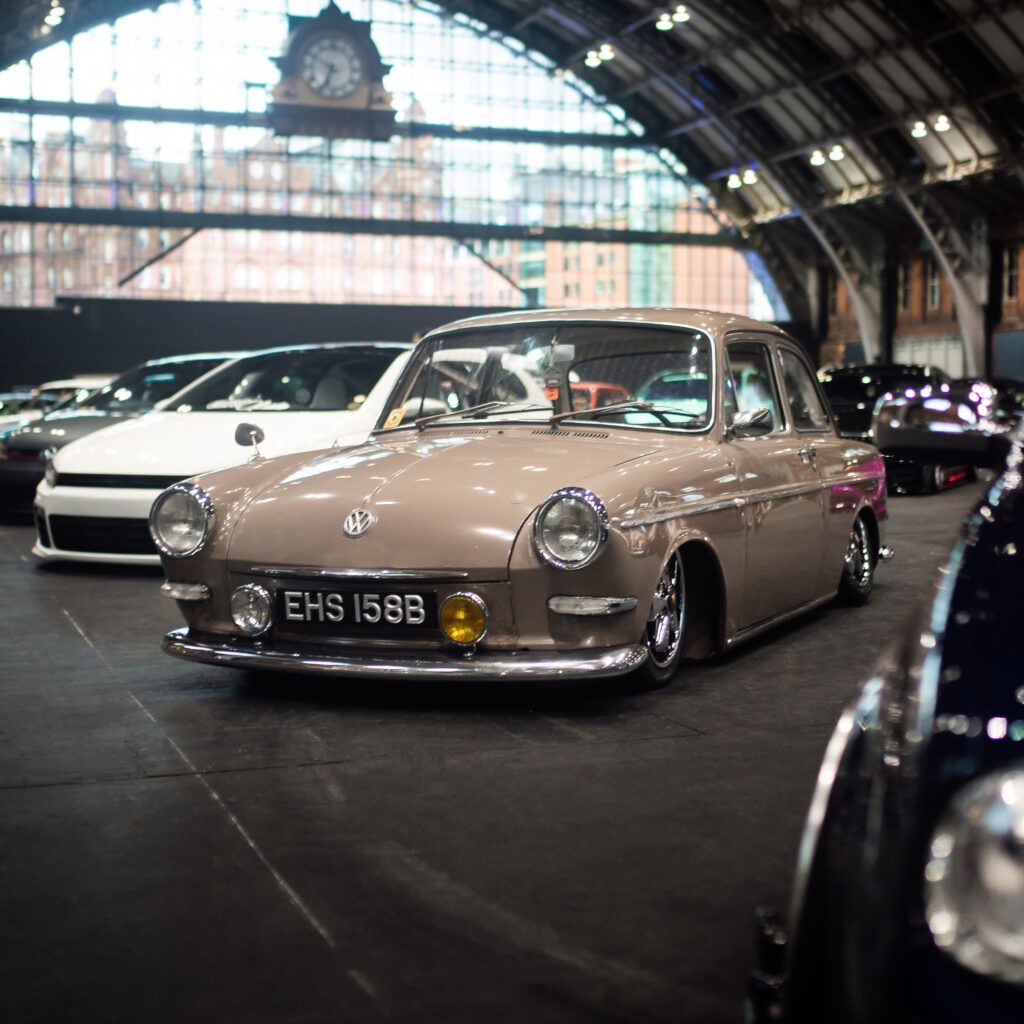
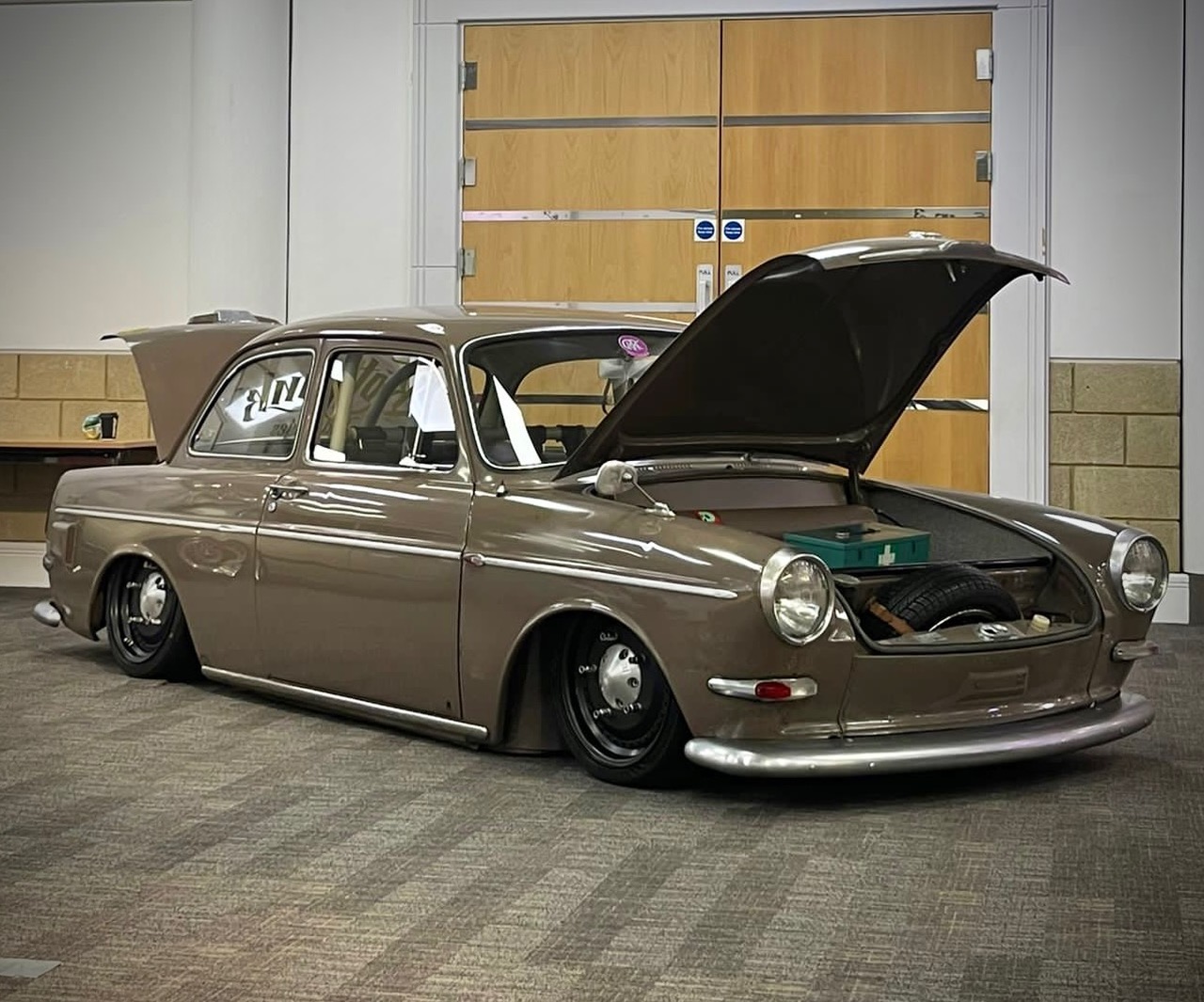
And sufficiently distinctive to make an impression when the car appeared at FittedUK in 2021.
FittedUK 2021
The first chapter on the show floor
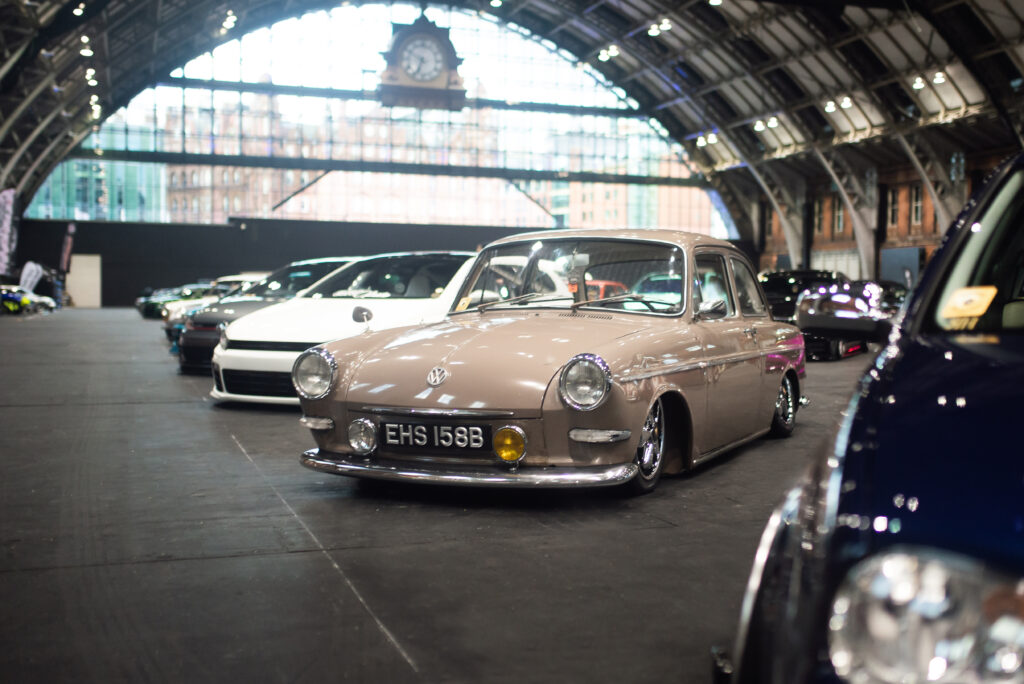
With the rear cantilever installed and the suspension working as a complete package, Rob took the Notchback to FittedUK 2021.
The event brings together an enormous variety of carefully modified vehicles, with stance, wheel design and attention to detail forming much of its appeal.
Among the polished modern performance cars and custom builds, an early Volkswagen Type 3 always offers something a little different.
Rob’s Notchback certainly looked the part.
The low stance, detailed Fuchs and classic three-box silhouette created a combination that was visually restrained compared with some of the more extravagant vehicles surrounding it.
But for anybody familiar with the engineering underneath, there was considerably more going on than a simple set of lowered springs.
And as it turned out, this was only the beginning.
One year later. Another direction.
Inspired by old-school race cars
Around a year after that first FittedUK appearance, Rob decided the Notchback needed another change.
This time, the inspiration came from old-school racing machinery.
The objective was to give the car a more purposeful appearance, moving away from the earlier Fuchs-equipped street-car specification towards something with a stronger motorsport influence.
And the first thing to change wasn’t the wheels.
It was the rear axle.
From swing axle to IRS
The Type 3’s existing swing-axle arrangement was replaced with a refurbished independent rear suspension setup.
The difference between the two systems is important, particularly on a heavily lowered Volkswagen.
With swing-axle suspension, changes in ride height influence wheel camber quite dramatically.
Lower the rear far enough and the wheels begin to take on that familiar negative-camber appearance.
It can suit certain traditional builds.
But it wasn’t the direction Rob wanted to take the Notchback.
The IRS arrangement offered a different set of geometry characteristics, allowing the rear wheels to retain a more upright appearance through the intended operating range.
For Rob’s evolving race-inspired specification, that was a significant improvement.
The beauty of building something modular
One of the particularly satisfying aspects of this conversion was that Rob didn’t need to abandon the cantilever system already fitted to the car.
Our Revolution rear suspension was designed around a modular central assembly.
The same core cartridge can be adapted for different air-cooled Volkswagen platforms and rear axle configurations using the appropriate associated components.
That meant the change from swing axle to IRS could be approached as a reconfiguration rather than a completely unrelated installation.
For us, this was exactly the sort of flexibility the system had been designed to provide.
And Rob’s Notchback was a rather good real-world example.
Getting the IRS properly low
Rob wanted more.
With the refurbished IRS arrangement installed, the rear wheel camber was considerably more controlled.
But there was still one thing Rob wanted to improve.
The height.
Conventional IRS arrangements present their own challenges when pushed towards extremely low ride heights.
Clearance around the suspension arms, bump stops and surrounding chassis components can become restrictive.
Getting everything lower requires more than simply adjusting the spring plates.
It needs a clear understanding of which components are approaching their mechanical limits.
And Rob wanted the Notchback sitting considerably lower than a conventional arrangement would comfortably allow.
Enter the Extra Low.
For the next stage, Rob chose our IRS Extra Low cantilever configuration.
This version incorporates a revised drop-link arrangement intended to extend the system’s lowering capability.
It is not simply a bolt-on modification for an otherwise untouched vehicle.
Achieving the additional clearance requires carefully planned modifications to the relevant surrounding components.
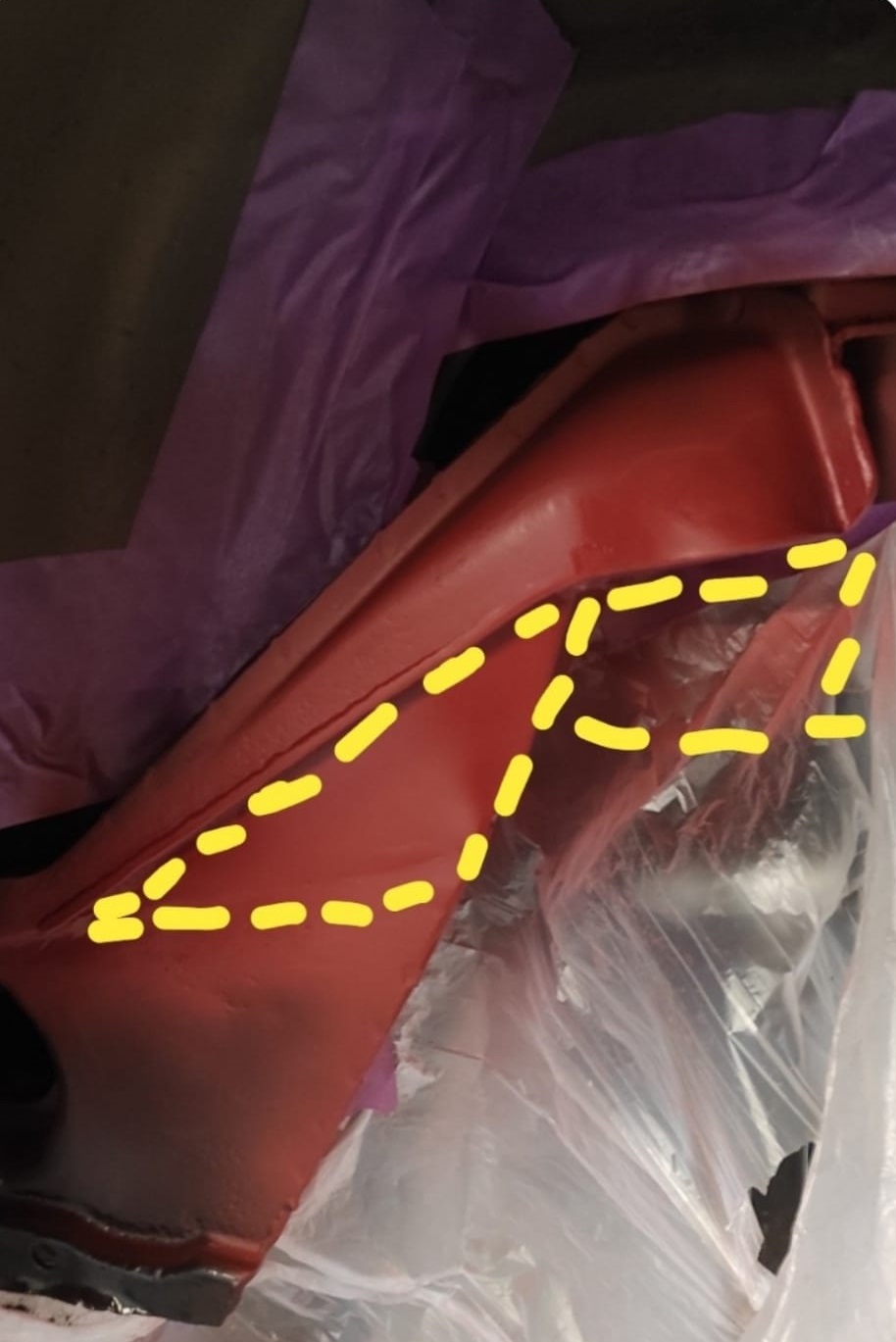
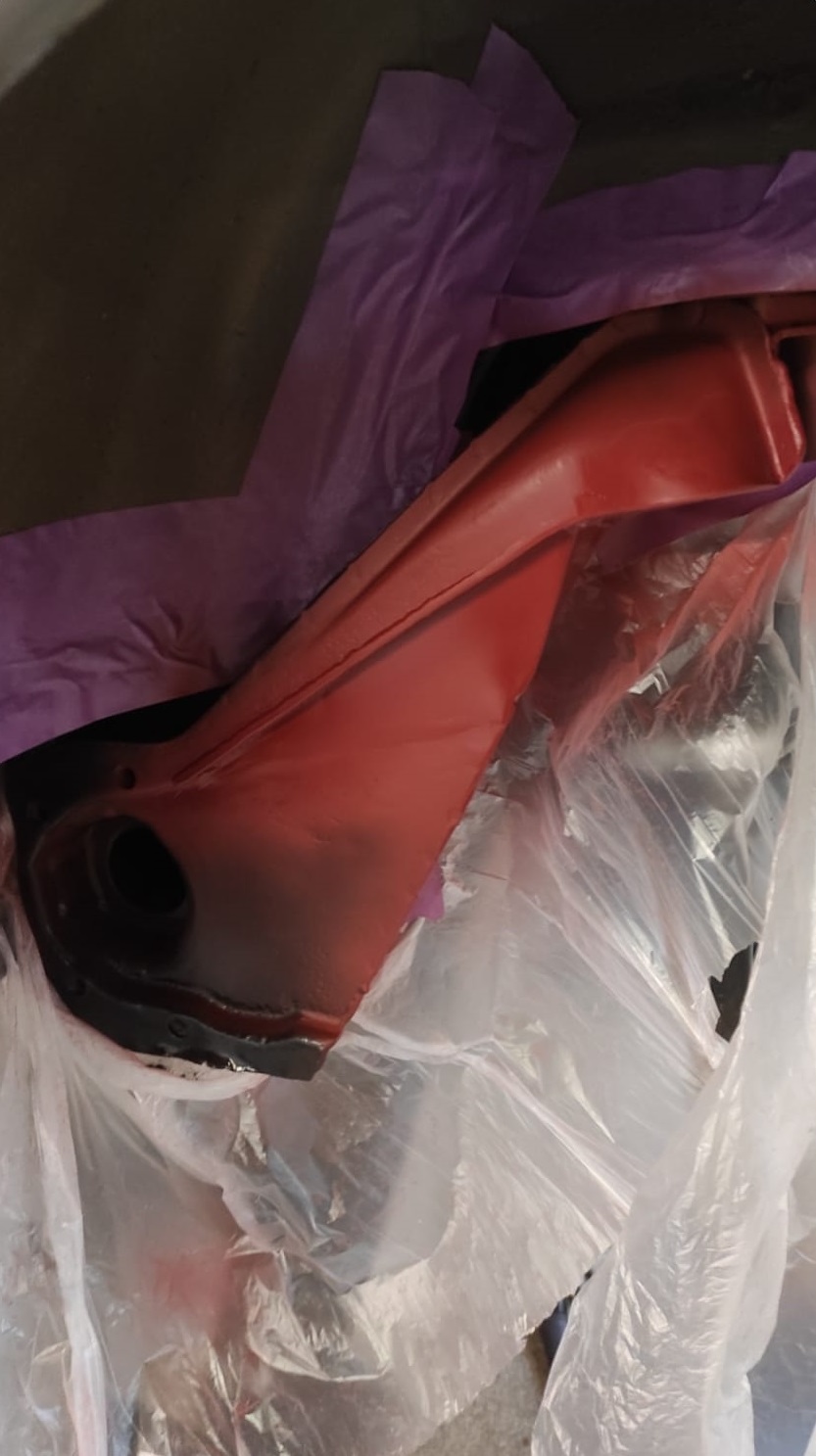
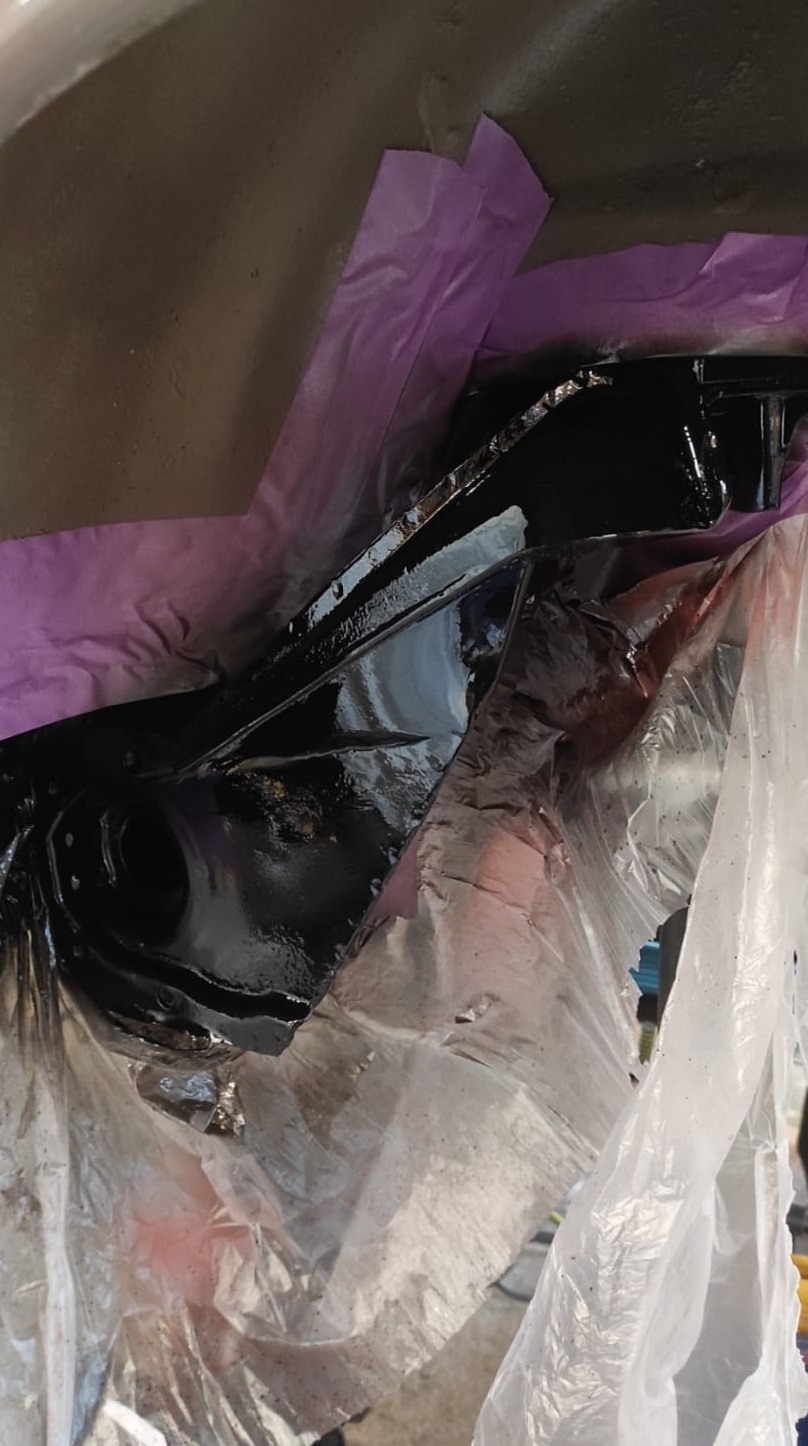
On Rob’s car, the conversion involved localised notching and adjustments to make the arrangement work.
The result was a significantly lower rear stance, with the IRS conversion retaining much more favourable wheel positioning than the previous heavily lowered swing-axle arrangement.
When fully lowered, the Notchback’s pan could sit right down on the ground.
And with that particular objective achieved, there was only one logical thing to do.
Change the wheels again.
A little drag racing inspiration
The wheel that started it all
For the next incarnation, Rob wanted to pay homage to classic American drag racing wheels.
Specifically, ERCO-style racing rims.
These have a distinctive visual language.
Simple, purposeful wheel centres.
Strong mechanical shapes.
And the kind of stripped-back appearance that makes them look perfectly at home on an old drag car.
The challenge was to capture that aesthetic while creating something specifically suited to Rob’s Type 3.
Which meant there wasn’t much point simply ordering a conventional off-the-shelf set.
We were going to make something a little different.
From CAD screen to split rim
The beginning of the ER34
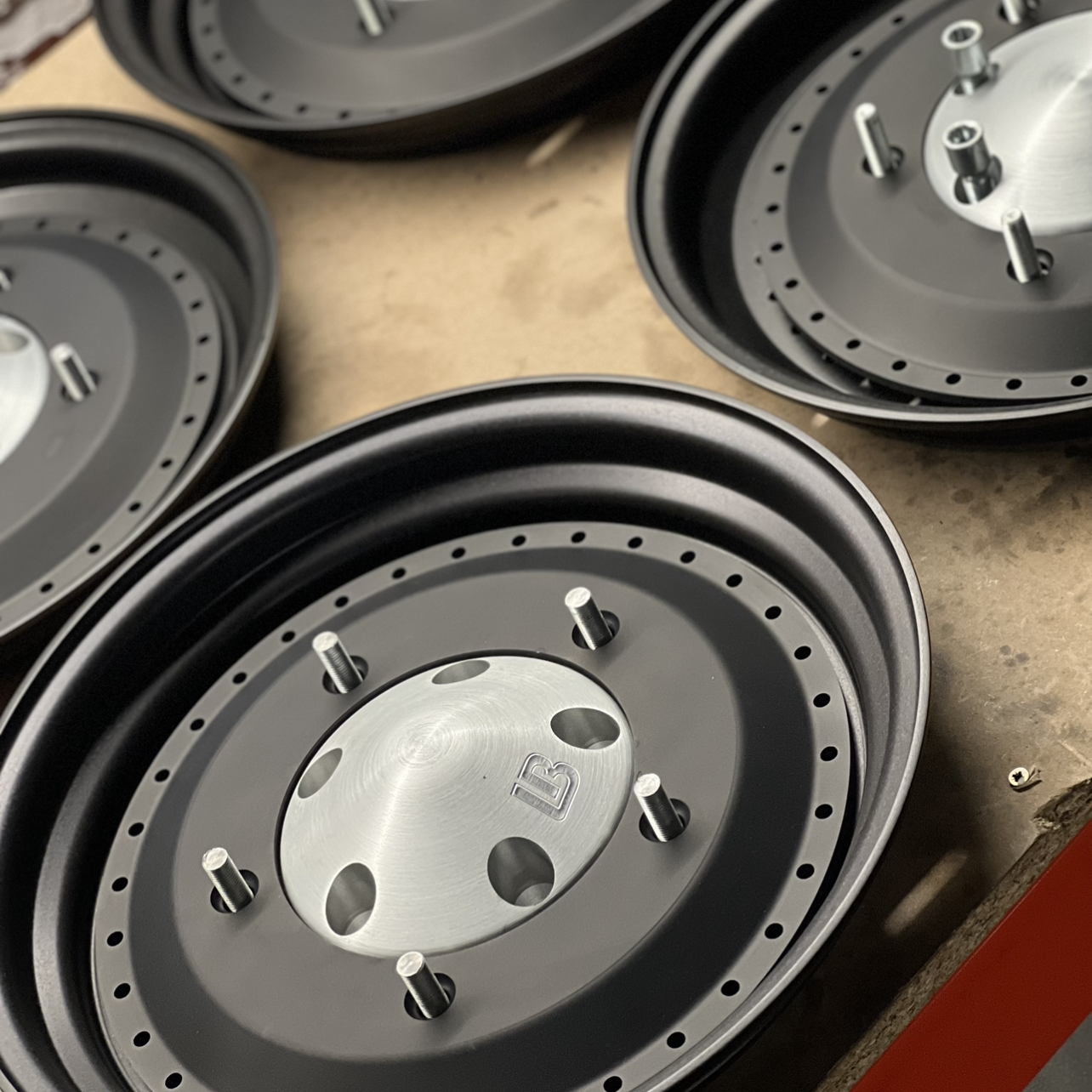
Using our CAD design software, we developed a custom 16-inch wheel centre inspired by the traditional ERCO racing-wheel appearance.
The design was configured around a BBS-style 34-hole modular wheel assembly, allowing it to work with separate outer lips and barrels.
The resulting wheel became the Limebug ER34.
Rather than following the earlier staggered Fuchs arrangement, Rob opted for a square wheel setup.
The faces, lips and barrels were all finished in matte black, giving the new wheels a much more purposeful appearance.
Against the familiar Type 3 bodywork, the change was substantial.
The Notchback was beginning to take on the appearance of something far closer to a vintage competition car.
Thirty-four holes. One very different wheel.
The 34-hole modular construction gave us the flexibility to develop the design around Rob’s requirements.
The flat wheel faces provided the visual simplicity associated with classic racing wheels, while the three-piece construction introduced the possibility of selecting the appropriate rim dimensions.
But simply building a set of black three-piece wheels wasn’t quite enough.
There was another detail we wanted to explore.
Something that would make this particular set unmistakably different.
The detail that made them different
Custom domed adapters
To complete Rob’s ER34 wheels, we designed and manufactured a one-off set of domed hub adapters.
These served two purposes.
They formed part of the wheel mounting arrangement while also creating a distinctive raised centre detail.
Rather than leaving the wheel face completely flat, the domed sections protruded from the centre, introducing another visual reference to traditional racing hardware.
It’s the sort of modification that might seem relatively small when considered on its own.
But once fitted to all four wheels, the effect was transformative.
The domed centres gave the wheels a very different character.
Almost as though the Notchback had borrowed part of its running gear from a period competition car.
Sometimes it’s the smallest details.
There’s a particular satisfaction in developing something specifically for one vehicle.
The amount of time involved doesn’t always make sense when measured purely against the size of the finished component.
But that’s rarely the point.
For Rob’s Notchback, the custom hubs were an opportunity to take a design that already looked interesting and give it another layer of individuality.
The sort of detail that rewards anybody who stops for a proper look.
And on a car with this much going on underneath, there was plenty worth examining.
A turbocharged change of character
A Garrett GBC17 enters the picture.
While the suspension and wheels were undergoing their latest transformation, Rob was continuing to develop the mechanical specification.
The engine received a considerable amount of attention, with one of the most significant additions being a Garrett GBC17 turbocharger setup.
It’s another modification that moves the Notchback further towards its race-inspired identity.
Turbocharging an air-cooled Volkswagen engine introduces an entirely different set of considerations from a conventional naturally aspirated configuration.
Boost pressure, fuelling, ignition control, cooling and the overall engine specification all need to work together.
For the Notchback, the turbocharger added another distinctive element to a vehicle that was already becoming considerably more complex than its original appearance might suggest.
The precise displacement and power output haven’t been established in the original build notes, but the inclusion of the Garrett turbo is certainly one of the most interesting elements of its later specification.
Race-inspired. Right down to the engine bay.
Rob also fitted MST rocker covers, continuing the theme of carefully selected mechanical components.
Alongside the turbocharger and other engine modifications, these help reinforce the direction the project has taken.
The understated Type 3 body hides something rather more purposeful beneath its rear engine lid.
And that contrast is part of the appeal.
Details from the paddock
A little Porsche influence
The race-inspired theme doesn’t stop at the wheels and engine.
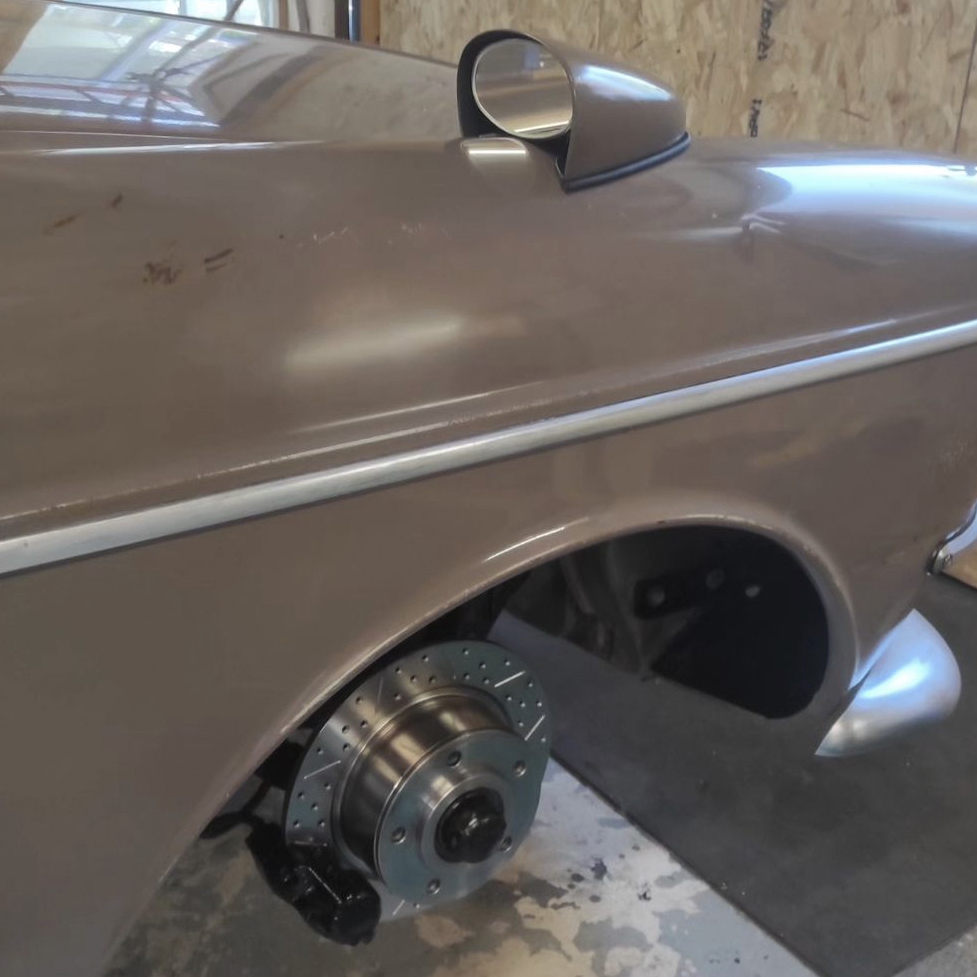
Rob added Porsche 550 Spyder-style mirrors, introducing another subtle reference to classic competition machinery.
They’re a small detail, but one that suits the increasingly purposeful character of the car.
The Type 3’s shape is still unmistakable.
Yet these little changes begin to suggest something different from a conventional restored Notchback.
Half cage. Harnesses. Proper intent.
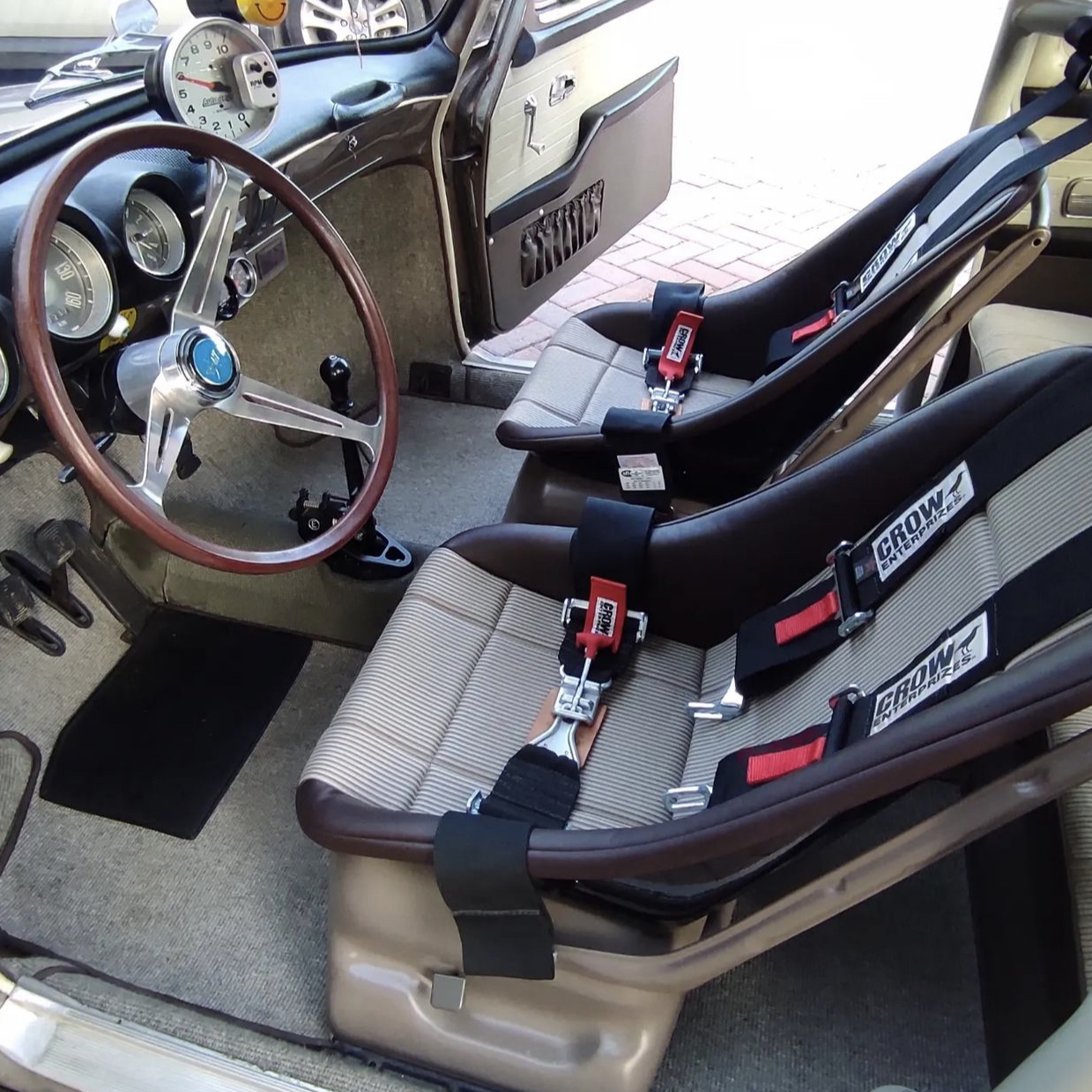
Inside, the car adopted a half cage and harnesses.
Again, the influence comes from competition cars rather than traditional Volkswagen restoration.
Combined with the exterior changes and the mechanical specification, the cabin helps establish a consistent theme throughout the build.
The Notchback is no longer simply a lowered classic Volkswagen wearing an interesting set of wheels.
It’s become a far more individual interpretation of what an early Type 3 can be.
And, knowing how the project has progressed so far, it’s difficult to imagine that being the final chapter.
The brakes behind the wheels
Wilwood stopping hardware
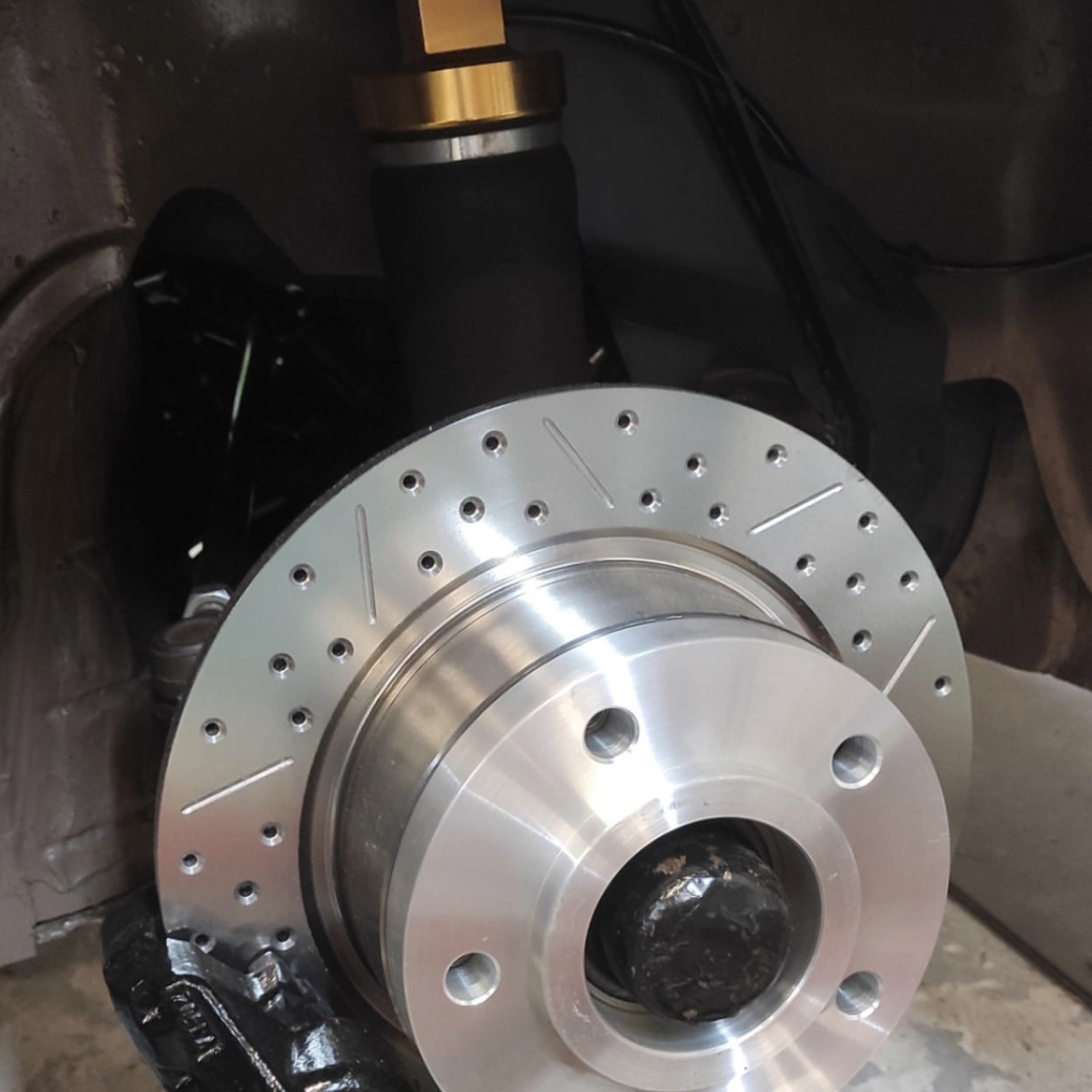
The Notchback’s mechanical specification also includes drilled and grooved brake discs with Wilwood hardware.
As with the suspension and engine modifications, the braking system reflects the greater emphasis on performance and mechanical development.
The move towards bespoke racing-inspired wheels makes the components behind them particularly interesting.
It’s another example of the way the build has evolved as a complete package rather than a succession of purely cosmetic changes.
No single component tells the whole story.
The suspension, wheel fitment, engine and braking system all contribute to the car’s overall identity.
Three chapters. One Notchback.
The evolution of Rob’s Type 3
Looking back at the different versions, it’s remarkable how much the car has changed without ever losing its recognisable shape.
The first Limebug-assisted arrangement combined front air suspension with a static rear drop.
The next brought in the Revolution swing-axle cantilever system, creating a more adjustable setup around the staggered Fuchs wheels.
Then came the change to IRS.
The Extra Low conversion.
And finally, the custom 16-inch ER34 wheels that transformed the Notchback’s appearance once again.
All while Rob continued to refine the engine, braking and interior specification.
Each stage has had its own character.
And each has contributed something to the finished result.
A rather useful engineering exercise
From Limebug’s perspective, the Notchback has been particularly interesting.
The transition from swing axle to IRS demonstrated the modularity of the Revolution system.
The Extra Low conversion showed how the suspension could be configured for more demanding ride-height requirements.
And the ER34 project provided an opportunity to develop a completely bespoke three-piece wheel arrangement, including custom-machined hub components.
These are precisely the sort of projects that make specialist air-cooled engineering interesting.
A customer arrives with an idea.
That idea becomes a collection of drawings and measurements.
And eventually, something rather unusual rolls out of the workshop.
The complete build specification
Front suspension
- Limebug 4-inch Type 3 Jawbreaker front beam
- Limebug MO430 air shocks
- Front air suspension
Rear suspension — earlier configuration
- Original swing-axle rear arrangement
- Limebug Revolution cantilever rear air ride
- Staggered 15-inch detailed Fuchs-style wheels
Rear suspension — later configuration
- Refurbished IRS rear axle
- Limebug Revolution IRS cantilever conversion
- Extra Low IRS drop-link configuration
- Additional clearance modifications for the lowered arrangement
Wheels
- Earlier staggered 15-inch detailed Fuchs-style wheels
- Later Limebug 16-inch ER34 three-piece split rims
- ERCO-inspired wheel-face design
- BBS-style 34-hole modular rim construction
- Square wheel arrangement
- Matte-black faces, lips and barrels
- One-off custom domed wheel hub adapters
Engine, brakes and interior
- Garrett GBC17 turbocharger setup
- MST rocker covers
- Drilled and grooved brake discs with Wilwood hardware
- Porsche 550 Spyder-style mirrors
- Half cage
- Harnesses
Show history
- FittedUK 2021 — Fuchs and swing-axle cantilever configuration
A Notch above the rest
There’s a particular satisfaction in watching a car evolve over several years.
Especially when each new version represents a genuinely different approach to the same basic vehicle.
Rob’s Notchback started with the familiar desire to get an old Volkswagen sitting closer to the ground.
But as the project developed, the ambition changed.
Better rear suspension.
More controlled camber.
A lower chassis.
Custom wheels.
A turbocharged engine.
And a growing collection of race-inspired details.
The result is a Type 3 that has travelled a considerable distance from the car that originally arrived at Limebug HQ.
But perhaps the most interesting part is the way the various changes have built on one another.
The modular cantilever made the IRS conversion more straightforward.
The revised rear geometry opened up a different approach to wheel fitment.
And the bespoke ER34 wheels helped establish the car’s latest identity.
From Fuchs to ER34. Swing axle to IRS. Street car to race-inspired custom.
Rob’s 1964 Notchback has never been one to stand still.
And that’s exactly what makes it interesting.