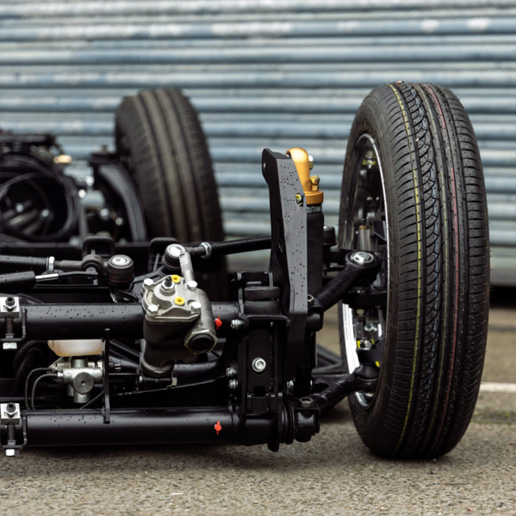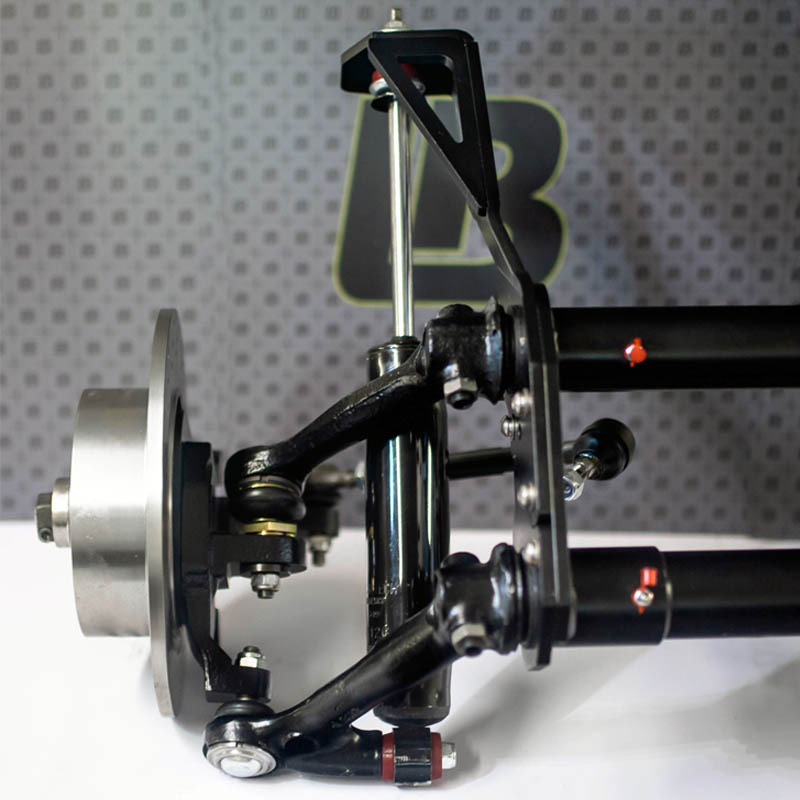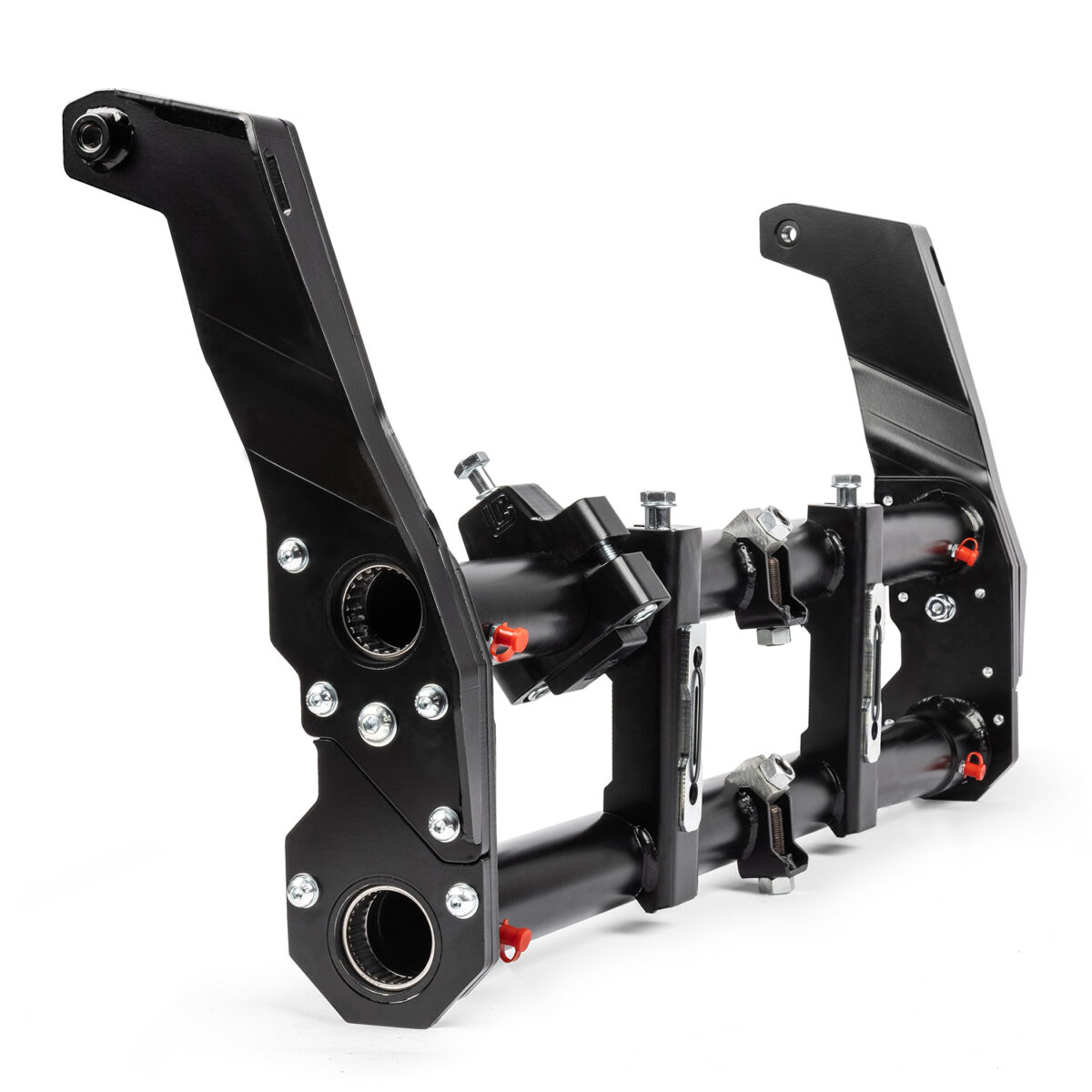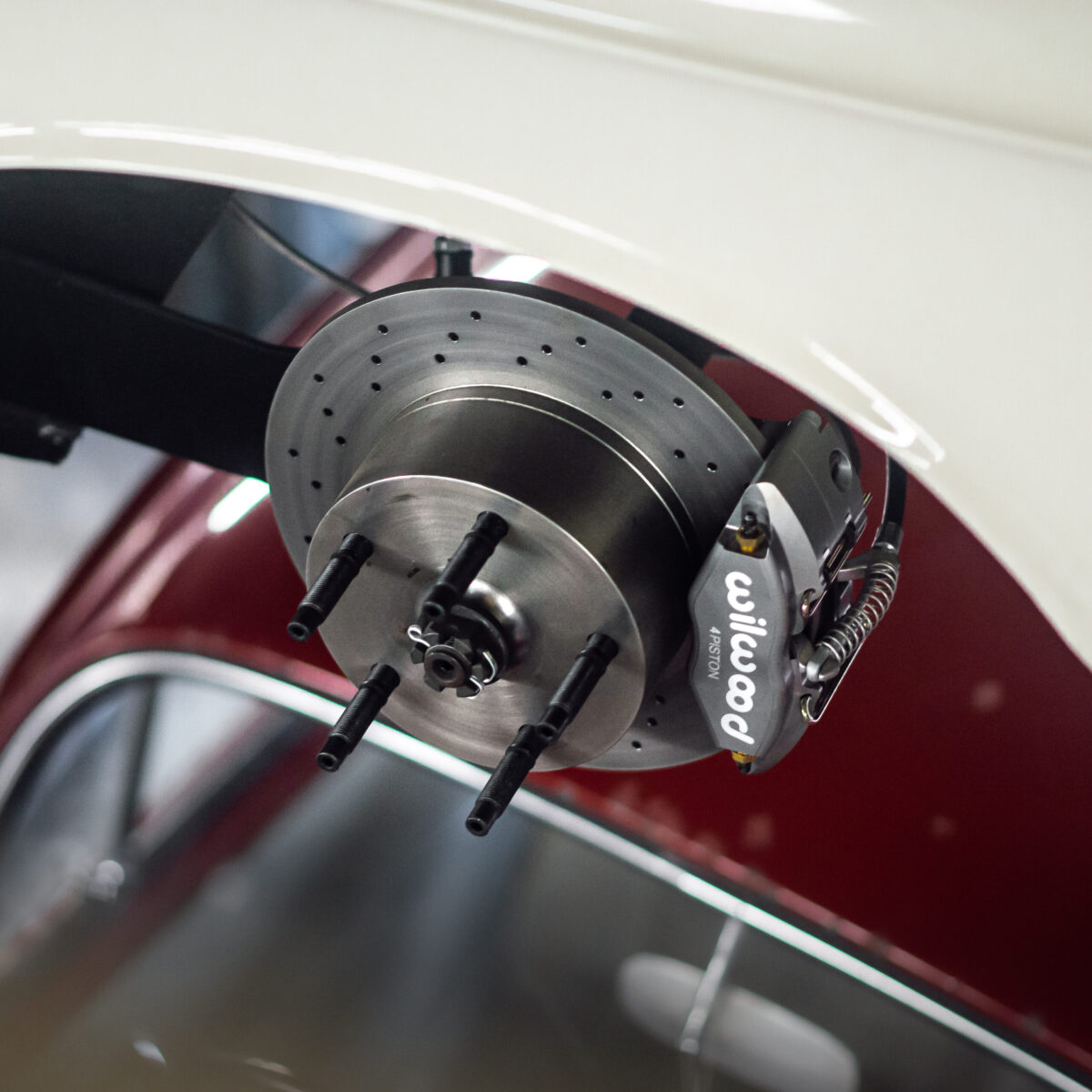

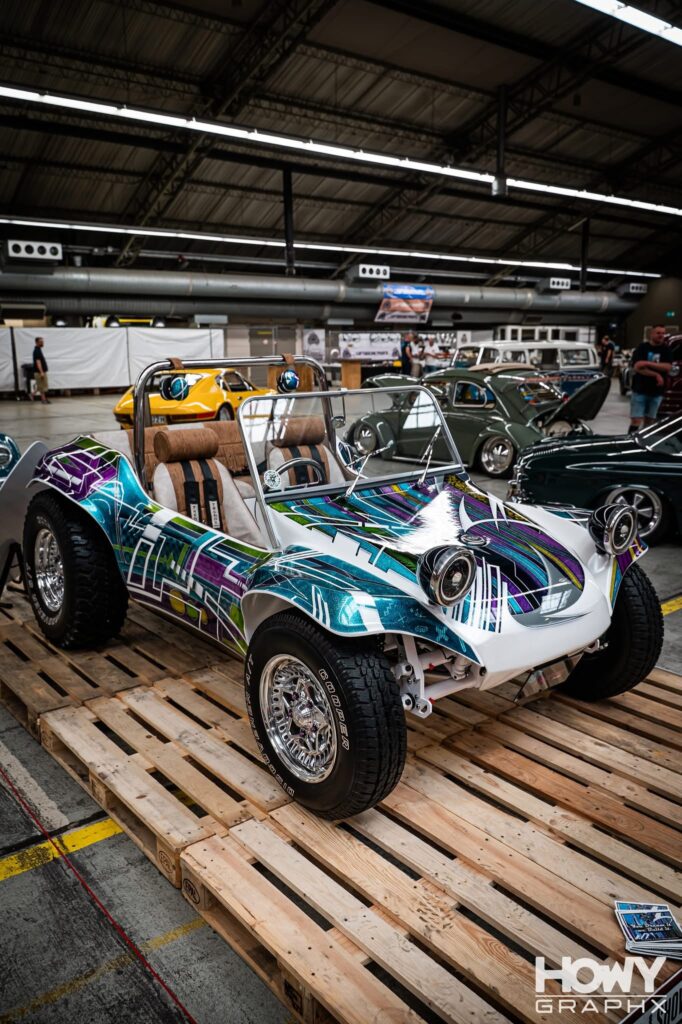
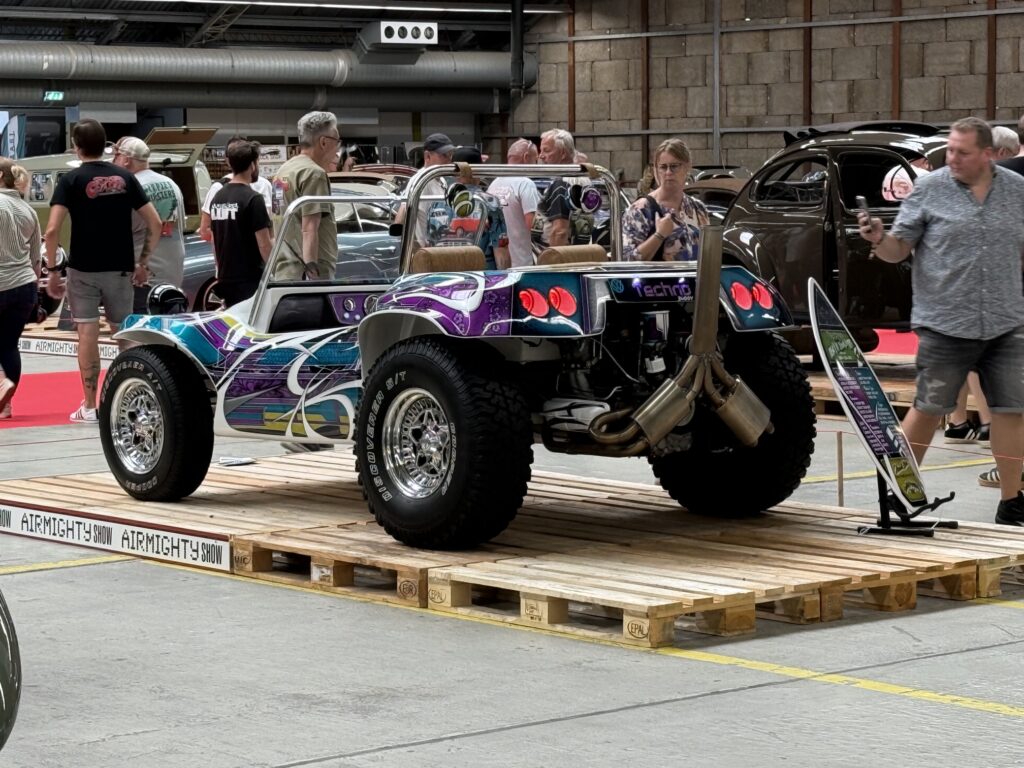
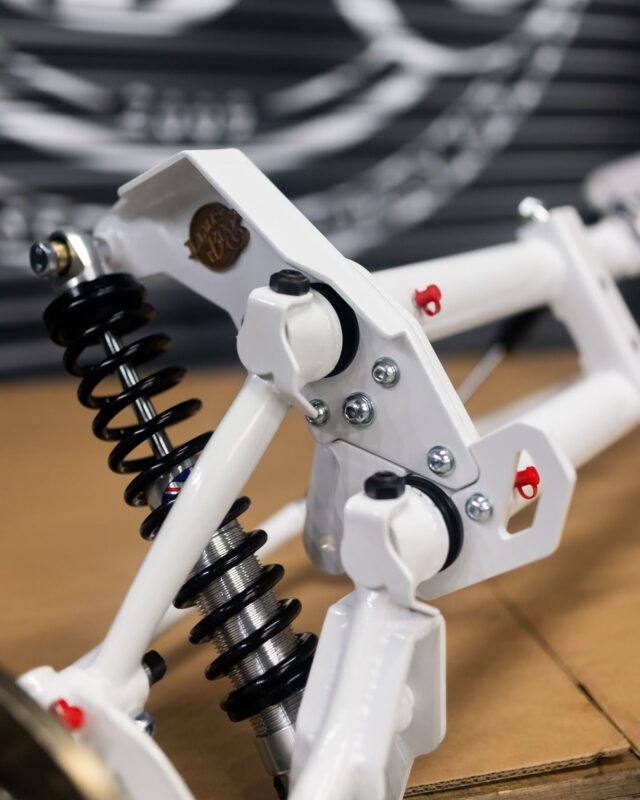
Classic Car Revivals’ TechnoBuggy puts a real-world finish on the Limebug catalogue, bringing together 1947-65 Beetle / Ghia Link Pin Weld on Lower Shock Relocators, 1950-65 Beetle / Ghia Link Pin Stock Width Elite Series Titan Front Beam Axle, Pre 65 Beetle / Ghia Titan / Wilwood 4-Piston Link Pin 5x130 Front Disk Brake Kit in one properly resolved setup.
TECHNO COLOUR
Dean Jones, Classic Car Revivals and the extraordinary Porsche-powered Techno Buggy that turned a familiar air-cooled formula into something completely different.
Words by Limebug | Hall of Fame — Featured Builds
Some builds don’t do subtle.
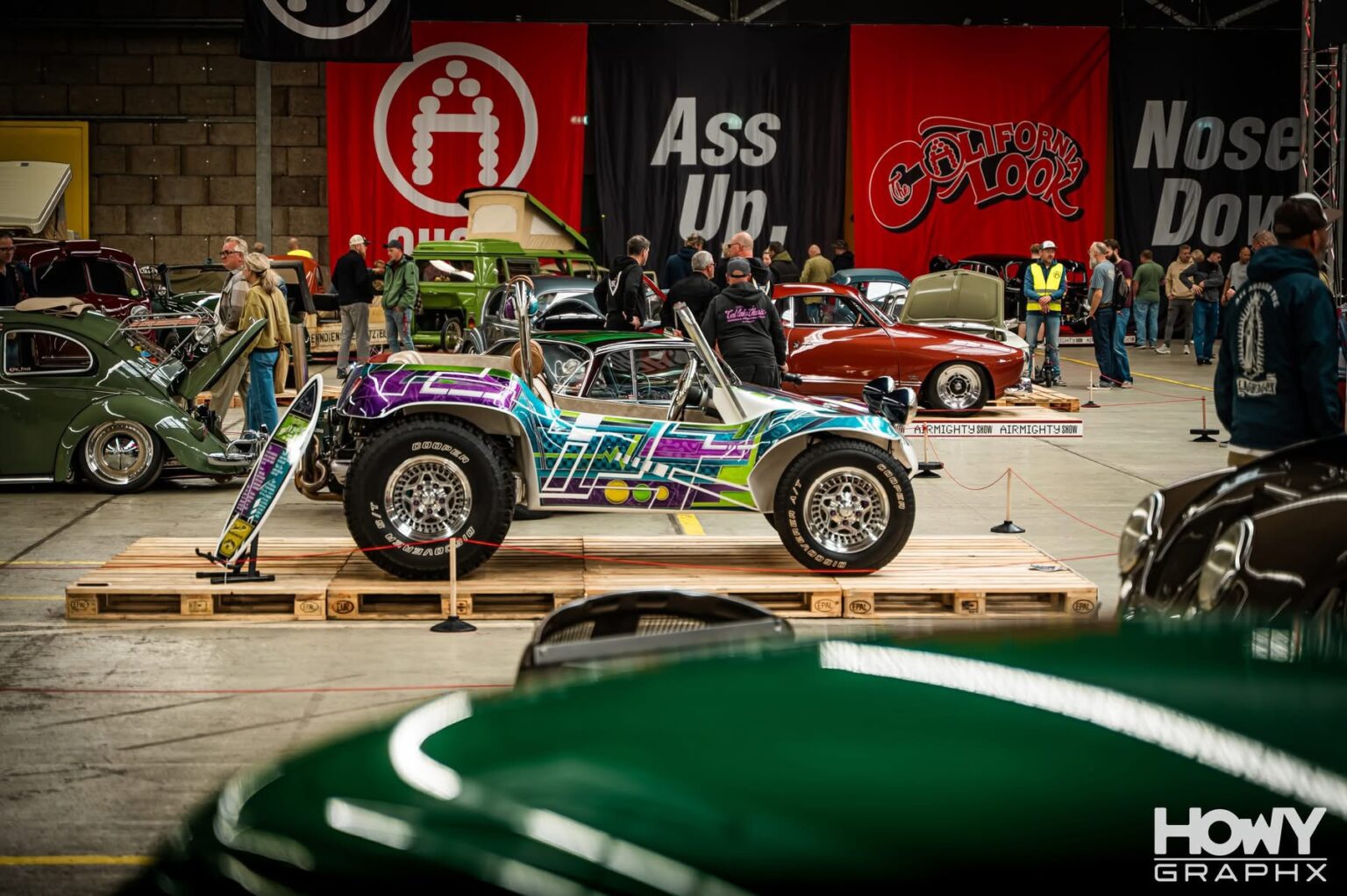
There are beach buggies, there are show buggies, and then there is Dean Jones’s Techno Buggy.
Somewhere between a seventies custom-car fantasy, a rolling piece of geometric artwork and an obsessive engineering exercise sits one of the most extraordinary creations to emerge from the Classic Car Revivals workshop.
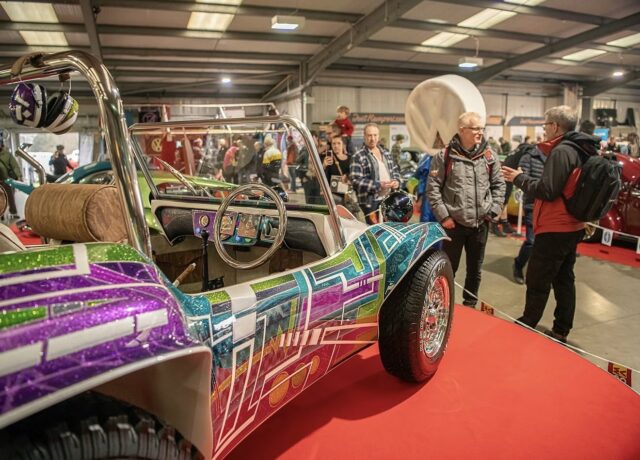
It’s low. It’s loud, at least visually. It’s covered in metalflake, and practically every surface gives you something else to look at.
But the real surprise isn’t necessarily what you see.
It’s how much work went into getting it there.
The man behind the madness
Dean Jones and Classic Car Revivals
Dean Jones isn’t exactly a newcomer to the Volkswagen scene.
In 2011, he founded Classic Car Revivals, a Hertfordshire-based restoration workshop specialising in classic cars, bespoke modifications and complete builds.
Over the years, the business has established a reputation for creating vehicles that look spectacular without ignoring the engineering underneath.
Dean’s own automotive history tells you quite a lot about his approach.
His 1969 Beetle, owned since he was just 15, features Porsche 944 Turbo rear suspension, Porsche 996 brakes, a Porsche 915 five-speed gearbox and a dry-sumped 2.1-litre Type 4 engine.
His 1971 Bay Window takes a similarly uncompromising approach, combining a 2.3-litre Type 1 engine, raised drivetrain, hydraulic suspension and serious Porsche braking hardware.
These aren’t cars modified simply to look good parked on a show stand. They represent a particular way of doing things: engineering, craftsmanship and appearance all given equal consideration.
So when Dean turns his attention to a beach buggy, you can reasonably expect something a little different.
Not another weekend toy
A beach buggy is about as simple as a custom Volkswagen can appear.
Take a Beetle-derived platform, remove most of the bodywork, add a lightweight shell and enjoy the freedom of open-air motoring.
That’s the appeal.
But in the hands of somebody accustomed to redesigning suspension geometry, fabricating components and building award-winning classics, simplicity doesn’t necessarily mean leaving things alone.
With the Techno Buggy, the familiar recipe became a starting point rather than the finished idea.
A different kind of buggy
Old-school inspiration. Modern execution.
The first thing that strikes you about the Techno Buggy is the sheer confidence of its appearance.
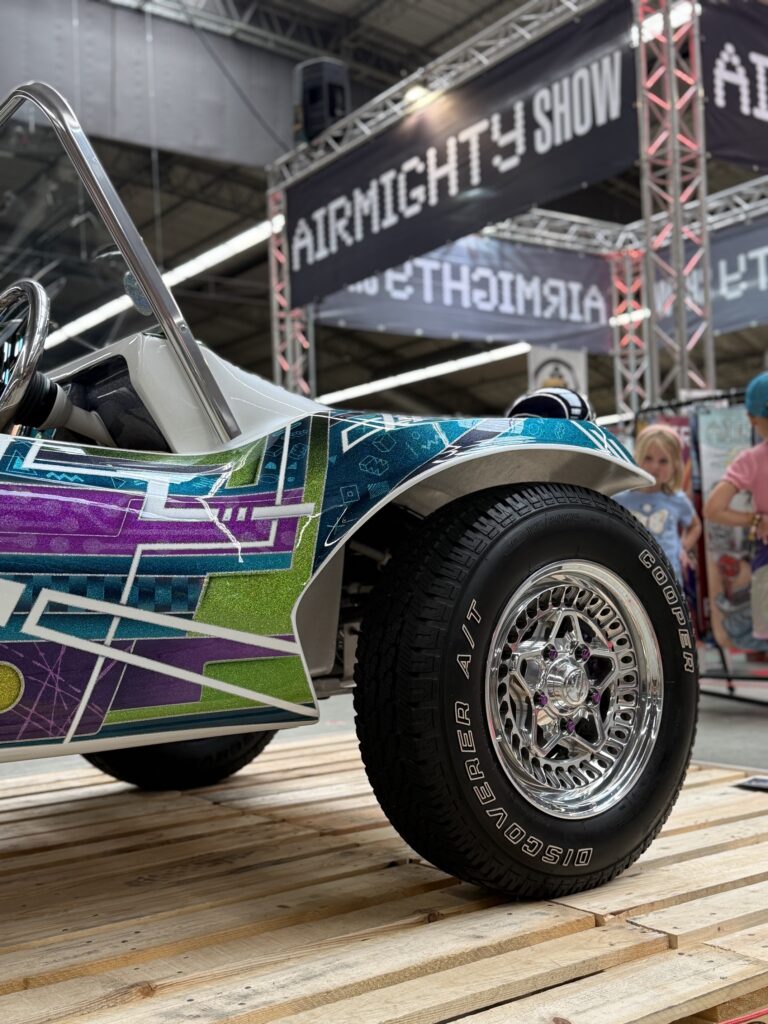
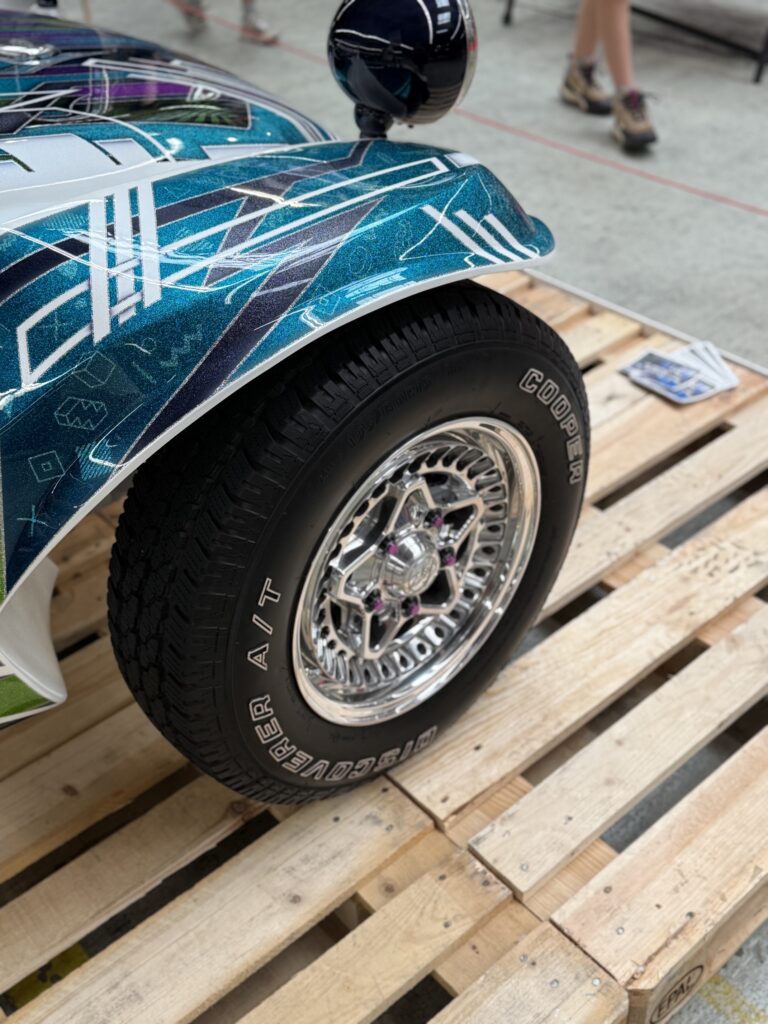
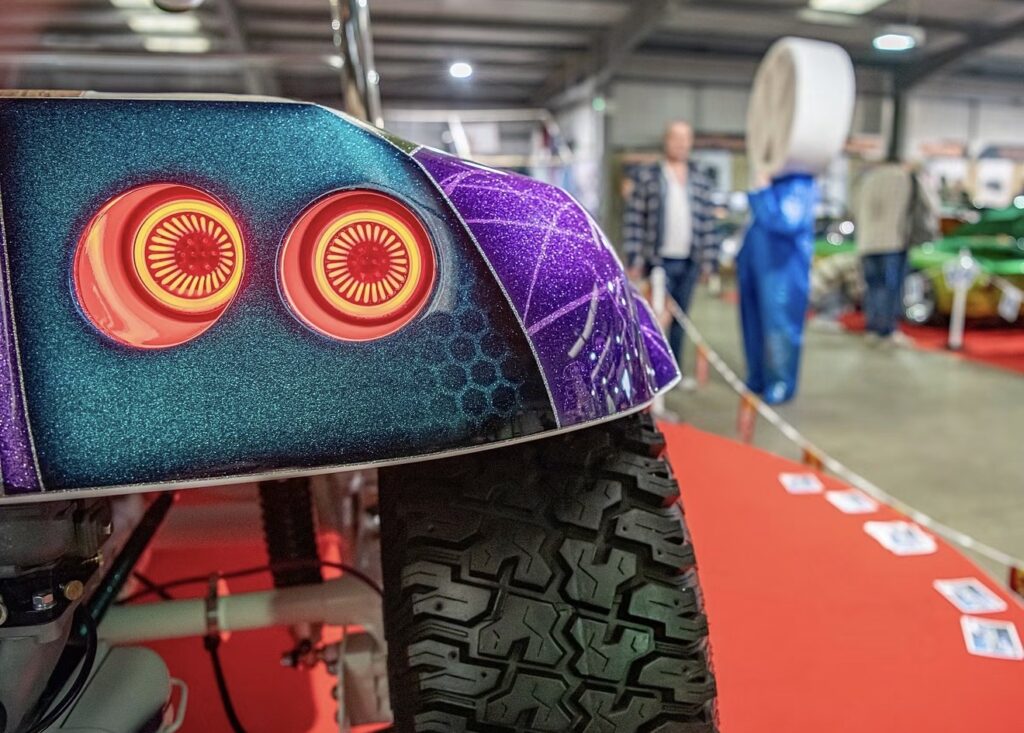
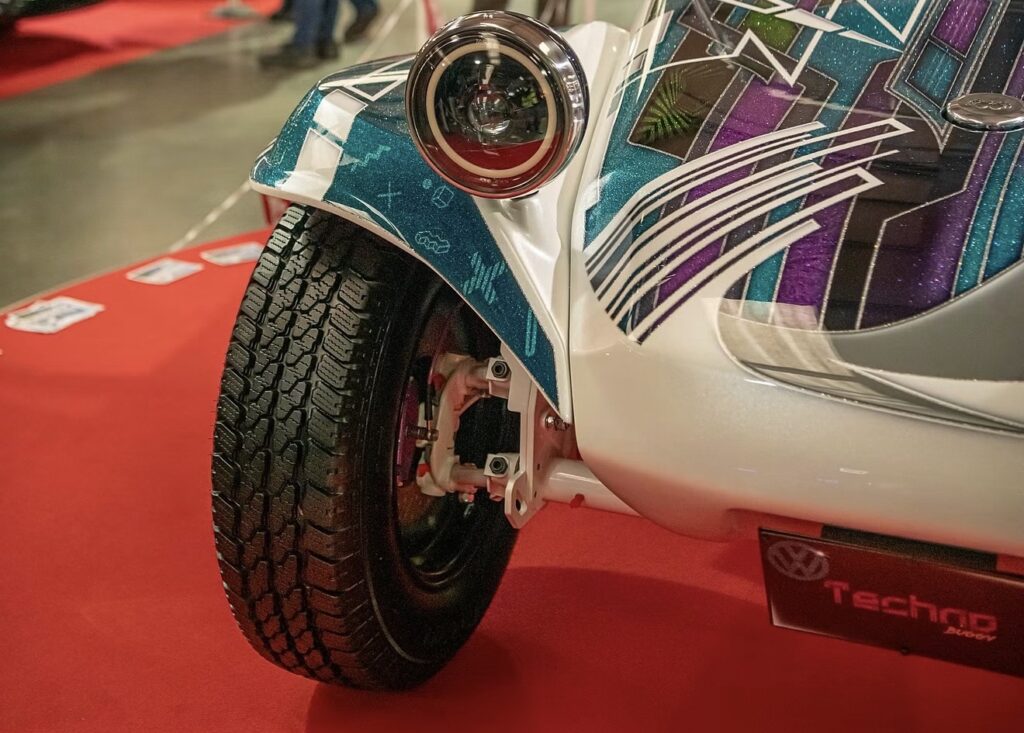
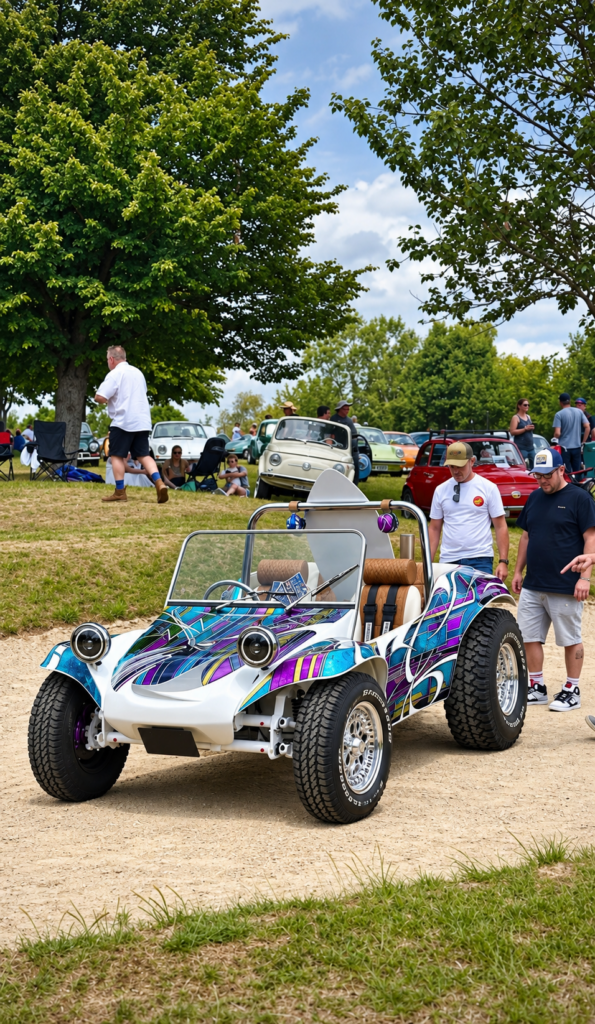
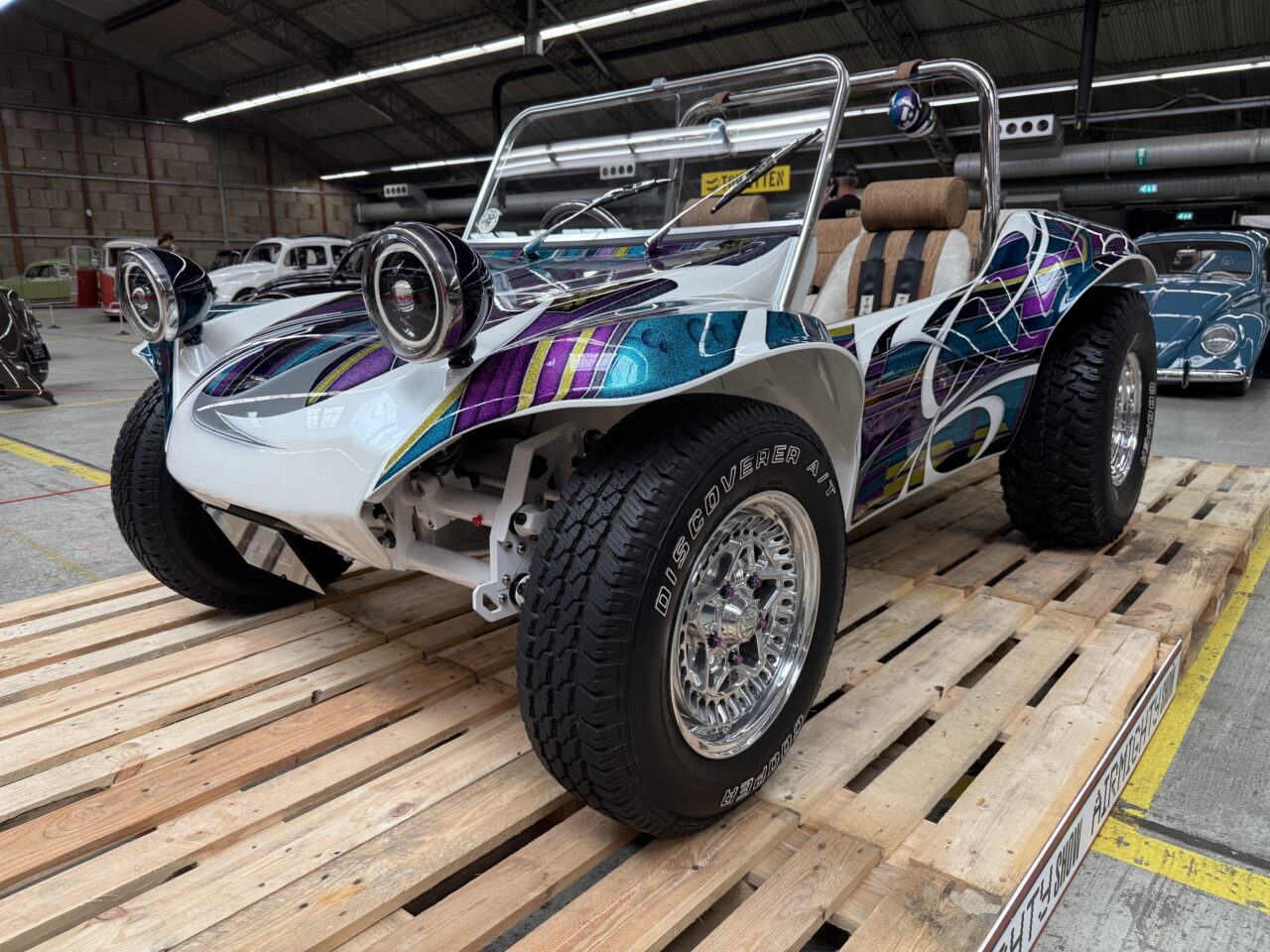
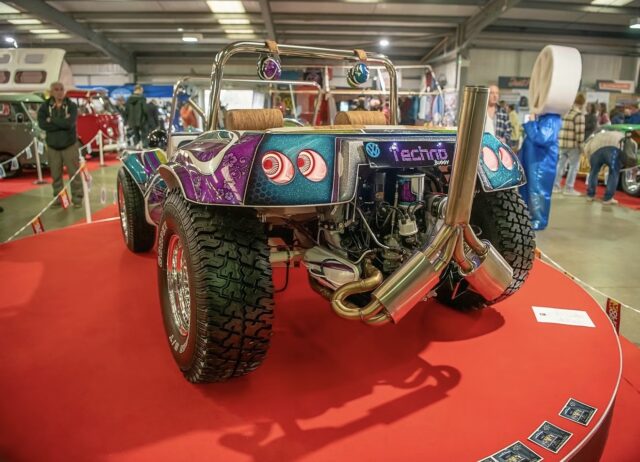
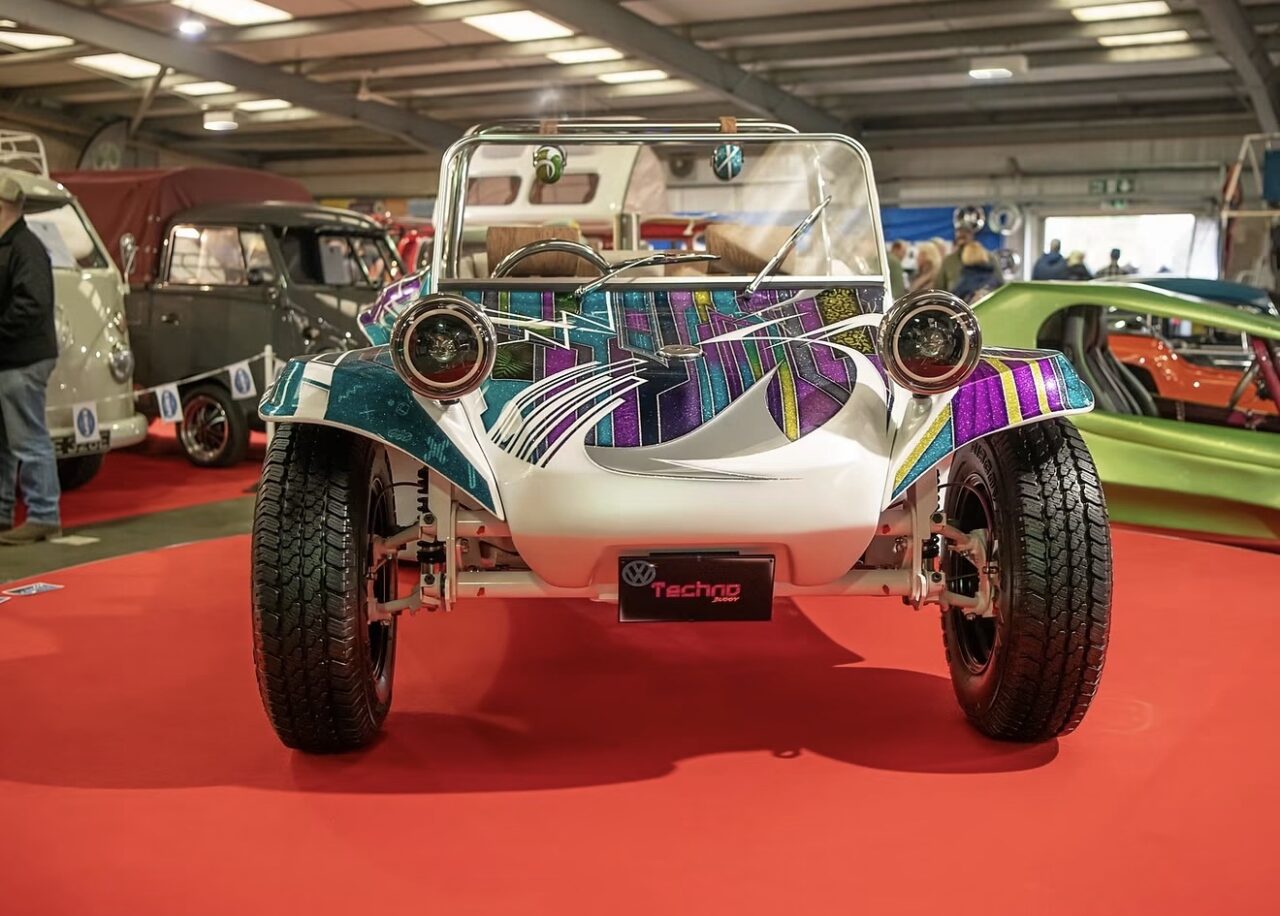
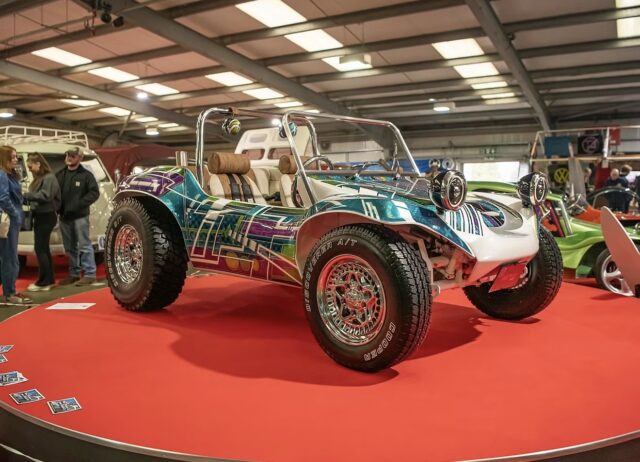
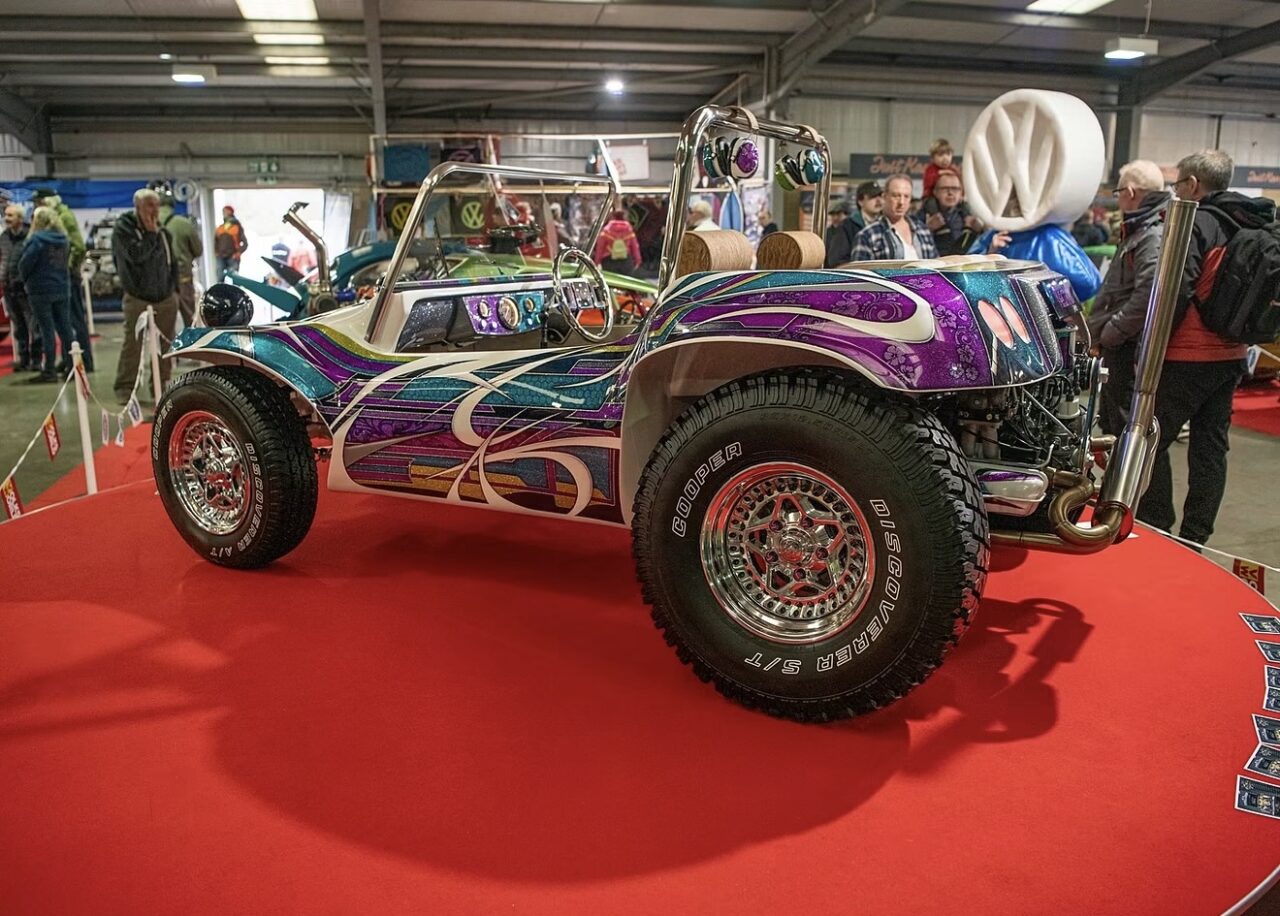
The bodywork wears an elaborate geometric metalflake finish, drawing on the visual language of classic custom cars while carrying a level of execution that feels thoroughly contemporary.
It’s the sort of paintwork that encourages you to walk around the car twice.
Once to appreciate the overall design.
And once more to try to understand how on earth somebody actually painted it.
The shapes, the changing colours, the way the light catches different surfaces — nothing about it feels accidental.
Even without understanding the mechanical specification, it’s obvious that this wasn’t a quick coat of paint over a fibreglass shell.
Six hundred hours. Just for body and paint.
Let that sink in for a moment.
More than 600 hours were devoted to the body and paintwork, according to the Techno Buggy’s AirMighty magazine feature.
That’s around fifteen full-time working weeks devoted to getting the surfaces and finish right.
Not the entire build.
Just the body and paint.
A kilogram of metalflake
Accounts associated with the magazine photography describe more than a kilogram of metalflake going into the finish, alongside countless coats of lacquer and an extraordinary amount of preparation.
Metalflake isn’t a forgiving finish at the best of times.
Getting it consistent is one challenge. Introducing complex geometric designs, multiple visual elements and the demanding curves of a buggy shell takes things into an entirely different category.
The result is a finish that manages to be outrageous without looking unfinished or improvised.

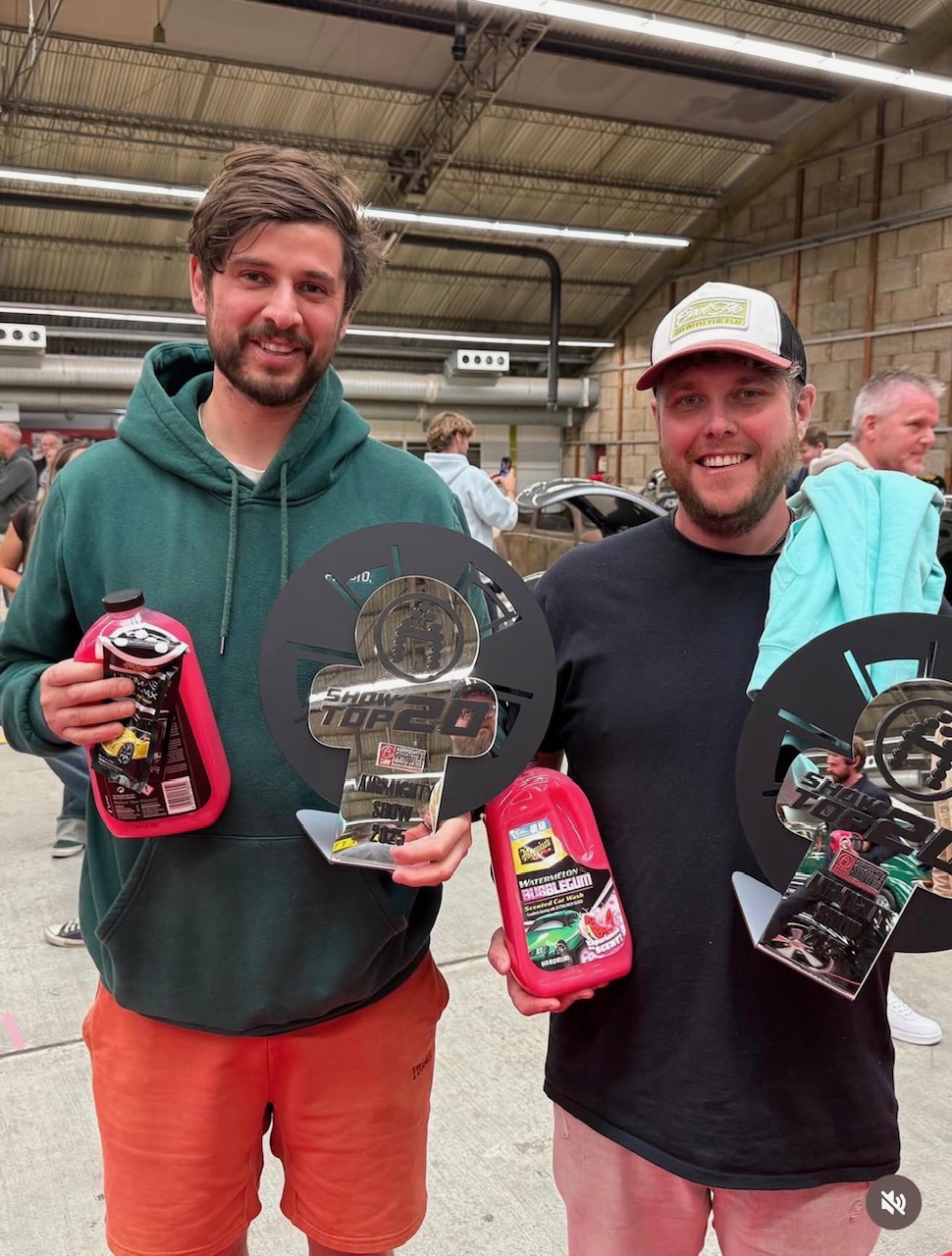
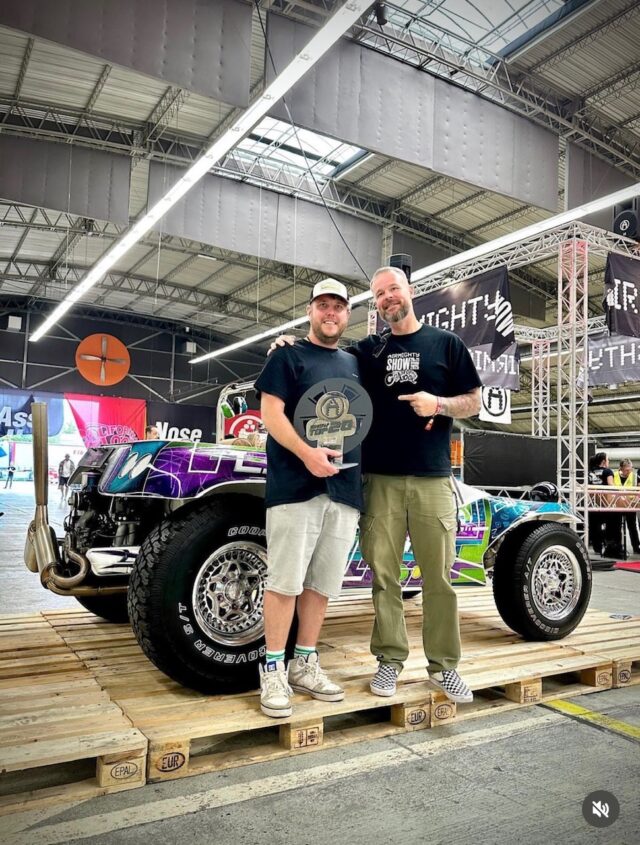
And that distinction matters.
The family connection
One of the nicest details of the story is that Dean’s daughter was involved in the project alongside the Classic Car Revivals crew.
It’s easy to focus entirely on the finished car, particularly when something looks this dramatic.
But builds like this are the result of countless evenings, weekends, technical decisions and repeated attempts to get something exactly right.
There’s something particularly fitting about a vehicle rooted in Volkswagen’s DIY custom-car heritage becoming a collaborative family and workshop project.
The Porsche connection
A 356 at heart
For all the attention the paintwork attracts, the mechanical specification is equally interesting.
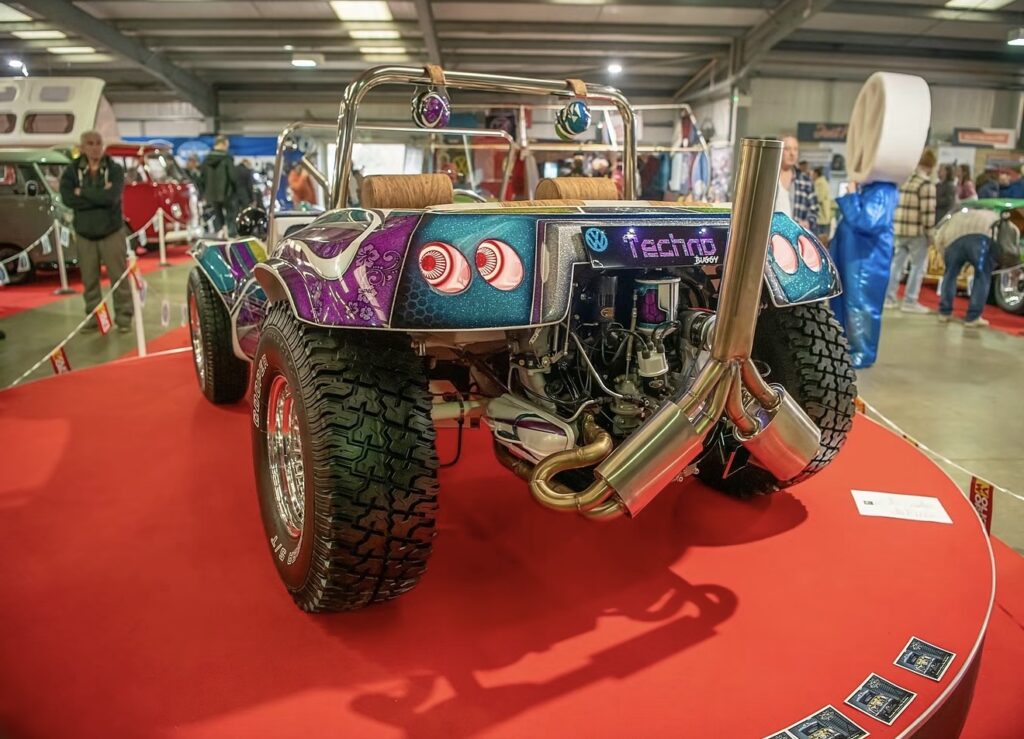
AirMighty describes the Techno Buggy as Porsche 356-powered.
It’s an intriguing choice.
Rather than relying on the usual familiar Volkswagen engine specification, the buggy incorporates a powerplant associated with one of Porsche’s most iconic early sports cars.
That fits the character of the entire build.
It mixes eras, manufacturers and design influences without feeling obliged to follow a conventional restoration formula.
A classic beach buggy body, Porsche power and highly developed Volkswagen-derived running gear.
An unusual combination, certainly.
But one that feels perfectly at home here.
Getting the stance right
Where Limebug enters the picture
For Limebug, the Techno Buggy became one of those projects where supplying components involved considerably more thought than simply matching a part number.
Dean’s approach to suspension and braking meant that the hardware needed to suit the vehicle’s wider engineering specification as well as its visual ambition.
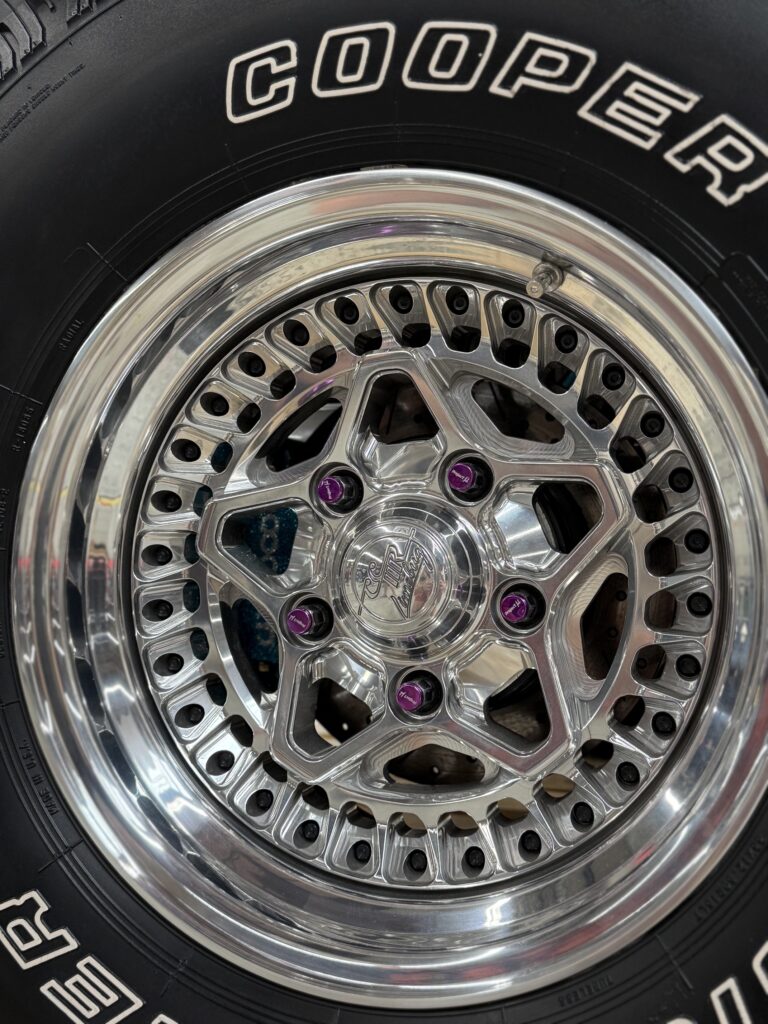
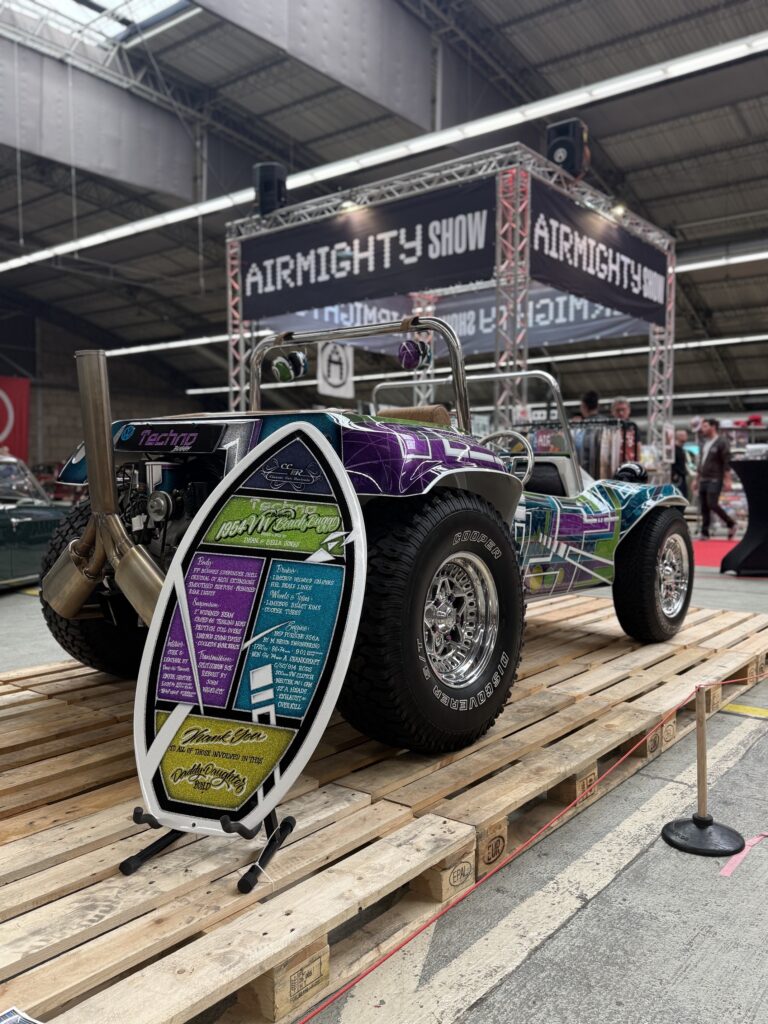
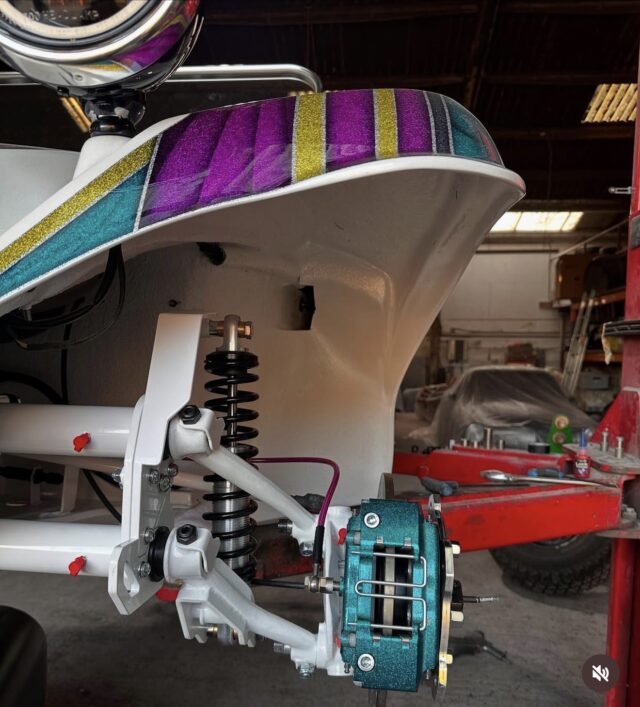
The Limebug components associated with the finished build include an Elite Series Titan link-pin front beam, Wilwood four-piston disc brake conversions, Ultimate rose-jointed IRS spring plates and a set of TB30 three-piece split-rim wheels.
Each forms part of the overall package.
The suspension determines how the car sits and behaves. The brake conversions bring modern hardware into a classic platform. The spring plates provide the adjustability needed for a carefully resolved rear suspension arrangement.
And the wheels tie together the entire visual concept.
Titan at the front
The Elite Series Titan front beam provides the starting point for the buggy’s front suspension.
For a build where the stance, wheel position and detailing are all under such close scrutiny, the beam is far more than a component hidden beneath the bodywork.
Its geometry and installation influence the way the entire front end comes together.
Wilwood braking
The Techno Buggy’s specification incorporates Limebug’s Titan/Wilwood four-piston front disc brake system alongside a Wilwood-equipped rear conversion.
It’s an interesting contrast.
A car rooted in the stripped-back simplicity of early beach buggies, but with braking hardware intended to deliver a much more developed mechanical package.
Three-piece wheels. One unmistakable look.
The TB30 three-piece split-rim wheels are another important part of the finished appearance.
On a buggy, where so much of the suspension and wheel assembly remains visible, getting the proportions right is absolutely critical.
The wheels don’t simply finish the build.
They help define it.
More than the sum of its parts
The really impressive thing about a project like this isn’t any single component.
It’s the relationship between them.
The colour palette, the wheel specification, the suspension arrangement, the braking hardware and the Porsche engine could all be talking points in their own right.
But put together, they create something with a distinctive personality.
It’s unmistakably a buggy.
Yet it’s difficult to mistake it for any other buggy.
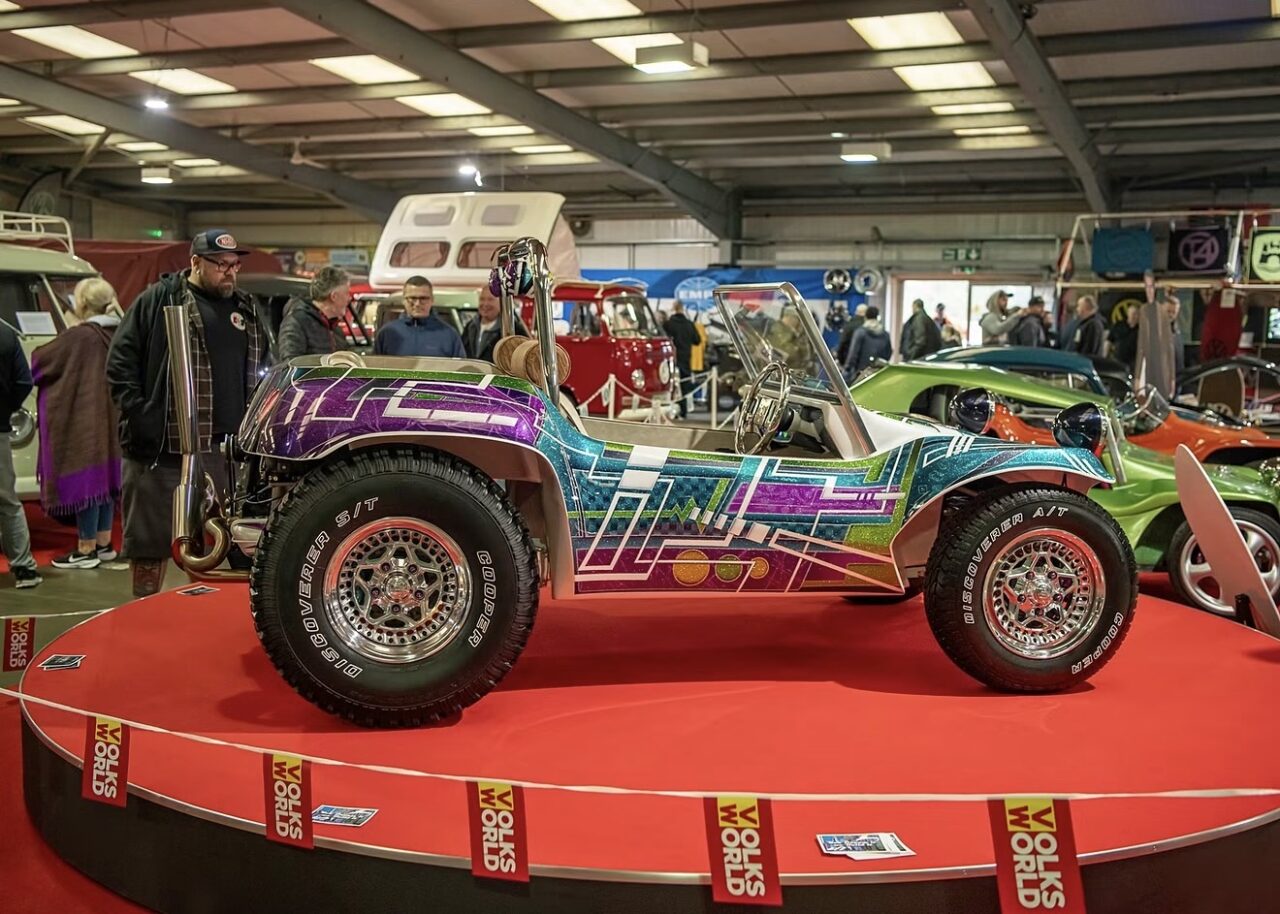
And that’s probably the highest compliment you can pay a custom build.
From the workshop to the show scene
A machine built to be seen
Classic Car Revivals has a long association with the Volkswagen show scene, and the Techno Buggy is exactly the sort of vehicle that rewards a proper walk-around on a show floor.
Unlike cars whose finer details disappear behind closed bodywork, this one invites inspection.
There is paintwork to examine, suspension hardware to study, fabrication to appreciate and a rather unexpected engine specification to discuss.
The finish makes an immediate impression, but the deeper engineering details give the car substance beyond its visual impact.
The VolksWorld connection
VolksWorld has long provided a showcase for the kind of ambitious, individually engineered builds that emerge from workshops such as Classic Car Revivals.
Dean’s workshop has developed a reputation for the attention it gives to vehicles prepared for major shows, with paint specialist Chris Crampton responsible for finishes seen on display and in magazines.
The Techno Buggy belongs firmly within that tradition of British air-cooled custom building: a familiar platform transformed through engineering, patience and an uncompromising attitude to presentation.
AirMighty Megascene — Issue 59
From show car to magazine feature
In June 2025, the Techno Buggy received a dedicated feature in Issue 59 of AirMighty Megascene.
The international air-cooled Volkswagen magazine placed Dean’s creation alongside an eclectic collection of exceptional Beetles, Type 3s, Karmann Ghias and Porsche-related builds.
The magazine feature highlighted the Porsche 356 powerplant, the extensive bodywork and the extraordinary paint finish.
Photographer three50six also documented the vehicle, providing a closer look at the workmanship that made the project so distinctive.
For a car that had already demanded an enormous amount of effort from its creator and the team around him, the international magazine coverage represented another chapter in its story.
Hundreds of hours condensed into a few photographs
That’s the funny thing about a finished custom car.
Thousands of small decisions, hours of preparation, trial fits, setbacks and refinements eventually become a handful of glossy photographs.
To somebody seeing those photographs for the first time, it can all appear effortless.
But the people who build these cars know better.
Every carefully aligned panel, every piece of suspension hardware and every perfectly finished surface represents time that somebody had to find.
And in the Techno Buggy’s case, quite a lot of it.
A natural fit for Bicester
Where engineering meets automotive art
Few places capture the diversity of British classic-car culture quite like the Scramble events at Bicester Motion.
Vintage sports cars, highly original restorations, unusual specials and modern custom builds all find themselves sharing the same historic surroundings.
The Techno Buggy is exactly the kind of creation that fits that atmosphere.
Its shape and underlying concept are familiar to anyone who knows the Volkswagen scene, but the execution takes it far beyond the ordinary.
It is simultaneously a traditional beach buggy, a highly detailed custom car and an engineering project with a decidedly unconventional specification.
A machine that can hold its own visually among far more expensive classics without pretending to be anything other than what it is.
Built with a different mindset
There is a particular kind of determination involved in a project like the Techno Buggy.
At some point, spending another twenty hours refining a detail that most people will never notice stops being a rational decision.
And yet those are often the decisions that separate a good build from a remarkable one.
Dean and the Classic Car Revivals team clearly understand that distinction.
From the complex paintwork to the Porsche powerplant and the carefully chosen suspension hardware, the Techno Buggy is the product of refusing to settle for something merely acceptable.
The art of doing things differently
For Limebug, being involved in a build like this is a reminder of why developing specialist air-cooled components is worthwhile in the first place.
It’s not simply about lowering cars, fitting different wheels or improving brakes.
It’s about giving builders the freedom to execute ideas that might otherwise remain drawings, photographs or conversations in a workshop.
Dean’s Techno Buggy is an excellent example of what happens when that freedom meets considerable skill, patience and a slightly outrageous imagination.
A Porsche heart. A Volkswagen soul. And absolutely no interest in blending in.
Some builds follow the rules.
Others create their own.
The Techno Buggy was never going to be one of the ordinary ones.